Six Things To Know About the Hundred Years War

Though I’ve written little about it on THIS blog, I have a huge interest in the Hundred Years War.  I don’t know when it started.  Maybe it was when I got the little Pan book on Agincourt by Christopher Hibbert from their  British battle series back in the day. Or maybe it was when I bought Donald Featherstone’s little guide to wargaming Poitiers from the Knight’s Battle Series at American Eagles in the late ’70’s.  Most likely, however, I was captivated by John Keegan’s absorbing account of Agincourt  in his landmark book The Face of Battle.

Though many miniature gamers know the minutiae of The Battle of the Bulge, Waterloo and the Napoleonic Wars, and the complete rise and fall of the Roman Empire, but don’t really know much about this war that consumed more than a hundred years of the middle ages (1336-1453) and profoundly shaped the history of England, France and Europe.  Here are the basics:

1. France won the Hundred Years War.  We often forget this because we mostly remembered the epic military disasters they participated in: Sluys 1340; Crecy 1346; Poitiers 1356; Agincourt 1415; Verneuil 1424.  Descriptions of  these battles are usually followed by the phrase “slaughtered the flower of French chvalry.” And indeed, though the English, at various times, occupied and ruled more than half of what we consider modern France, the French evolved, strong leaders emerged to forge a modern state and a royal, rather than feudal, military system and drove the English from possessions they held in France for hundreds of years.

2. The cause of the conflict is complicated.  There were two important causes of friction between Edward III of England and Philip VI of France.  At the center of it all was a succession issue. Philip succeeded his father, Charles of Valois after the Capetian line died out.  Edward asserted his claim to the French throne through his mother Isabella was more valid. Because the English king also owed homage to the French king for the English possessions in Aquitaine, Edward was nominally subject to Philip’s rule, a really odd position to be in.  When Edward refused to recognize Philip as his sovereign, Philip declared Aquitaine forfeit.  Them’s fightin’ words, and so they did.

3. The English military system was genius. The successful armies on the continent depended on large numbers of well- mounted, armored cavalrymen to defeat armies of peasants, infantry or other large forces of armored cavalry.  As a rule, for hundreds of years, that largely worked. England, a relatively poor country, with income about half that of France learned to fight in a different manner. With some armored men-at-arms, Edward III got his knights off their expensive horses and surrounded them with deadly well-trained longbowmen that could be lured into service for cheap wages, or be pressed into service if that was required. The wars with Scotland, in France and at Najera in Spain were cookies shaped with the same cutter-find a strong defensive position, entice the enemy to attack, and rain death on them until the arrows run out.  Then let what’s left have it with competent armored foot. Edward the III was an aggressive military commander who always sought battle, but only fought on his terms. For a hundred years the French system had no answer for this, except avoid battle and let the English pay the exorbitant cost of keeping an army in the field.

4. The Hundred Years War was a complex network of related conflicts   There are maybe 15 sizable battles fought over the 117 years of the Hundred Years War.  It was punctuated by many treaties and truces, some lasting for years, while the opposing sides angled for advantage. But, in addition to the fighting between the two kingdoms there was a succession struggle in Brittany that lasted decades, England had its own civil war resulting in the death of Richard II and the beginning of the Lancaster dynasty. There was war in Wales and Scotland.  France suffered through the rising of the Jacquerie after King Jean’s capture, and the struggle between between the Armagnacs and Burgundy.  France was infested by the Free Companies and both sides fought off the devastating effects of the Black Death. Edward, Black Prince of Wales and French commander Bertrand du Guesclin were both drawn into the war for the crown of Castile. It’s hard to know all the players without a scorecard.

5.  The French were most successful when they avoided big battles.  Like I said, maybe 15 big battles in the Hundred Years War and France lost about two thirds of them. The French won the war because they used their advantages against the English weakness. As much as anything, the war was shaped by two larger struggles.  One was economic.  From the very beginning Edward III realized the great cost of keeping large armies in France.  He borrowed tremendous sums, and bankrupted some of the largest Italian banking houses in Europe as a result.  By the end of his reign, Parliament and the Church were adamantly refusing to provide funds to keep armies in the field in France or provide for the adequate defense of Aquitaine. Later in the war, as England prospered, fewer men of military ability chose to seek their fortunes by force of arms. English armies shrank and Parliament was less willing to pay for them.  France, a much richer country, also had economic issues, but fewer of them. Charles V, a shrewd and dynamic leader of the 1360-80 period. He consolidated the wealth of France, used the money to buy off castles, cities and nobles and established the first, relatively small royal army to respond to English threats under great leaders like du Guesclin and Oliver Clisson. After Henry V’s death, Joan of Arc and Charles VI inspired a new French spirit of nationalism that inspired unity.  The introduction of the French royal army in 1440 and the comparative weakness of the English changed much of this.

6. The Hundred Years War is fundamentally an irregular war. From the beginning, the French viewed big battles as risky and tended to avoid them.  This seems to be the case throughout Europe.  Edward III, Henry of Lancaster, the Black Prince,  Henry V all sought the decisive battle that would bring an end to the war.  Their victories never did win the whole enchilada. And so it dragged on into an exhausting series of campaigns and raids.  The English,throughout the long war engaged in a series of raids called chevauchees.  These raids had two purposes.  One was simply looting and pillaging of wealth, food and supplies that kept the English forces in the field.  The second was equally important and that was to disaffect the gentry and peasantry from the French monarch.  If Philip, or Jean, or Charles wouldn’t protect them, maybe Edward or Henry would . Further, this loss of support might prick the French king’s honor and goad him into battle. The French and English also participated in a litany of local seizures of territory, castle raids, incursions, alliance swaps that shaped the political landscape in Brittany and Aquitaine.  Contributing to the misery of the small folk were the depredations of the Free Companies, small armies of English, French and various mercenaries that roamed France in the late 14th century, who formed heavily armed banditti.  They seized whatever wealth that could be had and lived off tribute and stolen goods until driven out of France or absorbed into the new national French army in the 1430’s.

This is just a quick snapshot of fundamentals about this interesting conflict.  There is a tremendous body of scholarly but highly accessible literature about the Hundred Years War. In a future post I’ll make a list of “must reads.”

As a miniature wargamer, however, I find the period is generally not well served by the rules that cover the Hundred Years War era.  Because the middle ages is often included in a broader Ancients millieu, the uniqueness of specific military systems or conflict get mashed down and homogenized into game systems that don’t work well historically.  The Hundred Years War is desperately in need of its own big battle set of rules.

However, I really do like Lion Rampant.  Perhaps you’ve noticed.  It is simple and easy to play and reflect the kind of small actions that form the vast bulk of conflict during the Hundred Years War.
Gaming in an age of cancer

With Enfilade 2015 in the well I’m rapidly bearing down on the one year anniversary of my cancer surgery.  I’d like to say I’m a brave SOB and nothing about me is changed. But that would be a lie. Physically and psychologically I am a profoundly different person.  I am a little more anxious and afraid, the things that are important to me are different. I am more sober and sentimental

Little things matter to me, especially friends and friendships, and nothing quite brought that home to me than Enfilade. We got the news the week before the convention that Terry Flynn, a longtime gamer and supporter of the hobby died of cancer in Portland.  Though I didn’t know Terry well, his smiling face around the Olympia ballroom was always a regular feature, and I was devastated by the news in a way I would not have been in previous years.

I enjoyed the hour I spent with Ed Texeira in the bar on Friday night.  Ed and I are almost exactly the same age (as we learned over gin and tonic) and go way back to the same game shop in San Carlos, CA in the 70’s.  I always enjoyed his little game gig in Marysville  in the early 90’s (Breakthrough, for those who are searching their memory banks,) and very much admire his work with Two Hour Wargames.  Together with hanging out with longtime roomie Doug Hamm, and my Canadian friends from White Rock and North Vancouver, it was the time together that seemed to matter most.

In the year since my cancer revelation, I haven’t abandoned games or gaming of any type.  I continue to paint figures.  I game-though much less than I would like. I’ve turned inward a bit and have explored another interest-music.  No, I’m not making music; it’s simply not one of my few talents.  No, I’m convinced there are two musical types, music consumers and music producers.  I’m strictly a consumer-a music-in person.  I’ve often wished I was a producer, or a music out person, but if I have any kind of music talent I’m too busy and impatient to find the time to practice, develop and share it.

One of the things I did do is access my longtime interest in music and begin collecting vinyl records.  What does that mean to my gaming hobby?  Collecting anything means money, and so I’ve largely curtailed my spending on miniatures.  Not entirely, but I haven’t bought a figure since February, except for a few odds and ends at the convention.  I still have tons of minis to paint in almost every period, so I’m not exactly going without.  Meanwhile I’ve completed my first record collection, including all the the records by Jefferson Airplane/Jefferson Starship and their ancillary projects.  It is much fun, and I’m sure I’ll turn to another subject soon.  I’m mostly interested in American and British psychedelia, so it’s just a start.  Why have I done this?  I think it’s some kind of acknowledgment that I’m not going to live forever, I have plenty of unpainted lead, this is something I’ve always wanted to do, and there’s no time like the present.  On June 6th I’ll attend the Annual Northwest 45, 78rpm, and LP Record show.  It’s my first show and I’m excited.

For the present, however, I’m staring summer right in the eye.  I have my summer painting all set out with 28mm knights to paint.  After that will be some Galactic Knights ships and a really big steam gunboat.  After that who knows.  I have lots of minis but I’m not willing to make big plans.  Life is too short for that.

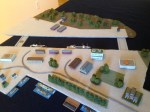
More St. Nazaire pics

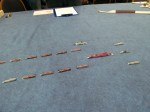
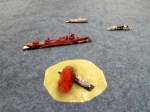
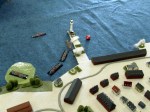
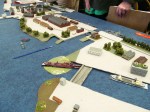
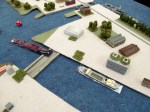
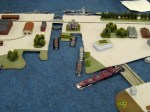
Dave Schueler shared some more St. Nazaire pics. Unfortunately I had already packed my camera, and my phone was dead, dead, dead. So here are some photos, care of Daveshoe.

Just for clarity, the yellowish circles designate ships picked out by searchlight batteries across the Loire River.  Batteries of 75mm guns targeted the British throughout the game, wrecking two motor launches and damaging others.

Enfilade 2015: the hits just keep coming.

I attended Enfilade over the Memorial Day weekend.  It was my 24th Enfilade.  I haven’t missed one yet, and I’ve had organizing responsibilities in almost all of them.  Last year I announced my retirement from the Enfilade committee and all other leadership responsibilities for NHMGS.  It was a carefully considered decision, and the right one for me. There was no animosity or rancor in my decision, and I’ve moved on.

It was a very good convention and I think the organizers did quite well.  It seemed to me there were few glitches and almost all of them were beyond their control.  If I have one suggestion it would be to try to problem solve the event sign-up dilemma. I know and understand all the problems associated with pre-registering for events, but the long 45-minute lines must be addressed. They’ve done a great job of promoting pre-registration electronically for the convention, and now it’s time to put equal or greater promotion into pre-registering for events.  It’s complicated and I get that, but this seems to me a must-do, especially as attendance hovers around the 350 mark and the lines snake through the convention hall.

Each convention is different, and this one certainly was for me.  I had to work on Friday.  That’s unusual for the day of the convention and it presented a number of problems I clearly foresaw.  It meant leaving at school about 2:30 and driving to Olympia and arriving in time to host my 7:00 event.  if you are a stranger to Washington geography, that’s about a 60-70 minute drive under normal circumstances.  Unfortunately Memorial Day weekend is far from normal.  It is the beginning of the camping season, and as the weather moderates any long weekend is a good excuse for camping.  The roads were a mess and instead of arriving at the hotel 3:30-4:00ish, it took an extra hour.  I had piles of stuff to haul in for my game, so by the time I checked in, set up my game, and caught my breath, it was game time. Something to consider for the future.

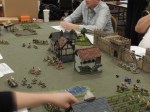
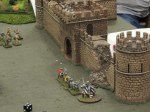
Friday night I ran my raid on Agen scenario.  It was a Lion Rampant game with seven players who had not played the rules before.  All had purchased copies of the rules and were genuinely interested in learning them to see if they liked them, which meant they were motivated to work through them.  That made life a lot easier for me. After a somewhat slow start, they were doing things pretty much on their own.  The story of the scenario is something like this: three English retinues arrive outside the village of Agen, defended by a dilapidated castle.  This is a chevauchee, meaning the English are there to loot and burn the village and carry off their goodies.  The French arrived with a three retinue relieving force-something frequently unusual for a chevauchee-and their job is to prevent the English from achieving their goals.  The last retinue was a smattering of serfs, whose job it is to offer token resistance, but most of all survive.  The French were able to inflict some damage to the English, but the invaders were pretty efficient, looting and burning many of the various buildings on the table.  But, the big winners were the serfs, who by staying away from trouble, managed to score 105 points edging out the English who amassed 104.  Most importantly, the players seemed to enjoy themselves,and especially the rules.  They were running the game themselves by the end of things.

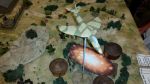
Saturday morning I made time to actually play a game.  I have long been interested in Galactic Knights, the space epic using ships originally made by Superior Models. I own some of the ships and the rules, but only walked through a kind of quickie scenario with Dave Schueler.  The Saturday game was hosted by Scott Williams and Joe Grassman and was loosely based on the WWII Battle of Midway. I commanded the Terran star bombers, which are the rough equivalent of the Ameriacn TBD torpedo bombers slaughtered by the Japanese.  In GK they have the virtue of being faster than the Devastator death traps.  I loved the scenario and learned a lot about the rules.  I was able to be sneaky and sly, took advantage of the rules and administered the coup de gras to two thirds of the Avarian capital ships–following the advice of my colleagues.  The game inspired me to work on my collection of GK stuff-in fact I’m writing this during a break from them.

The Saturday mid-day period was all about judging games for the period’s “Best of Show” award.  Often that falls to one person, but the convention organizers did a super job of mobilizing three judges for each period.  That’s way better than I was able to do.  I actually hope to continue aiding in this because it is great fun.  The best part of serving in that role is the ability to circulate and see all the games during the period.  I actually got around to see each game three times and there were some wonderful ones.  While the 28mm Waterloo game raged on in the corner, John McEwan hosted an amazing undersea submarine game.  Max Vekich and Ed Texeira ran a very interesting hypothetical 28mm WWII Japanese invasion of Washington game I was very intrigued with. Special guest Howard Whitehouse had a very interesting Vinlander/skraeling semi RPG with miniatures game that was very cool.  But the winner was FireForce Rhodesia ’76.  This was a great looking and playing game in which the miniatures and terrain all seemed to work well.  Damond Crump, Bruce Smith and Lawrence Bateman were the big winners in that period.

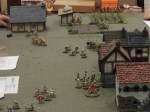
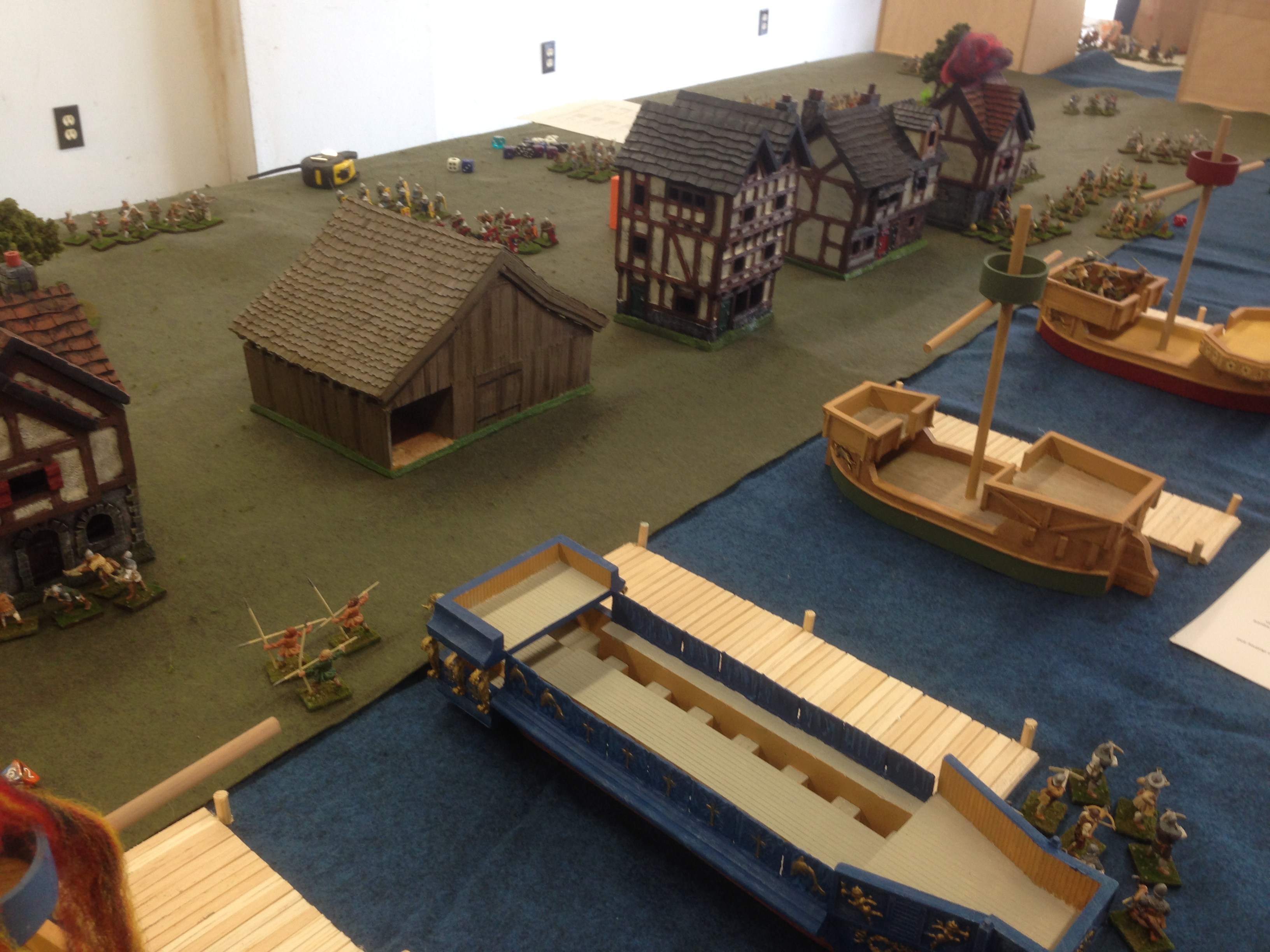
Saturday evening was my big game, Smoked Bolougne.  It was another Lion Rampant game with space for eight players.  It was a mixed group of LR veterans and noobs.  The game featured an attack on Bolougne’s port at either end by a picked English force.  The goal of the English is to destroy key buildings in the town and destroy the French ships at anchor.  The English got off to a roaring start, using their flaming arrows to set fire to their targets.  The waterfront was quite ablaze, but the invaders were soon bogged down by French reinforcements and poor activation rolls. In the end they were able to achieve what the English did historically–destruction of their targets, but their forces were also destroyed.

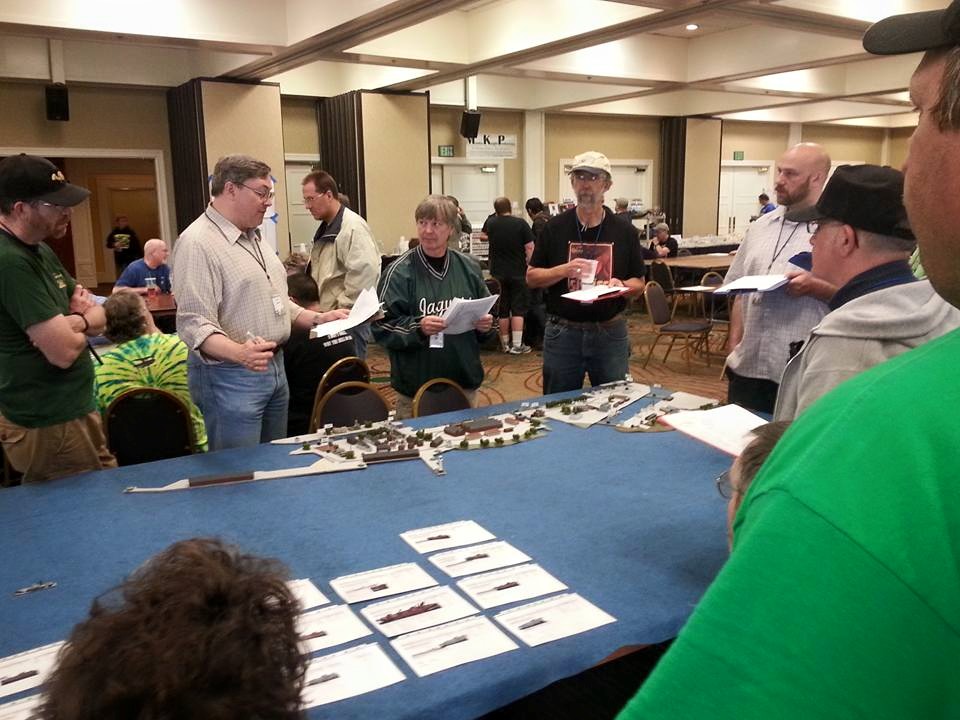
During Sunday’s final period Dave Schueler and I hosted the Raid on St. Nazaire.  I got some credit for helping, but honestly this was Dave at his finest. Based on the raid on the French port city on the Loire River that also contained the Normandie dry dock, this was going to be a tricky show. We’d walked and talked through the way the scenario would be played, but hadn’t had a real playtest. We’d done that on other scenarios, but this was complex in the sense that the six British players had to move their 13 motor launches plus five escorts through German gunfire, land their load of commandos, and destroy important features in the the port area before re-embarking for home. Overall the game went well.  The Brits suffered two losses and several vessels damaged while engaging the port defenses. They did get some commandos ashore, damaging the one of the winding houses and the pump house for the dry dock.  But it was concluded that, like Bolougne, it was a pretty historical result.  Serious damage to the dry dock meant the Tripitz would have to find a new address, but the British attackers were pretty much trapped and would likely be killed or captured.

Picture of St. Nazaire set up courtesy of Rod Fleck. I'm the goof in the green Jaguars wind shirt.

Picture of St. Nazaire set up courtesy of Rod Fleck. I’m the goof in the green Jaguars wind shirt.

The good news is that the powers that be thought enough of our game to consider ti the best of show for the Sunday game period.  It also won the best game for the year’s theme, raids.  It was the perfect finish for the weekend.

Enfilade around the corner: My mad dash to the finish line.

Though I may not have written much recently, that doesn’t mean I haven’t been busy.  I have three games I’m running at Enfilade, and I’m still trying to wrap up the last one in time for my weekend-before-the-convention playtest.

I’ve done a lot this spring/winter (this is so embarassing!) Dave Schueler and I will host a game we’ve wanted to do for many years-the 1942 combined sea/land raid on St. Nazaire. I slowly accumulated all the motor gunboats and assorted naval vessels needed to play the game, but the challenge was always going to be putting together what would pass for a harbor and adapting a game to it.  Dave and I have done a lot of projects together including the Tirpitz game and the Persian Gulf tripwire scenario with lots of modern gunboats, but this was especially challenging.  Dave did most of the work modelling the various pieces representing warehouses and dockyards.  I contributed some, but the work is mostly his.  The scenario will force the British players to cooperate and be aggressive as they try to land their commandos in the face of fire and demolish their targets.  Dave and I will run the Germans using a combination of ideas from David Manley’s excellent Action Stations and the old Raid on St. Nazaire board game by Avalon Hill.

I’m also running two games using the Lion Rampant rules by Daniel Mersey.  As I’ve written before, I really like these rules-you just need to think outside the box. The first scenario, Raid on Agen, I’ve already written about.  I’ve done a couple of playtests, and hopefully I’ve worked out the flaws. It represents a typical chevauchee of the Hundred Years War.  Maybe not typical, but the French are inclined to resist in this scenario.
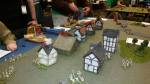
The second game is the preparation sucker.  It is based on the English raid on the port of Bolougne in 1340.  It reminds of the Raid on St. Nazaire in the sense that the raiding force was disembarked in darkness, did their work, but were trapped and captured or killed. The English will start on either end of the lower town.  Their job is to destroy buildings and ships along the waterfront. The resistance in the dock area is light, but enough to be a pain to the attacking English. The challenge to the English will be the French relief force as it masses and thunders down from the upper town.

For both scenarios I’ve tried to think outside the box.  I’ve used or created troop types to assist in the scenario.  Town militia was a type suggested on the game forum hosted on Boardgamegeek.  I’ve created a sailor troop type to defend some of the ships.  I’ve also created an engineer type charged with destroying the ships and town in the Bolougne raid. In addition to troop types I’ve also worked out rules for burning.  In the case of the Bolougne scenarios, I’ve put together rules for tow-wrapped flaming arrows and combustibles used by the engineers.  Don’t know how historical they are, but they should be fun and easy.

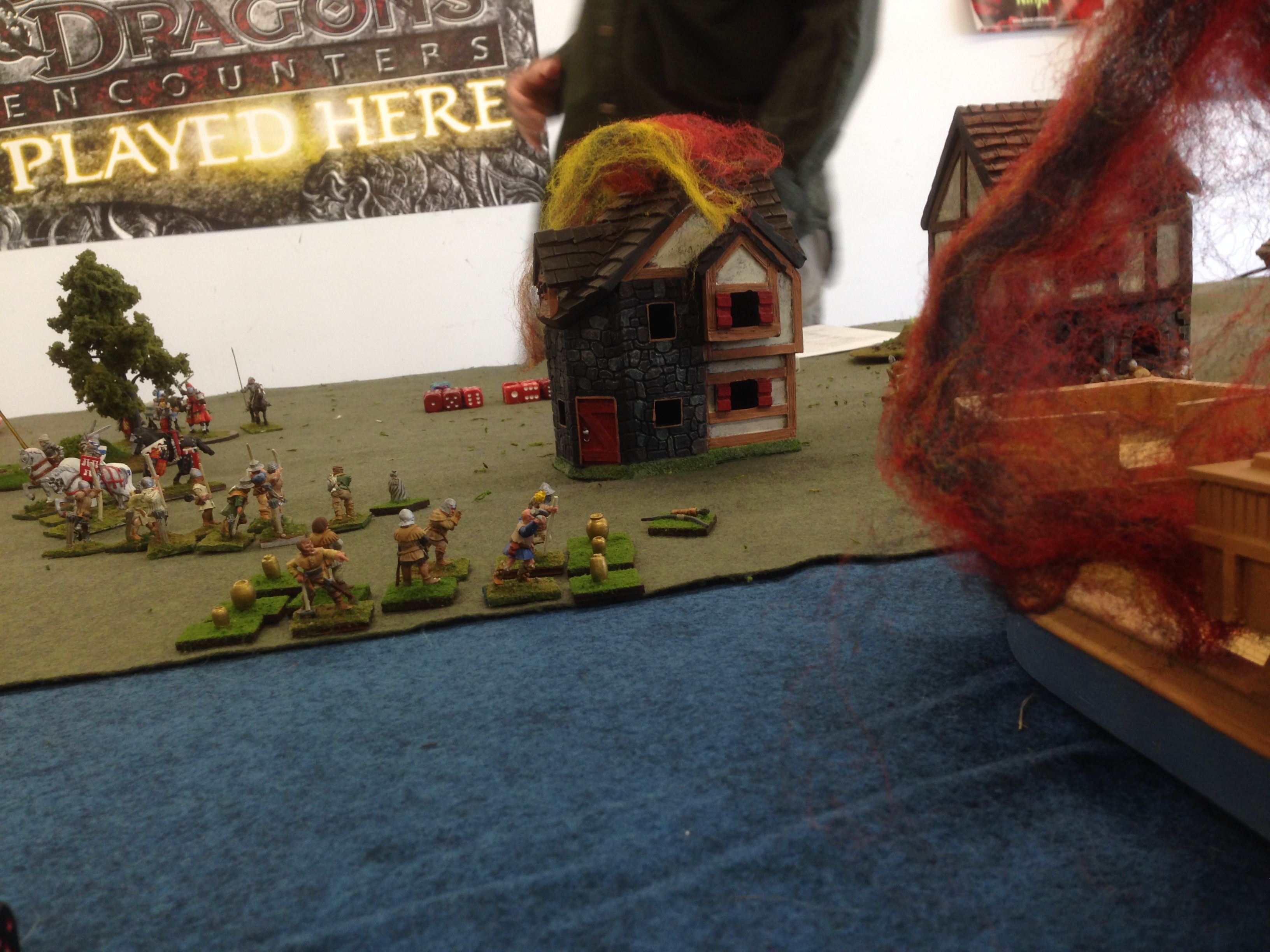
Playtest photo.  The English land in the lower town, setting afire a waterfront building and a ship

Playtest photo. The English land in the lower town, setting afire a waterfront building and a ship

I hope to have pictures from the Saturday playtest on the web by the weekend.

The playtest set-up. The French fleet rests at anchor as English retinues approach from either end of the town. French reinforcements boil out of upper Bolougne and down to the docks

The playtest set-up. The French fleet rests at anchor as English retinues approach from either end of the town. French reinforcements boil out of upper Bolougne and down to the docks

The Pledge: February

Even though I haven’t posted a lot, February was a busu month.  I remain very focused on the St. Nazaire project.  There were purchases, but lots of painting too.  And a certain amount of urgency.  Dave and I have our next St. Nazaire meeting scheduled for March 14th, less than two weeks ago.  My goal is to have all my painting assignments done so I can A) move on to my other Enfilade activities, and B) pick up anything else St. Nazaire-ish I might need to do.

On the plus side, here is what I accomplished

12 Old Glory pavisiers

8 figures worth of railroad tracks  (two sets of Brigade miniatures RR tracks-tedium galore.)

6 figures worth of industrial buildings, including Skytrex lighthouse

4 figures worth of railroad buildings (one set of Brigade miniatures track and buildings)

12 figures worth of Pico German and British WWII figures (35 stands plus three stands of armored cars-sounds like a lot but it’s not.)

4 figures worth of Skytrex coastal defense buildings

Total figures painted: 46 figures painted

On the minus side, here’s what I purchased.

15 figures worth of Pico infantry

4 figures worth of Skytrex lock gates

3 figures worth of Skytrex coastal defense buildings

1 figure worth of Skytrex German torpedo boat

2 figures worth of Bay Area Yards warehouses

1 figure worth of Bay Area Yards CSS Selma

3 figures worth of Bay Area Yards buildings.

Total = 29 figures

+ 17 figures painted for the month.

As you can see, most of the purchases were related to the St. Nazaire project, but a few were just cool items–the Selma and the Wolf class torpedo boat (really a destroyer sized escort) were just kind of cool and calling my name.

Pictures later this week of some of the completed bits for the St. Nazaire stuff.

March is a busy month at school.  But I still hope to wrap up all of my St. Nazaire figures, before moving on to work on 24 HYW crossbowmen and a 28mm cog by Old Glory shipyards.  My fingers are crossed.

From heraldry to railroad ties: my gamer’s life

I’m a very project oriented gamer.  Almost everything I work on has a beginning and an end, based on its intended purpose. When Enfilade is over in May I’m almost always geared toward what I’m going to do for the next Enfilade. I’ve mentioned my Enfilade projects already, and at some time I’m sure I’ll go into depth about them.  But I’ve shifted gears away from my Lion Rampant stuff, which I really enjoy painting so something a little less interesting and exciting, painting 1/600 scale bits and pieces for a scenario based on the Raid on St. Nazaire.

For those of you who don’t know this action, it was a WWII raid on the French port of St. Nazaire which possessed a strategically important drydock built for the enormous French liner Normandie, the only one big enough on the French coast capable of servicing the German battleship Tirpitz.  The British feared the Germans would move the Tirpitz there where it could menace shipping, the British coast and control of the English Channel.  If you want to really set the Brits off, threaten control of the Channel.

On March 28, 1942 a combined force of British commandos were ferried into St. Nazaire by motor gunboats and an explosives-laden ex-American destroyer, the Campbelltown.  Their mission was to destroy the massive caissons of the dry dock as well as operating machinery and industrial targets in the dock area.  The Germans defended the port apparatus with dozens of automatic cannon and about 6,000 men. The raid succeeded in the sense that the Campbelltown detonated and destroyed the caisson while loaded with celebrating German officials, but the raiding force was largely forced into captivity and the motor gunboats and smaller vessels were mostly non-factors.

Dave and I plan to recreate the St. Nazaire raid, including the Campbelltown and supporting MGB’s, emphasizing mostly the role of the commandoes.  The players will run the British while the Germans are more or less randomly run.

Our challenge as game designers is to reproduce all the dock goodies, including buildings, railyards, teeny, tiny figures and the vessels involved.  After our last meeting, it looks like Dave and I are agreed on using rules inspired by the Raid on St. Nazaire board game published by Avalon Hill many years ago.  We’ve worked together on many projects, and I always look forward to our collaborations.  Dave is the brains of the outfit, and often takes on the bigger modeling pieces.  I usually take on more of the smaller bits. For example, when we did our Tirpitz game a couple of years ago, it was Dave who took on the battleship, while I worked the Fleet Air Arm stuff.

This game is a little different.  We’ll be trying to recreate portions of a large port city, including living areas, industrial and warehouse districts, rail lines and buildings, as well as bridges, canals, lock-gates, and, of course, the enormous dry dock caissons and the ephemera that go with them.

I wish I was an awesome scratchbuilder who could make all this stuff myself, but alas I am not.  So, I’ve been acquiring 1/600 scale buildings from a variety of sources.  One source I really like is the old Skytrex range of ships and buildings. They are all in metal, which I like a lot, but they are also spendy.  Another complication is that Skytrex folded last year and have since been acquired by Ros/Heroics.  I’ve made a couple of orders to them and found them easy to work with, but their goodies are priced in pounds and shipping is significant. I’ve included pictures of some of the items I’ve received.

Another important supplier I’m using is PicoArmor.  If it wasn’t for this project, it’s a company I would have overlooked.  Pico does a lot of work with WWII and Modern 1/600 ground and air combat.  But they also carry some wonderful buildings in that scale from Brigade games. I’ve ordered their industrial buildings and railroad bits, as well as their own 2mm (as in eeny-teeny) figures needed to play the game.

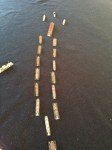
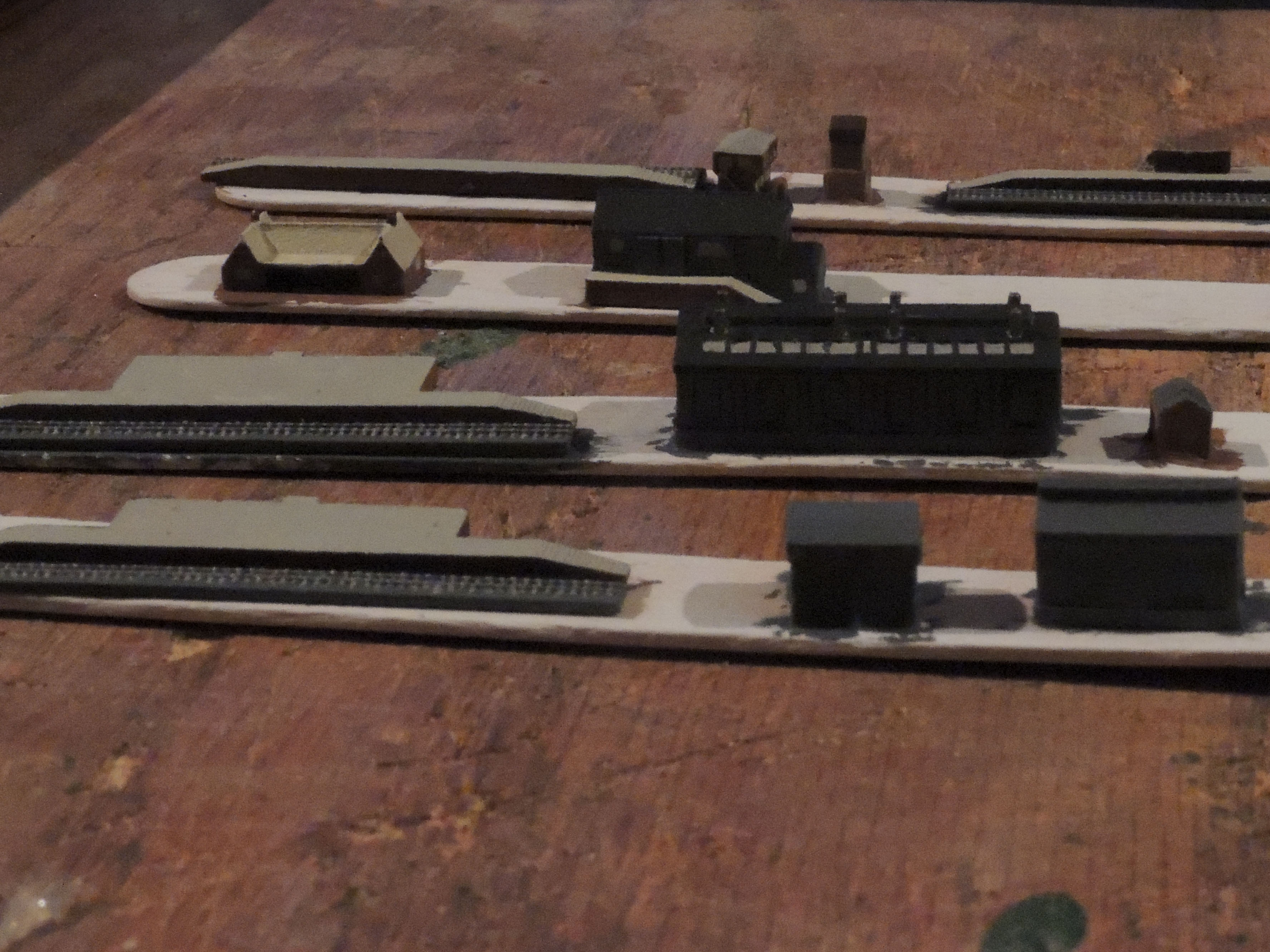
Railway buildings by Brigade Miniatures.  Eeny teeny, but oh so necessary

Railway buildings by Brigade Miniatures. Eeny teeny, but oh so necessary

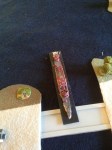
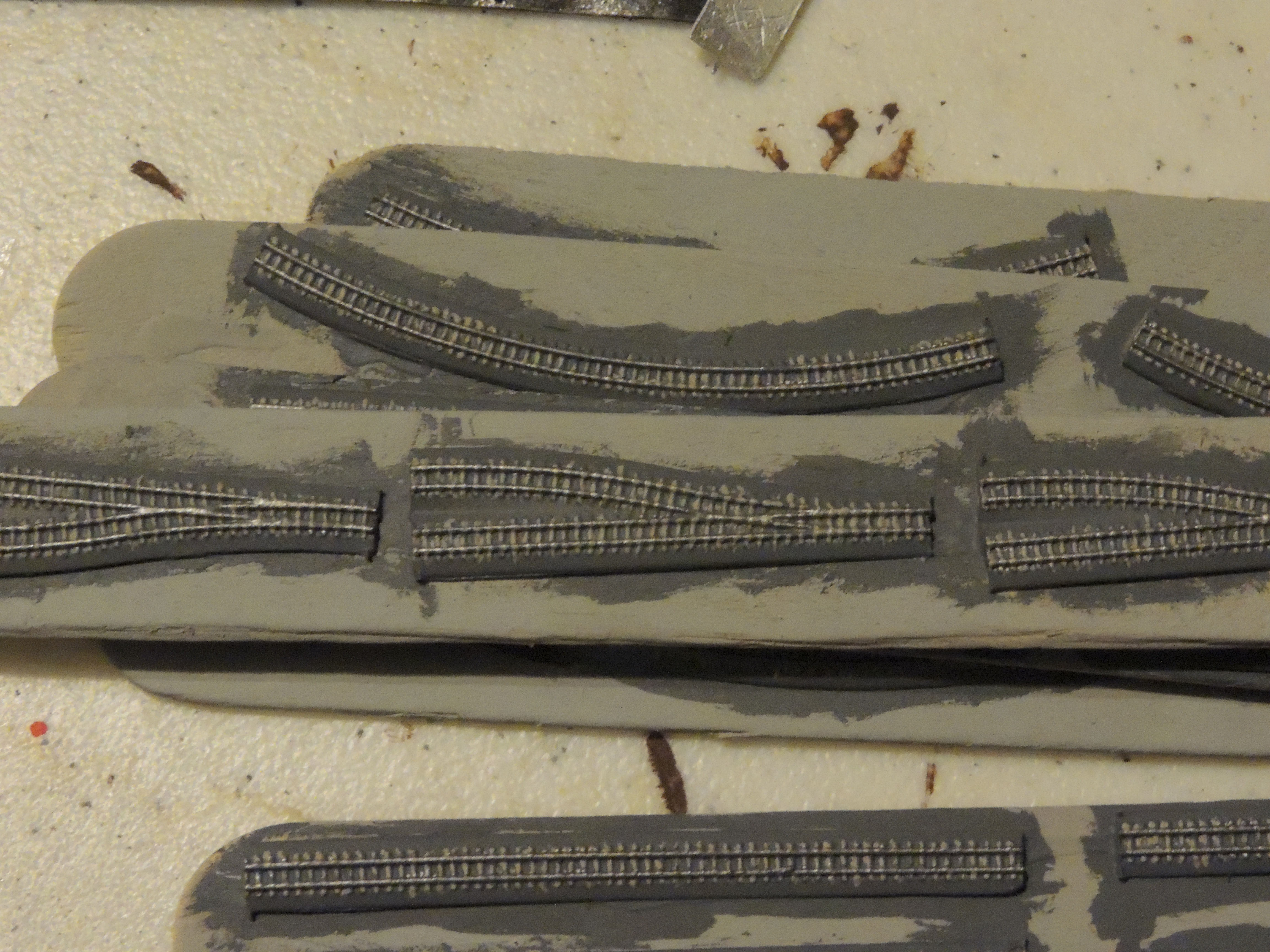
Railroad tracks by Brigade.  Without question the most tedious thing I've ever painted, period the end.

Railroad tracks by Brigade. Without question the most tedious thing I’ve ever painted, period the end.

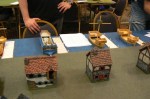
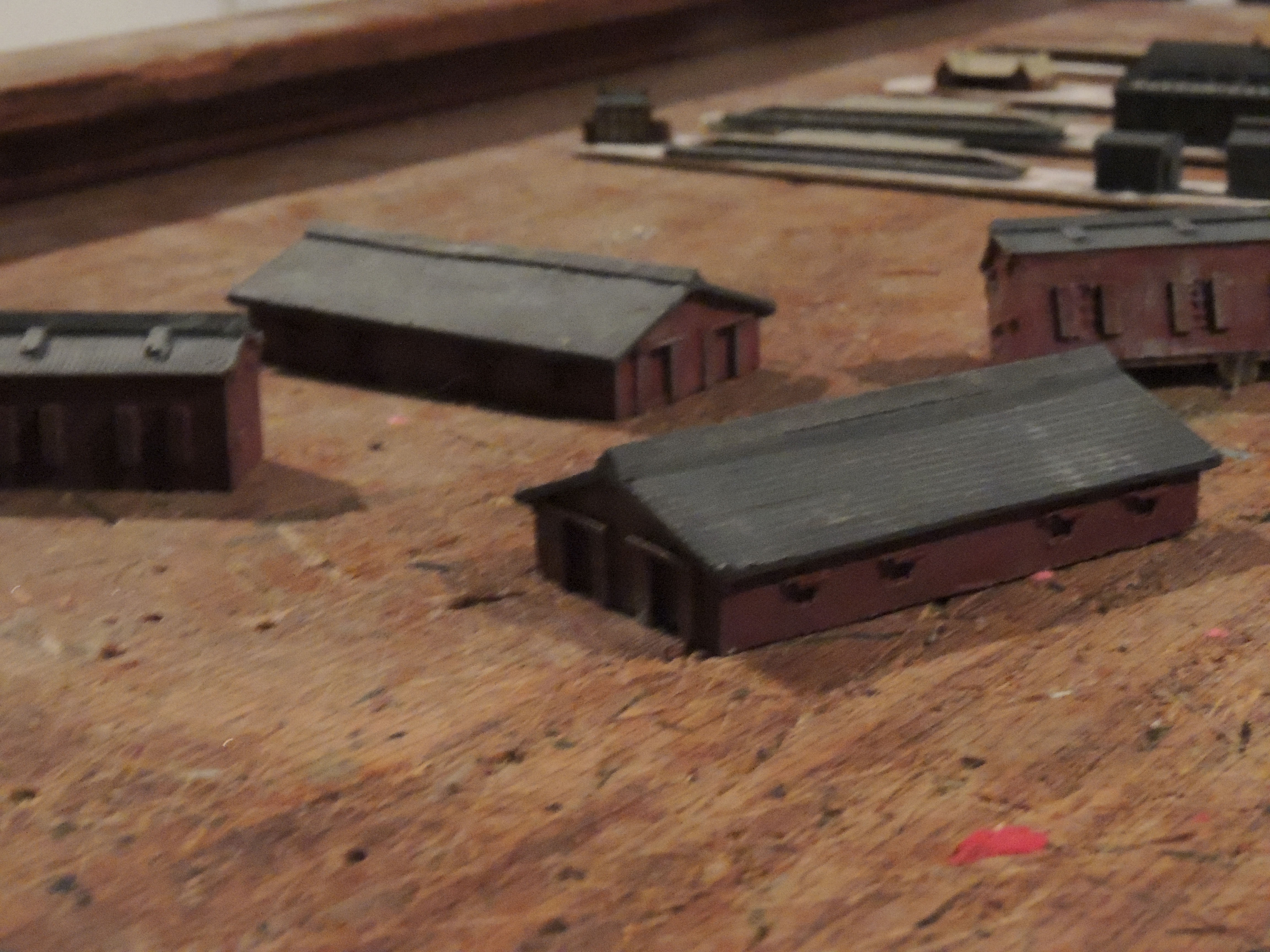
Some of the Pico buildings are really small, so Dave and I are also exploring some of the buildings made by Bay Area Yards for their ACW naval range.  I really like Bay, and I really like their buildings.  They are more substantial than the Pico structures, but there is also the question of size and scale.  They may be out of scale, but sometimes it’s important to have something larger and more detailed for our failing eyesight to look at than be just so on something so small.  I’ve included pictures of the warehouses I’ve completed to give you an idea of what they are like as well as a comparison shot with the Pico buildings. Bay casts in resin, and their buildings are nice, and quite inexpensive.  The resin poses a few problems with bubbles and such, but they’re hard to pick out when the miniature is this small.

Bay one

This is a big change from painting my beloved Hundred Years War miniatures, but I’m also very excited about this project.  I’m hoping it will be as good a game and as pretty a project as the Tirpitz affair.  When I’m ready for a bit of a change I’ll share the building of the PT Dockyard vessels awaiting construction.

Sergeants and Town Militia: My Pavisiers

In the Hundred Years War, at least during most parts of the Hundred Years War, the French depended on feudal levies to be called out when their regions were threatened or under attack.  Some of these were rich guys in armor and horseback (mounted men-at-arms) and their retainers (mounted sergeants.) But horses were expensive and not everyone could feed a horse let alone own one, so French nobility depended on foot troops too.  In Lion Rampant these dependable foot types are called sergeants.  They are generally foot spearmen, though they can be upgraded to a nastier version with pole arms.  Together with crossbowmen, these spearmen tended to be what was turned out to defend towns and cities, or to fill out the French king’s army when it took the field.

These French spearmen were often called pavisiers, due to their enormous shield, called a pavise.  These protected them from missile fire.  They also offered shelter to crossbowmen as they reloaded their cumbersome weapons in a sort of early combined arms arrangement.

I really like pavisiers.  They are a departure from the normal depiction of medieval warriors with their cute heater shields.  They also offer a larger canvas to paint heraldry.  Usually the shields show the coat of arms for the down or duchy from which they were raised and to whom they owed fealty.

Pavisiers 007

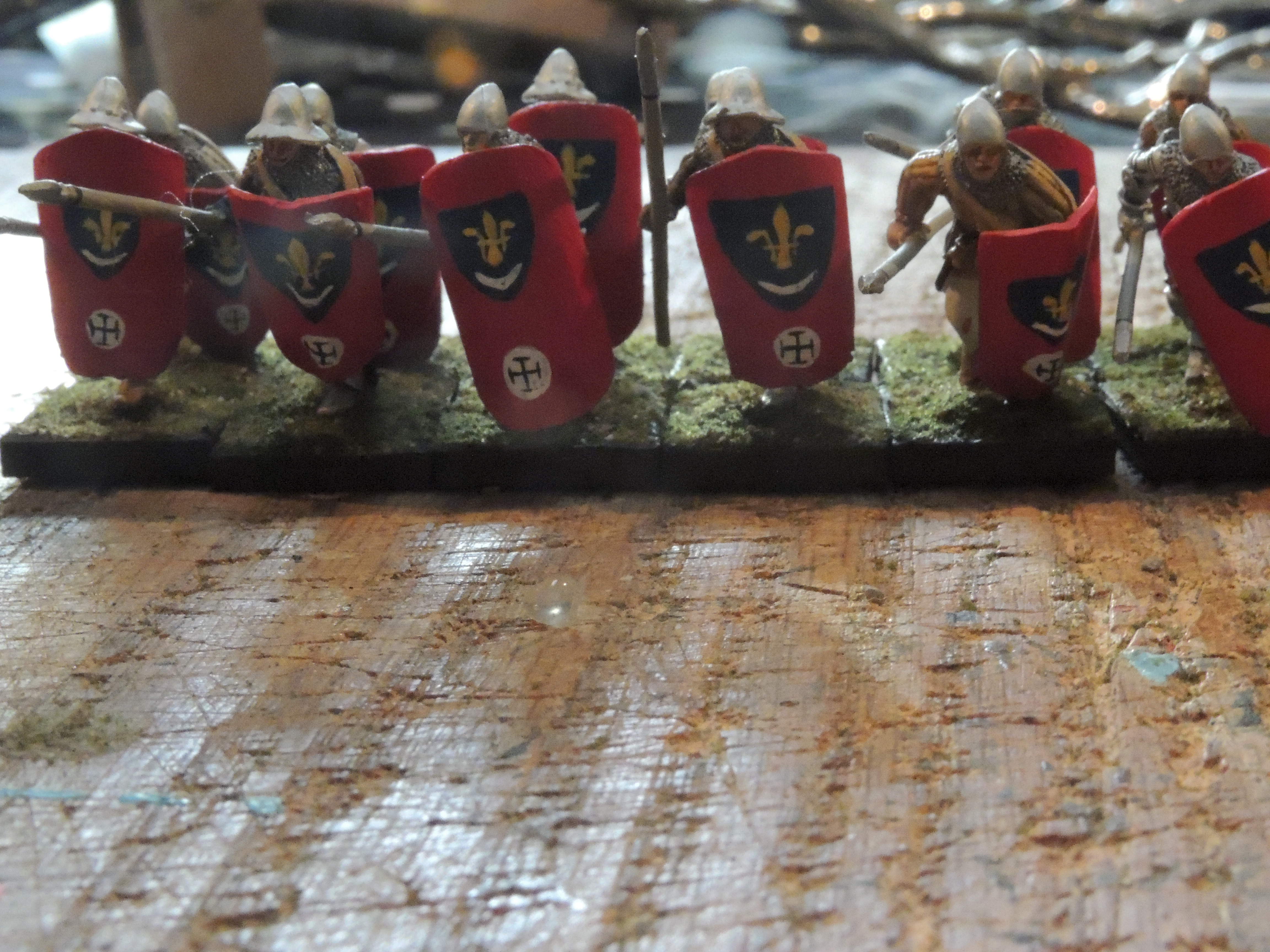
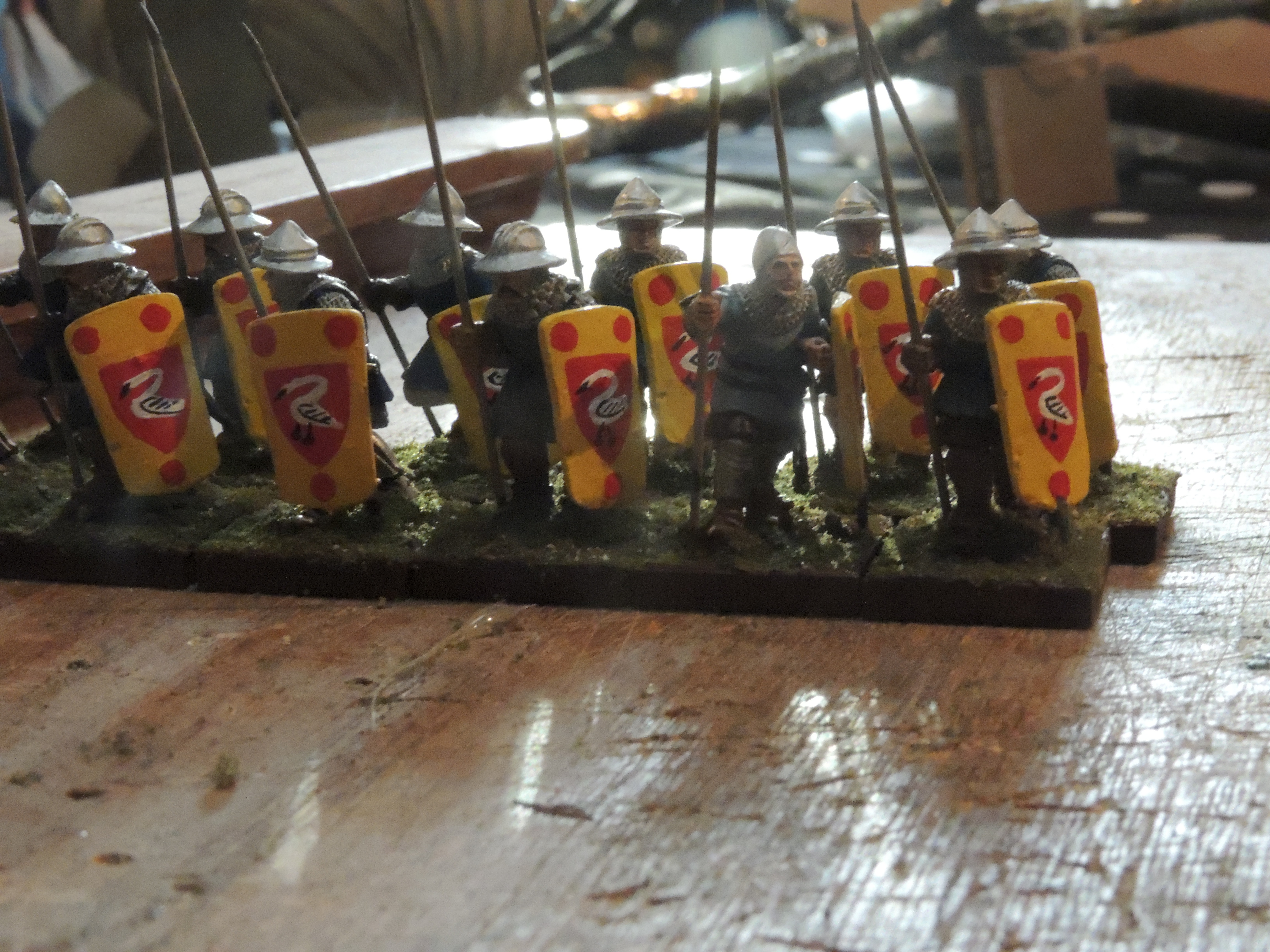
I’ve painted a couple of units the last few weeks.  The first is a unit of Perry pavisiers.  These are very nice figures.  If they have a problem, it is they represent troops from very late in the Hundred Years War, being from the Agincourt to Orleans range (1415-1430.) As a group they are pretty well armored for a batch of militia. Their shields carry the device for the city of Calais, which was an English bastion after 1347, but I liked the heraldic insignia, so don’t let it get out.

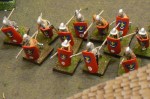
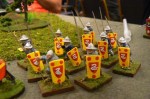
Very serviceable pavisiers offered by Old Glory with Perry pavises.  They are armed with the dangerous Northstar spears. They carry the colors of Boulogne.

Very serviceable pavisiers offered by Old Glory with Perry pavises. They are armed with the dangerous Northstar spears. They carry the colors of Boulogne.

The second group of spearmen are from Old Glory.  I actually used their shields for a different project, so had to replace them with Perry shields, which can be purchased separately. I used a pin vice to drill a hole in the back of the shield and glued the pin on the figure into the hole.  The pavises are perfect and are painted with the device from the channel port of Boulogne, a city that will figure prominently in one my of Enfilade scenarios.

The Lion Rampant rating of sergeant for these figures is, in my mind, problematic.  Sergeants may be necessary, but I think of them as the dismounted version of the mounted troop type.  They are reasonably well armored and trained and highly motivated.  I think of pavisiers as more the draftee type who would much rather be at home with the missus in front of the fire trying to figure out how to pay his hearth tax.  That being the case, consider adding this troop type I saw suggested on BoardGameGeek on the Lion Rampant forum.

Militia, 12 Models per unit, Cost 2 Points
Attack 7+, Attack value 6+
Move 5+, Defence Value 5+
Courage 4+, Maximum Movement 6”
Armour 2, Special Rules Schiltron

I’ve used this unit in a game, though it didn’t make much difference.  Give them something to defend and life is all good.

Kevin’s wrap-up and The PLEDGE

Make no mistake about it, I am struggling to post timely, interesting stuff on this blog.  I think there are a few reasons for that. One is that my life is a little more complicated and other interests are taking more of my time.  What does that mean?

1. No  I haven’t and will not give up miniature wargaming.  I continue to paint almost nightly and still have some new projects I’d like to tackle at some point.  I’ve become a bit of a vinyl record collector. No, not collector.  Let’s never use that word again.  But I do love hunting for records I really like and fit into my pile o’ music.  I do discuss this over here. I am not obsessed, or at least try not to be, but it does take some time and cash.

2.  It’s my wife’s fault.  No, really, sort of. The past couple of years Lorri has become a re-seller.  She has a little space at Third Street Antiques in downtown Puyallup.  What does that mean for me?  One problem is her stuff is everywhere.  One of the prime Lorri staging areas is the dining room table.  That is my prime pitcher-taking space, especially during our notoriously long, dark winters when I take photos of newly completed figures.  No pictures, fewer blog entries, ’cause let’s face it, as brilliant a word-smith as I am, Smyth writing is only so interesting. I should tell my wife what?  She actually makes real money at this.  Nearly $500 in each of the last two months.  Her hobby is money-in, mine is like money . . , never mind, but you get it.  Besides, sometimes the money-in trickles down to we deserving but impoverished types.

3.  After years away from it, I’ve taken a greater interest playing board games the last few years.  Not only that, but I’ve bought a few.  I have a number of friends I really enjoy spending time with who still like games, but just don’t do miniatures anymore.  Maybe they weren’t that big on them in the first place, or they’ve moved on from miniatures, but they really do like board games.  Mostly the Euro-games, which, despite the lack of intensity of old Avalon Hill Games or GDW’s Europa series, are still challenging and definitely fun.  My son Casey loves to play these games too, so I play them when I can make time.  But there’s only so much time in the gaming calendar, so this definitely cuts into that a bit.

But I am painting almost nightly.  I used to paint about 350 days a year.  I’m a bit less now, maybe as few as 300 nights a year.  It’s really difficult when we are on late night deadlines on the school paper.  And I willingly give up a few more nights than I used to.

I don’t go to the Miniatures Page as often as I used to.  I had a bit of a falling out with Bill Armintrout a couple of years back and actually managed to stay away for about nine months, but I am back and do occasionally share stuff. It’s a good site, but it was a matter of principal and I am nothing if not a stubborn Irishman. One of my very favorite monthly features is by poster Monkey Hanger who shares his progress toward making his Pledge.  The plan is to paint at least as much as is purchased.  I will do that here each month too.  But I will take it one more step and that is to paint at least one miniature for every day in the year, or 365 miniatures for the year.

For those who know me, I dabble about 75% in 28mm and the other 25% in something else–planes, ships, the odd 15mm figure.  For my purposes a figure is a figure is a figure.  A plane or a ship is a figure, a gigantic 28mm cog is a figure.

Here are the numbers for January

Painted

5-40mm Sash and Saber Indians

6-28mm Perry Men at Arms

12-28mm Perry Pavisiers

Total 23 figures      342 figures from overall goal

Purchases

The purchases for January were pretty light.  Mostly I bought stuff for the 1/600 St. Nazaire project Dave and I are working on. They are as follows

1 pack Pico Armor German Infantry

1 pack Pico Armor German armored cars

2 packs of Brigade models rallroad tracks

Because everything is so tiny and inexpensive, let’s say I spent about $28, a buck a figure so 28 figures.

28-23= -5 figures for January.  Not quite the way to start the year, but I’ll do better.

Good-bye 2014, hello 2015

I can’t believe it’s been nearly two months since my last post. But it’s been a pretty busy two months. After a pretty eventful November when I squeezed in four or more Lion Rampant games, the only miniature game I’ve played was Dave Schueler’s excellent DANG medieval naval game. I’ve squeezed in some board games, but pretty quiet on the miniatures front with the holidays and a big journalism fundraiser at school.

On the painting front, I didn’t produce as much as I would like since my last post, but I have worked steadily. I wrapped up all my 40mm figures for my role-playing project. I’ve also finished a few units for Lion Rampant.

Let’s just move on to Lion Rampant since it seems to be one game I’m pretty excited about. I have plenty of figures to play the game, but I did find myself short of a few figure types. I purchased some Perry pavisiers I’m in the middle of painting right now. I also bought some additional Perry pavises to outfit some Old Glory pavisiers whose shields I swiped for another project a few years ago. Those will give me a couple more units of foot sergeants, a troop type that is pretty ubiquitous. In addition I picked up enough Crusader Miniature crossbowmen for two units. These will balance out my HYW collection and should allow me to run most of the games I want.

These should allow me to host some pretty big games. I’ve already planned out a couple of sizable Lion Rampant games for Enfilade. The first is the Sack of Agen game I’ve already played once, and will run again at Drumbeat next weekend. It’s a 7-player game that gives everyone plenty to do. The second game is historically inspired and based on the 1340 raid on the Bolougne docks that deprived the French fleet of valuable ships and crews for the Battle of Sluys. The battle is the result of an English landing, mostly in the mist. The English are able to overwhelm the resistance in the dock area, and destroy the prime targets on the waterfront, but are mostly cut to pieces by reinforcements coming from the upper city. I have four 28mm medieval ships I’ll be able to use in the game. It will also require some additions to the rules, but I’ve already begun thinking through those.

I don’t intend to devote all of 2015 to painting more singly mounted HYW figures, although I’m sure I could. Remember those 28mm Irish Civil War figures I expressed an interest in? I really mean to work on those and try them out. Probably a summer project. I’m also interested in acquiring enough figures to adapt Lion Rampant to Aztecs vs. Spanish. That will take some time and money. I ordered a few of the excellent Eureka figures for this period and just love them. I’ve also typed up some ideas for troop types.

Last year I promised myself more games and gaming. Not quite sure I did that, but I feel Iike I made more of an effort. There was a gap during the summer-when I would normally play a lot-when I was out with my illness, but I usually played a time or two per month. I also was possessed by board gaming sickness, which has taken time as well. I hope to do even better in 2015