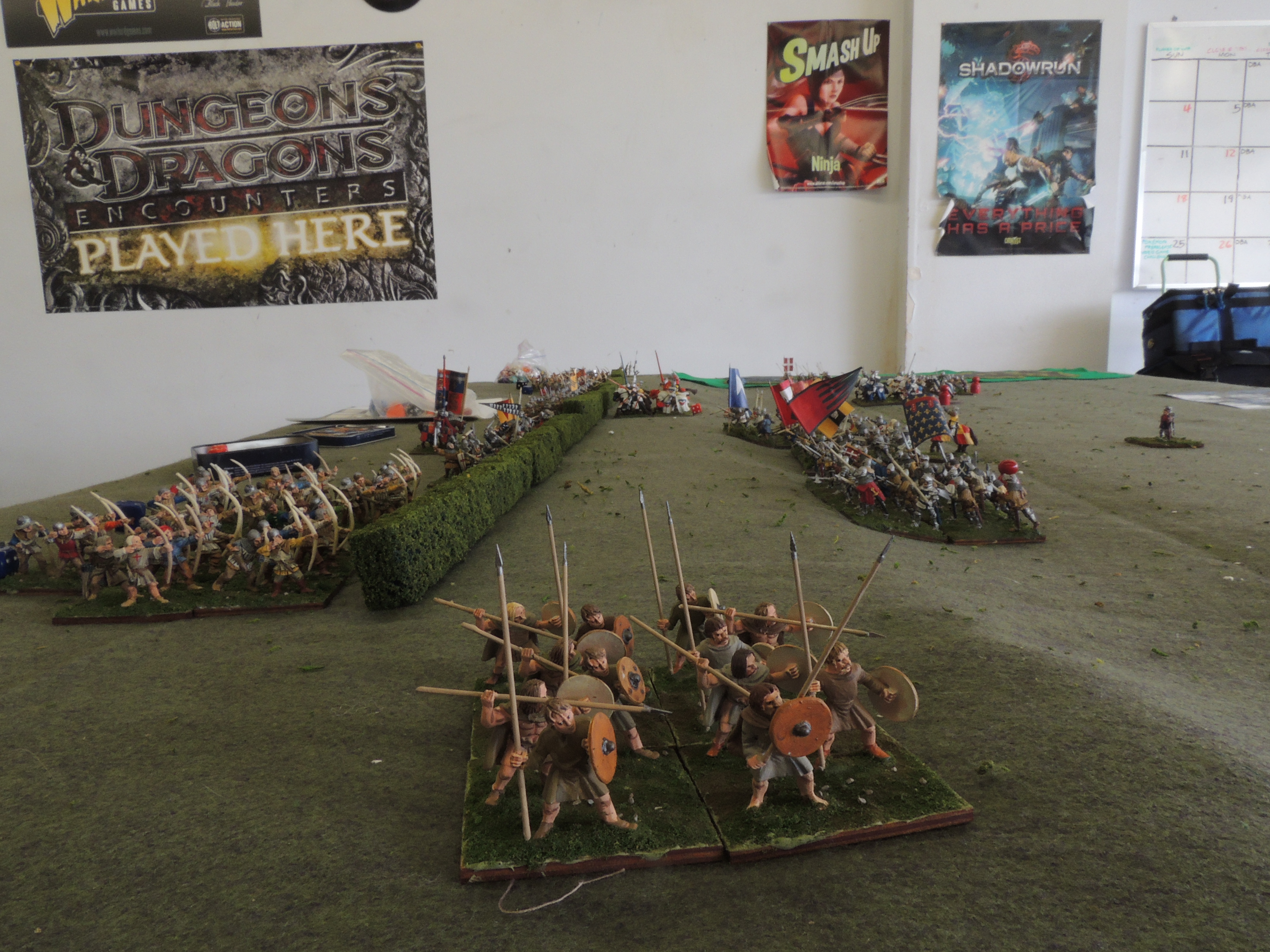
I had the good fortune to have spent my working life doing something I really enjoyed. Before I retired in 2019 I was a school teacher. 36 years in the classroom. But it was so much more. I finished as a high school history and English teacher, which was my dream when I graduated from Carlmont High in 1973. The path there wasn’t easy. The Baby Boomers were aging out of schools and the vast demographic bubble that was inflated by a massive population of school age kiddoes was collapsing and there simply wasn’t a need for fresh-faced know-it-alls to share their truth with the young ‘ens. I was only able to become a teacher through a back door and for my first ten years in the classroom wasn’t really doing what I wanted to do.
But I did eventually make it into a traditional classroom and taught U.S. History, Washington History, and English to 5th and 6th graders, middle school students and high school sophomores and I loved it. I was able to do some super cool stuff with outdoor ed. I took students camping and we regaled in the wonders of the Lewis and Clark bicentennial here in the Northwest. I earned a Gates Foundation tech grant in 2000, and was able to bring computers into my classroom where students could do research without being limited to the library. I became a journalism adviser and took part in the wonderful community supporting journalism advisers here in Washington State and nationally. I had a wonderful career, and would never choose another. Unless, of course, I could just read, paint figures, play games, and have lunch with friends, which is sort of my current vocation.
Or if I could just be Ken Burns.
I love books. I don’t have a massive library, but I do fill my bookshelves. I read each day, not as much as I should, some time every day. I love interesting documentaries. But Ken Burns’ work I simply worship. I love his style-the inclusion of historians, the voices of David McCulloch and Peter Coyote, the variety of perspectives, the illustrations. Every Burns documentary makes me look beyond what I already know. After Baseball, I sought out Buck ‘O Neill, after Lewis and Clark I built a library many colleges would envy, after Vietnam, I acquired and read books by Vietnamese writers like Bao Ninh. A great documentary film maker should inspire us to learn more, read more widely, or at the very least seek out more documentaries and Ken Burns does that for me. He isn’t the final word, and he always inspires me to learn more.
The most recent Burns opus, The American Revolution, was another inspiration. I think I’ve watched every episode twice. It wasn’t that I didn’t already know stuff. I’ve read both the Rick Atkinson volumes he’s published on the conflict. Atkinson was the chief expert pictured in the doco. I thought broadening the focus of the TAR to include greater detail on the lives and views of women, Native Americans and enslaved people was perfectly valid and interesting. I’ve added Colin Galloway’s books to my Amazon want list. It has inspired me to read more deeply about George Washington, and I’m in the middle of James Flexner’s George Washington: the Indispensable Man, a book I’ve owned and not finished since, well, forever.
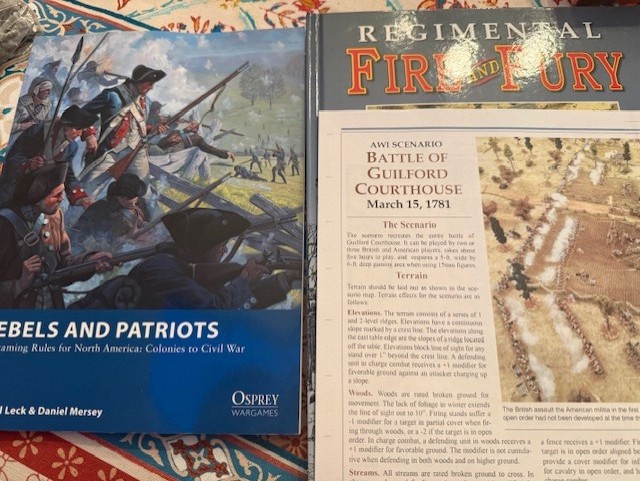
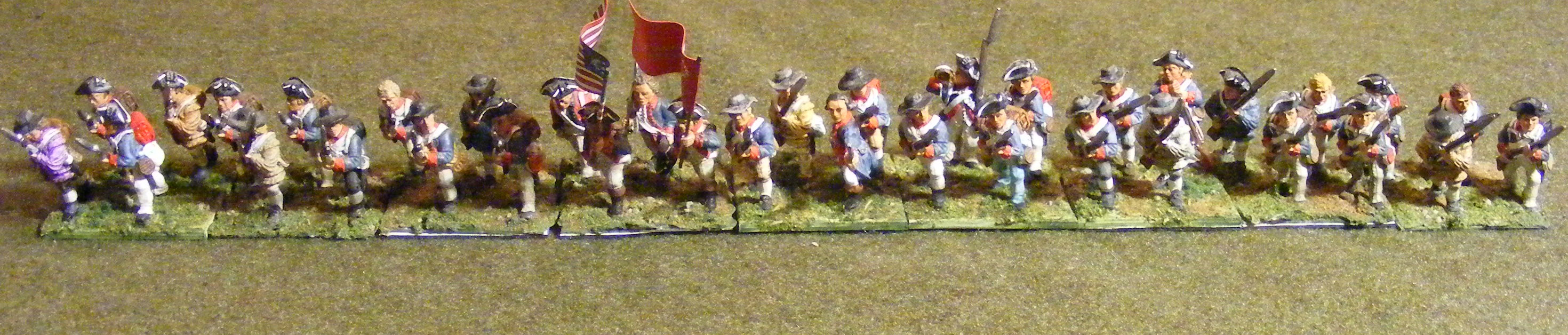
More importantly, from a gaming standpoint, Burns and TAR have fired greater interest in returning to my two (!!!!!) American Revolution projects. I have over 1300 painted 28mm American Revolution figures. Yes, I know, it’s absurd. What’s even more absurd is that I have plenty of unpainted figures. Compounding that problem is that I took on all of my friend David’s unpainted figures when he passed away last spring. They do live in the house, taking up a huge bunch of storage area. I swear, while I’m sitting at my desk painting and watching something terrible on television, I hear them whispering about their place in the painting queue. I’ve actually put some on the painting calendar, with Hessian units for Rebels and Patriots up next.
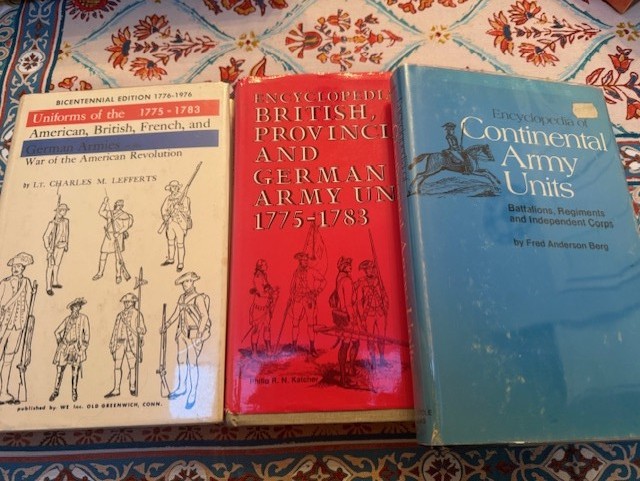
Do I have a plan? Well yes. The plan is to paint the damn things. Oh you mean, what will I do with them? One of my goals is to have the figures to do each of Nathaniel Greene’s battles in the south, 1780-81. There are four of these actions-Guilford Courthouse, the siege of Ninety-Six, the Battle of Hobkirk’s Hill, and Eutaw Springs. All of these battles were losses for the patriots, sort of, but each were costly victories British that caused them to surrender ground in South Carolina. I’ve already gamed Hobkirk’s Hill once. Perhaps some future Enfilade, I’ll run them all and see how it turns out.
The Nathaniel Greene battles all involve a fair number of troops and units. Those games will be played with Regimental Fire and Fury. It’s an older game, but I love the mechanics. It was written for the American Civil War and chiefly for 15mm. However there is a super Fire and Fury website with rules to support variants including the American Revolution and 28mm scale. Greene’s battles are larger and often include a lot of militia The good news is that for the Americans, a lot of the units show up at all the battles, so they can be reused. Guilford Courthouse was the first of those battles and the British under Lord Cornwallis marched off to recover in Wilmington, N.C. and then made their way north to Virginia. Greene’s enemies changed with each of the succeeding battles. There is still much painting to do, but I seem to have the figures.
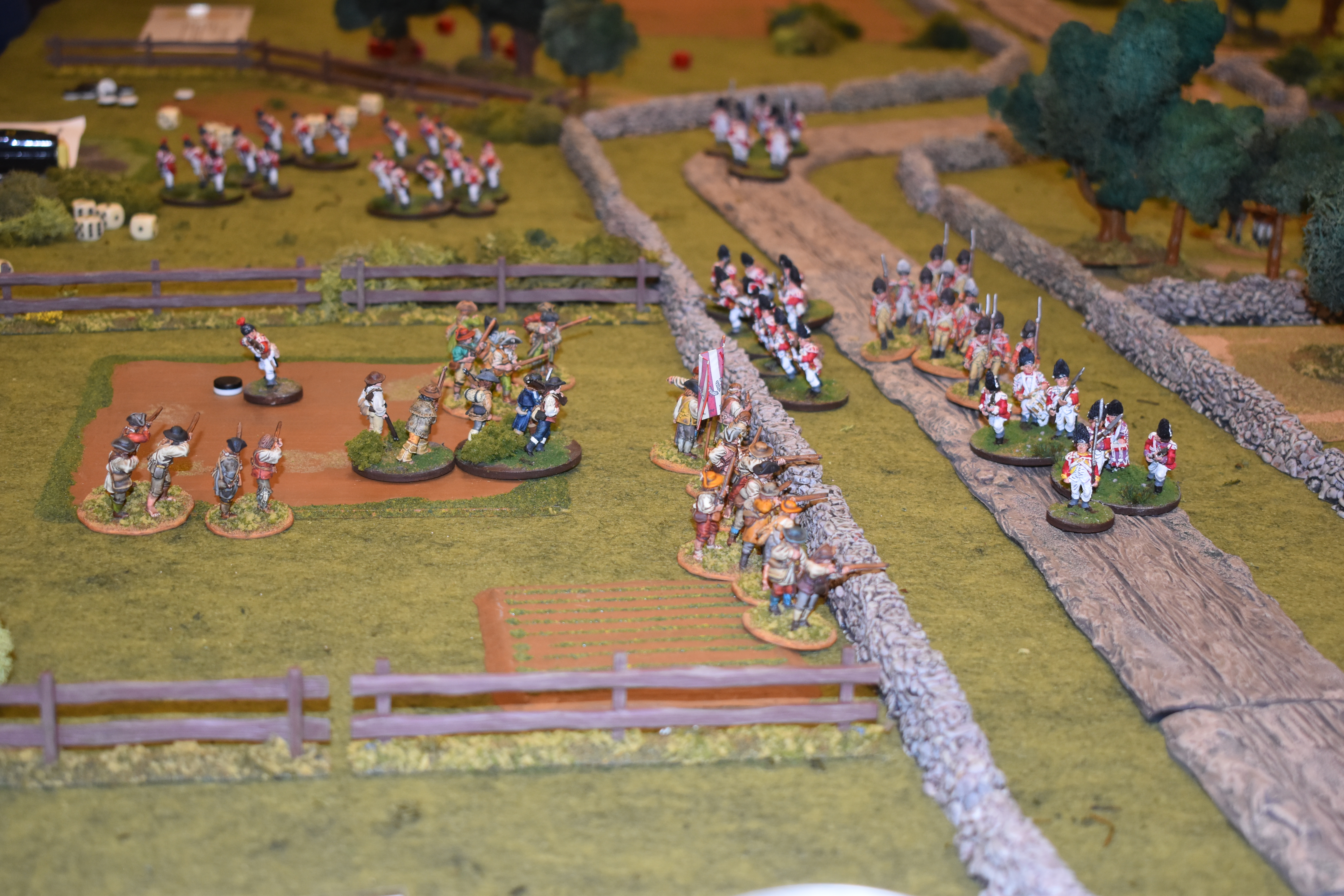
One of the great things about gaming the American Revolution is the plethora of smaller engagements. These actions can be gamed using the Daniel Mersey’s Rebels and Patriots. I love these rules. They are looser and easy to learn. The New Jersey winter campaign of 1777 is replete with lots of engagements between New Jersey militiamen and British and Hessian forces attempting to forage, ie steal, food, fodder and supplies from New Jersey landholders. South Carolina is another theater in which there was intense fighting between Patriot and Loyalist militias that were very bloody and very important to the course of the war. I have tried to acquire a fair number of Perry militia figures so I can effectively recreate actions like Fishing Creek or Blackstocks Tavern.
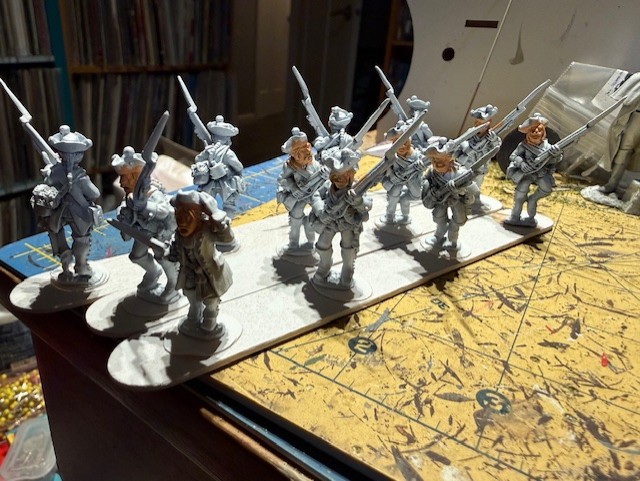
I’ve generally tried to avoid the major actions of the war–Brandywine, Germantown, Monmouth. Part of it is the size, part is just personal interest. I am fascinated by the Southern campaign of 1778-81, and its political and military difference from the northern campaigns. It is far more of a civil war than the war in the north, they exist in both places. The northern war, however is fought more with ideas, prisons and seizure of property, while the southern war is fought with bullets and battles. Burns did a great job of emphasizing this when he pointed out that the only British soldier at the Battle of Kings Mountain was the Loyalist commander Patrick Ferguson, but all his soldiers were Loyalist Americans. There are also fascinating personalities in the south from Daniel Greene and Lord Charles Cornwallis to Banastre Tarleton, Daniel Morgan and Thomas Sumter (and those are just a few.)
In any case, I am hoping 2026 is a year when I can make a lot of progress on this project, and Ken Burns is definitely helping my level of motivation. Now if Burns could only do a documentary on the Hundred Years War, perhaps I could make more progress on that project.