Reviving the Oldies: Quetzacoatl Rampant Leaves the Closet

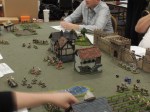
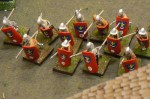
There’s always gotta be some mouthy guy up front giving orders.

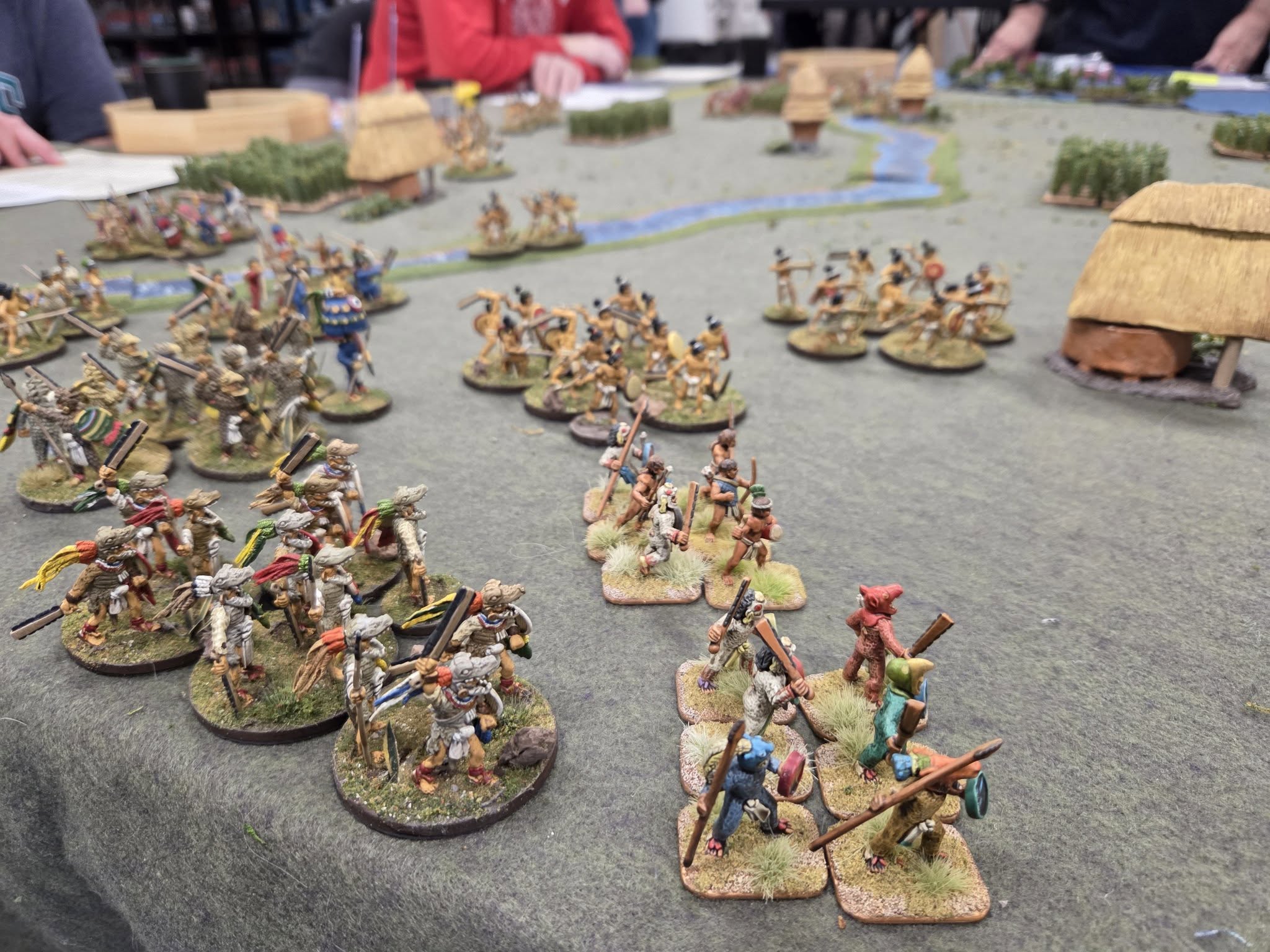
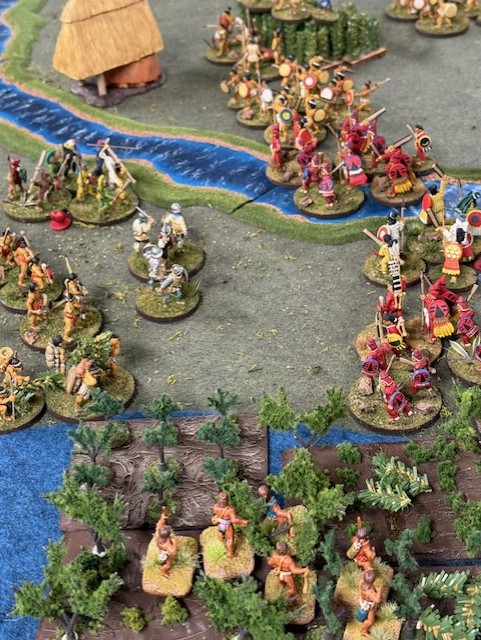
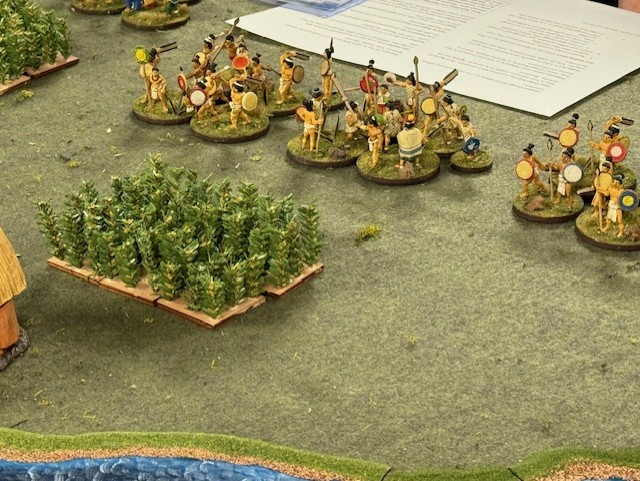
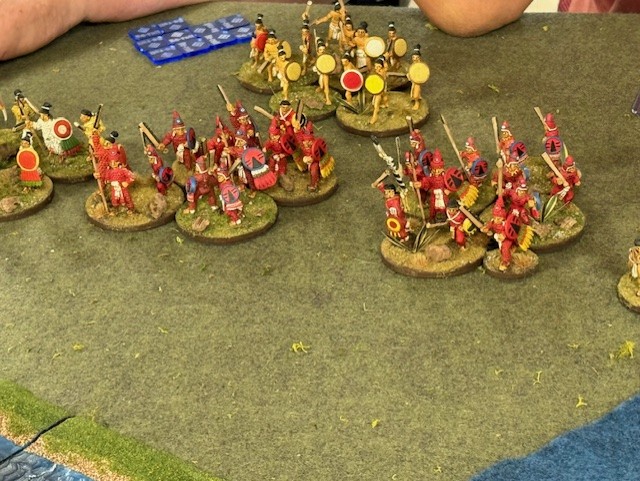
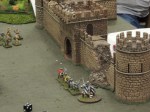
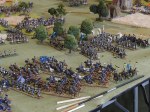
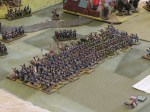
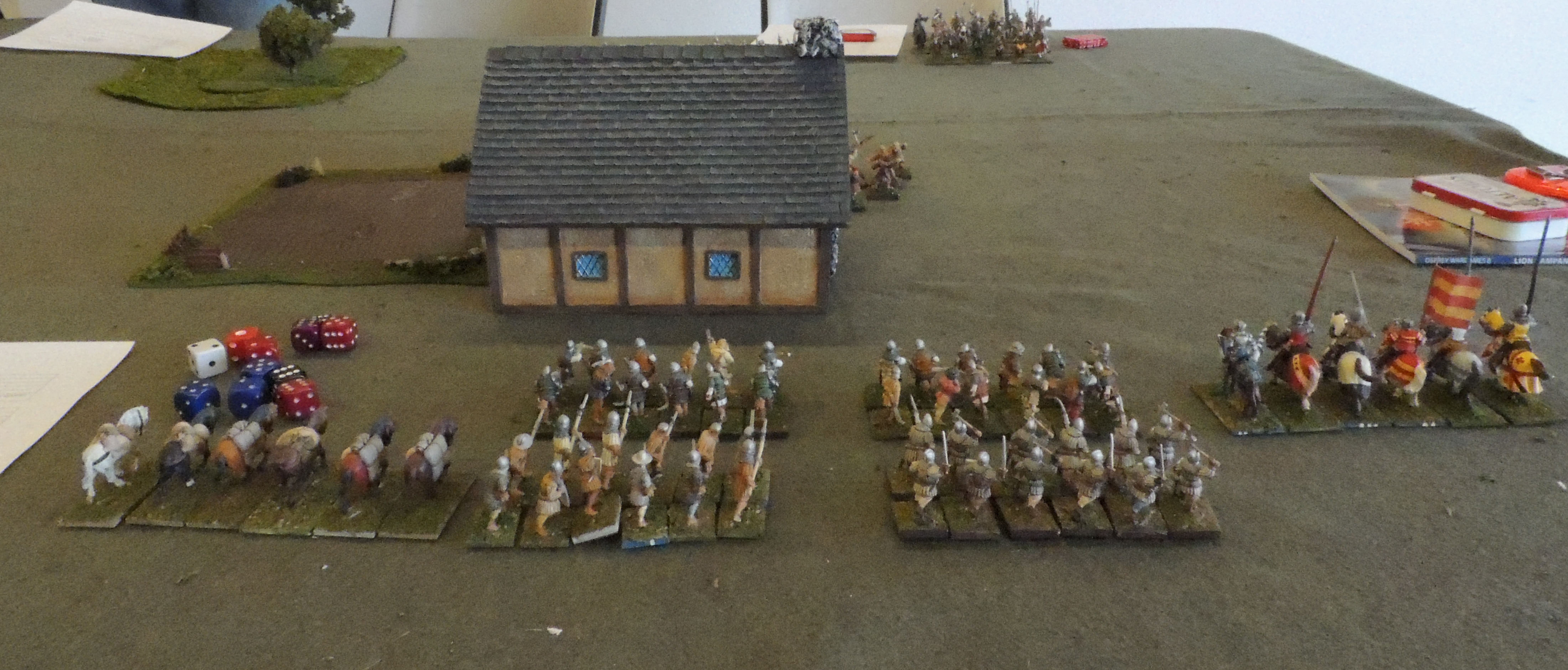
In 2015 or 2016, or maybe both years, David Sullivan and I had played a few games of the Lion Rampant and decided it would be cool to try to adapt it over to playing the game system with Aztecs and Conquistadors. Of course, the rules didn’t quite cover the period, but we didn’t let that stop us. David immediately began crafting some changes that all Daniel Mersey rules seem to invite. He called them Quetzacoatl Rampant. We both bought piles of figures. Most of them came from Eureka Miniatures and their fine range. Others were from The Assault Group and Outpost Miniatures.

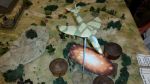
We ran a couple of different scenarios. David and I both acquired Aztec temples from Stonehouse Miniatures, but David was much more “all in” with his. We ran a big temple game at Enfilade. I focused my efforts on a foraging scenario with the Spanish aided by Tlaxcalan allies trying to gather supplies in the face of hostile Aztecs. That was a long time ago.

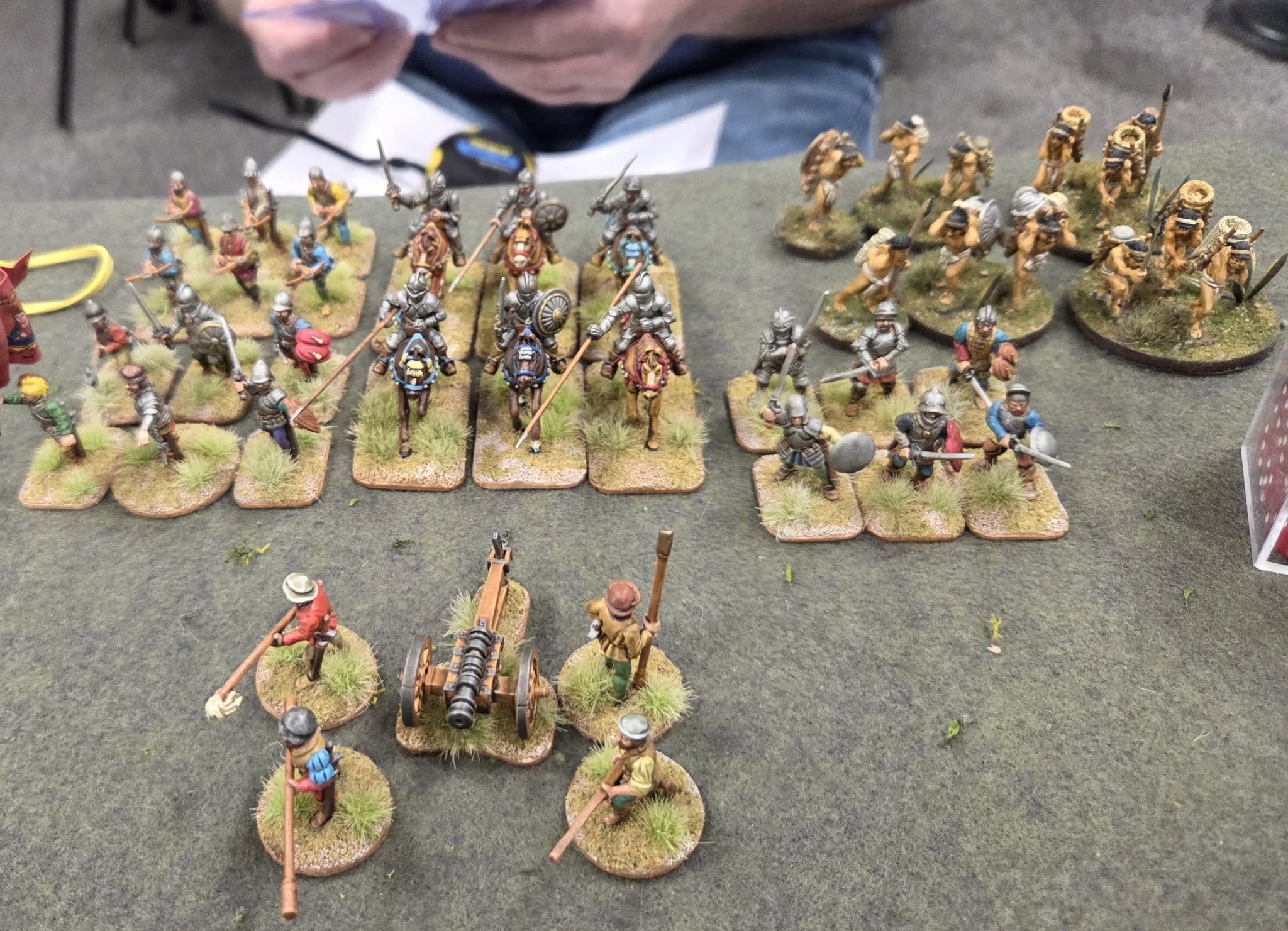
When David passed away in March, I tried to glom on to as many of our shared projects as possible. One of those was David’s Conquistadors and Aztecs. His painted figures were mostly focused on the Spanish, which more or less repeated mine-a cavalry unit, a bunch of swordsmen, a cannon and some missile troops. But his are a bit nicer (mine are okay,) and these were also his first venture into the Dip painting technique he would get to be so good at at.

I spent a lot of 2024 remounting my 400 or so painted figures for this project to my preferred 3-2-1 mounting model. I haven’t remounted David’s figures, which are mounted singly and honestly, I don’t think I will. However, by acquiring them, I did plan to work in a game or two. July was the month for me to act.

There are some important rule changes to note for QR. Actually, these are rules that could be applied to any Lion Rampant derivation. There is that entire activation thing. We’ve played the game straight out of the box, that any activation failure means you’re done. That seems harsh. We’ve played so that everyone gets a chance to activate, which seems excessive. We’ve played so that the leader can re-roll one failed activation or courage test per turn. David and I decided that instead we could give each side ten Appeal to God tokens. Each of these could be spent to re-roll a failed Activation or Courage test. However they also gave their foes an additional victory point.

Another change we made was in the die rolling rule for Lion Rampant. Full strength units get 12 dice and then at 50% casualties they fell off the cliff to six dice. We felt this was too arbitrary. Our game group in Tacoma decided to allot dice by figures in the unit. A standard 12 figure unit generated one die per figure, so twelve. Six figure units would generate two per figure or twelve. But as figures were removed by casualties, they would lose one die per figure or two dice per figure respective.y. A big deal for this project because all Spanish units are only six figures

Last, but not least, there are the historical flavor adds, and that is in the pile of little modifiers we threw in to reflect the period. Gunpowder weapons negatively affected Aztec armor and Courage tests. However, our favorite was the “Your Beating Heart” rule which allowed the Aztecs to capture casualties rather than remove them from play. This required a Courage test, with all required modifiers. Success would boost the captors’ Courage and give a negative courage modifier to the enemy. The hearts could give the Aztecs victory points as well.

July provided a couple of opportunities for me to host games using my Aztec pile of wonder. I focused on running the foraging scenario twice, once for the monthly game day at Wizard’s Keep and the other at Silver King for my usual game buddies.

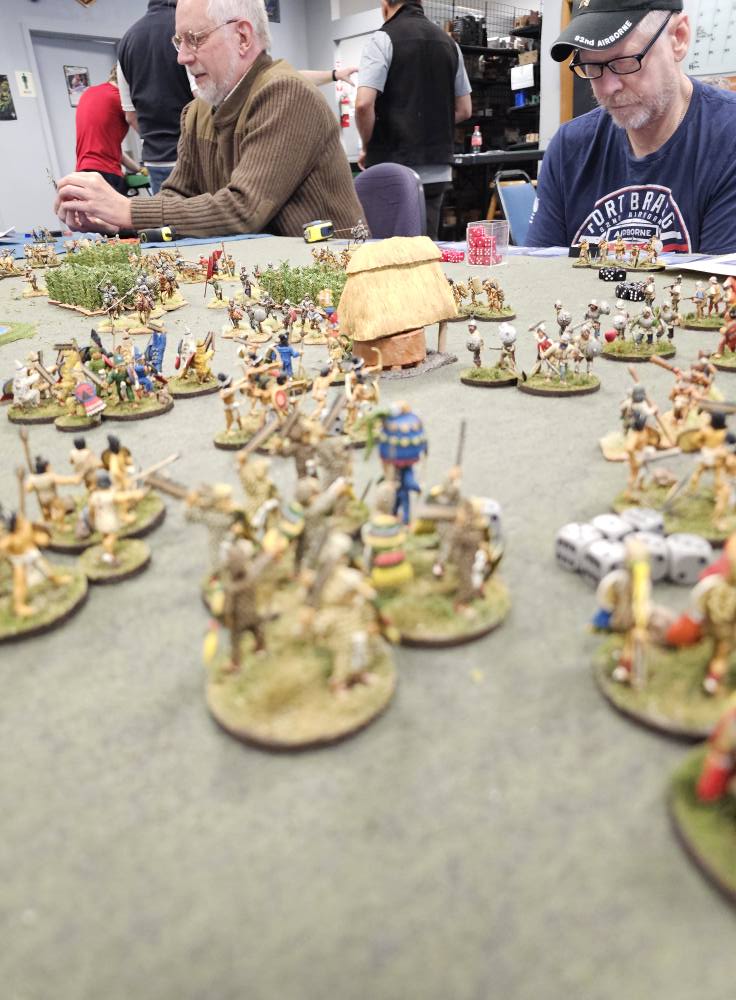
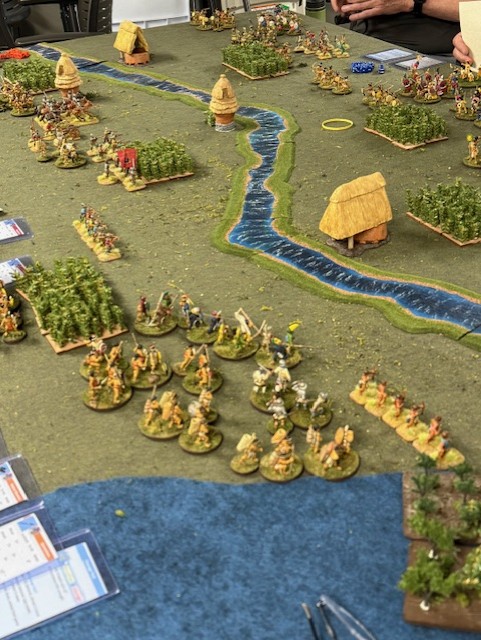
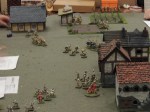
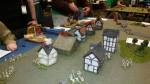
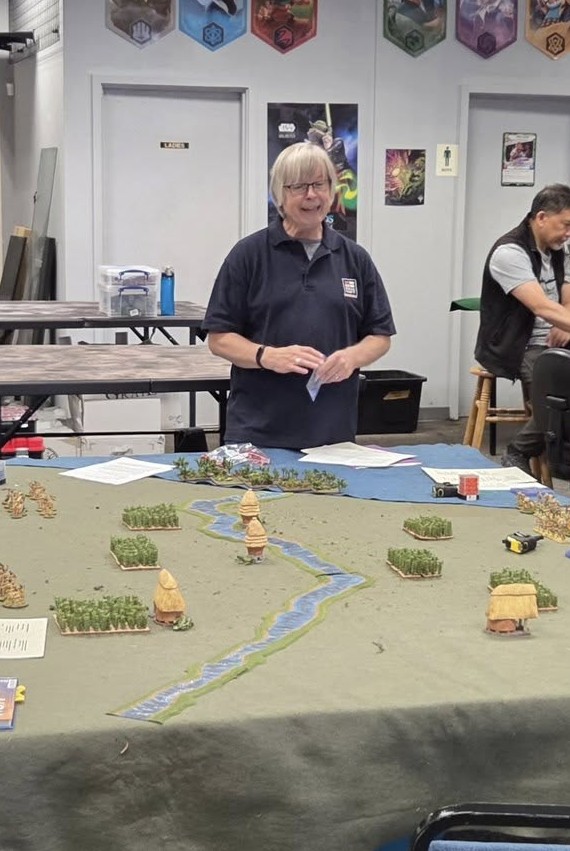
The Wizard’s King day came first. Lots of guys I knew well who would be reasonably kind. I had a 6′ by almost 8′ table so lots of width and depth. The Spanish were constrained by the bay of chimnampas or floating gardens, which was also a source of victory points. The table was bisected lengthwise by a stream. Most of the food storage to be captured by the Spanish was located there. The Spanish had three retinues. They were pretty big. The two flank retinues were mostly Tlaxcalan allies with two Spanish units-a swordsman and a missile unit. The middle retinue was all Spanish and included a mounted unit, a sword unit, two missile units and a cannon. They set up 12″ on to the table.
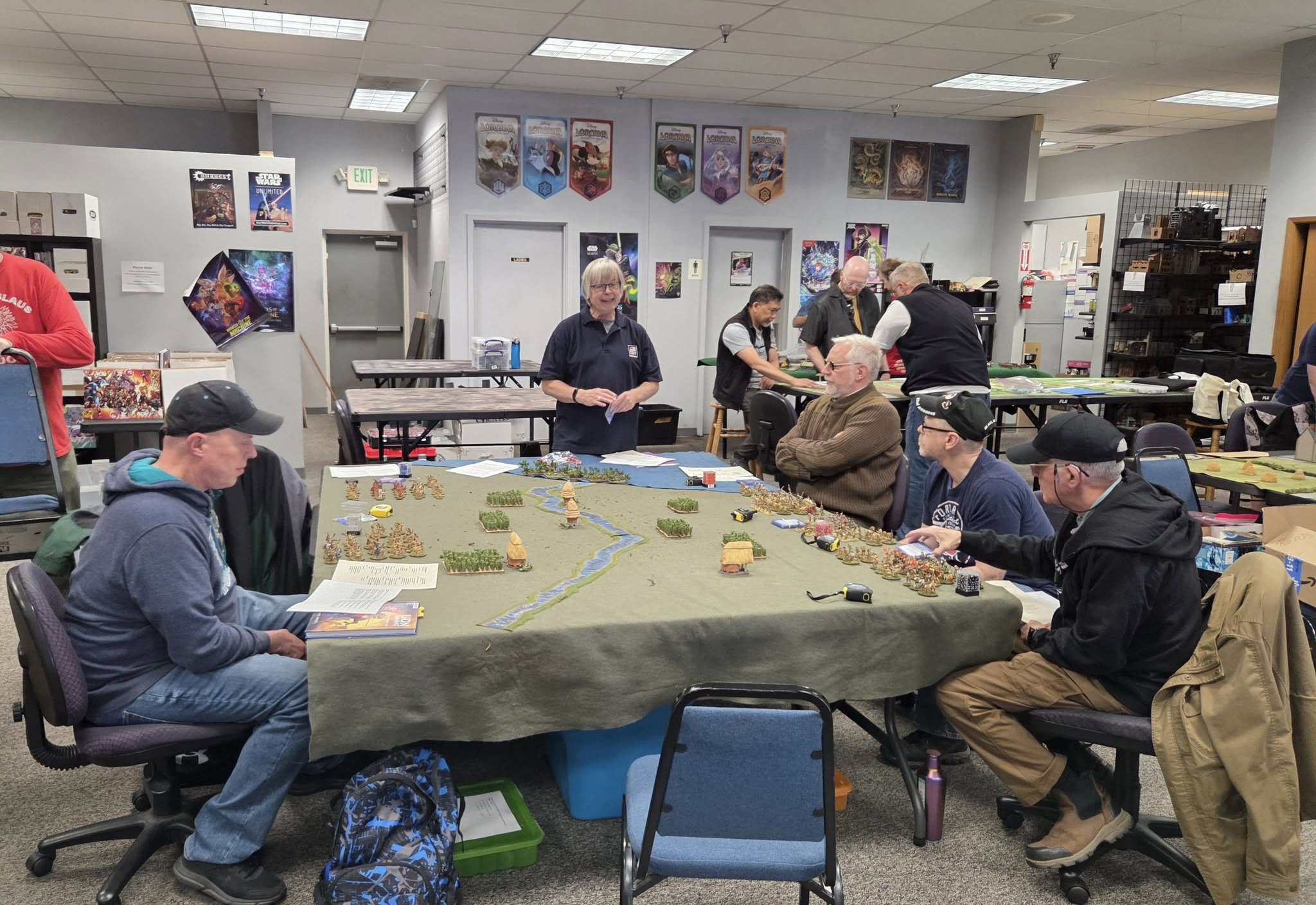
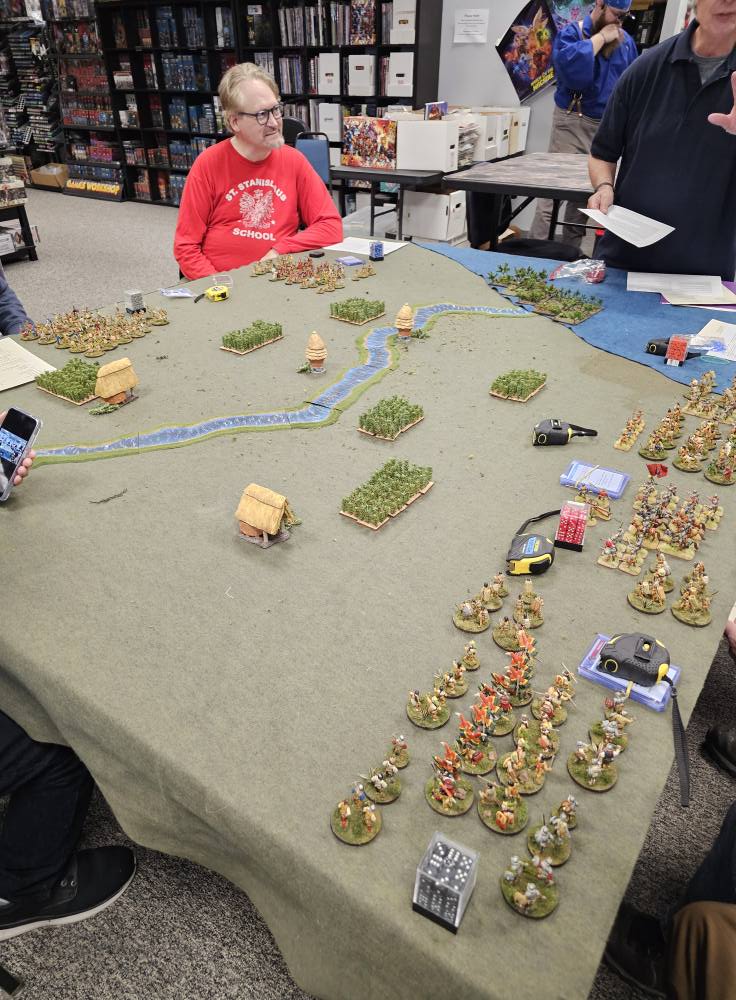
The Aztecs set up 18″ on the table. Again the retinues were largeish with four units of warriors and two units of skirmishers. The middle retinue had five units of warriors to cope with the Spanish to with the skirmishers. The right hand retinue appeared on the board edge at the end of turn one to give the Spanish something to think about.

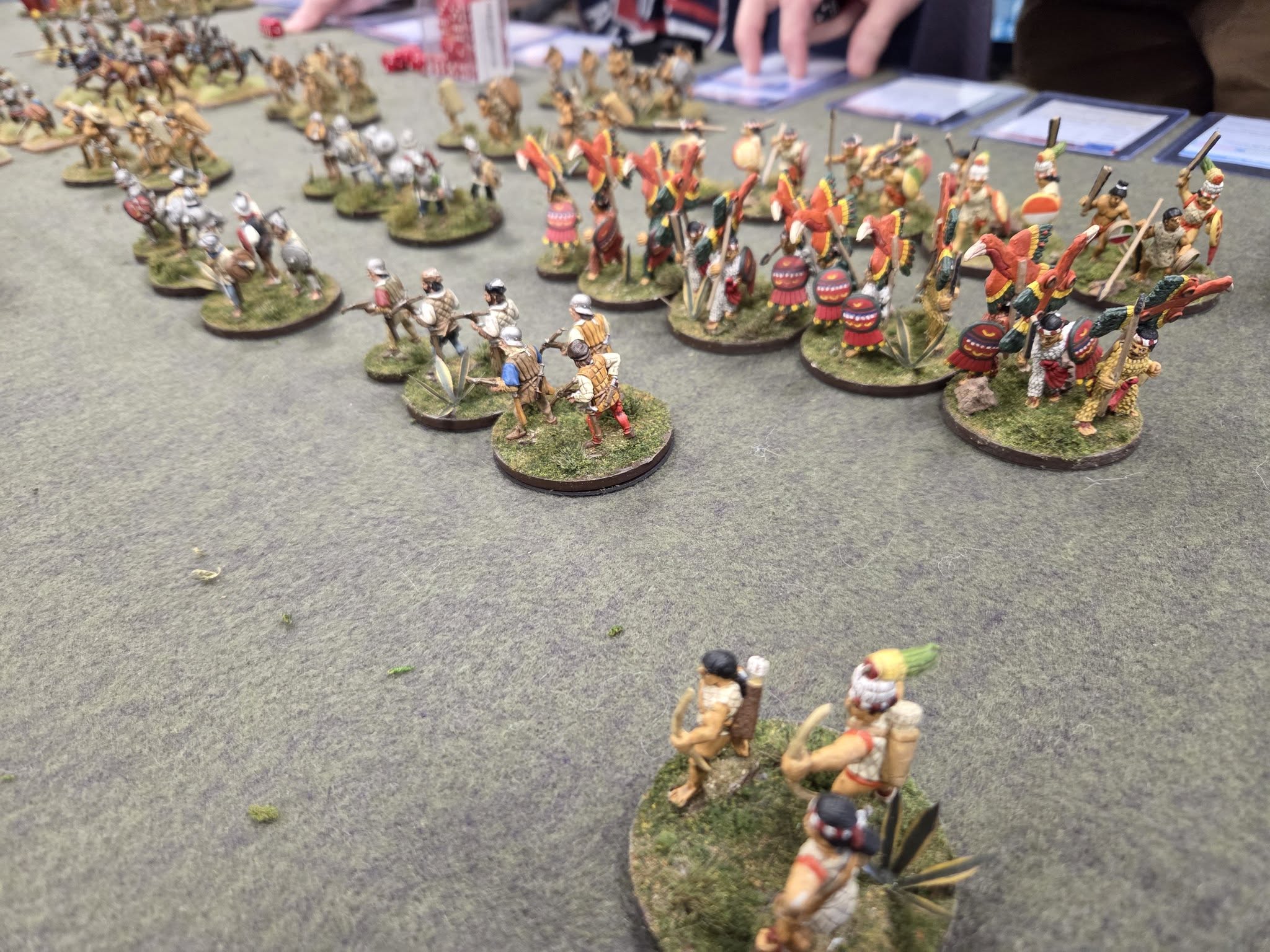
This game didn’t go quite as I planned. I loved the activation snafus and the decisions about whether to Appeal to God or not. Honestly, there may have been too many units for everyone to manage effectively. I probably should have started units further on to the table-activation failures really slowed the armies from getting to grips. The skirmishers were too effective. The game ended up a Spanish victory. All the native bearers who collected forage were successful and survived. The Aztecs took some hearts and inflicted some casualties, but not enough, but it was a fun first step.

The Silver Kings game was only a few days later so I had a chance to clean things ups. I wanted to reduce and standardize the retinues. The Tlaxcalans would each have three warrior units, a Spanish swordsman, two units of bearers and a skirmish unit. The Spanish would have a horse unit, a swordsman, an arquebusier and a crossbowman, the cannon and one bearer. The Aztecs would also be a bit more limited. The two flank commands each had four warrior units and one skirmish unit. The center unit had five warrior unit and two skirmish units.

The tables at Silver Kings are only 4′ wide, so much narrower. I also limited the skirmishers to be the “Flighty Light Troops” on pg. 120 of Lion Rampant, ed. 2, which limits their shooting to skirmishing only, no Shooting activations.

The game was popular and we had seven players for the six positions. Keith and Scott divided the center Aztec command which effectively became two commands. The game also played much differently

The Spanish/Tlaxcalans almost immediately lost two units of bearers, and reduced their ability to gather forage reduced by 40%. The narrower table, however made the Spanish shooters much more effective and Mark rolled well with them, doing a lot to put pressure on the Aztec center. Those guys were severely affected by splitting their command, as Keith took his pile of warriors to the left to help Mark fight Kurt while Scott had his smaller group of guys to fight off other Mark in the center. At the other side of the table, Eric and John conducted their own private bloodbath of Tlaxcalan warriors with their handful of Spanish fighting off Aztec Knights in what seemed like an even struggle.
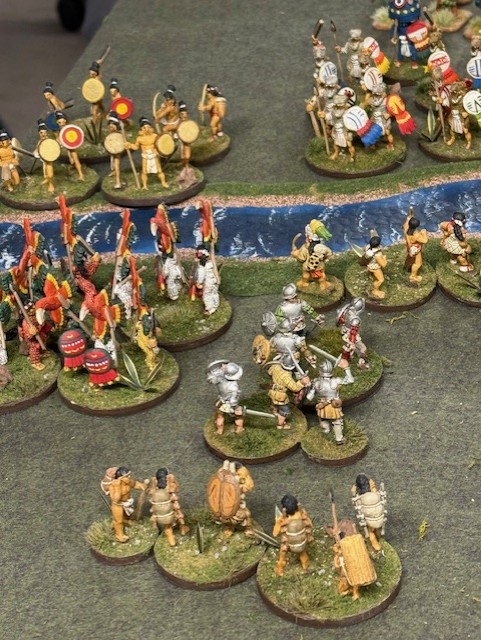
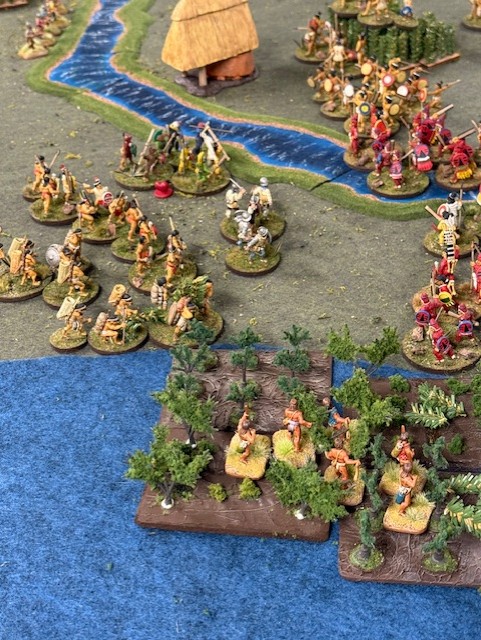
I thought a couple of choices made in the game were really interesting. One were the few Appeals to God made in the game. Each side burned three tokens. Because the game was so tight, it may have been a wise choice, though I wonder about the activations not made as a result. The other choice was the few Beating Hearts attempted. Mark had one successful capture-worth victory points. But after failing a second attempt, he decided to stop. No other Aztecs attempted Beating Hearts. I thought it was interesting.

It was a great game and everyone had a good time. Lots of figures on the table makes everything good. It was very tight with the Spanish perhaps winning by one victory point.

I am anxious to try again this fall. David had perhaps as many as a hundred unpainted Aztecs and Tlaxcalans I’m hoping to paint. I’d also like to pick up some Aztec civilian types that Foundry makes. I have a scenario I’d like to try that was generated through Chat GPT that has potential. Looking forward to more.
Sometimes The Stars Just Align

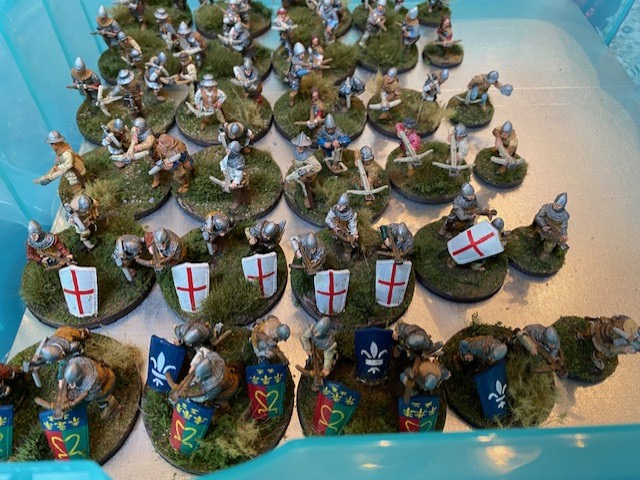
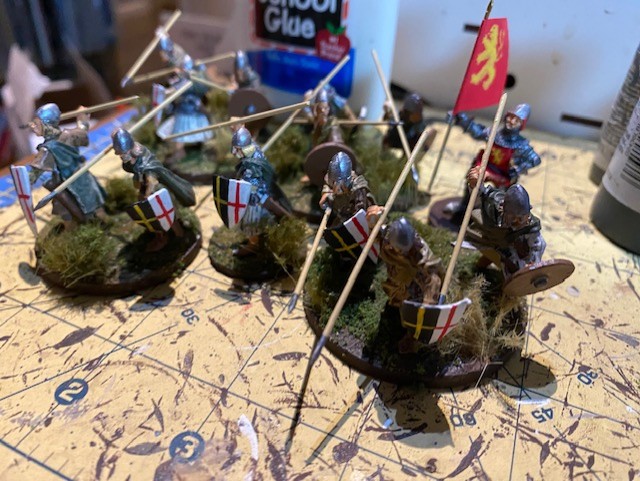
Welsh Infantry by Footstore. Really nice figures, but I’m doubtful about the heater shields. I was perplexed about painting them, believing the average Welsh soldier probably wouldn’t have a heraldic symbol on their shield. I divided them between the cross of St. George and the cross of St. David.

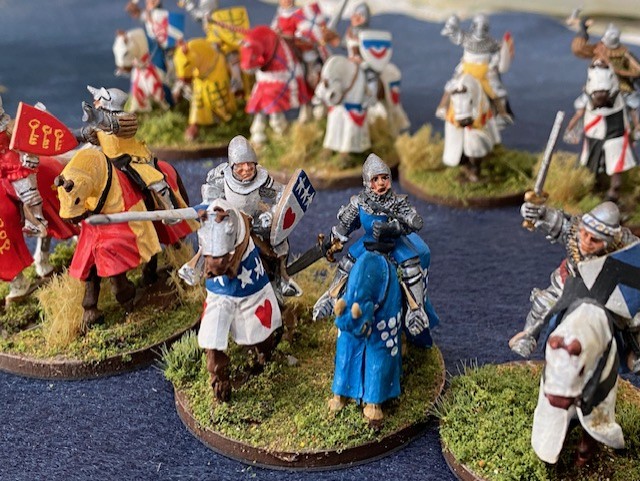
After sitting relatively fallow the past ten years, my Hundred Years War project is simply beset with activity. I made up my mind as 2024 was nearing its end that I was going to re-base my singly mounted figures to my preferred 3-3-3-2-1 for Lion Rampant. Why? Fewer figures are falling down in boxes, and it’s faster to move five bases than twelve. Is it a pain? Well, yes, but I have a system that allows me to remount a unit a night if I want to. Typically I don’t, but so far in January I’ve remounted 11 longbow units, so I’m make good progress. Altogether I’ve remounted 262 figures, with many more left to do.

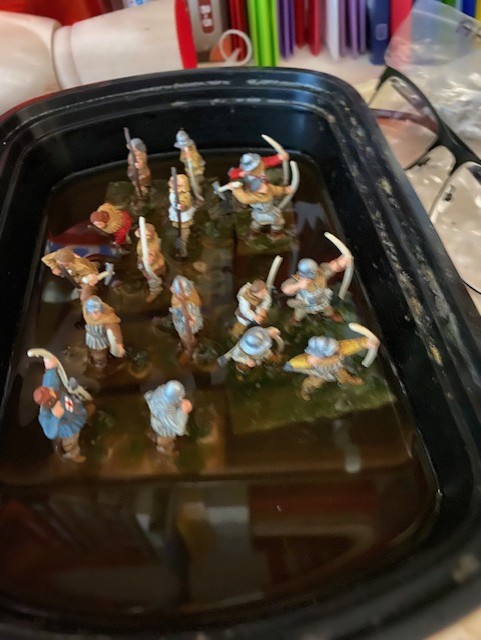
Archers in the “dunk tank” awaiting rebasing. These guys will actually be rebased on round bases for SAGA.

I’ve also had this rash of scenario ideas. Some old and some quite recent that should be fun to play. I think I’ve posted about a game for Blanchetaque Ford in 1346. I probably can’t do that until the remount is finished and I see where I am and what, if any figures I’d need. It is a game that is process driven more than fought. The French are relatively few in number but can drive the English crazy as they try to frantically get their army across the very wide Somme River before the tide comes in.

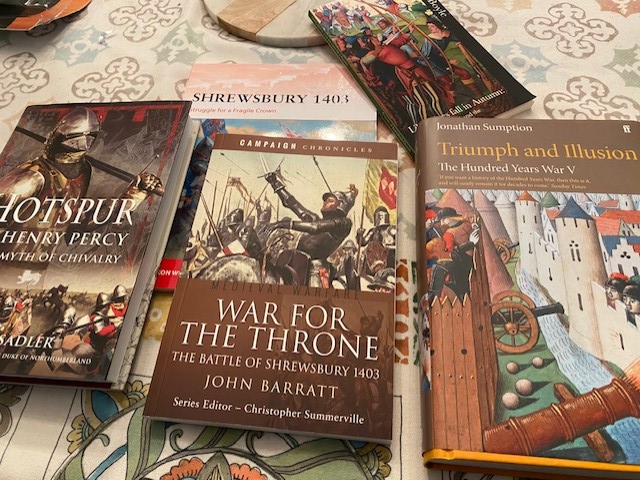
Recent adds to my bookshelf. Mostly Shrewsbury related, but I’m barely knee-deep in the final Sumption volume which will take weeks to finish.

I’m also really interested in fighting Shrewsbury 1403. Fascinating battle between the royal forces of Henry IV and the rebel forces under Sir Henry Percy (Hotspur). Both sides are blessed with large numbers of longbowmen, and Lion Rampant is quite effective at simulating longbow death. Even though missile fire is a super important feature of Shrewsbury, the battle is decided by armored knights and men-at-arms clubbing each other with large, heavy two handed weapons. Percy died and King Henry did not.

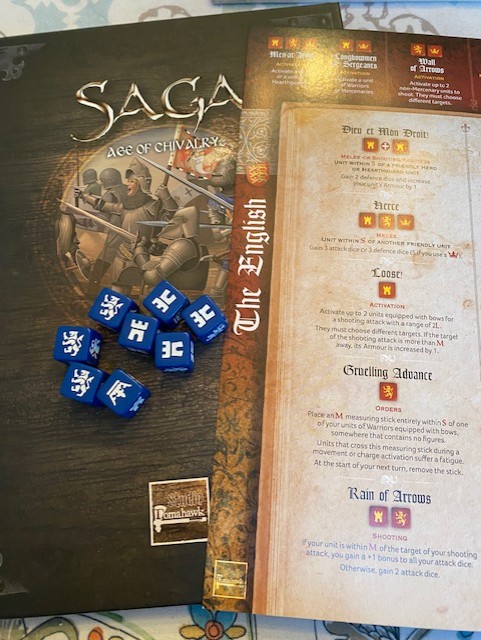
I’ve got a couple more old chestnuts for Lion Rampant, but the even bigger news is that I’ve received the Age of Chivalry expansion for SAGA. I enjoy SAGA. I only have painted armies for the Age of Vikings, but I’m looking forward to doing something a little different. The armies for this volume are really aimed at the Hundred Years War and the later middle ages. The designers really encourage the use of more generic troop types because so many armies use them. Generally I’d spit on that idea, but in this case I get it. Not quite sure how far I’d tread down that path but I’m intrigued. Needless to say, I’m looking at the English army first. I have tons of unpainted figures, but I’m also really interested in looking at the painted figs I might remount for SAGA just to get something on the table. Any way you look at it, we’re just not talking about a lot of figures.

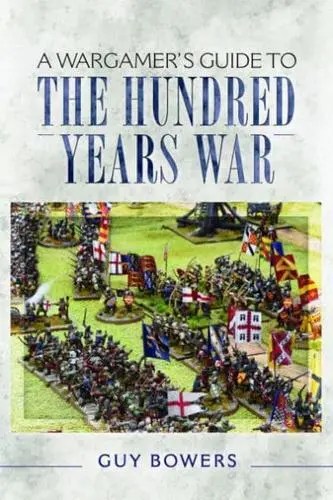
If this isn’t enough, I am also anxiously awaiting the release of Guy Bowers’ new book “A Wargamer’s Guide to the Hundred Years War.” Supposed to have some good stuff for scenarios and building armies for the period. I met Guy at Enfilade a number of years back. Seemed a good fellow and he is a regular contributor to Wargames, Soldier and Strategy, so I’m interested to give it a look. It was supposed to be released in December and I pre-ordered from Blackwells. Alas it was not. Scheduled to come out at the end of this month, but I’ll wait until it’s a for sure deal.

This is the year of the Hundred Years War to be sure, if for no other reason than getting my figures painted and on the table in one form or another. I’m working on it. But not to the exclusion of other things. I’ve also made a little progress on my Cuban Rebellion figures. Well, one unit. Before January is over I also plan to finish my last two units of Rohan cavalry, which will complete my Rohan army for MESBG.

The Hundred Years War and Me

I know, I know, in my last post I laid out my plans for the new year, and honestly I’m not sure they’ve changed a lot in less than two weeks. Santa the gamer was quite kind to me. Actually Missus Kevin was quite kind to me. She rounded up the remaining figures I need to complete my LOTR project, elevating it to a must do wrap up. I’ve finished another unit of Cuban rebels for the The Men Who Would Be Kings. However, my time right now is pretty focused on The Hundred Years War.

I have few project interests in the Old World. No Romans or “ancients” per se. My Dark Ages SAGA stuff for sure. No Seven Years War or Napoleonics. They’re pretty, but a black hole of gaming because I could paint my entire life and never have enough. Nope, most of my interests are in the Western Hemisphere. AWI, Western Expansion, The Mexican War, Maximilian, The Spanish American War and it’s subsidiary effects. But that Hundred Years War thing.

I find it to be a fascinating conflict, incredibly complex, with roots more than a century before its outbreak, even back to 1066. It’s a war with terrific economic stress on both sides throughout the conflict. There are great kings English and French, ineffective kings, mad kings, great leaders, poor leaders, changes in technology, sea battles, great sieges, politics, politics, politics, usurpation, civil wars, civil wars within civil wars, and the emergence of France as the first true nation-state. It’s amazing.

And I have figures. A virtual shit-pile. How many? I have no idea. I am planning to remount them for Lion Rampant. Not a great rules choice for big battles, but I think I can make it work. Daniel Mersey is quite flexible in that way. But just to give an idea of how many figures I may really have, I’ve remounted six units of crossbows plus one unit of mixed missile and melee troops, two units of French local levies, for a total of 108 figures, plus four units of French mounted knights, and a unit of Irish skirmishers for the English. A total of 140 figures. A drop in the bucket. I was looking at my painted longbows last night and they number at least 200. Maybe a few too many. That leaves aside dismounted men at arms and various other wretched infantry, many mounted figures, plus all the unpainted stuff (which will likely be added as SAGA armies for the new Age of Chivalry factions.)

So I’ve got a lot of figures for the period.

What’s changed is that these figures have mostly laid fallow for the past decade, and now I’m super enthused about them. Maybe it is the imminent arrival of Age of Chivalry, maybe it’s the publication of the final volume of Jonathan Sumptions’s history of the Hundred Years War. I’ve also read Dan Jones’ excellent new bio of Henry V and recently ridden the Michael Livingston traveling circus. But something has fired up my interest in revisiting this project

I’ve begun to consider scenario plans to go with it. I would really like to do the Battle at Blanchetaque ford in 1346 just days before the Battle of Crecy. It would be a very different, interesting game. However it would require a lot of playtesting due to the unique nature of the action. I just don’t think there is enough time to do the remount and do enough practice to make a good game at this time. Instead I’m drawn to the Battle of Shrewsbury of 1403. It’s a battle between Englishmen during Henry IV’s contested reign and the sky will be filled with arrows. It should be fun, and I’ll keep you posted dear reader.

Playtest: Quetzcoatl Rampant

Today was the day, long awaited. David Sullivan, Dave Schueler, Dave Demick and I met at Meeples in West Seattle to try David’s adaptation of the Lion Rampant rules to the Conquest of Mexico. Last night I sat down and made some quick play sheets for the Quetzacoatl Rampant adaptation. . This morning I laminated them.I reorganized Aztecs according to the rules. I have thirteen units instead of eleven.

This morning I piled by prized collection into the car, and   I picked up Dave D. in Tacoma at 9:00, grabbed Brother Schueler in West Seattle, and we actually made it to Meeples before the store opened at 10:00

I knew the table space would be fair small, and I was okay with that for our first run through.  I love playing games-miniatures or boardgames-in the Meeples cafe.  It is terribly comfortable, if small.  The food and beer is tasty and cheap.  And because what we do isn’t typically what is played at the store, there are always folks interested in what we are playing.

I set up the table with the Spanish advancing on an Aztec village. The Spanish had a unit of horse, five of sword and buckler men, two arquebusiers, a dog pack, and a unit of Tlaxcallan allies. The Aztecs had four units of skirmishers, a unit of Eagle knights, three units of veteran warriors and two units of peasant warriors.

I didn’t have any expectations.  The Aztecs were pretty outclassed, but didn’t know by how much.  Let’s just put it this way, the Spanish won in a walkover. There were Spanish figure losses, but the Aztecs, though they pointed out about the same as the Spanish, were not able to do much to them.

We went over some simple changes that would balance out the rules: reducing the Spanish armor value by a point, improving the Aztec’s move, shoot and attack values, reduce the accuracy of Spanish arquebusiers.

Like I said, simple changes, and all we need is the opportunity to try it again. Would like to give the game a whirl on a larger table so we can cram all the Aztecs into the game. Can’t wait to give it a try.


Enfilade 2015: the hits just keep coming.

I attended Enfilade over the Memorial Day weekend.  It was my 24th Enfilade.  I haven’t missed one yet, and I’ve had organizing responsibilities in almost all of them.  Last year I announced my retirement from the Enfilade committee and all other leadership responsibilities for NHMGS.  It was a carefully considered decision, and the right one for me. There was no animosity or rancor in my decision, and I’ve moved on.

It was a very good convention and I think the organizers did quite well.  It seemed to me there were few glitches and almost all of them were beyond their control.  If I have one suggestion it would be to try to problem solve the event sign-up dilemma. I know and understand all the problems associated with pre-registering for events, but the long 45-minute lines must be addressed. They’ve done a great job of promoting pre-registration electronically for the convention, and now it’s time to put equal or greater promotion into pre-registering for events.  It’s complicated and I get that, but this seems to me a must-do, especially as attendance hovers around the 350 mark and the lines snake through the convention hall.

Each convention is different, and this one certainly was for me.  I had to work on Friday.  That’s unusual for the day of the convention and it presented a number of problems I clearly foresaw.  It meant leaving at school about 2:30 and driving to Olympia and arriving in time to host my 7:00 event.  if you are a stranger to Washington geography, that’s about a 60-70 minute drive under normal circumstances.  Unfortunately Memorial Day weekend is far from normal.  It is the beginning of the camping season, and as the weather moderates any long weekend is a good excuse for camping.  The roads were a mess and instead of arriving at the hotel 3:30-4:00ish, it took an extra hour.  I had piles of stuff to haul in for my game, so by the time I checked in, set up my game, and caught my breath, it was game time. Something to consider for the future.

Friday night I ran my raid on Agen scenario.  It was a Lion Rampant game with seven players who had not played the rules before.  All had purchased copies of the rules and were genuinely interested in learning them to see if they liked them, which meant they were motivated to work through them.  That made life a lot easier for me. After a somewhat slow start, they were doing things pretty much on their own.  The story of the scenario is something like this: three English retinues arrive outside the village of Agen, defended by a dilapidated castle.  This is a chevauchee, meaning the English are there to loot and burn the village and carry off their goodies.  The French arrived with a three retinue relieving force-something frequently unusual for a chevauchee-and their job is to prevent the English from achieving their goals.  The last retinue was a smattering of serfs, whose job it is to offer token resistance, but most of all survive.  The French were able to inflict some damage to the English, but the invaders were pretty efficient, looting and burning many of the various buildings on the table.  But, the big winners were the serfs, who by staying away from trouble, managed to score 105 points edging out the English who amassed 104.  Most importantly, the players seemed to enjoy themselves,and especially the rules.  They were running the game themselves by the end of things.

Saturday morning I made time to actually play a game.  I have long been interested in Galactic Knights, the space epic using ships originally made by Superior Models. I own some of the ships and the rules, but only walked through a kind of quickie scenario with Dave Schueler.  The Saturday game was hosted by Scott Williams and Joe Grassman and was loosely based on the WWII Battle of Midway. I commanded the Terran star bombers, which are the rough equivalent of the Ameriacn TBD torpedo bombers slaughtered by the Japanese.  In GK they have the virtue of being faster than the Devastator death traps.  I loved the scenario and learned a lot about the rules.  I was able to be sneaky and sly, took advantage of the rules and administered the coup de gras to two thirds of the Avarian capital ships–following the advice of my colleagues.  The game inspired me to work on my collection of GK stuff-in fact I’m writing this during a break from them.

The Saturday mid-day period was all about judging games for the period’s “Best of Show” award.  Often that falls to one person, but the convention organizers did a super job of mobilizing three judges for each period.  That’s way better than I was able to do.  I actually hope to continue aiding in this because it is great fun.  The best part of serving in that role is the ability to circulate and see all the games during the period.  I actually got around to see each game three times and there were some wonderful ones.  While the 28mm Waterloo game raged on in the corner, John McEwan hosted an amazing undersea submarine game.  Max Vekich and Ed Texeira ran a very interesting hypothetical 28mm WWII Japanese invasion of Washington game I was very intrigued with. Special guest Howard Whitehouse had a very interesting Vinlander/skraeling semi RPG with miniatures game that was very cool.  But the winner was FireForce Rhodesia ’76.  This was a great looking and playing game in which the miniatures and terrain all seemed to work well.  Damond Crump, Bruce Smith and Lawrence Bateman were the big winners in that period.

Saturday evening was my big game, Smoked Bolougne.  It was another Lion Rampant game with space for eight players.  It was a mixed group of LR veterans and noobs.  The game featured an attack on Bolougne’s port at either end by a picked English force.  The goal of the English is to destroy key buildings in the town and destroy the French ships at anchor.  The English got off to a roaring start, using their flaming arrows to set fire to their targets.  The waterfront was quite ablaze, but the invaders were soon bogged down by French reinforcements and poor activation rolls. In the end they were able to achieve what the English did historically–destruction of their targets, but their forces were also destroyed.

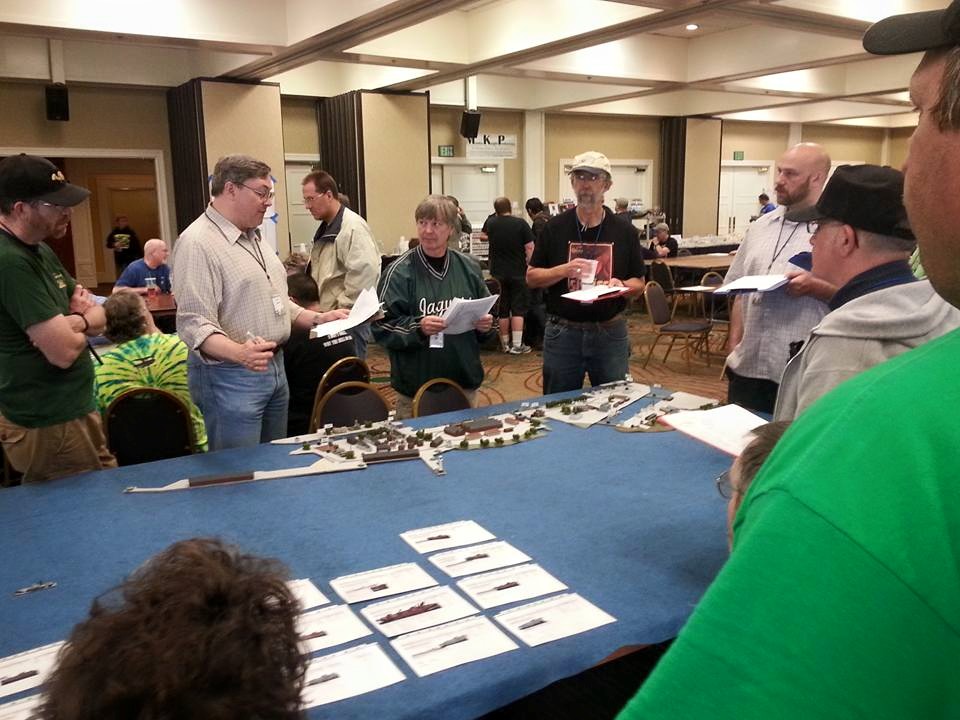
During Sunday’s final period Dave Schueler and I hosted the Raid on St. Nazaire.  I got some credit for helping, but honestly this was Dave at his finest. Based on the raid on the French port city on the Loire River that also contained the Normandie dry dock, this was going to be a tricky show. We’d walked and talked through the way the scenario would be played, but hadn’t had a real playtest. We’d done that on other scenarios, but this was complex in the sense that the six British players had to move their 13 motor launches plus five escorts through German gunfire, land their load of commandos, and destroy important features in the the port area before re-embarking for home. Overall the game went well.  The Brits suffered two losses and several vessels damaged while engaging the port defenses. They did get some commandos ashore, damaging the one of the winding houses and the pump house for the dry dock.  But it was concluded that, like Bolougne, it was a pretty historical result.  Serious damage to the dry dock meant the Tripitz would have to find a new address, but the British attackers were pretty much trapped and would likely be killed or captured.

Picture of St. Nazaire set up courtesy of Rod Fleck. I'm the goof in the green Jaguars wind shirt.

Picture of St. Nazaire set up courtesy of Rod Fleck. I’m the goof in the green Jaguars wind shirt.

The good news is that the powers that be thought enough of our game to consider ti the best of show for the Sunday game period.  It also won the best game for the year’s theme, raids.  It was the perfect finish for the weekend.

Enfilade around the corner: My mad dash to the finish line.

Though I may not have written much recently, that doesn’t mean I haven’t been busy.  I have three games I’m running at Enfilade, and I’m still trying to wrap up the last one in time for my weekend-before-the-convention playtest.

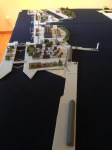
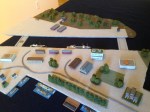
I’ve done a lot this spring/winter (this is so embarassing!) Dave Schueler and I will host a game we’ve wanted to do for many years-the 1942 combined sea/land raid on St. Nazaire. I slowly accumulated all the motor gunboats and assorted naval vessels needed to play the game, but the challenge was always going to be putting together what would pass for a harbor and adapting a game to it.  Dave and I have done a lot of projects together including the Tirpitz game and the Persian Gulf tripwire scenario with lots of modern gunboats, but this was especially challenging.  Dave did most of the work modelling the various pieces representing warehouses and dockyards.  I contributed some, but the work is mostly his.  The scenario will force the British players to cooperate and be aggressive as they try to land their commandos in the face of fire and demolish their targets.  Dave and I will run the Germans using a combination of ideas from David Manley’s excellent Action Stations and the old Raid on St. Nazaire board game by Avalon Hill.

I’m also running two games using the Lion Rampant rules by Daniel Mersey.  As I’ve written before, I really like these rules-you just need to think outside the box. The first scenario, Raid on Agen, I’ve already written about.  I’ve done a couple of playtests, and hopefully I’ve worked out the flaws. It represents a typical chevauchee of the Hundred Years War.  Maybe not typical, but the French are inclined to resist in this scenario.

The second game is the preparation sucker.  It is based on the English raid on the port of Bolougne in 1340.  It reminds of the Raid on St. Nazaire in the sense that the raiding force was disembarked in darkness, did their work, but were trapped and captured or killed. The English will start on either end of the lower town.  Their job is to destroy buildings and ships along the waterfront. The resistance in the dock area is light, but enough to be a pain to the attacking English. The challenge to the English will be the French relief force as it masses and thunders down from the upper town.

For both scenarios I’ve tried to think outside the box.  I’ve used or created troop types to assist in the scenario.  Town militia was a type suggested on the game forum hosted on Boardgamegeek.  I’ve created a sailor troop type to defend some of the ships.  I’ve also created an engineer type charged with destroying the ships and town in the Bolougne raid. In addition to troop types I’ve also worked out rules for burning.  In the case of the Bolougne scenarios, I’ve put together rules for tow-wrapped flaming arrows and combustibles used by the engineers.  Don’t know how historical they are, but they should be fun and easy.

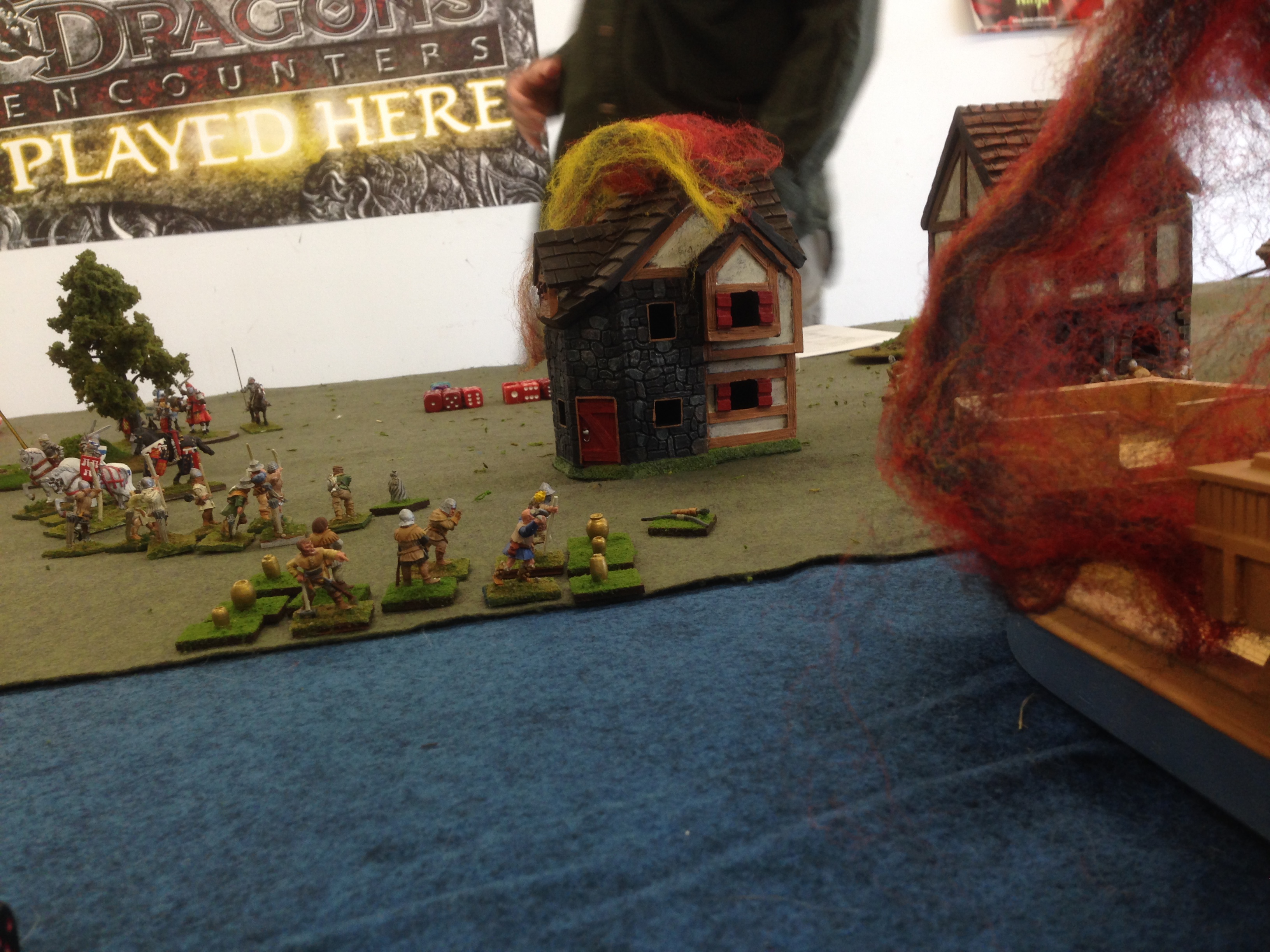
Playtest photo.  The English land in the lower town, setting afire a waterfront building and a ship

Playtest photo. The English land in the lower town, setting afire a waterfront building and a ship

I hope to have pictures from the Saturday playtest on the web by the weekend.

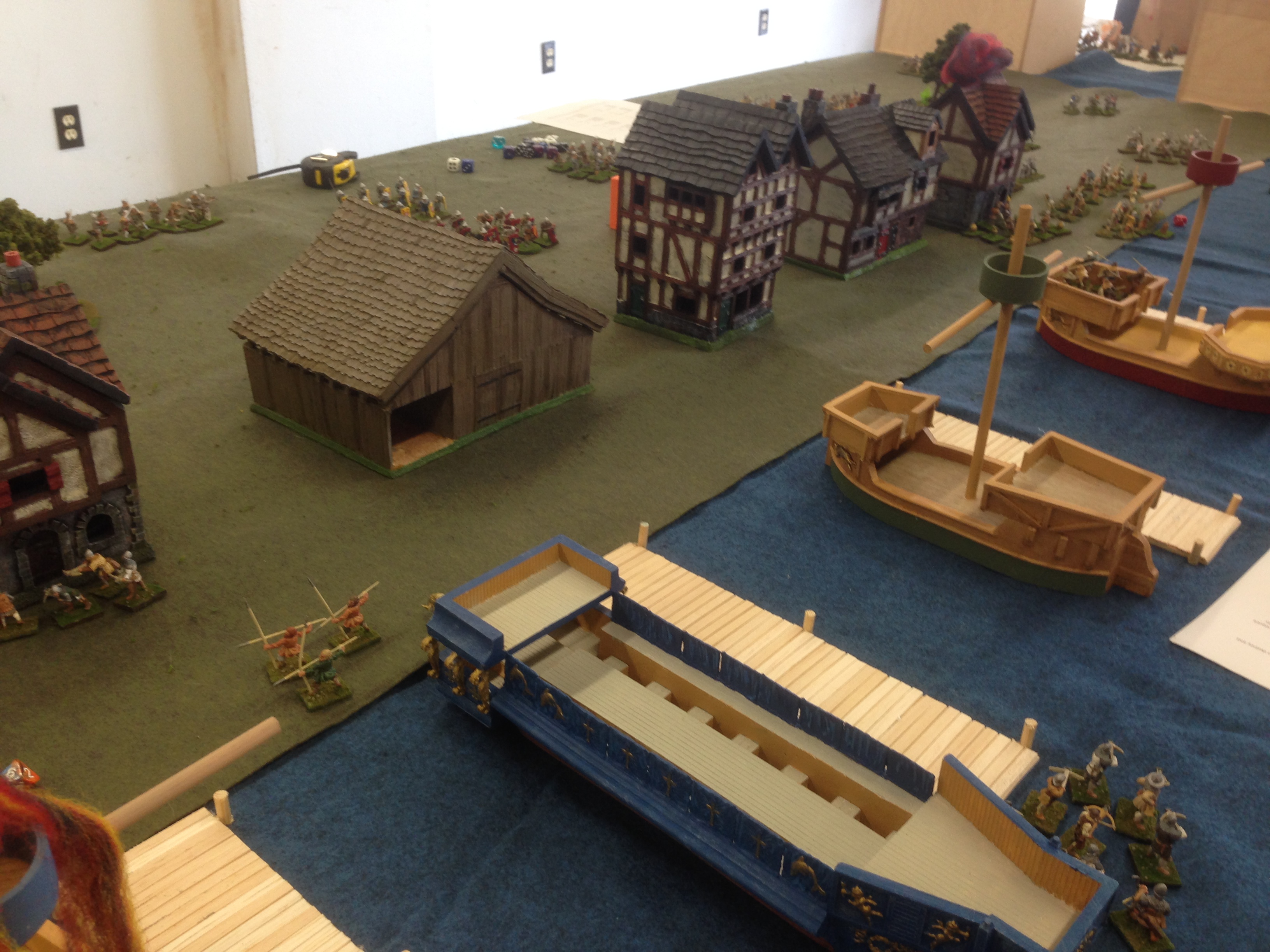
The playtest set-up. The French fleet rests at anchor as English retinues approach from either end of the town. French reinforcements boil out of upper Bolougne and down to the docks

The playtest set-up. The French fleet rests at anchor as English retinues approach from either end of the town. French reinforcements boil out of upper Bolougne and down to the docks

Sergeants and Town Militia: My Pavisiers

In the Hundred Years War, at least during most parts of the Hundred Years War, the French depended on feudal levies to be called out when their regions were threatened or under attack.  Some of these were rich guys in armor and horseback (mounted men-at-arms) and their retainers (mounted sergeants.) But horses were expensive and not everyone could feed a horse let alone own one, so French nobility depended on foot troops too.  In Lion Rampant these dependable foot types are called sergeants.  They are generally foot spearmen, though they can be upgraded to a nastier version with pole arms.  Together with crossbowmen, these spearmen tended to be what was turned out to defend towns and cities, or to fill out the French king’s army when it took the field.

These French spearmen were often called pavisiers, due to their enormous shield, called a pavise.  These protected them from missile fire.  They also offered shelter to crossbowmen as they reloaded their cumbersome weapons in a sort of early combined arms arrangement.

I really like pavisiers.  They are a departure from the normal depiction of medieval warriors with their cute heater shields.  They also offer a larger canvas to paint heraldry.  Usually the shields show the coat of arms for the down or duchy from which they were raised and to whom they owed fealty.

Pavisiers 007

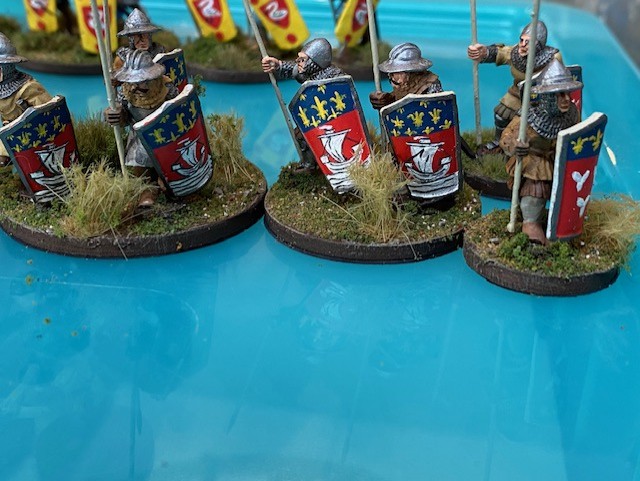
I’ve painted a couple of units the last few weeks.  The first is a unit of Perry pavisiers.  These are very nice figures.  If they have a problem, it is they represent troops from very late in the Hundred Years War, being from the Agincourt to Orleans range (1415-1430.) As a group they are pretty well armored for a batch of militia. Their shields carry the device for the city of Calais, which was an English bastion after 1347, but I liked the heraldic insignia, so don’t let it get out.

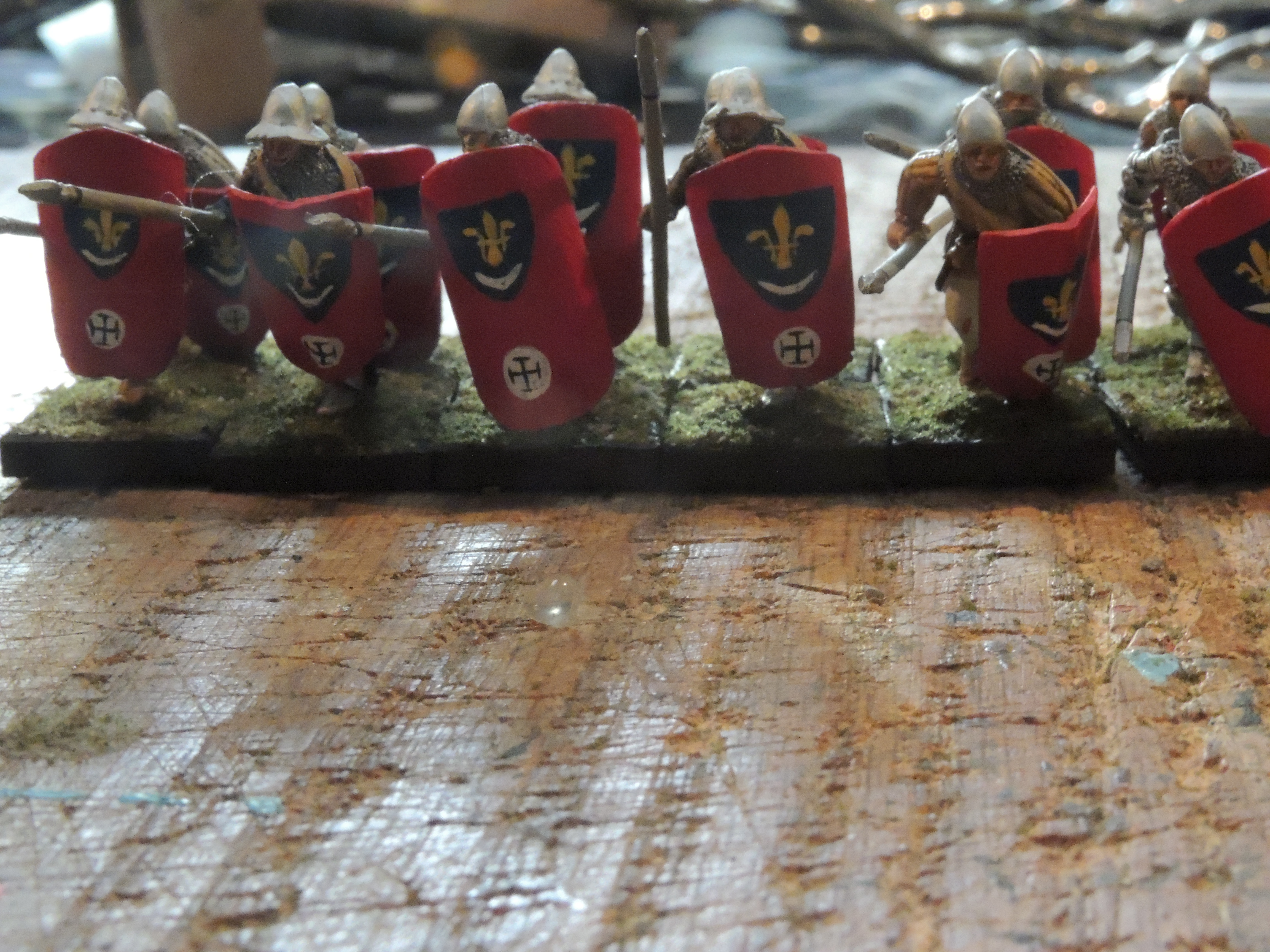
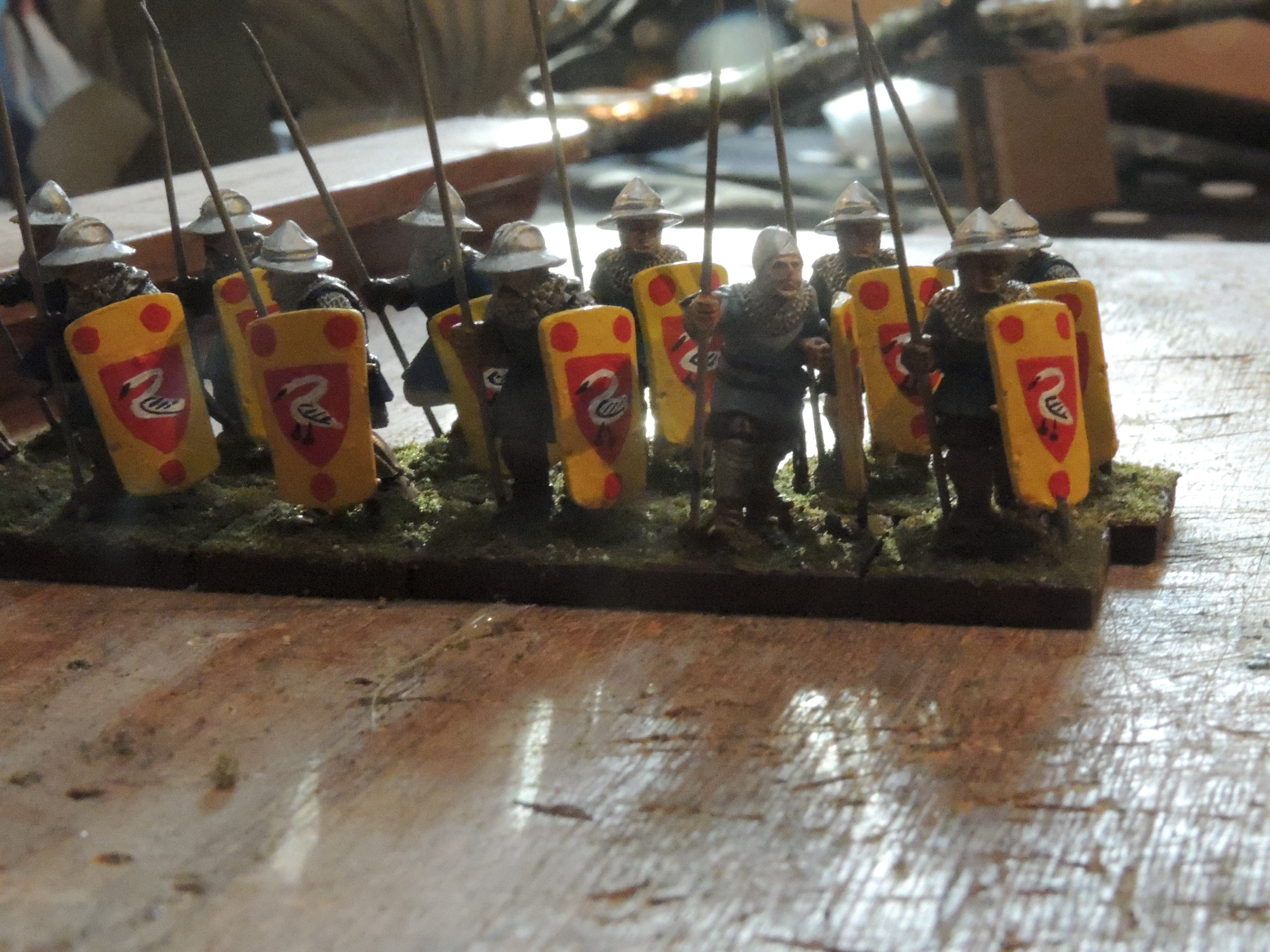
Very serviceable pavisiers offered by Old Glory with Perry pavises.  They are armed with the dangerous Northstar spears. They carry the colors of Boulogne.

Very serviceable pavisiers offered by Old Glory with Perry pavises. They are armed with the dangerous Northstar spears. They carry the colors of Boulogne.

The second group of spearmen are from Old Glory.  I actually used their shields for a different project, so had to replace them with Perry shields, which can be purchased separately. I used a pin vice to drill a hole in the back of the shield and glued the pin on the figure into the hole.  The pavises are perfect and are painted with the device from the channel port of Boulogne, a city that will figure prominently in one my of Enfilade scenarios.

The Lion Rampant rating of sergeant for these figures is, in my mind, problematic.  Sergeants may be necessary, but I think of them as the dismounted version of the mounted troop type.  They are reasonably well armored and trained and highly motivated.  I think of pavisiers as more the draftee type who would much rather be at home with the missus in front of the fire trying to figure out how to pay his hearth tax.  That being the case, consider adding this troop type I saw suggested on BoardGameGeek on the Lion Rampant forum.

Militia, 12 Models per unit, Cost 2 Points
Attack 7+, Attack value 6+
Move 5+, Defence Value 5+
Courage 4+, Maximum Movement 6”
Armour 2, Special Rules Schiltron

I’ve used this unit in a game, though it didn’t make much difference.  Give them something to defend and life is all good.

Dipping your toe in the Lion Rampant pond.

If you’re thinking about trying out these rules, whether you have stuff or not, I hope, with this post, to offer some guidance to you.

First, a bit about my decision to go with this game rather than another. I am the owner of some 500 singly mounted Hundred Years War figures.  I have more than a hundred painted longbowmen.  I have more than a hundred painted dismounted men-at-arms.  I can field seven units of foot sergeants and multiples of most other units from this conflict.  I am also a devoted student of the period.  My interest in these rules was only natural.  All I needed was to try them out to see if they met some simple requirements

  1. Were they easy to play?  Could I easily run them at a convention with folks who didn’t know them at all?  The answer was a simple yes. I’ve played with at least a dozen of my gaming friends. Of those only one has had a less than enthusiastic response.
  2. Were they suitable for making well thought out scenarios?  I didn’t want a game that was really designed for head to head games.  Again, I’ve tried several multi-player games and have reported on the Agen scenario.  I’ll likely run that one at Enfilade, together with a second scenario based on the 1340 raid on the Boulogne docks.

I find Lion Rampant to be a great set of rules.  Of course, I feel fully prepared to play them with figures, high interest and research material galore.  What if I wasn’t?  How could I get started?

First, some basic parameters.  If you’re interested in refighting Agincourt, or Bannockburn, or Mortgarten, these are not the rules you want.  These are small unit actions.  No archers behind stakes, no Flemings defending ditches, no massive schiltrons of Scots spearmen driving foolish English knights into swamps. Those troop types might be available to you, but they won’t quite function the way they would in large formations. I confess I haven’t quite found the right set of rules for fighting big battles in the late middle ages, but Lion Rampant won’t do the trick either.

I always worry about the cost of rules sets. Rules books that cost forty or fifty bucks really annoy me.  They better come with their own electronic service like Siri to answer my questions, a useful painting guide, complete army lists and an introduction by Anne Curry.    Worse than rule books that cost forty or fifty bucks are rule books that cost forty or fifty bucks and will require the forty or fifty dollar expansion or two.  I don’t care what the logic is, it’s ridiculous and inexcusable.

If you’re worried about the cost of Lion Rampant, you can buy it at your local game store for $17.95.  You can order it at Amazon for $13.62.  You can order it for your Kindle or Kindle ap for $10.49.  I bought two.

What do you get for your dough? A complete set of mechanically simple, grammatically clean set of rules. There are some quirks to the game, but nothing that is unreasonable or unfathomable.  There are a plethora of handy color plates and game photos.  There are eleven troop types and 40 sample retinues to muster them into. Finally there are twelve sample scenarios. That’s a lot for less than twenty bucks.

This is a highly adaptable rules set.  Though the sample retinues cover England all the way to Eastern Europe, the Middle East and the Thomas Mallory Arthurian legend, there is definitely room for more.  I see these rules as something to experiment with, as many did with The Sword and the Flame. A friend has been playing Korea and Japan.  I plan to build something around the Spanish conquest of  Mexico.  It should work for any region up through the early gunpowder age. Not only that, but author Daniel Mersey is highly accessible, regularly answering questions on a Lion Rampant forum on BoardGameGeek.
So what is the cost to get in on Lion Rampant? Units are either six figures or twelve figures.  I’d suggest starting out with a retinue which is usually 4-6 units.  If your army is infantry-heavy, like the Swiss you’ll need more figures, say 60 figures.  If you have expensive troops, like the English you’d have fewer, say 42.  Armies with cavalry like the French Hundred Years War army, the Normans or the Ottoman Turks makes an army more costly in real dollars. Be sure what you buy fits in with your friends, and is an army you are really interested in.

There are lots of great figure manufacturers for the Hundred Years War.  Here are a few of my favorites:

Old Glory Miniatures–They have a huge range for this period.  They are relatively inexpensive per figure, especially if you are an Old Glory Army member. They are also quite nice and draw a distinction between the early period of this war (say until 1380) and later.  The drawback is that you have to buy the figures in pretty large quantities.

Front Rank Miniatures–A very nice range of miniatures for the Hundred Years WAr and the Wars of the Roses.  The range is older, so not tons of variety between figures of the same type, but a huge range of troop and armor types.  The mounted figures are really awesome.  They also have some great accessories and wagons. The downside is their size.  They are huge.  They don’t mix well with other manufacturers in the same unit.

Crusader Miniatures–Some great figures, but not tons of different troop types.  Sized well, all the major troop types are covered. Some very nice command figures too.

Perry Miniatures–The Agincourt to Orleans range is geared strictly for about 50 years of the conflict. Absolutely stunning miniatures, but a little spendy. The Perrys have a number of plastic boxed sets that are super reasonable covering the Wars of the Roses.  They plan to release an English boxed set for Agincourt to Orleans before Christmas (hark, I hear sleigh bells.)

Before I close, I’d simply add that no I am not an Osprey employee, nor do I hang out with Dan Mersey.  I do believe this is a great set of rules. Not perfect, and with limitations that are clearly stated.  If you believe you’d enjoy a skirmish set of rules for the late middle ages, these may work for you.  They definitely work for me and my interest in the Hundred Years War.


Lion Rampant: The Agen Scenario

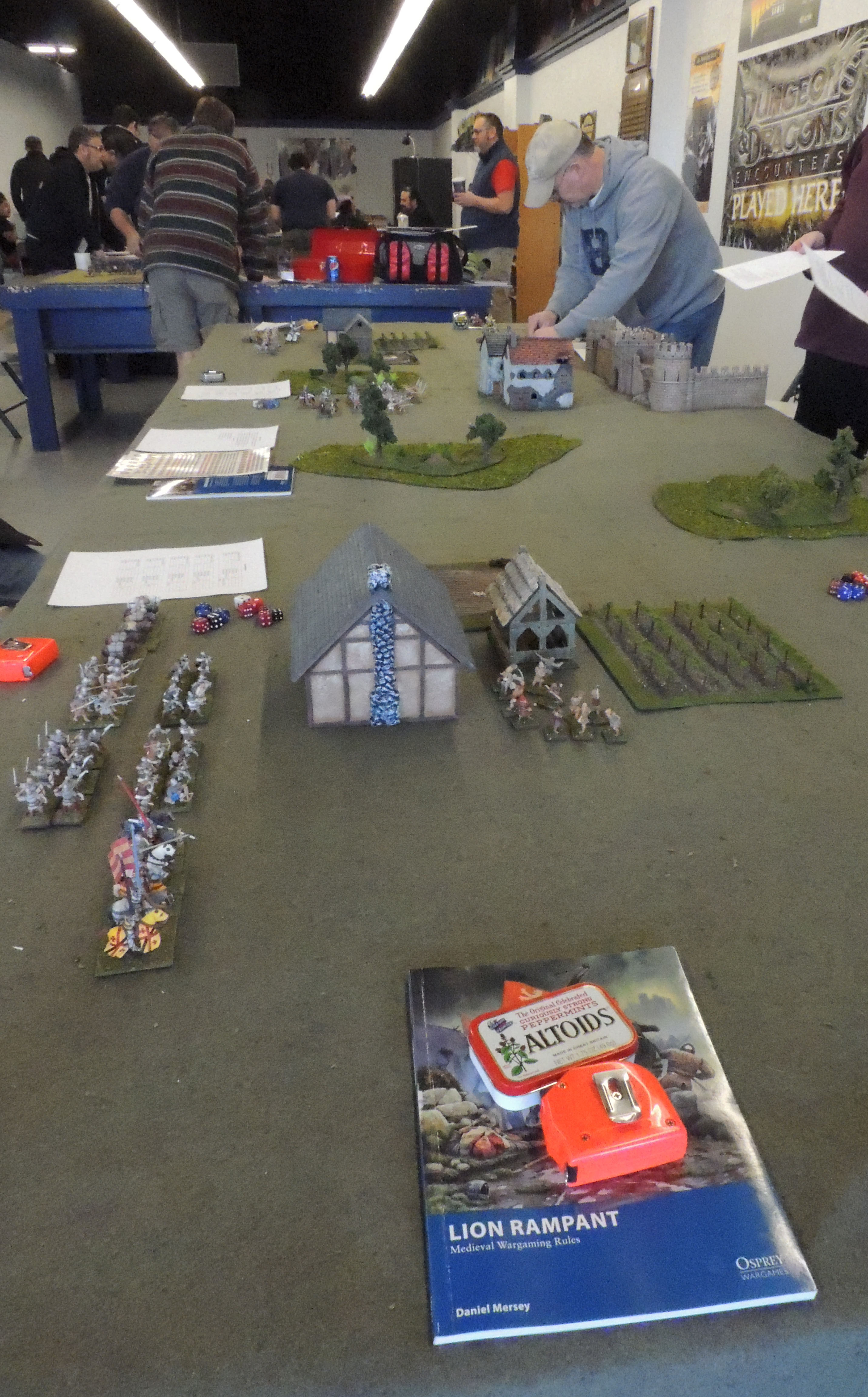
A quick shot down the 14' board at Game Matrix.  Enough going on to make it look good, without too much clutter.

A quick shot down the 14′ board at Game Matrix. Enough going on to make it look good, without too much clutter.

It’s rare that I’ve fallen utterly in love with a set of rules.  Maybe only one other time.  About twenty years ago I played the original Fire and Fury Rules for American Civil War and I continue to believe they were the most influential rules set in my life.

But, for the moment, at least, I am consumed by Daniel Mersey’s Lion Rampant, published by Osprey. In my previous post I mentioned my idea for a game involving a raid on a small town, a castle and too many troops.  Yesterday, with the help of many friends we tried it out.  It was sort of like buying an awesome car-maybe one of the new Chevy Camaros. It looks cool.  It sure drives nice between Tacoma and Seattle, but you really need to get it over the pass on a trip to the Gorge to see Tom Petty and the Heartbreakers to air it out and see what you’ve got.  Yesterday was our trip to the Gorge.

First of all the basics:

  • This was a scenario based game-cooperative in the sense the three French players and three English players had to decide on a plan.
  • The table was 5′ X 14′. That was the table mix available at Game Matrix so I went with it.
  • There were three retinues for each side.  None of the retinues were the same.  I have no idea of the total retinue points or quite how even they were.  There was one additional retinue composed of four serf units.whose primary mission was to stay alive. All in all, there were 12 French units, 14 English units and the 4 Serf units for a total of 30 units on the table.
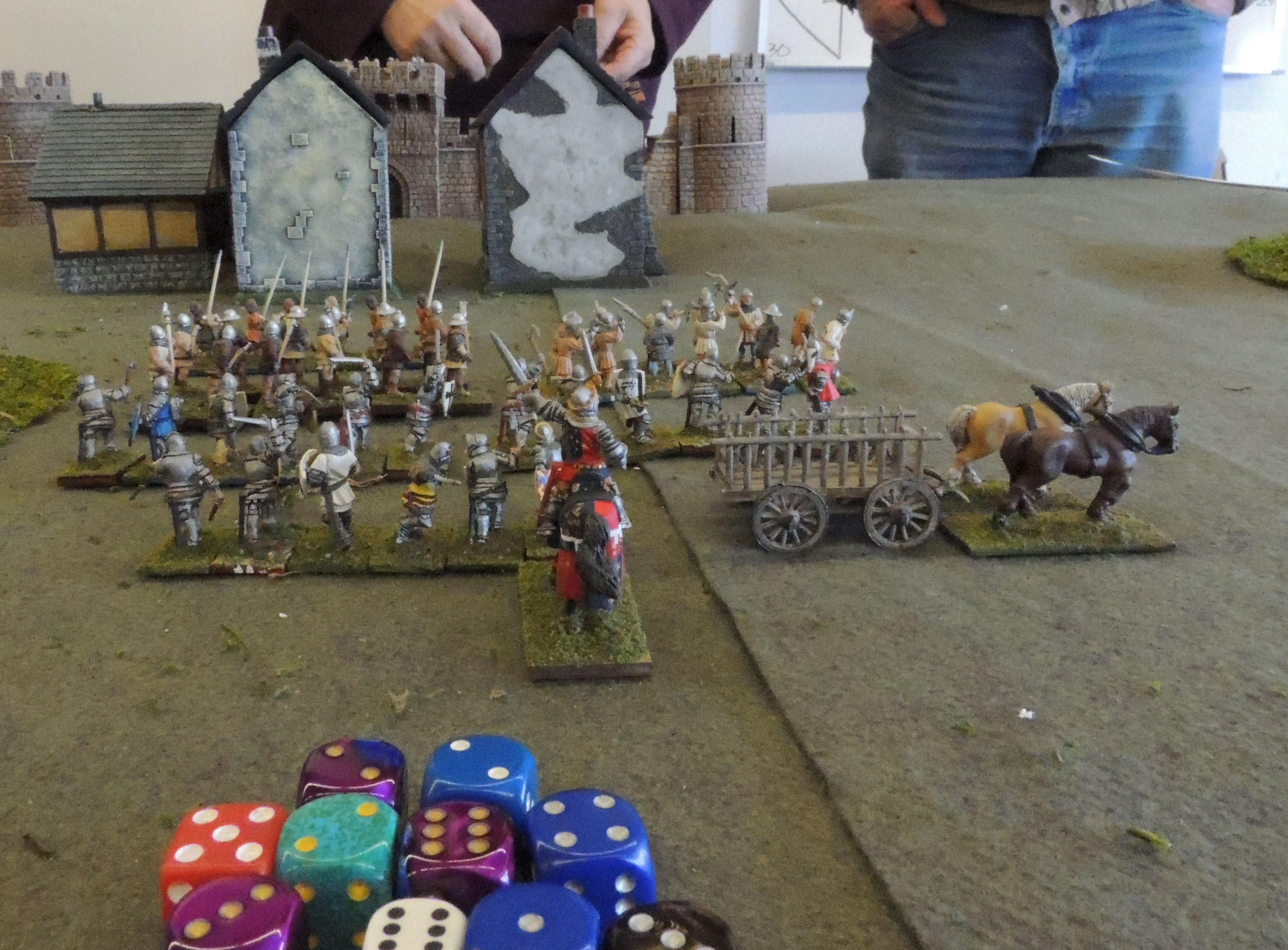
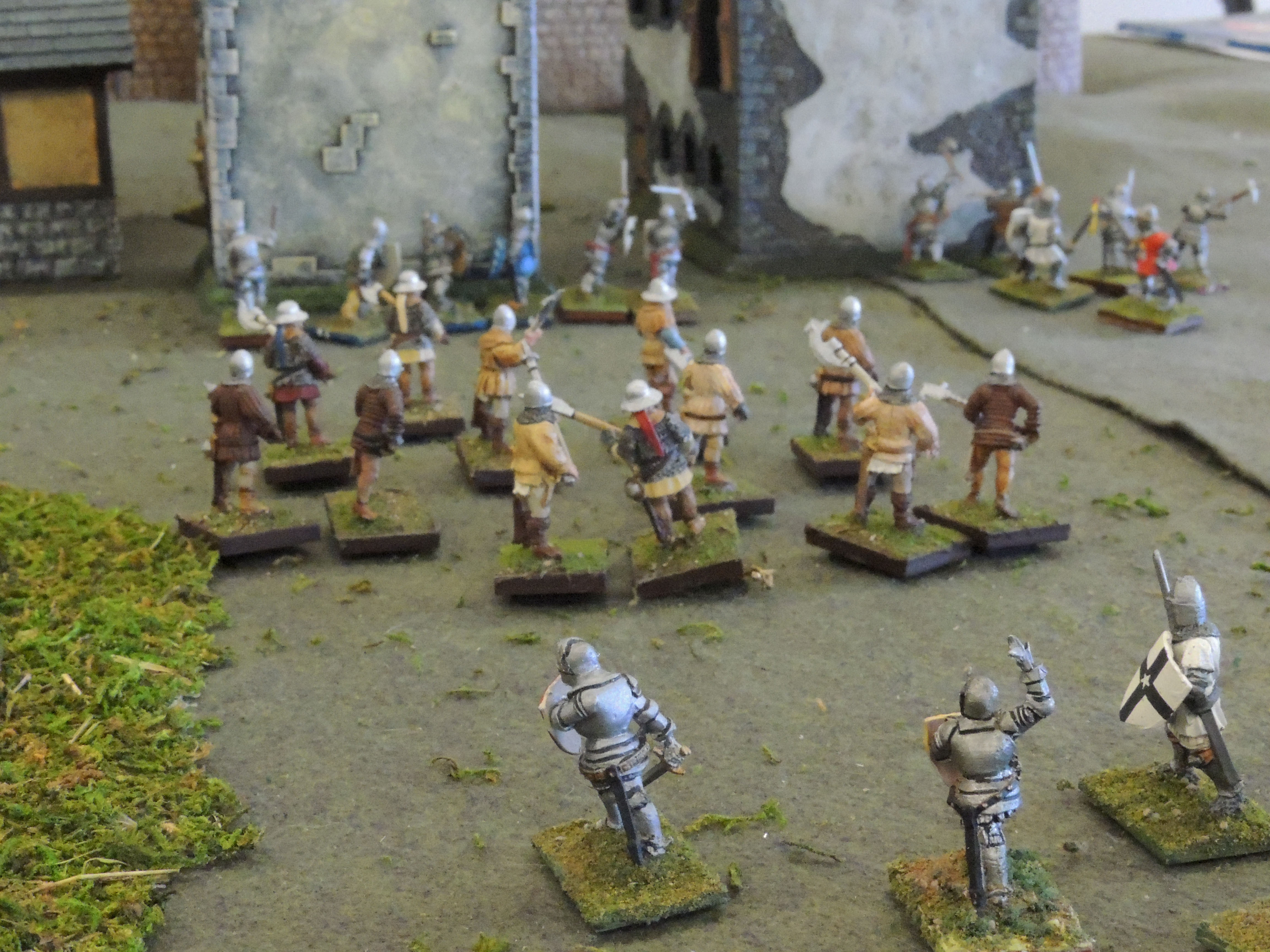
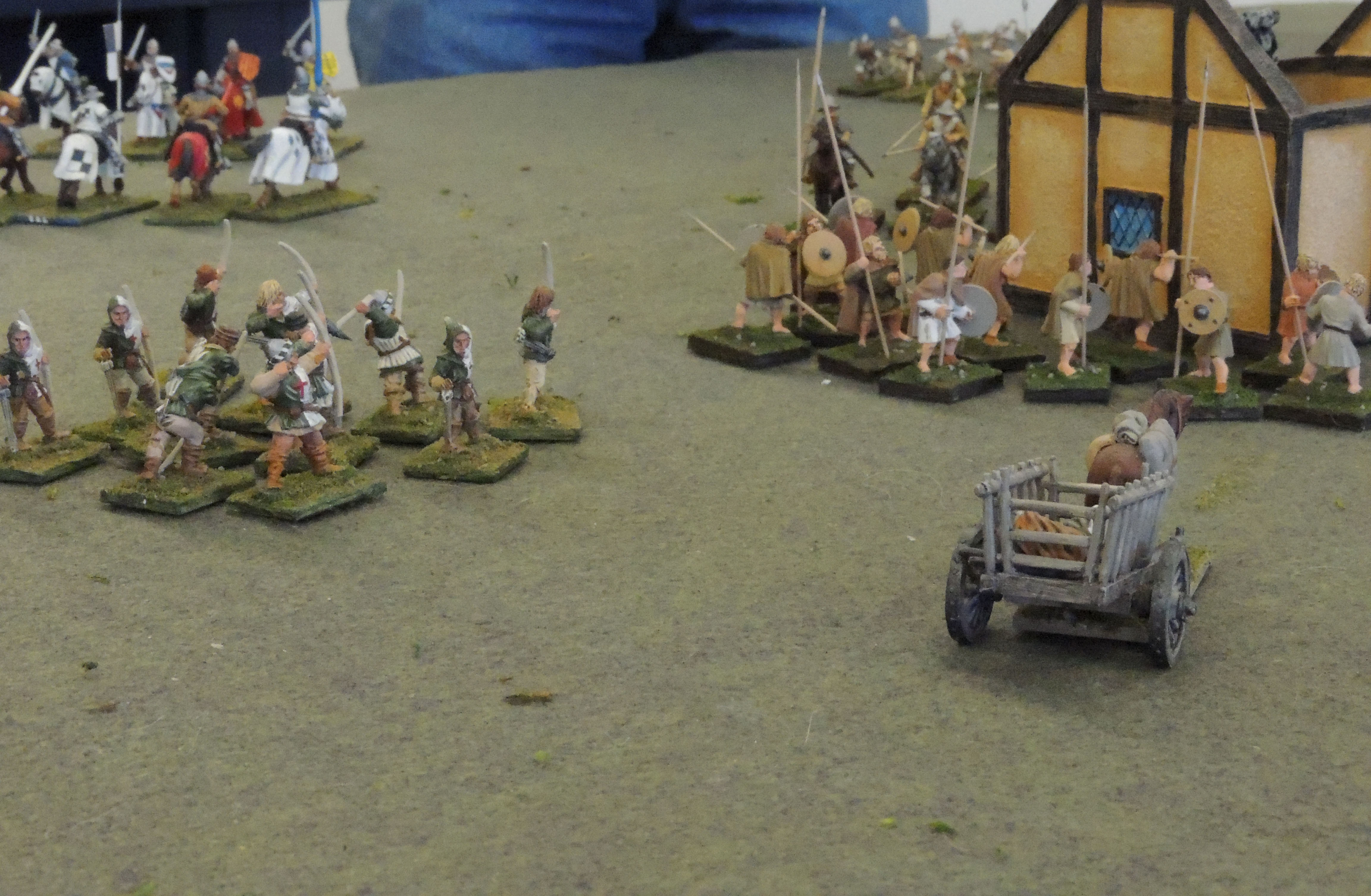
  • The game was played “out of the box” with one exception I’ll get to shortly.  I did add some rules to the scenario.  The rules were chiefly added to allow the English to sack the settled areas on the table.  These included rules for looting and burning. There was also a rule that allowed peasants to panic and flee toward the castle, violating the 3″ ZOC around French units.
  • Each side earned victory points-the English chiefly for destroying/looting/killing, the French for saving property and killing English.  The French also received points for killing Englishmen, of course, the peasants, scored separately, won points for stayin’ alive, stayin’ alive, ah, ah, ah ah, stayin’ aliiiiiiive. (sorry couldn’t help myself.)

The game was large and pretty elaborate.  I made sure to get to the shop as early as I could and allow about an hour’s set up.  I used two buildings for each of two. I put the castle on a hill near the three building town.

One of the English retinues.  Five units 54 figures is a pretty typical retinue size for Lion Rampant.

One of the English retinues. Five units 54 figures is a pretty typical retinue size for Lion Rampant.

The English forces, who had a pretty complex bunch of tasks to choose from, were allowed to set up 6″ from each of the three settled areas.  The French were allowed to set up 18″ on to the table. The challenge for the English was to make a plan from a variety of point scoring options, and fight off the French.

Though there was complexity in the scenario, the game devolved mostly into retinue on retinue combat, though the English were also burdened with devoting time and resources to looting and burning. On the English left, things went badly, mostly through bad die rolls. The French attacked with their cavalry, eventually destroying the English unit of mounted knights and killing the leader.  The English couldn’t activate their archers, and failed key courage tests. Though they were able to burn one of two structures, they couldn’t make key die rolls when needed.

English retinue in the center comprised three units of dismounted men-at arms, two units of expert foot sergeants and a unit of bidowers. Nasty stuff, but they faced supporting fire from the castle.

English retinue in the center comprised three units of dismounted men-at arms, two units of expert foot sergeants and a unit of bidowers. Nasty stuff, but they faced supporting fire from the castle.

In the center, the English burned all three buildings in the town, driving the serfs into the castle.  However they suffered from crossbow fire from the castle walls losing a vulnerable unit of bidowers. They also drove off a counterattack from the mounted sergeants coming from the French left.

On the English left, they easily burned the farmstead and held off the French advance.  The French were content to stay away from the English bowmen and siphon some of their mounted troops to the center of the board to support the castle.

We played for about two and a half hours.  All but one of the players had played at least one game of Lion Rampant, but I don’t think anyone had played more than one game. We carefully walked through the first turn, and pretty much after that, players ran on their own, with occasional questions.

A tighter shot of the English assault on Agen town. They successfully drove the peasants out of the buildings and burned them, but didn't try to take the castle. ,

A tighter shot of the English assault on Agen town. They successfully drove the peasants out of the buildings and burned them, but didn’t try to take the castle. ,

We did struggle a bit to keep everyone on the same game turn.  Multi-player games are a bit of a mystery and aren’t covered much in the rules. I set up the game so the English retinues went first, then the serfs, then the French. There was a little more thumb twiddling than I’d like as folks from one end of the table who weren’t involved with combat waited for those who were.

All agreed the rules were fun, the scenario was enjoyable and easy to figure out. The serfs, based on the victory points I’d set up won easily, with the French edging out the English for second. I made some mistakes in the rules that were quickly brought to my attention (gotta work on that.)  This is a scenario I’d really like to run again, and possibly at Enfilade.

English on the left have burned one of the farm structures, while mounted French advance on them.

English on the left have burned one of the farm structures, while mounted French advance on them.

A couple of quick changes I’d make:

  • Adjustments in the victory points. Not a big deal, that’s why you play test is to make adjustments.
  • Would like a shorter table. 5′ X 14′ was too long, 5′ X 12′ would probably be optimal.  5′ X 10′ would probably be crowded.

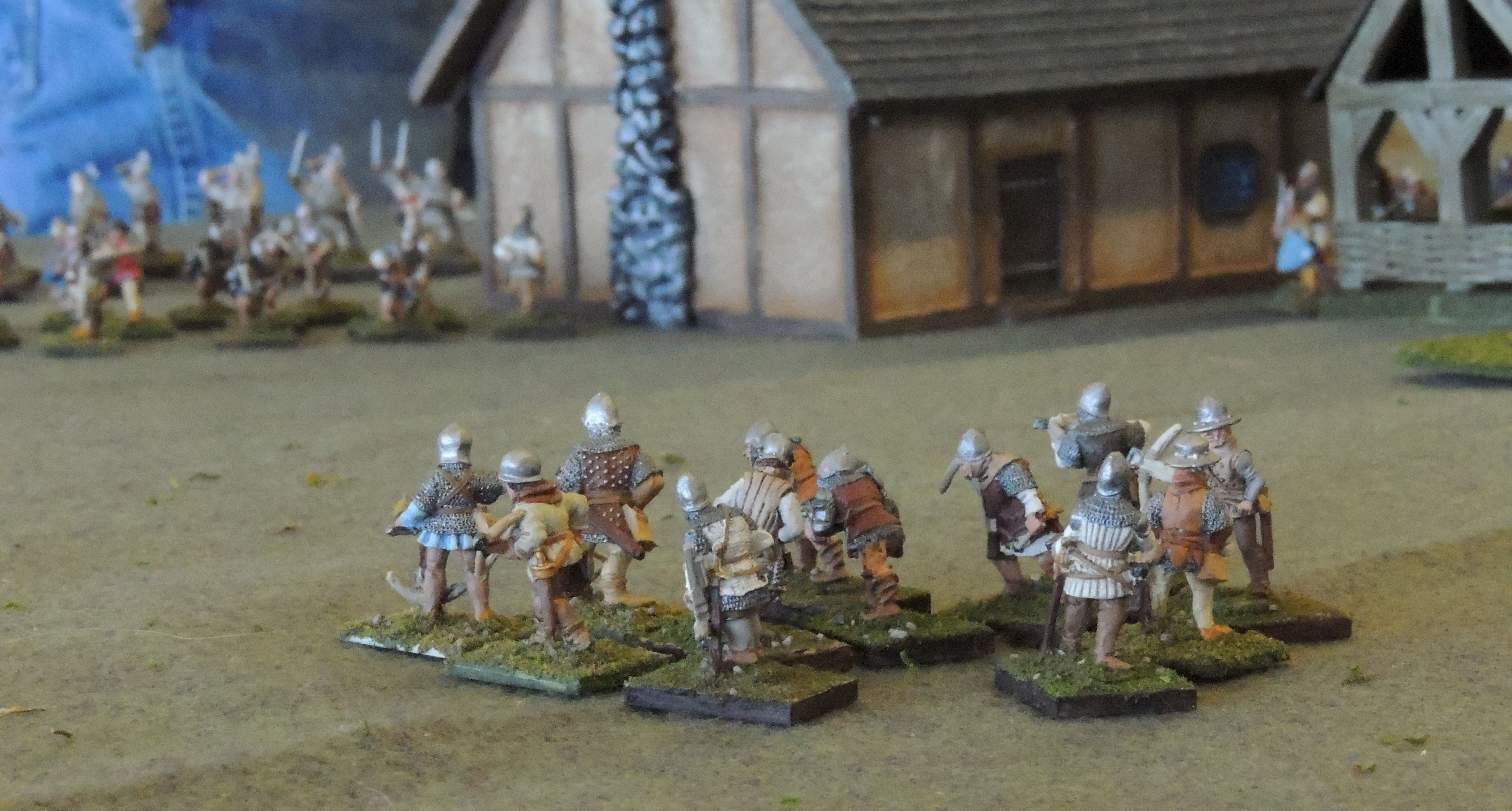
On the French left, a unit of crossbowmen huddle, unsure of what to do against the English

On the French left, a unit of crossbowmen huddle, unsure of what to do against the English

For myself, I never looked forward to running a game as much as this one.  I had my troops perfectly organized to pull out of boxes.  There was plenty of terrain-Barbs Bunker vineyards and fields, Pegasus and Miniature Building Authority buildings including a castle with a breached wall. I wrote over two thousand words worth of retinue charts and scenario notes.  I painted 24 figures worth of foot sergeants in four days. I came home exhausted, but extremely satisfied.  Thanks to all the players-Dean, Bill, Ron, Scott, James, Lawrence and Gene.  They were great to work with and were willing to take the time to debrief the game with me.  Ron pointed out the rules errors I was making-thank you.  It was just a great day.

So, we got that Camaro out of the garage and let it rip.  We drove like mad from North Bend to George, and though the WSP was out in force we didn’t get caught speeding. Petty was awesome and I  can’t wait to do it again.

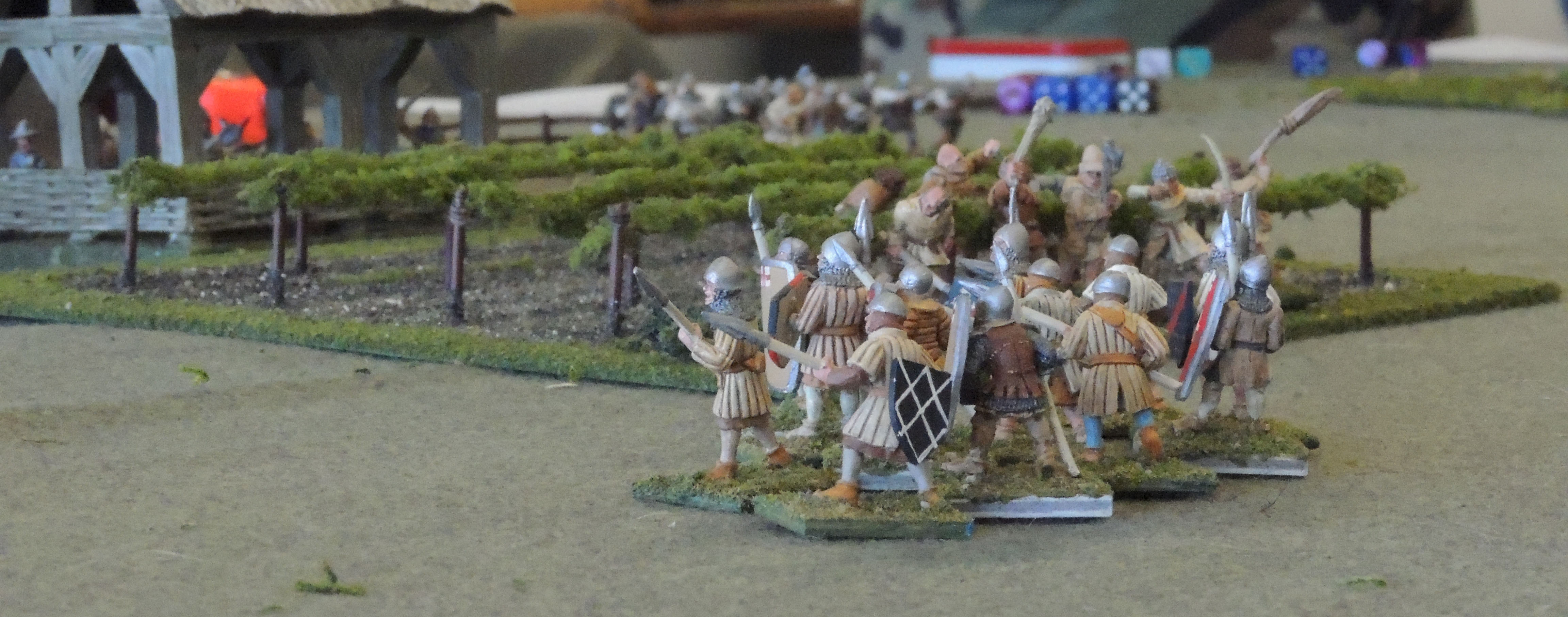
French sergeants take shelter behind the vineyards.

French sergeants take shelter behind the vineyards.

Lion Rampant Again

English longbowmen confront French mounted troops

English longbowmen confront French mounted troops

402In our neck of the woods (Washington state, Puget Sound region)  many gamers are very interested in Lion Rampant.  For some of us, Lion Rampant is competing with SAGA as a rules set of choice for medieval warfare.

Confession: I am not a fan of competitive, one-on-one rules sets with points-based army lists. I know many of my good friends really do enjoy that gaming environment.  I’m not one of them.  No slam on those who do, but that’s not what it’s about for me.  SAGA is that kind of game.  Lion Rampant could be, with its points-based retinues, but it doesn’t have to be, at least not from my perspective.

I’ve had the good fortune to walk through four games of LR over the past ten days.  I believe the rules can be a very capable vehicle for scenario design.  In each of the games we had multiple players in games-four players, three players, up to eight players.  The games all proceeded fairly quickly through simple scenarios finished in less than two hours, and in some cases even faster.

For those of you just picking up these rules, or trying to decide if this is the rules set for you, there are some important things you should know.

  1. These are skirmish rules.  Though author Daniel Mersey suggests they could be sort of semi-skirmish, they are intended to be 1:1 scale.  Each unit of 6 or 12 figures represents 6 or 12 guys.  They are a collection of dudes, not intending to represent a formation one would find on the battlefield at Agincourt or Tournai.
  2. Mersey uses an interesting device in the rules–a 3″ zone of control around each unit that may not be crossed by friendly or enemy units (unless you are being attacked.)  This keeps the combat unit to unit, and fairly tidy, but it does create some interesting problems. This extra 3″ footprint takes up extra space on the table, likely requiring more room than one would think at this scale. Resist the temptation to toss this requirement.  The 3″ rule is sacrosanct and gives the game real flavor and uniqueness, on the one hand, but it doesn’t complicate the simple, but clear game mechanics
  3. One would think that with such small units on the table it should be easy to throw loads of them out there. Careful. The 3″ footprint does rob lots of valuable space from the tabletop.  I would suggest two 24 point retinues on a 5′ X 4′ table. Four 24 point retinues on an 8′ X 4′ table.  Six 24 point retinues on a table at least 10′ – 12′ long. This is an important  consideration in scenario design.  Most foot units only move 6″ per turn and due to activation rolls may not move much at all in a turn. Mounted Men-at-Arms move 10″ per turn, but are fairly disdainful about moving. Missile fire extends 18″ from the shooter.  So, if you’re counting on your units covering great expanses of the table, think again. And the 3″ zone of control makes it more difficult to throw lots of units into an extended skirmish.
  4. Missile fire can be deadly.  Putting terrain on the table to break up line of sight is critical.

For my purposes, I feel like the rules work well.  In the Hundred Years War there are endless small unit battles in Gascony and Brittany over strong points and market towns. English chevauchees left many small towns in ashes, while local French commanders scratched together troops to drive off the invaders. I have an idea for a raid on town guarded by a derelict castle, though I also fear it may involve too many troops.  We’ll just have to see.

I confess the rules have really captured me. I like it that they are inexpensive.  I like it that the mechanics are easy, though there is some subtlety.  The activation roulette means that no unit alone is queen of the battlefield. Suggested retinues should be considered just that, suggestions subject to contact with history.