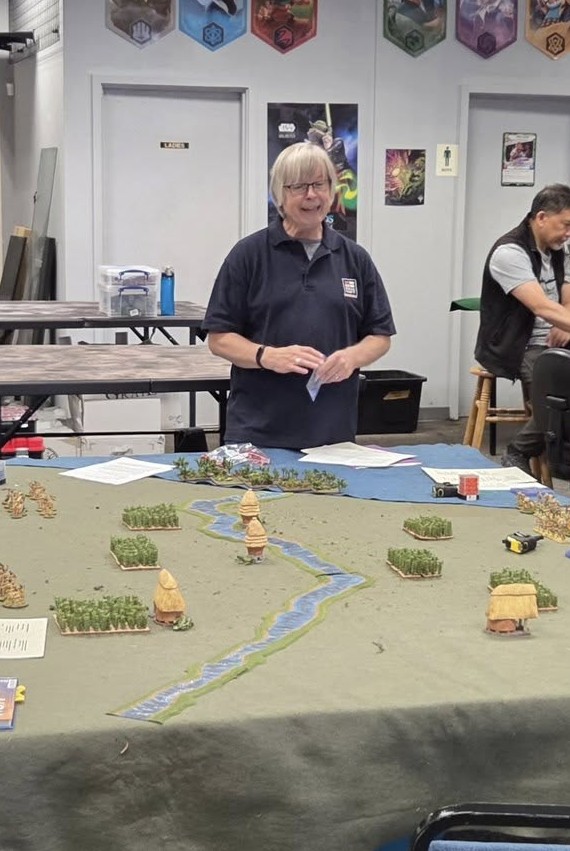
In 2015 or 2016, or maybe both years, David Sullivan and I had played a few games of the Lion Rampant and decided it would be cool to try to adapt it over to playing the game system with Aztecs and Conquistadors. Of course, the rules didn’t quite cover the period, but we didn’t let that stop us. David immediately began crafting some changes that all Daniel Mersey rules seem to invite. He called them Quetzacoatl Rampant. We both bought piles of figures. Most of them came from Eureka Miniatures and their fine range. Others were from The Assault Group and Outpost Miniatures.
We ran a couple of different scenarios. David and I both acquired Aztec temples from Stonehouse Miniatures, but David was much more “all in” with his. We ran a big temple game at Enfilade. I focused my efforts on a foraging scenario with the Spanish aided by Tlaxcalan allies trying to gather supplies in the face of hostile Aztecs. That was a long time ago.
When David passed away in March, I tried to glom on to as many of our shared projects as possible. One of those was David’s Conquistadors and Aztecs. His painted figures were mostly focused on the Spanish, which more or less repeated mine-a cavalry unit, a bunch of swordsmen, a cannon and some missile troops. But his are a bit nicer (mine are okay,) and these were also his first venture into the Dip painting technique he would get to be so good at at.
I spent a lot of 2024 remounting my 400 or so painted figures for this project to my preferred 3-2-1 mounting model. I haven’t remounted David’s figures, which are mounted singly and honestly, I don’t think I will. However, by acquiring them, I did plan to work in a game or two. July was the month for me to act.
There are some important rule changes to note for QR. Actually, these are rules that could be applied to any Lion Rampant derivation. There is that entire activation thing. We’ve played the game straight out of the box, that any activation failure means you’re done. That seems harsh. We’ve played so that everyone gets a chance to activate, which seems excessive. We’ve played so that the leader can re-roll one failed activation or courage test per turn. David and I decided that instead we could give each side ten Appeal to God tokens. Each of these could be spent to re-roll a failed Activation or Courage test. However they also gave their foes an additional victory point.
Another change we made was in the die rolling rule for Lion Rampant. Full strength units get 12 dice and then at 50% casualties they fell off the cliff to six dice. We felt this was too arbitrary. Our game group in Tacoma decided to allot dice by figures in the unit. A standard 12 figure unit generated one die per figure, so twelve. Six figure units would generate two per figure or twelve. But as figures were removed by casualties, they would lose one die per figure or two dice per figure respective.y. A big deal for this project because all Spanish units are only six figures
Last, but not least, there are the historical flavor adds, and that is in the pile of little modifiers we threw in to reflect the period. Gunpowder weapons negatively affected Aztec armor and Courage tests. However, our favorite was the “Your Beating Heart” rule which allowed the Aztecs to capture casualties rather than remove them from play. This required a Courage test, with all required modifiers. Success would boost the captors’ Courage and give a negative courage modifier to the enemy. The hearts could give the Aztecs victory points as well.
July provided a couple of opportunities for me to host games using my Aztec pile of wonder. I focused on running the foraging scenario twice, once for the monthly game day at Wizard’s Keep and the other at Silver King for my usual game buddies.
The Wizard’s King day came first. Lots of guys I knew well who would be reasonably kind. I had a 6′ by almost 8′ table so lots of width and depth. The Spanish were constrained by the bay of chimnampas or floating gardens, which was also a source of victory points. The table was bisected lengthwise by a stream. Most of the food storage to be captured by the Spanish was located there. The Spanish had three retinues. They were pretty big. The two flank retinues were mostly Tlaxcalan allies with two Spanish units-a swordsman and a missile unit. The middle retinue was all Spanish and included a mounted unit, a sword unit, two missile units and a cannon. They set up 12″ on to the table.
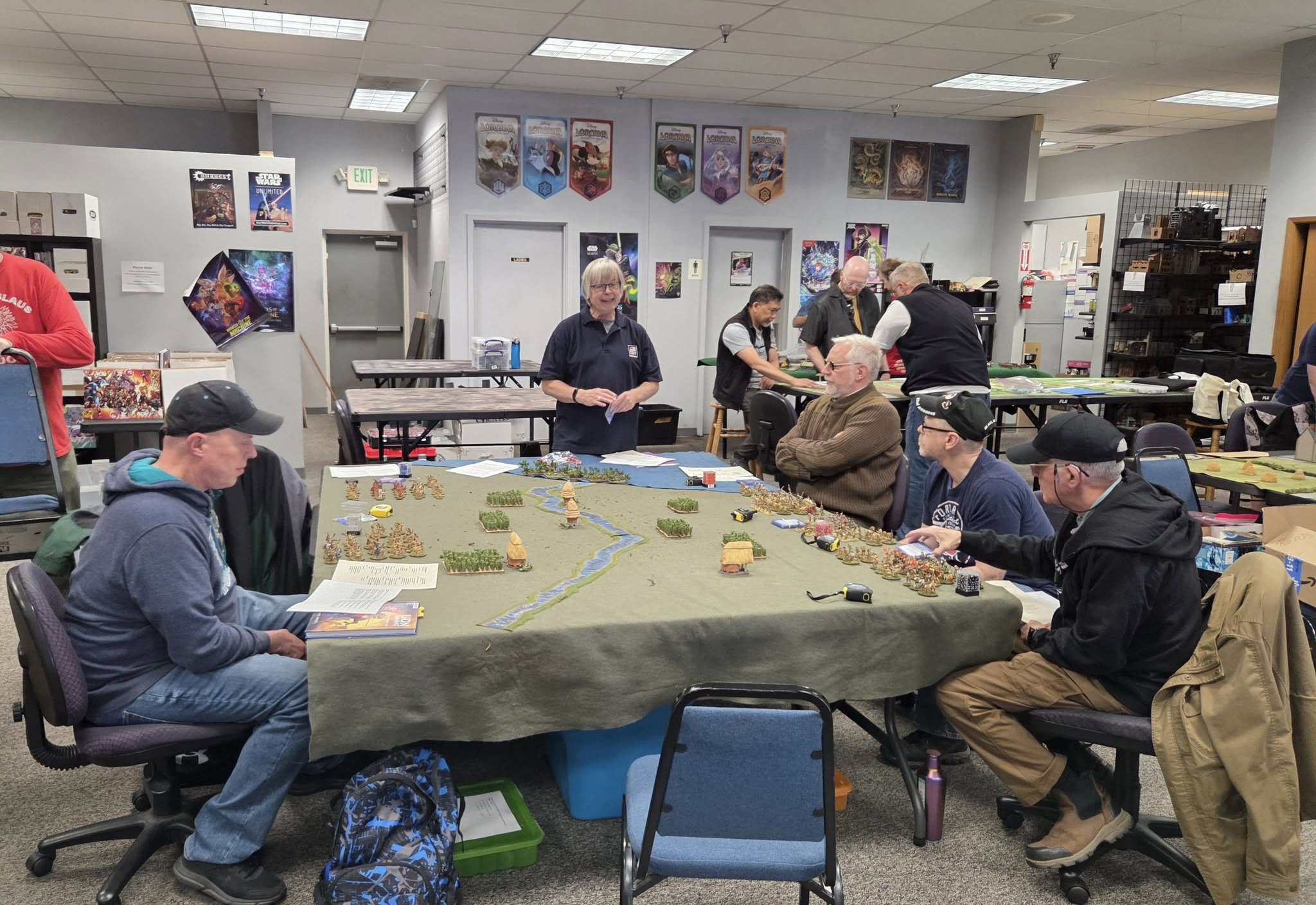
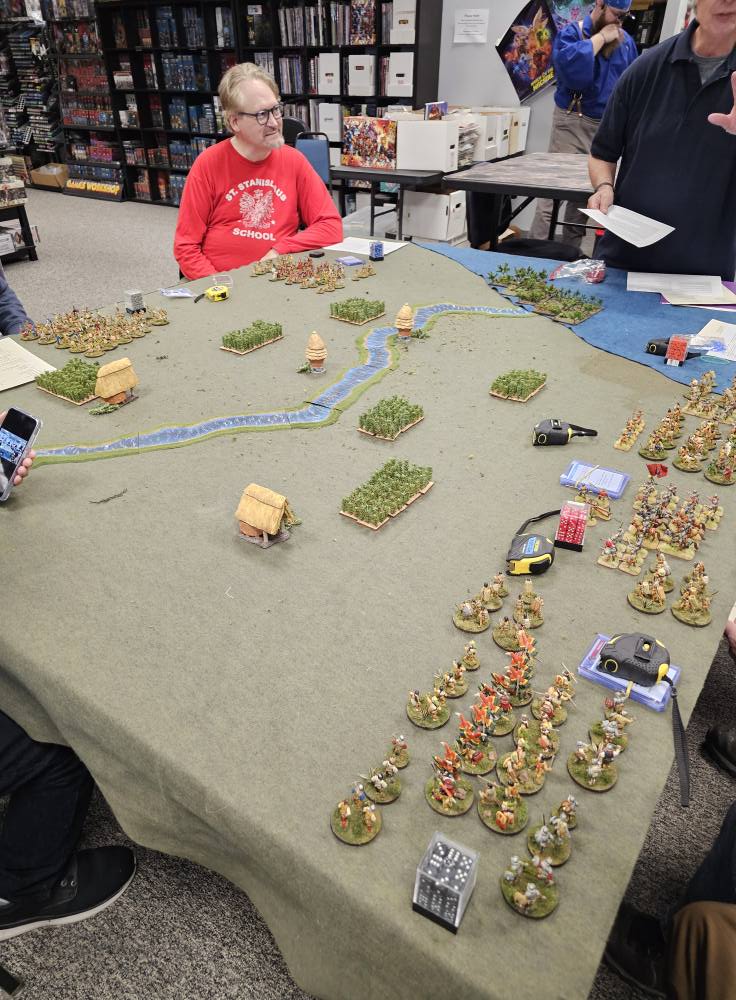
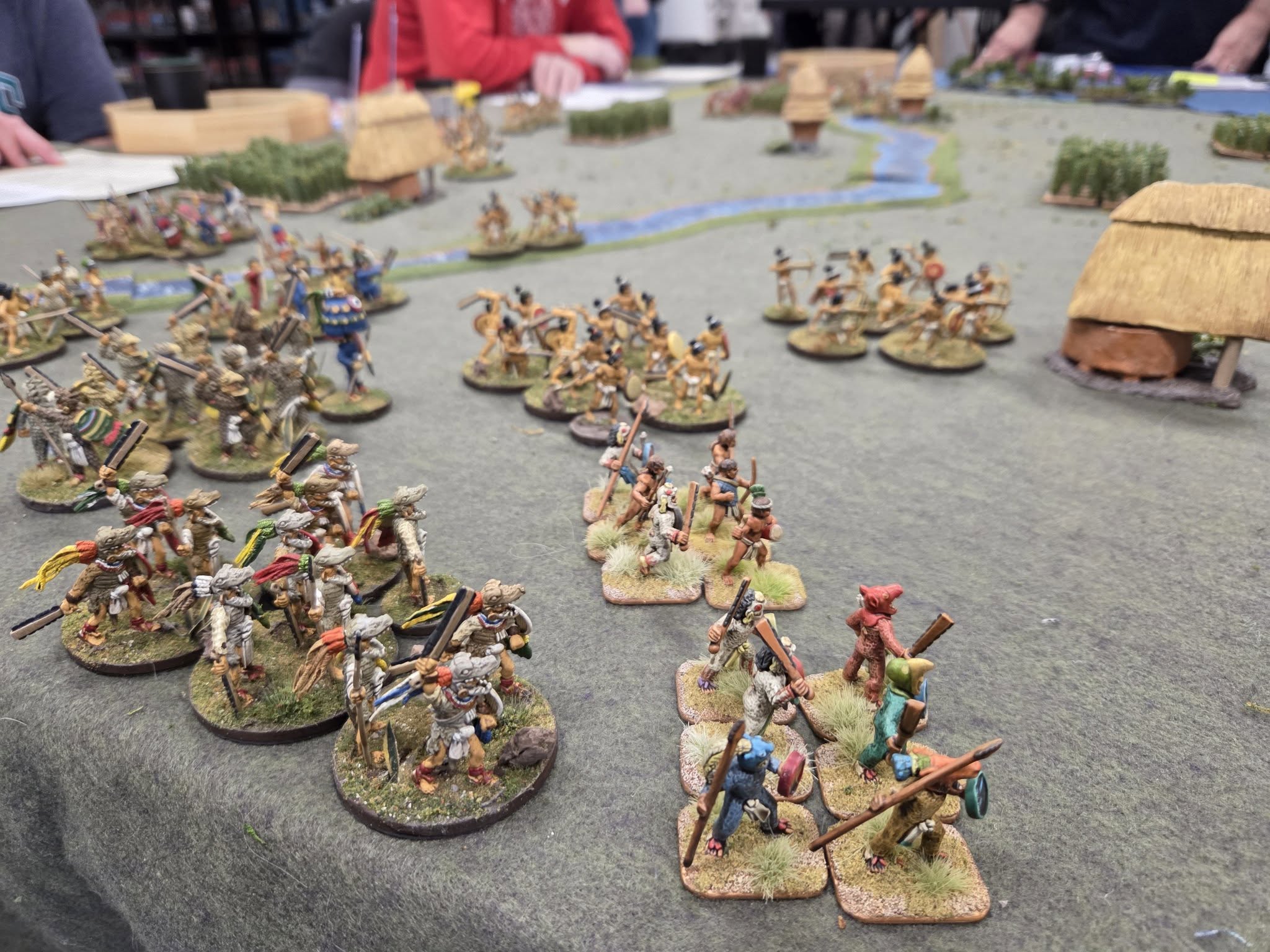
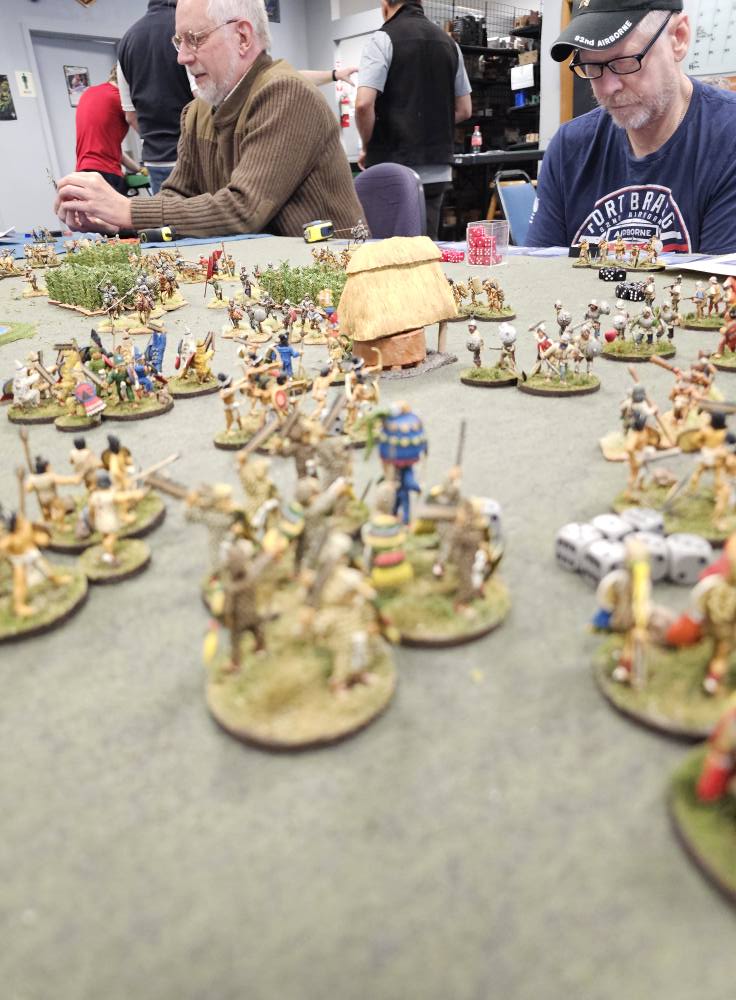
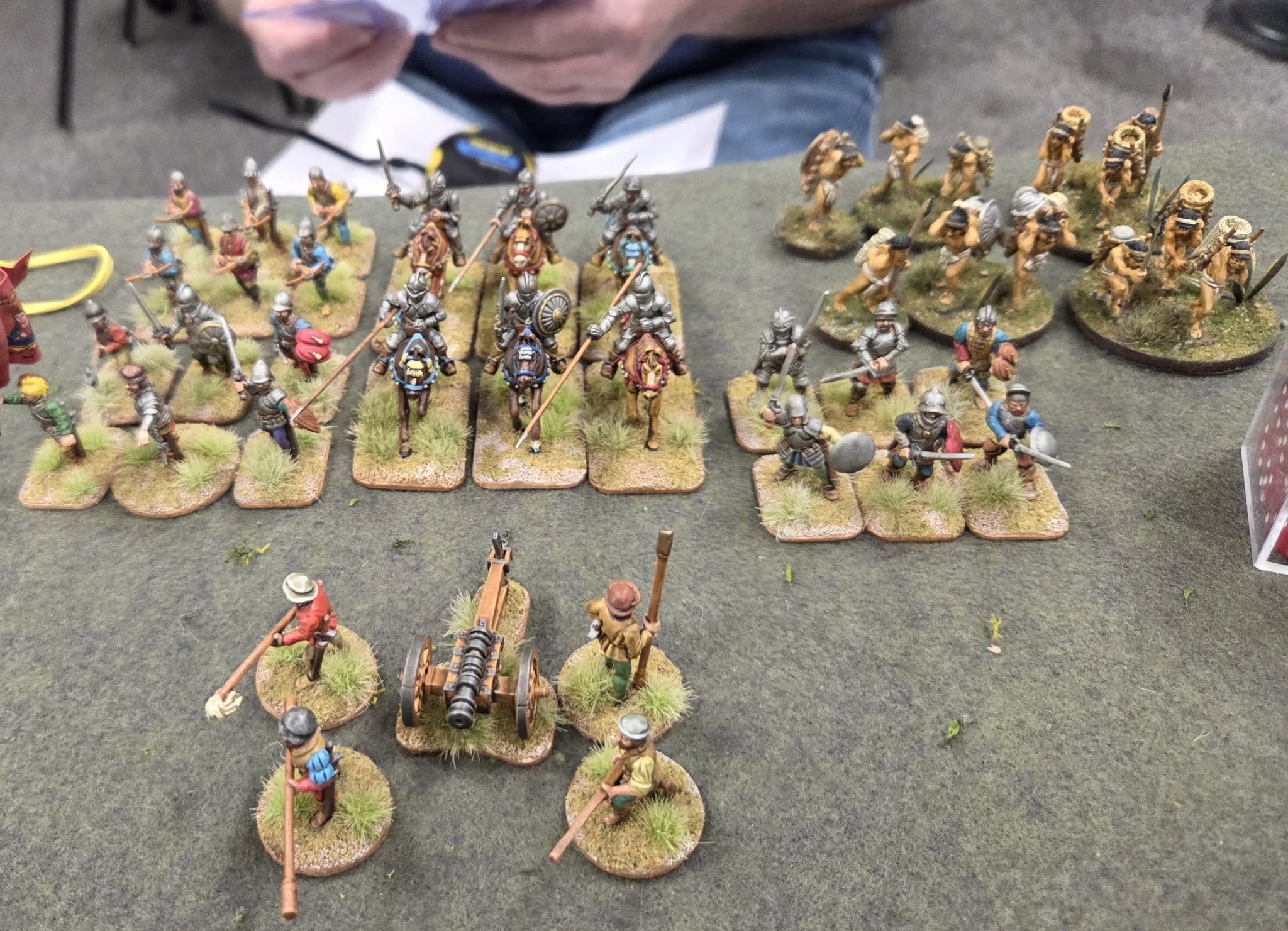
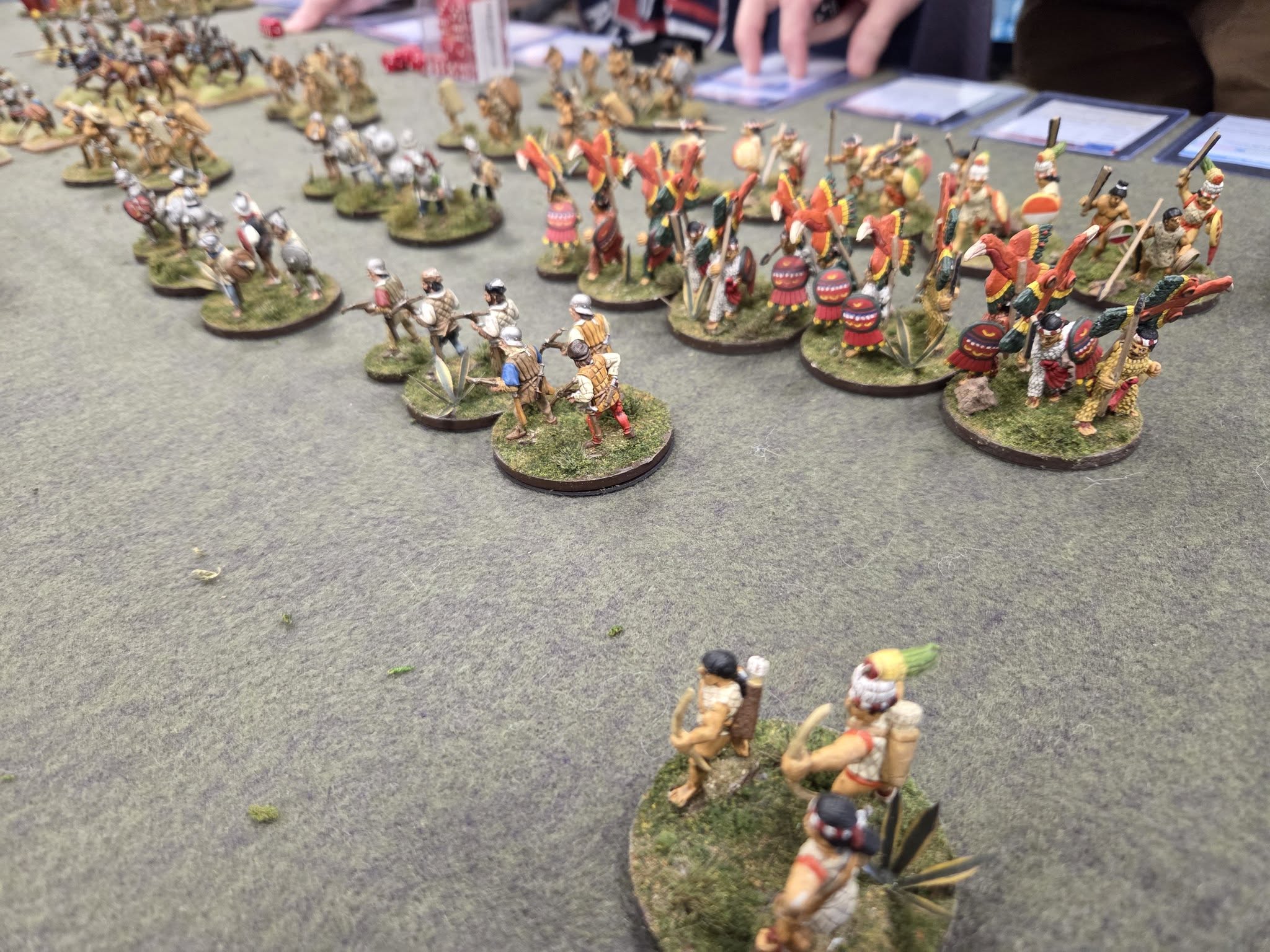
The Aztecs set up 18″ on the table. Again the retinues were largeish with four units of warriors and two units of skirmishers. The middle retinue had five units of warriors to cope with the Spanish to with the skirmishers. The right hand retinue appeared on the board edge at the end of turn one to give the Spanish something to think about.
This game didn’t go quite as I planned. I loved the activation snafus and the decisions about whether to Appeal to God or not. Honestly, there may have been too many units for everyone to manage effectively. I probably should have started units further on to the table-activation failures really slowed the armies from getting to grips. The skirmishers were too effective. The game ended up a Spanish victory. All the native bearers who collected forage were successful and survived. The Aztecs took some hearts and inflicted some casualties, but not enough, but it was a fun first step.
The Silver Kings game was only a few days later so I had a chance to clean things ups. I wanted to reduce and standardize the retinues. The Tlaxcalans would each have three warrior units, a Spanish swordsman, two units of bearers and a skirmish unit. The Spanish would have a horse unit, a swordsman, an arquebusier and a crossbowman, the cannon and one bearer. The Aztecs would also be a bit more limited. The two flank commands each had four warrior units and one skirmish unit. The center unit had five warrior unit and two skirmish units.
The tables at Silver Kings are only 4′ wide, so much narrower. I also limited the skirmishers to be the “Flighty Light Troops” on pg. 120 of Lion Rampant, ed. 2, which limits their shooting to skirmishing only, no Shooting activations.
The game was popular and we had seven players for the six positions. Keith and Scott divided the center Aztec command which effectively became two commands. The game also played much differently
The Spanish/Tlaxcalans almost immediately lost two units of bearers, and reduced their ability to gather forage reduced by 40%. The narrower table, however made the Spanish shooters much more effective and Mark rolled well with them, doing a lot to put pressure on the Aztec center. Those guys were severely affected by splitting their command, as Keith took his pile of warriors to the left to help Mark fight Kurt while Scott had his smaller group of guys to fight off other Mark in the center. At the other side of the table, Eric and John conducted their own private bloodbath of Tlaxcalan warriors with their handful of Spanish fighting off Aztec Knights in what seemed like an even struggle.
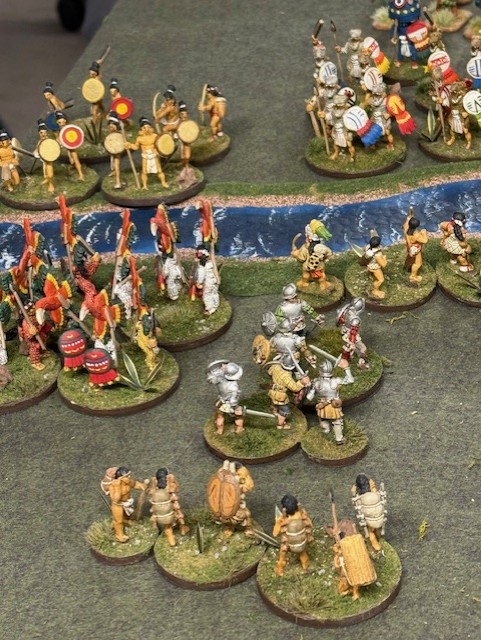
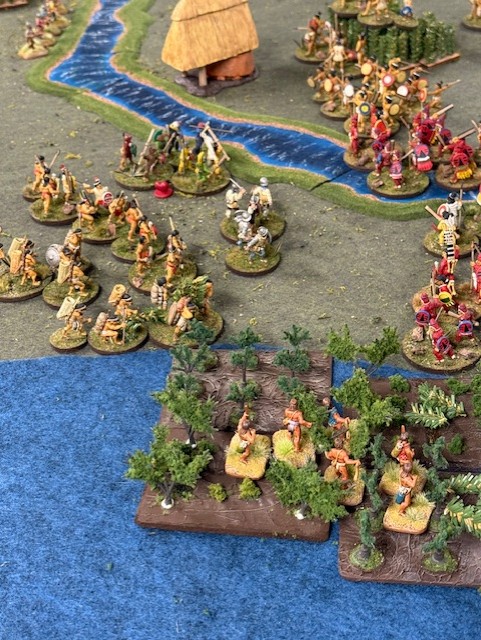
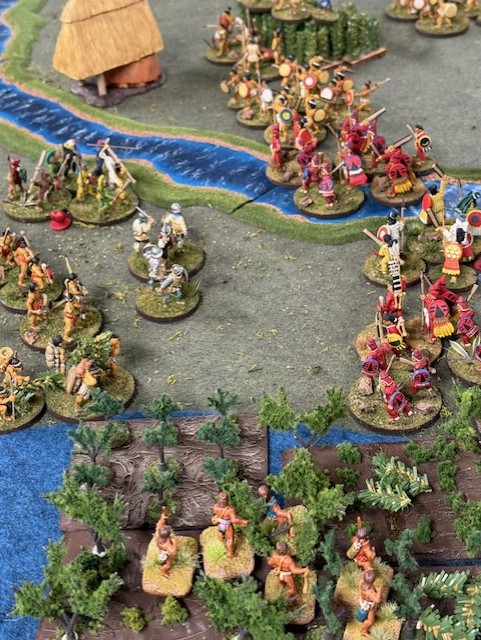
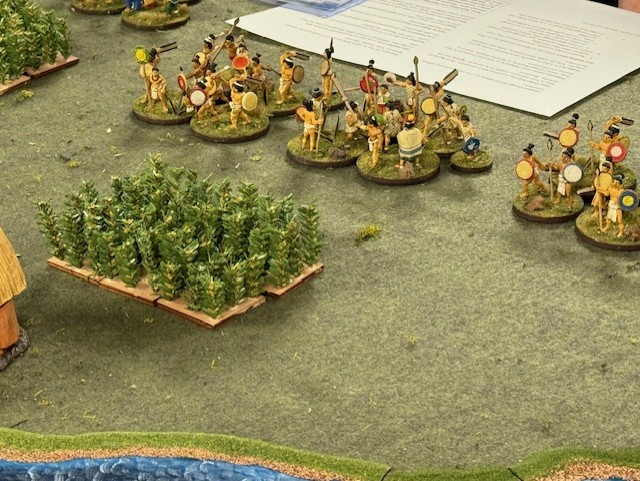
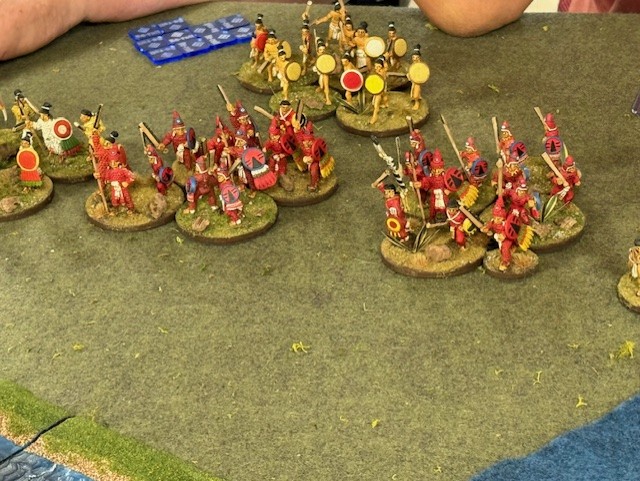
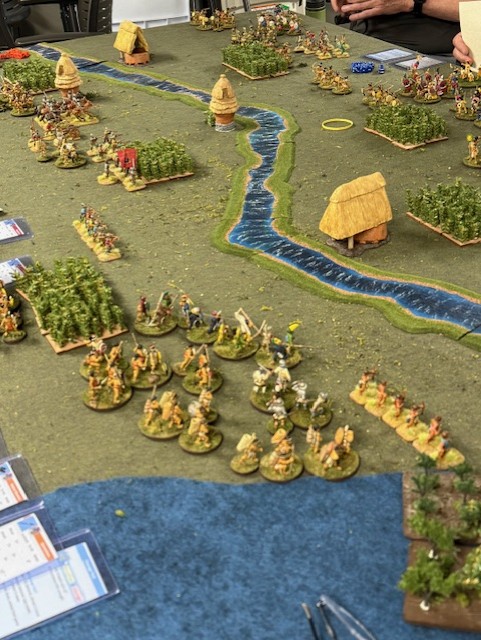
I thought a couple of choices made in the game were really interesting. One were the few Appeals to God made in the game. Each side burned three tokens. Because the game was so tight, it may have been a wise choice, though I wonder about the activations not made as a result. The other choice was the few Beating Hearts attempted. Mark had one successful capture-worth victory points. But after failing a second attempt, he decided to stop. No other Aztecs attempted Beating Hearts. I thought it was interesting.
It was a great game and everyone had a good time. Lots of figures on the table makes everything good. It was very tight with the Spanish perhaps winning by one victory point.
I am anxious to try again this fall. David had perhaps as many as a hundred unpainted Aztecs and Tlaxcalans I’m hoping to paint. I’d also like to pick up some Aztec civilian types that Foundry makes. I have a scenario I’d like to try that was generated through Chat GPT that has potential. Looking forward to more.


