The Makah

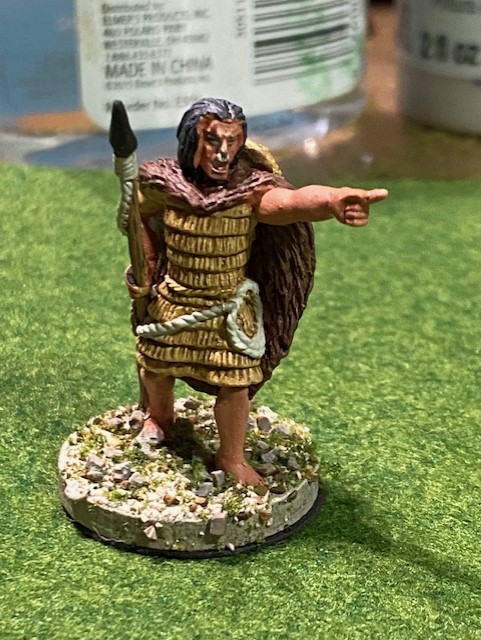
The Makah leader is great and quite heroic in size.

When I gamed in the 80’s I was raising a family, didn’t have much extra money, and thus didn’t have a lot of cash to invest in the next big thing in figures. Friends would talk about the new Dixon figures at a buck a piece and I would laugh and go about painting my strip Minifigs. Times have changed, and I do pay attention and every now and then the hook gets set and I’m suddenly hurtling through the air after the next shiny thing. Sometimes it works out and others, well, not quite as much.

There was a post in one of our groups about the Pacific Northwest native figures from Paymaster Games. Paymaster is a small company located in Seattle (just up the road) that offers some real niche figures, including MesoAmerican peoples, Pacific Islanders and Northwest natives. I am a sucker for anything resembling local to this area so I was immediately intrigued. David Sullivan and I began looking at playing the recently revised Tribal rules, which call for small singly mounted commands of 15-20 figures. We both thought these would be just right for such a mini project. We jumped right in on the PNW natives.

With the completion of my Skraelings for SAGA and the wrap up of the Camerone figures I currently have, I felt the time was right for work on these PNW figures. As I said, Paymaster is a Seattle company. I would guess they are quite small, maybe they don’t do their own casting. Their on-hand supply of figures seems to be quite limited. David Sullivan and I have made small, multiple orders and have exhausted what seems to be in-stock. My first order was slow in coming and wasn’t exactly what I ordered, though the second order arrived promptly and was exactly what I asked for. I’m sure it’s a tough business for newbies. I chose to focus on the harpoon-armed warriors that resembled, at least in my mind, Makah warriors. I tried to do a little reading to learn a bit more about dress. Though there is an Osprey book on Indians of the Pacific Northwest, it’s of limited utility and I had to make my own best guesses.
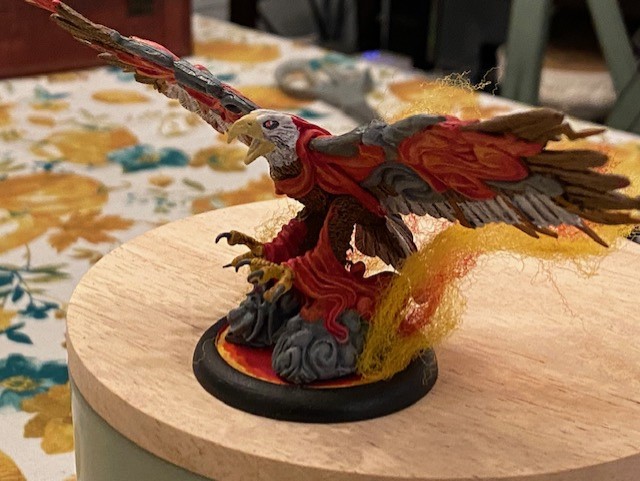
the Great Thunderbird miniature was very fun to paint and really inspired me to be creative.

I had the figures for six weeks or so before I started doing anything with them. I did, however, paint the Great Thunderbird figure immediately. It was so cool and such a great attraction I couldn’t help myself. It was a four piece resin cast miniature, quite large that I’m sure I can figure out a way to use in something. I loved every minute of painting it. They also have an Ogopogo miniature based on a Loch Ness-like myth that lives in Lake Okanagon. Another local story that I can’t ignore.

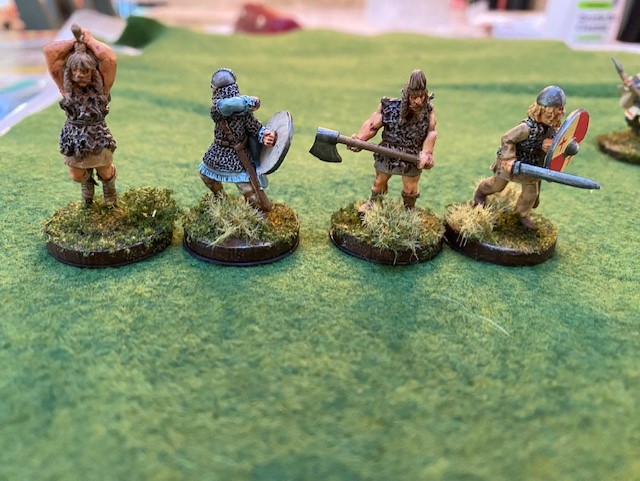
Last week I finished my last Camerone guys so it was time to start doing something with the Paymaster dudes. The Paymaster ranges are similar throughout. I can buy warrior packs of five figures and supplement those with more individual “heroic” figures. The “heroes” are definitely distinct. They are more expensive, much larger and some of the poses are quite cool. I had actually painted the Makah leader and the two Makah harpooners and I liked them quite a bit. They had just the right amount of detail and the casting really reflected the simplicity of dress these larger than life fellows would have had. However I had a bunch of warrior figures to assemble and paint, and they would be different.
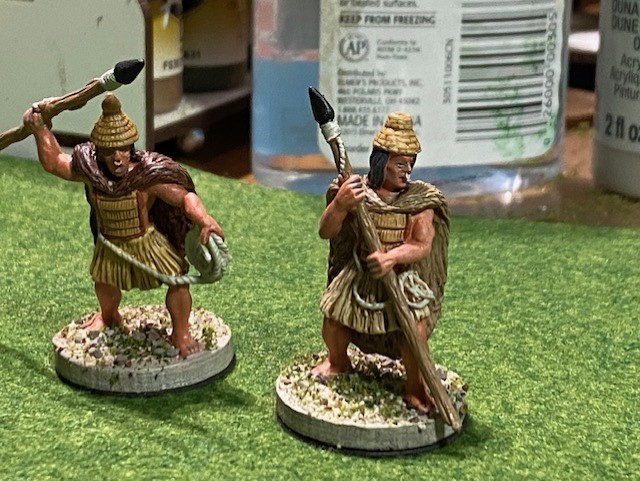
The Makah heroes are quite large and have wonderful details-the hats, the armor, the harpoons were all just wonderful to work with.

The Paymaster warriors of all types come in packs of five figures. Looking at the pack, my eyes bulged out at the pieces, “holy crap.” Depending on the figure type, there are 4-6 pieces per figure that must be assembled: legs, torso, head, separate arms or arm combination, and a quiver if your figure has a bow. I became very friendly with my large bottle of Zap CA glue and Bob Smith’s CA glue accelerator.
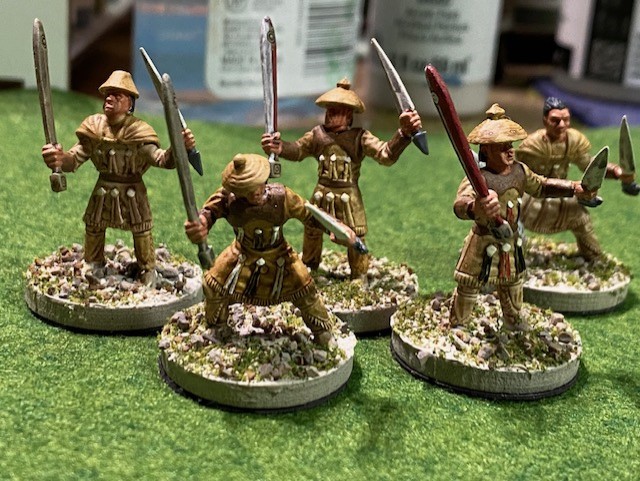
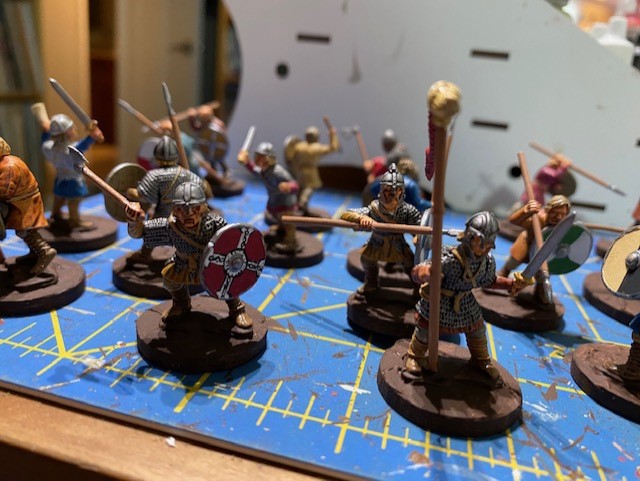
The PNW basic warrior.

The warrior figures are not large. They are much smaller compared to the one piece “heroes” types. In terms of animation they aren’t super. There are some very nice touches. I like that 3/5ths of the torsos have the capes, typically made of cedar bark, that many northwest natives wore to keep off the rain. The harpoons, which are cast metal, have very nice detail with the whale sinew rope wrapped around the projectile and the hands. Love the pattern printed on the quivers, very northwestish. The tassels on the tunic are a nice touch, but everybody has ’em. I also really like the variety of headgear for the figures.
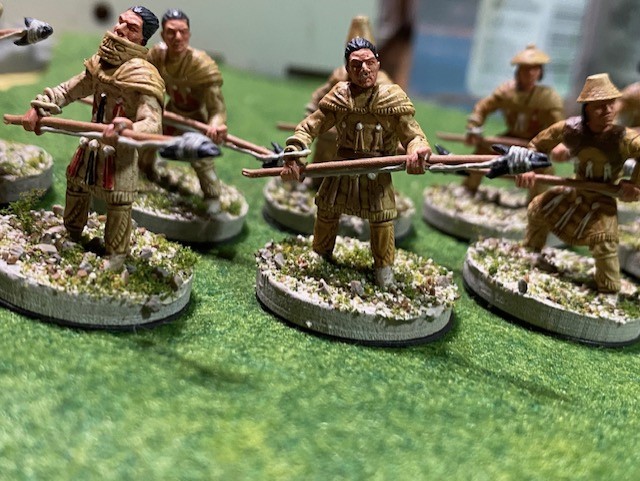
Makah harpooners.

But there are issues, at least for the dude like me who is new to the party. The figures come with a nice variety of weapons and bits. The archers have a choice of a bow being fired in the left hand OR a bow that is schlepped, and in the right hand, one has either an arrow or a war club (or at least I think that’s what it is.) Unfortunately those options don’t work for every figure. If the figure has a cape, it can’t use the right hand with arrow. How did I find out? The hard way. Harpooners with capes good. Harpooneers without capes, bad. The harpoons actually come attached to both arms, one version clearly for dudes with capes, one clearly for sans capes. The arms for without, just don’t fit right without lots of filing and epoxy filler. This automatically catapults them to the bottom of Kevin’s most-loved figures list. They were quickly dragooned into service as archers or with war clubs, but that was only because I had a fair amount of figures to mix around and I was able to discern the patterns in the void pretty quickly. Some directions would have been useful.

Painting isn’t difficult. There actually is a Pacific Northwest Indians Osprey book (Men at Arms 418) but the plates don’t give a ton of guidance. The figures probably much better attired than the pre-contact warriors would have been. I chose to keep colors simple and used a lot of variations on tan. Then I soaked ’em down with Army Painter Soft Tone wash. I was pretty happy with the results. For the tassels on every warrior figure’s chest and back, I did a few in light brown, but most I painted red, white or black, because those are colors that appear in most contemporary native cultural symbols. Is it right? No idea. The tassels are attached with off[-white shells. The figures were easy, but kind of fun to paint.

The assembly is a pain. I’ve assembled a fair number of plastic figures-Perry, Victrix, Gripping Beast, North Star-some more fiddly than others. These were worse.

That said, these figures fill an interesting niche and the detail is nice. The warrior figures look good when painted, though the posing is mostly uninteresting. The heroic figures I really like, but they are also quite costly. The warriors work out to an acceptable $2.25 each or so, but the heroic figures can be pretty pretty spendy at $8-10 a whack. These figures are also quite large. They are beefy and about 34mm tall. The warrior figures, by comparison, seem slight and measure in at 28-30mm.

I would never say not to buy these figures, however the buyer should be aware of what they are getting and that they carry some risks with them. I will add more figures as I need them to make a good 4 player Tribal game. But now I know what I’m getting into.
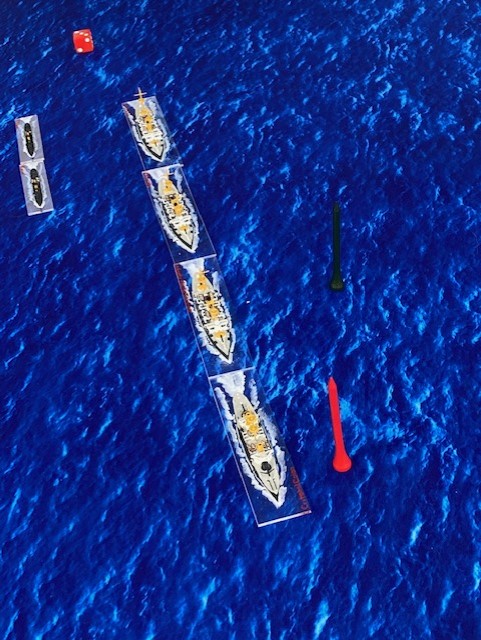
International Naval Wargaming Day 2023: Cienfuegos

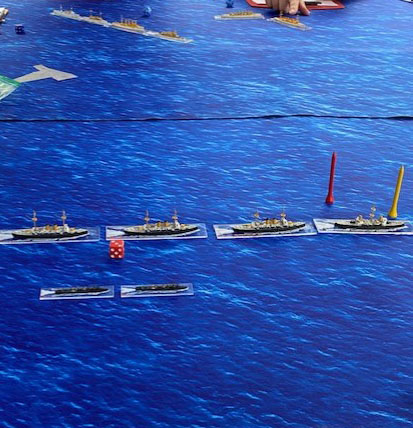
Cervera’s Squadron

Saturday was August 5th, International Naval Wargaming Day is today, the 6th. Unfortunately I wasn’t available to game today so I hosted eight of my friends at my house yesterday to celebrate the notable gaming occasion.

Hosting games at my place is a little tricky because I don’t have an obvious place to play a game. My garage, where I’ve set up games before, is full of stuff for sale at our space at the local antique mall. It’s been a beautiful dry summer in the Northwest so I planned to host a the game outdoors on the lawn under the shade of our big maple tree, but with a pop-up canopy for additional shade just in case. The weather early in the week was predicted to be 86 degrees and dry, in what has been a very dry summer.

I chose a scenario from Monroe’s Legacy, a scenario book on America’s emergence as a naval power in the late 19th century by The Admiralty Trilogy Group. It was a hypothetical scenario for the Spanish American War about an early encounter between Cervera’s Spanish armored cruisers and Schely’s Flying Squadron before the former became bottled up in Santiago harbor and doomed to blockade by the entire American fleet. Perfect scenario for six players, but I had two late additions to I added a scenario within the scenario–a sortie by the tiny Santiago naval defenders to drive off the gigantic, but poorly equipped American merchant cruiser St. Louis which had been tearing up the telegraphic cables between Santiago and Cienfuegos.

I take this hosting business seriously and spent a good part of the week getting ready for the game, carefully preparing ship cards. We played David Manley’s Fire When Ready Rules, which we’ve played before but not in a couple of years, so refreshing our memories were part of the game, and mistakes were made. I supplied the 1/1200 scale ships-a few Navis metal models, but many 3D printed ships from War Times Journal and Matthew Lawson’s Brown Water Navy Shapeways shop. Lunch was ordered. Thursday night all was organized and prepared.

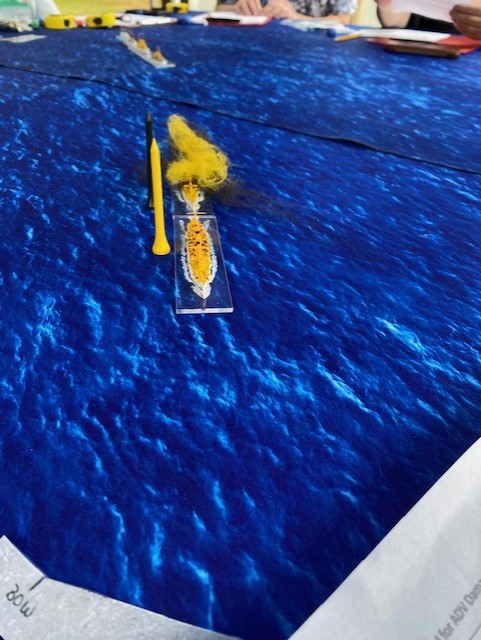
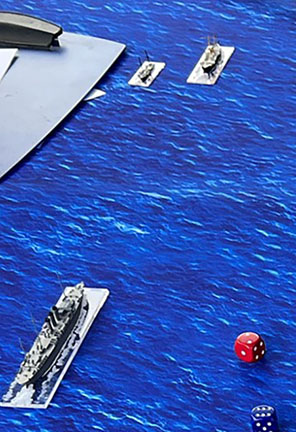
The battle unfolds. Minneapolis and Columbia lead the US. Followed by Massachusetts, Brooklyn, Texas and New Orleans. Cervera’s Spanish squadron is in the foreground.

And then it started to rain. Not a drenching, pouring gully washer, not even persistent northwest drizzle, but an unpredicted, cool damp I definitely couldn’t plan for. I asked George to bring his canopy just in place we needed space to stay dry. The 8 X 6 table fit under my canopy, but I feared that everyone’s chairs might not. In the end it dripped off and on throughout the day, but it had the affect of cooling things down, so no big deal.

Everyone arrived as planned. John, John and Mark volunteered to be Cervera and the Spanish with their four armored cruisers and two destroyers. George, Bill and David took on the Americans. Michael agreed to take the massive St. Louis while Eric took the Reina Mercedes and tiny gunboat Alvarado trying to get away and return to Santiago.

Minneapolis is battered and Columbia suffers a raging fire.

This was a tough game for the Americans. They started at long range, and never really managed to close it much. They decided to split off the large protected cruisers Minneapolis and Columbia to perhaps cross the T of the much slower Spanish armored cruisers. Instead they drew a lot of fire which eventually led to their destruction. On top of that, the American gunners simply shot poorly. Because the range remained quite long they weren’t able to use their secondary batteries and could only hit with their few main guns. With the bad rolling that wasn’t enough to do anything catastrophic.

In the end the Spanish met their victory conditions of crippling the Americans at a 2:1 rate.

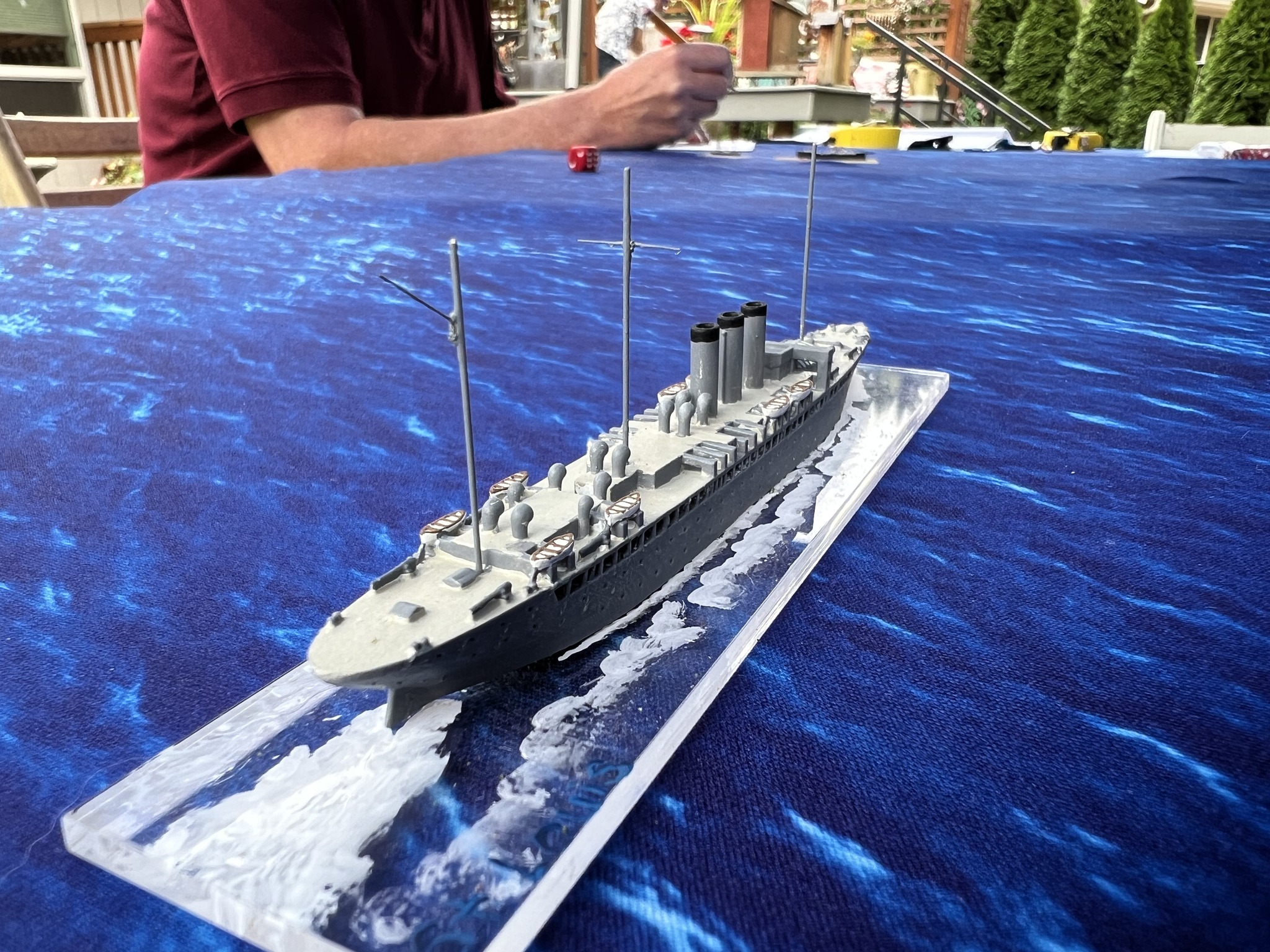
American merchant cruiser St. Louis. Miniature by War Times Journal. Photo by David Sullivan

The other chunk of the game was Michael with the St. Louis chasing Eric with Reina Mercedes and Alvarado. St. Louis was a nearly 15,000 ton converted liner while Reina Mercedes was an obsolete wooden-hulled unprotected cruiser and Alvarado was barely ocean-worthy at 120 tons. St. Louis was also much faster but had a much larger turning radius. The rules of engagement were simple. The Spanish simply had to identify the St. Louis, then turn tail and get back off the east board edge. St. Louis had a more difficult task. It had to prevent the Spanish from getting away. Neither side was well armed. The gunboat only had quick firing guns. The Spanish had six ancient medium guns, but only two could fire fore and aft. The St. Louis only had four 4-inch quick firing guns, again only two firing fore and aft. The Spanish disadvantage was they had to make a 180 degree about face, and were five knots slower than St. Louis, while the big American ship only had to turn 90 degrees.

The much larger St. Louis pursues the Alvarado (left) and Reina Mercedes

The lack of gunpower really showed in the game, but so did the speed disparity between the two sides. One Spanish salvo did cause a raging fire on the St. Louis, but the Americans were able to put it our in the repair phase. An American salvo finished the Alvarado, which had no damage points to spare. The Reina Mercedes suffered a flooding critical as it was nearing the board edge, but met its victory conditions by being the tortoise to St. Louis’ hare.

In the end, it seemed fun for all. The puppies, Owen and Ringo, made their appearances and seemed to enjoy the company. I hope to make this an annual game and I’m already thinking about possibilities for 2024.

David, Dave and International Naval War Games Day

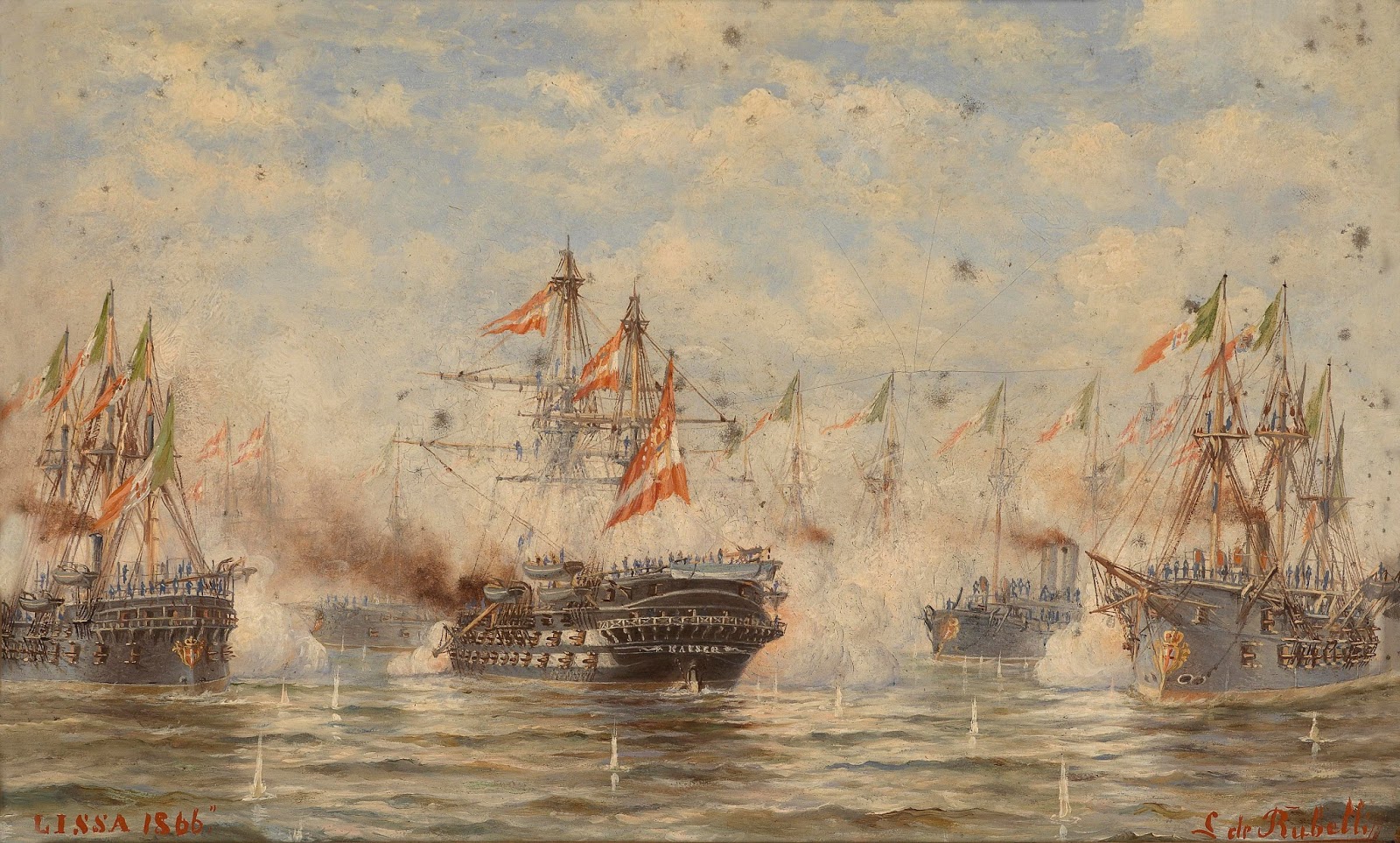
Battle of Lissa was the last naval game we played with Dave Schueler. We will do it again.

This coming Sunday, August 6th, is International Naval Wargames Day. It is on the birthday of naval wargames innovator Fred Janes and it is a day to remember by playing a naval war game. I’m not quite sure who began the Janes’ day remembrance, but certainly a person with a huge megaphone has been David Manley. For those who don’t know David, he is a British naval architect who has worked in design for the Royal Navy and is presently on the faculty at University College London. David has done tons of great stuff for the hobby including rules development, including “Fire When Ready” and “Narrow Seas”, his company, Long Face games designs loads of STL’s for American Civil War ships in 1/700th scale.

Just as importantly, David had a great relationship with my friend Dave Schueler. Shoe did lots of work on the Harpoon modern naval game system, and I suspect they became friends around that game. Through that relationship, Dave and I were able to gain David’s trust with a couple of his developing rules sets including “Lord of the Seas” and “Airwar 1940.” Manley’s rules really resonated with us and they frequently became our go-to when considering new projects.

Shoe was very good at remembering and honoring INWD. He’d drag out a naval board game and have at. I’ve always been terrible about doing solitaire stuff. It is much better for me to use my time painting. Because the 6th is, well, the 6th and could be any day of the week instead of a weekend, it was easy for me to forget and didn’t coincide with a day I could get with Dave.

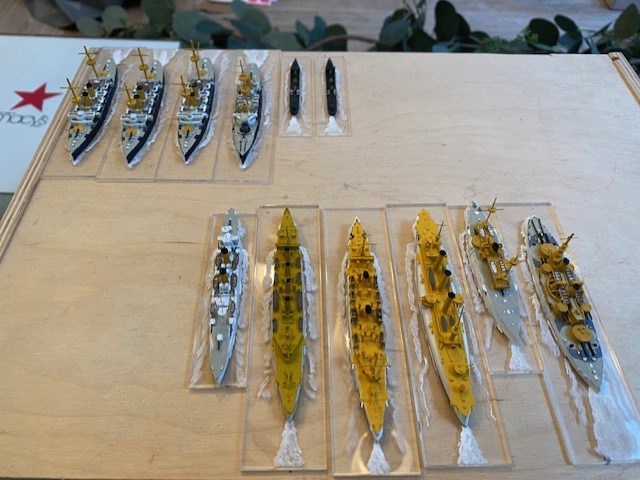
Ships for Cienfuegos. Spanish ships top. Americans bottom.

We never talked seriously about it, but I always had a dream. It was a simple one. My dream was that Shoe and I would someday hop on a plane and make our way to Yeovilton or wherever David Manley was hosting his annual INWD game. Dave and I would make our way to the naval museum at Portsmouth, and somehow we’d get to Manley’s farm to pet the llamas. I don’t know if it was Dave’s dream, but it was definitely mine.

This year the 6th falls on on a Sunday. Unfortunately it is also Ringo’s first day of puppy training, so INWD is a no go for me. But I’ve invited my very best group of wargaming buddies to Chez Smyth for an early Fred Jane remembrance on Saturday the 5th . We’ll be playing a scenario from the Monroe’s Legacy scenario book, Battle of Cienfuegos, with a hypothetical encounter between Cerveras’ cruisers and Schley’s flying squadron. Rules are “Fire When Ready,” Manley’s pre-dreadnought rules of course. It’s smallish, but should be fun enough to keep six players occupied for a few hours. I don’t have a game room. We’ll play outdoors under the shade of my big maple and a pop up canopy. Then we’ll have lunch and hoist a cool one in honor of David and Dave. There will be puppies. Letcha know how it goes.

SAGA Anglo Saxons: The Great Melting Pot

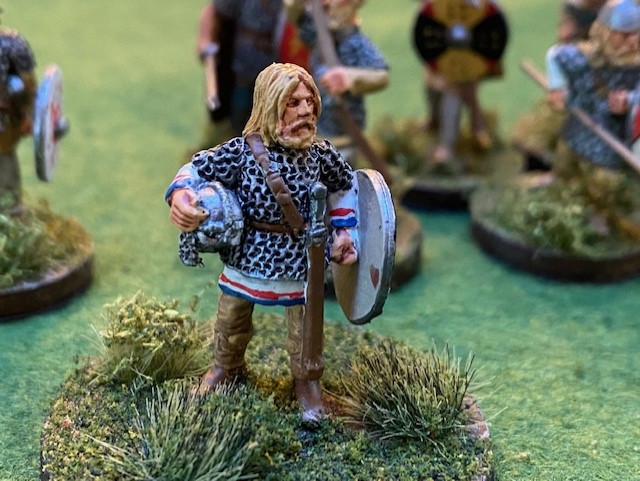
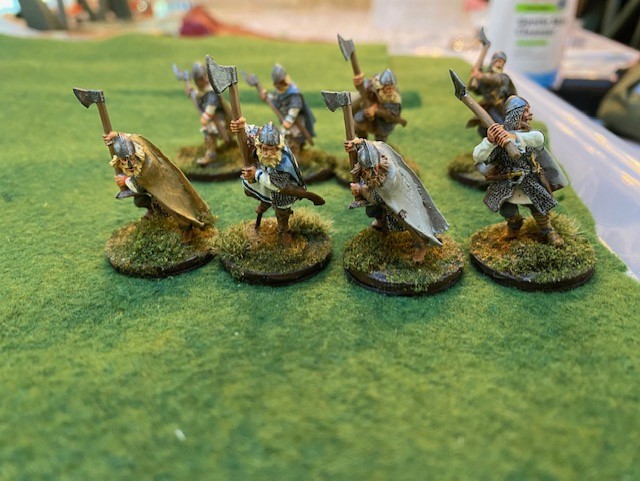
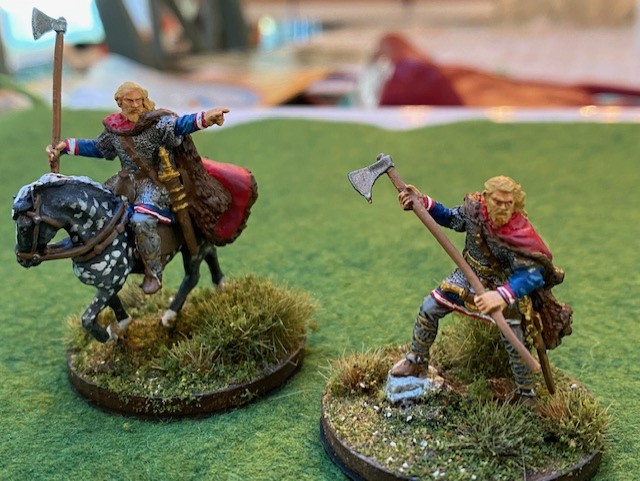
Geat Thegn figure from Eureka is masquerading as Beowulf and is my warlord

Last fall I had one SAGA army, the Norse Gaels. I played with them a lot and then I began to plan for more SAGA armies. I think that’s the nature of the beast. The armies are small, there are five different period books. Lots of interesting possibilities and then I’m (speaking for myself) sucked into something else. Today I have three painted SAGA armies, the Norse Gaels, the Irish and last night I finished the last touches on the an Anglo Danish army. I have one more army, the Skraelings, which are not quite official, but their list and board was generated by Studio Tomahawk. I have also ordered the figures to fill out a Saracen army from the Age of Crusades, and those to add to the Anglo Danes to make an Early Saxon army from the Age of Invasions.

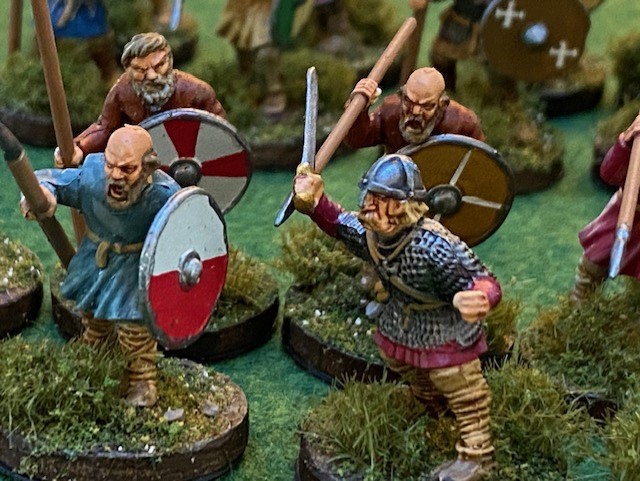
These are the Beowulf figures from Eureka Miniature. They are quite sturdy, which is just the way I like ’em. LBMS doesn’t make shield transfers for Eureka, so I painted ’em meself.

Lots to share on the Ango Danes. This is one of those projects in which I allowed the miniatures to own me. I rarely let that happen, but it did in this case. I’ve always been intrigued by the Beowulf range by Eureka miniatures, and I thought I could use these figures as warriors for an Anglo Danish army. So I ordered both of the two sets of miniatures.

Left, the Eureka beefy boys as hearthguard/huscarls. On the right, some Footsore dudes filling the same role.

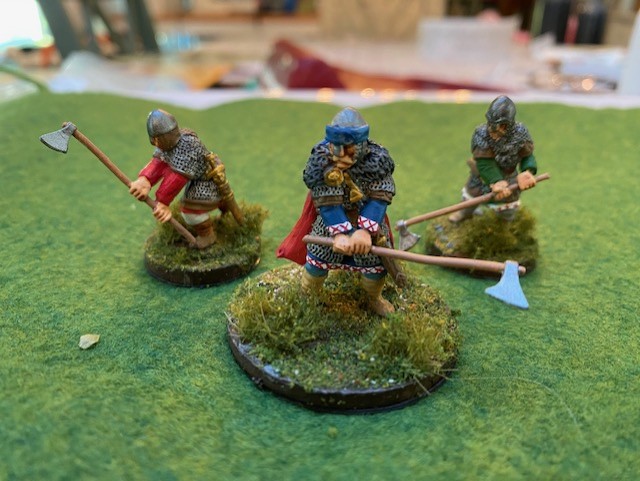
That’s 30 figures, fifteen in a set of posing guys, and the other set of fifteen action figures. Some of the figures are a bit oddly posed and not terribly useful. Plus there’s the huge barechested warrior that didn’t really fit in. There’s also a 13th Warrior guy I did end up using. A few using swords or Dane Axes I made into a little hearthguard unit. I used the Great Thegn figure as my Warlord. So, all in all, 21 of the 30 figures made their way into my three units plus a leader figure.

I was interested in getting the Eureka Islemen figures to use as Huscarls/hearthguard, but when I ordered they were out of stock and back order was uncertain so I moved on. I added some Huscarls from Footsore miniatures. These are a bit less beefy than the Eureka guys, but they’ll do.

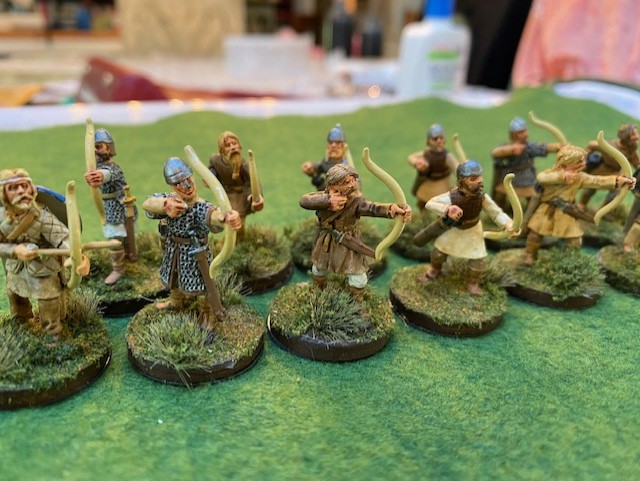
Bowmen by Eureka

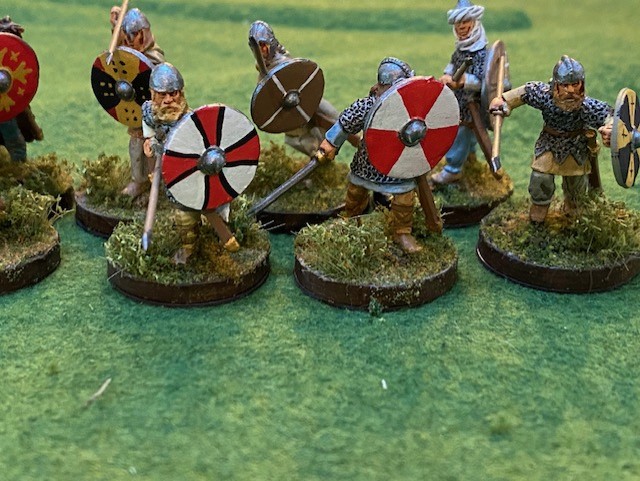
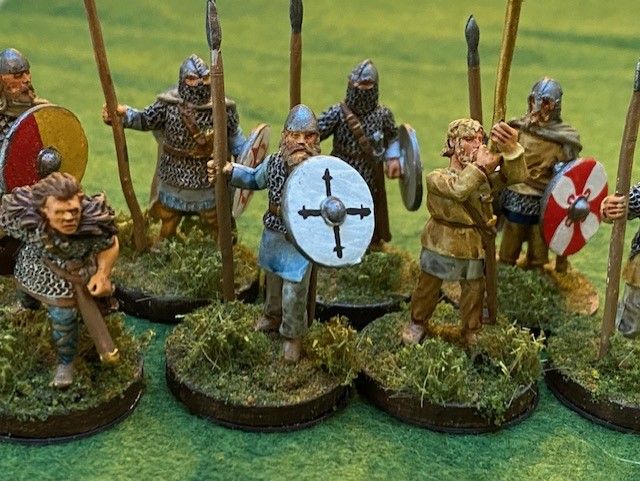
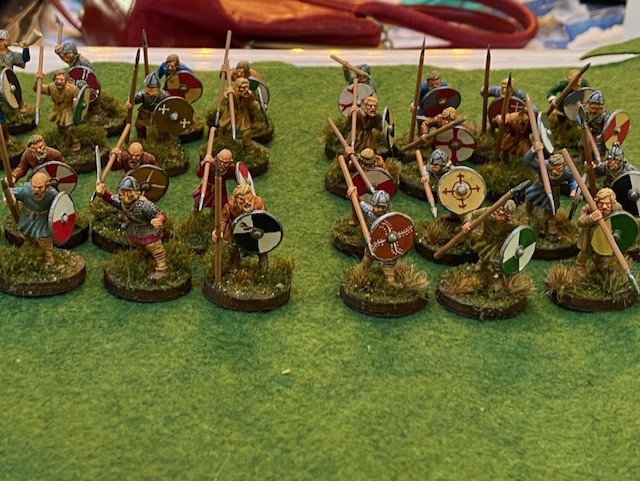
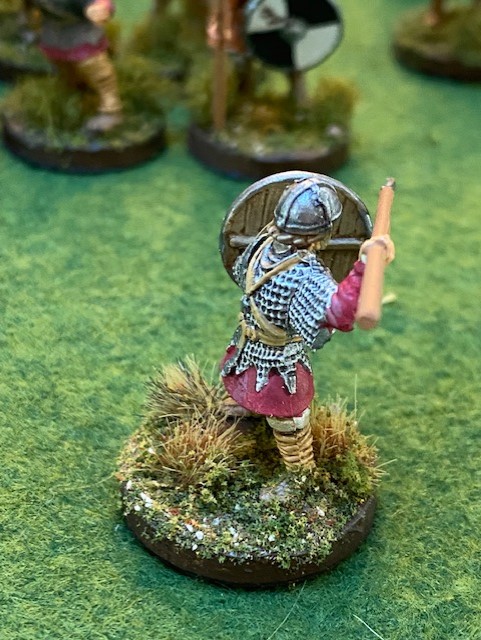
These two photos are of the Gripping Beast plastic Thegn figures from their Swordpoint range. These were great despite my fairly miserable assembly skills. they are actually quite nice, with just enough differences to be interesting. I painted the shields. Blame it on me.

So I had two warrior units, a few Huscarls, some bows and a leader. Five points plus a warlord, I just felt I needed more beef. So I broke down and ordered the Gripping Beast plastic Saxons Thegns from their Swordpoint range. I used these to build another four Saxon Warrior units. They work quite nicely. While I am not super adept at assembling plastic figures, they were relatively easy and they painted up well. Nice mix of figures too. Oh, and I made a little error in assembling one of them.

A mild Saxon genetic disorder here.

I would be remiss if I didn’t also blather about the two Legendary Heroes for the Anglo Danes. The first is Cnut the Great who really rescued the inhabitants of the Dane Law from oppression and oh by the way conquered England too. He’s a good get. However there is the matter of the mounted Cnut with Dane axe. Ahem. I also painted Harold Godwinson and his brothers because how could I not? In the rules they are simply nasty. Both are Gripping Beast miniatures, but honestly I’m not a huge fan.

So, the Anglo Danes are unusual because the figures came from every place. Some were a little better than others, but coming from a guy who started out painting strip Minifigs I’m not complaining. Well, I’m not complaining very loudly.

The best news is they are finished and I’m going to take a month’s break from painting SAGA stuff to work on my Camerone figures. It’s always nice for me to break things up a bit. I don’t paint anything that isn’t kinda fun to work on and let’s just say my den is packed with all kinds of fun.

The Best Days Are Painting Days

Anglo Danes with their bases painted awaiting, highlights, tufts and flocking

It’s the very end of a perfect Sunday. The weather was quite warm but not too hot. Lorri was away with two of her good buddies. I was left at home with very doable list of chores and my two good buddies Ringo and Owen, our American Shepherd puppies. Done with anything important by 1:30 or so, there was nothing better to do than paint figures and watch the Mariners game.

The Mariners won 2-0 to salvage one game from the Tigers series (grrrrr.) The painting was much better. I’ve been working on the last bunch of figures for an Anglo Danish SAGA army. They were 75% finished, but because there were 19 figures to wrap up, the remaining 25% wasn’t exactly nothing. I hoped I might be able to put my nose to the grindstone and get them done.

But wait. I always like to have my next bunch o’ stuff ready to go before I wrap up what I’m working on. More SAGA? Well, no. I do have a SAGA army ready to paint, the Skraelings using Footsore figures. But honestly I need a break. Finished the Picts last week. Wrapping up the AD’s. I want a SAGA siesta. So it’s on to my little pile of Camerone figures. I’m guessing I have a bout 100 figures to paint, plus the terrain, so it’s time to get started.

I primed up nine French Legionnaires and while waiting for them to dry (which doesn’t take long with the warm, dry air) and got back to work on the Last of the Anglo Danish.

I had sixteen plastic warriors to finish. They are Gripping Beast figures. I like their looks though I am not especially good at assembling them. While painting, I noticed I didn’t do a terrific job of getting arms and shoulders aligned. But they have nice detail and the cast on spears are so much better than the GB metal cast spears. However, in the ultimate sign of trying to do too much too quickly I did actually manage to glue a torso on backwards with the feet pointing in the wrong direction. Sigh.

However, today the focus was wrapping these guys up. Shield patterns were done. There were hands to paint, some flesh washing to do and some brass bits to finish up. In addition to those sixteen guys I had Harold Godwinson and his brothers to finish. Their painting was a bit more fiddly. I fancied up their tunics and Harold had a kite shield to do. By the end of the Mariners game they were finished and it was time to bring the Camerone guys in from the garage.

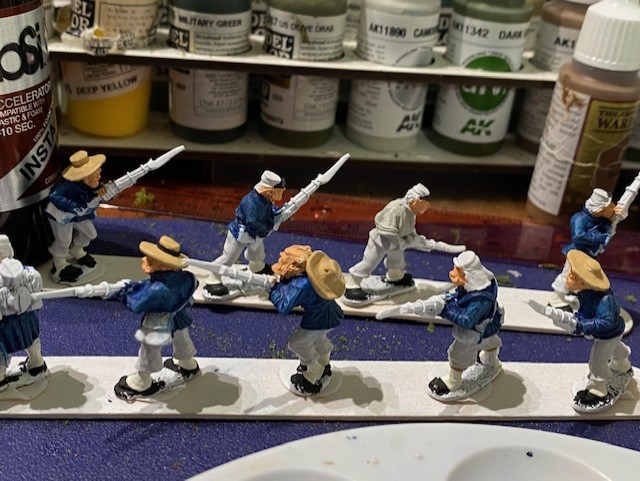
Danjou’s compatriots for Camerone. They’re about 50% done. Maybe by Tuesday.

I managed to get a good start on them, and hope to wrap them up in the next day or so. I decided, after reading through James Ryan’s excellent account of Camerone, to ditch the madder red kepis and trousers and go over to white for both. I used Vallejo White-Grey, which has become a real go to color for me. Most of my already-painted Legionnaires have the red, so a bit of a mix is good.

Yep, Sunday was a most excellent painting day. It wasn’t an all-day paint fest as I mixed my chores and playing with the puppies in with the brush work, but from abotu 1:30 to 8:00, with a few intermissions for other things, it simply wasn’t better. Of course, I’m one of those guys who needs to paint to feel normal.

Camerone: My Obsession

I always plan a new project for Enfilade. My project for 2024 is Camerone, the slaughter of the 3rd Company of the 2nd Foreign Legion battalion in Mexico. It is celebrated by the Foreign Legion to this day and was a remarkable example of heroic if forlorn defenses that ranks up there with Thermopylae and the 300 Spartans. Except there were only about 49 functional Legionnaires and not quite the entire Mexican army. It just seemed that way.

I am very drawn to Camerone. I am fortunate to have a copy of James W. Ryan’s “just the facts Ma’am” account of the battle. I’ve read and re-read it several times. I find the Legionnaires and the Mexicans under General Milan both quite sympathetic characters. One group just trying to do their difficult job, the other trying to free their country from foreign occupation.

I’ll do all the work for the project myself. It isn’t gigantic and I have a lot of the stuff already, meaning I have the figures. Many of the Mexicans are already painted, and I’ve finished about half of the French. The Hacienda, its walls and oubuildings will need some work, but I don’t think it will be overwhelming.

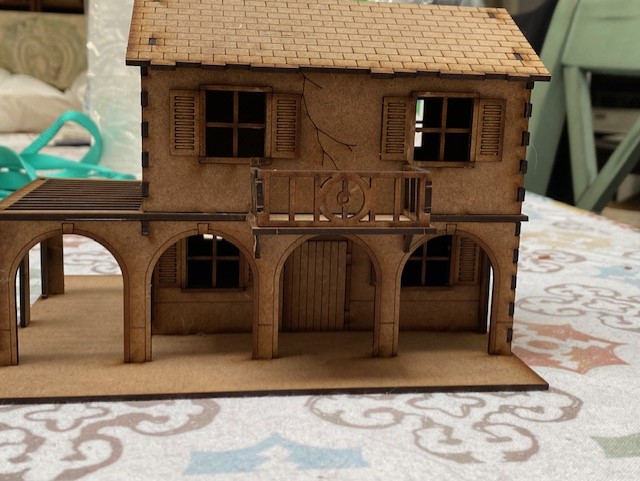
This Sarissa hacienda will probably serve as the Trinidad Hacienda. It’s a bit small, and I’ll have to add walls to that space, but it will do. It was in poor repair, but I think I’ll drybrush some white over the earthen/mdf color. Gotta add some red to those tile roofs.

I have done Camerone before. The first time was probably 25 years ago. I had a mix of early Wargames/Guernsey Foundry figures with some Old Glory guys thrown in for good measure. I used the old Warpaint rules that I wish I still had.

I did it again in the early 2000’s with. This time I used some of my figures and some belonging to another gamer. In this case it was his game to run and we used the Wooden Hand of Captain Danjou by Howard Whitehouse. Fun set of rules. I can’t quite remember how it turned out.

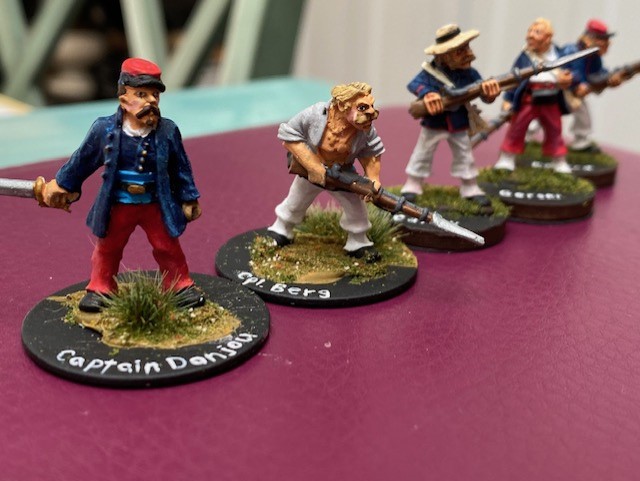
These are a handful of the Wargames Foundry French Foreign Legion figures from Old West Range. They are quite nice and compare favorably with the Gringo 40’s range-on the large size. Bigger than the original Wargames/Guernsey Foundry figures.

The Whitehouse rules would prefer to do singly mounted figures. I will do that for the French, using the excellent Foundry French Foreign Legion/Filibuster figures from their Old West Range. The faceless, nameless Mexicans are a bit trickier. I have many Mexican figures from my Maximilian project mounted as 12 figure units for Rebels and Patriots. I think I’m going to paint up singles to easily make change for those two and three figure stands I have. The Mexicans will be a mix of the original Aly Morrison figures from Wargames Foundry. I also have some of the more recent, hence larger, Mexican figures from the Old West Range. Finally, there will be mounted and foot figures from Gringo 40’s which sizewise compare well with the Old West figures.

I’m going to use the Whitehouse rules again. I’ve spent some time reviewing the rules and there are lots of opportunity for fun and some ad hoc rules-making if players are interested. The French fight as individuals, while the Mexicans are faceless and recycled. In many respects it is like Rorke’s Drift or the Alamo. We remember the bravery of Chard, Bromhead and their men, but Captain Danjou’s wooden hand rates right up there with them. Wonder why there was never a great movie made about Camerone during the 50’s and 60’s?

The Lure of SAGA

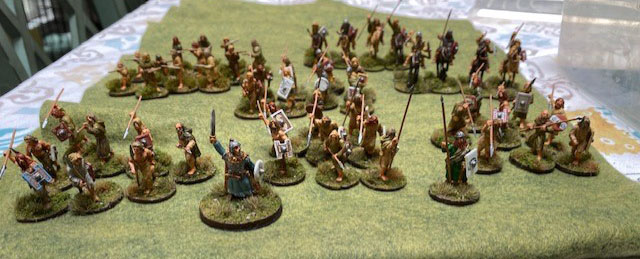
Pict warband I painted for my friend Dave. This has two hearthguard units, four warrior units and a levy unit of crossbows. The Warlord and a single bodyguard figure bring the total to 54 figures. That’s a seven point army, but allows the user some flexibility in unit choices.

I’m retired. I have many gaming buddies who are mostly retired. We all play SAGA. It’s a sickness.

It’s actually a pretty pleasant sickness because the game is interesting and fun. It’s the only way someone could sucker me into playing some form of ancients. The game, by Studio Tomahawk, is a skirmish game and an army requires no more than 80 or so figures and many are much less. I have three armies I’m working on. There are several “period” guides and mine are all from the Dark Ages book, “The Age of Vikings.” I am finished with the Norse Gaels and the Irish, which are sort of the same. I’ve always been intrigued by the Battle of Clontarf in 1014. Both of the these armies have representatives from that battle in Dark Age Ireland.

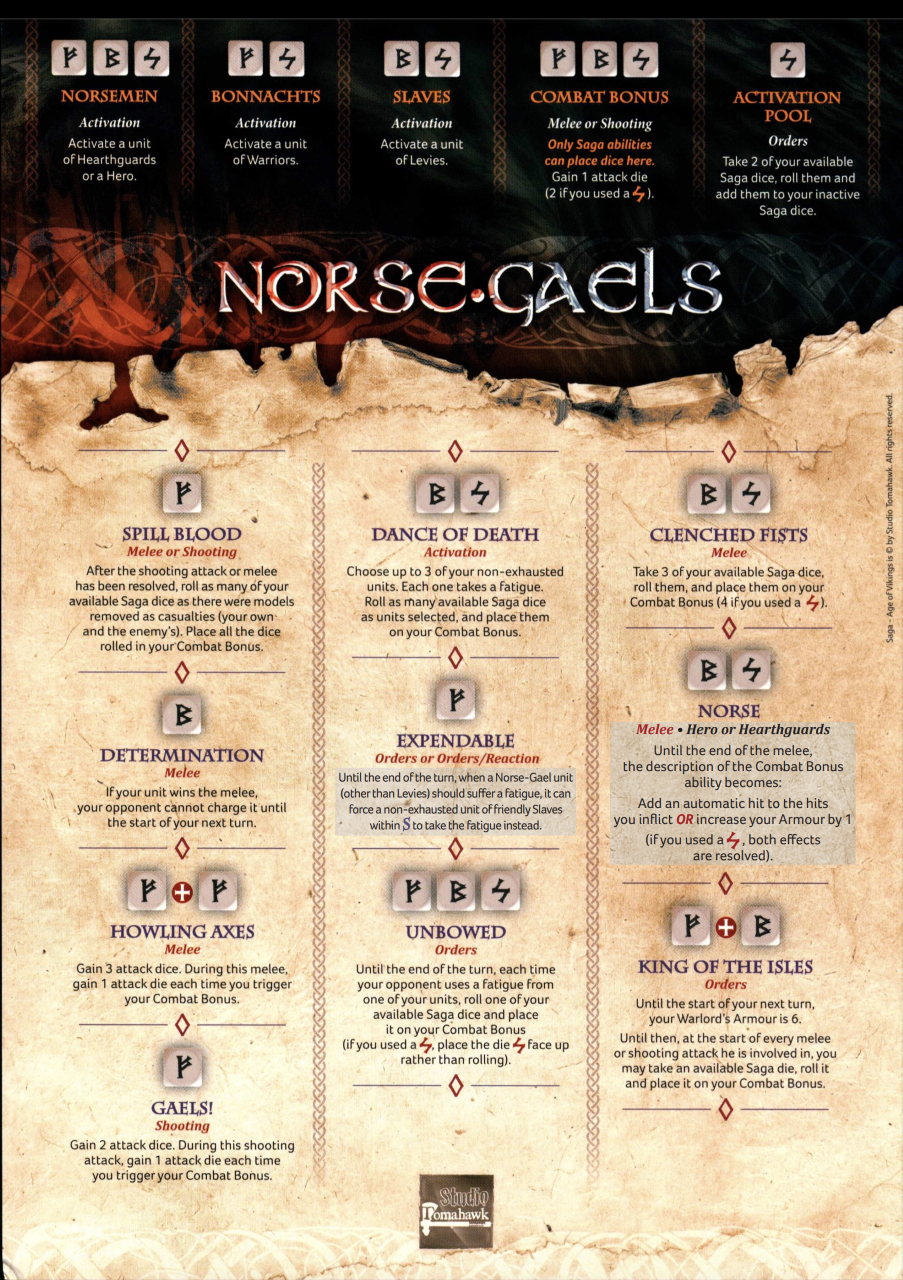
Battle Board for the Norse Gaels.

While all the armies are basically similar, their national characteristics make them unique, and using those characteristics effectively is the challenge in the game. For those not in the know, every SAGA warband is allowed six SAGA points, and the basic troop types in the game are worth one point each. A hearthguard unit, typically the best units in the warband is four figures. A warrior unit is often the backbone of of an warband is eight figures. A levy unit, often missile troops, but sometimes not, is twelve figures. Without getting too far into the weeds, sometimes two units of the same type can be divided or combined to create larger or smaller sizes, but you’re limited to six points plus your Warlord figure who has his own badass attributes.

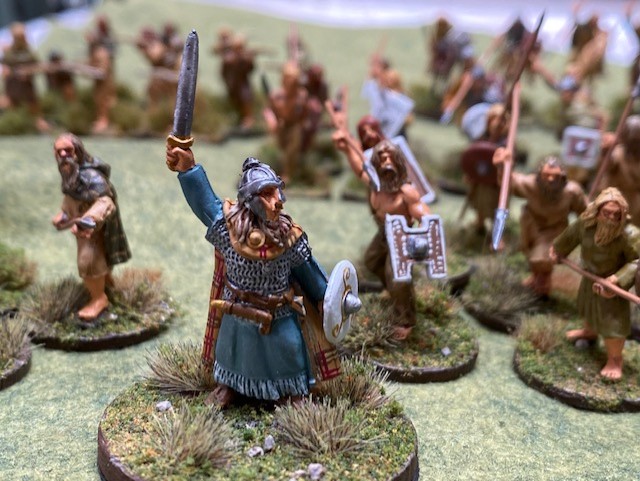
Pict warlord. Picts are interesting (to me at least) and I am happy to have them in the game. The only shortcoming is they aren’t in the Age of Vikings book. They come from the Age of Invasions, which means I’ll have to build another army in order to exactly match with them. Early Saxons look likely

The number of units is important because they generate SAGA dice. This is an orders based game. In order to activate units to move or shoot you gotta have SAGA dice. In addition to the simple activations, every nationality has a Battle Board that allows different abilities to that army. My Irish army has a board that enhances its ability to activate its mostly crappy units, fight in rough terrain and maximize the effectiveness of its levy slingers. My Norse Gaels are encouraged to be more aggressive in melee. Everybody has something special. The challenge is to make the most out of what you have and what you can do.

Beginning game play as a noob is not super simple. It’s important to know the basic rules of the game that apply to all. Sometimes this is complicated by the fact that Studio Tomahawk is a French company and a little gets lost in translation. I wouldn’t say this could lead to verbiage confusion of Phil Barker’s writing, but there’s a lot to remember, and it isn’t unusual to change our understanding from time to time. It’s also really important to know what your army is, if it has any special attributes but even more important, learning how to make best use of your Battle Board. Just starting out, it’s easy to look at the Board, read your ten SAGA abilities and just think, “Hunh?” Some play, some experience is the best teacher even if it means getting your brains beaten out a time or two.

What makes SAGA fun? Once you’ve figured out your Battle Board and your army characteristics and the flow of the game feels more natural, the mechanics are pretty easy and the game flows well. I’ve enjoyed single player and four player games, plus the game system has some great scenario ideas in the Book of Battles. It doesn’t feel to me that one warband has a decisive advantage over another. There are no “killer” armies that I’ve seen so far.

That warbands are small, my friend Eric is building an Arthurian British army that has something like 22 mounted figures, means painting a playable army can be pretty quick-depending your level of commitment to painting stuff. Games don’t take long, and win or lose I’ve always had a good time.

Are there some things I wish were different? Well, of course, and I feel that way about most rules sets. SAGA is an industry. In some ways that’s good. It has miniatures companies like Gripping Beast and Footsore catering to the game, and they drag along Little Big Men Studios to make flags and shield transfers. But in some ways it drives me crazy. SAGA has a rule book, a scenario book (The Book of Battles,) plus there are four historical variant books from Alexander the Great to the Crusades at $42.00 a throw, special measuring devices and dice (which one could create given the inclination.) Plus the rules were just revised, and of course I got those. Though the warbands aren’t large, there is a fair entry cost by way of official stuff.

The other peeve is the temptation to resort to the one on one match-ups. I think my SAGA buddies have noticed this and have increasingly tried to turn to scenarios from the Book of Battles. However, they tend to devolve into one on ones anyway. That may be resolved as more folks figure things out and can take on more complex games. My big giant fear is that we’re moving toward some kind of tournament play and I just don’t love tournaments. I don’t have that competitive fire.

Big picture-wise, however, SAGA has had an incredibly positive effect on our gaming community. When I observed my first SAGA game about 15 months ago, it was at an old friend’s house. It reunited me with a second old friend and I met somebody new. Today those same old friends are still playing, but altogether the SAGA group that meets twice monthly at Silver King Games in Tacoma numbers a dozen with potential for more. Almost all are retirees. All have at least one SAGA army, some have many more. And everyone is having a good time.

I’m Back!!!

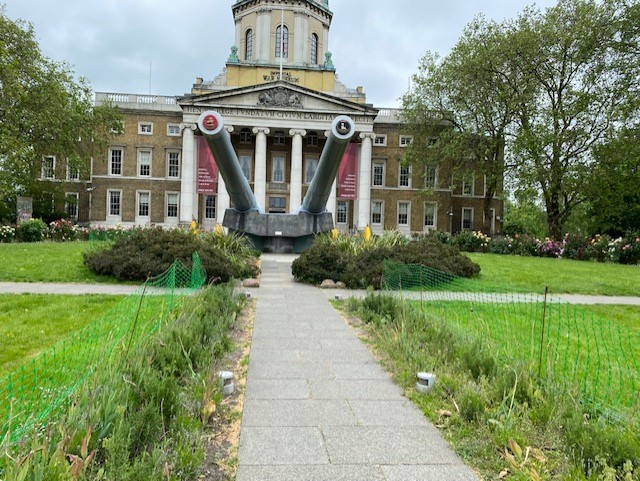
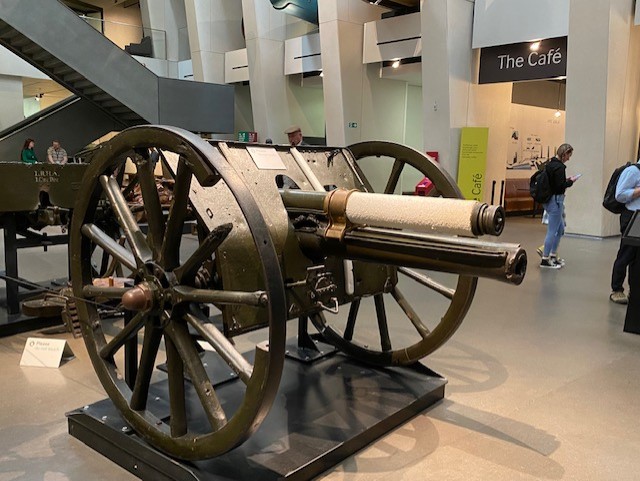
Imperial War Museum featuring the 15″ guns of HMS Ramillies

It feels like a long time since my last post, mostly because it has been such a long time since my last post. Things have been so busy in Smythland since May 9th and I confess I haven’t done a lot, but I’m happy to share a bit.

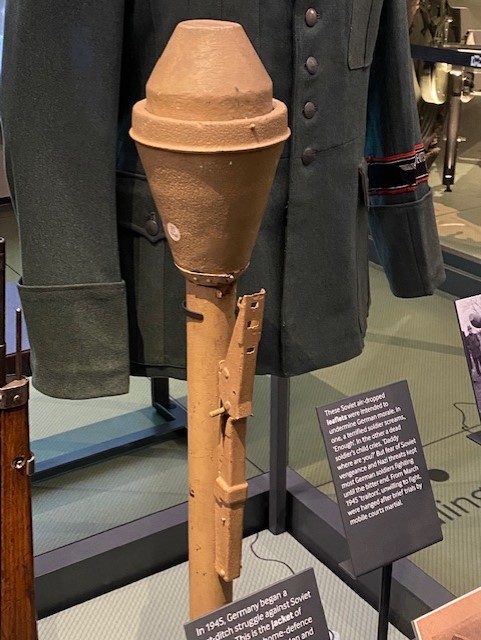
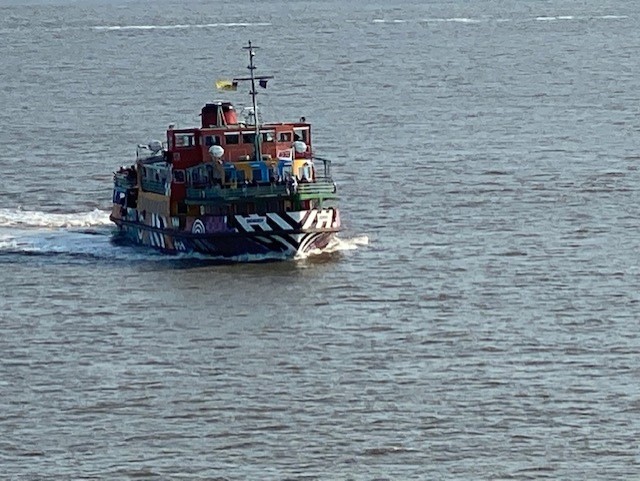
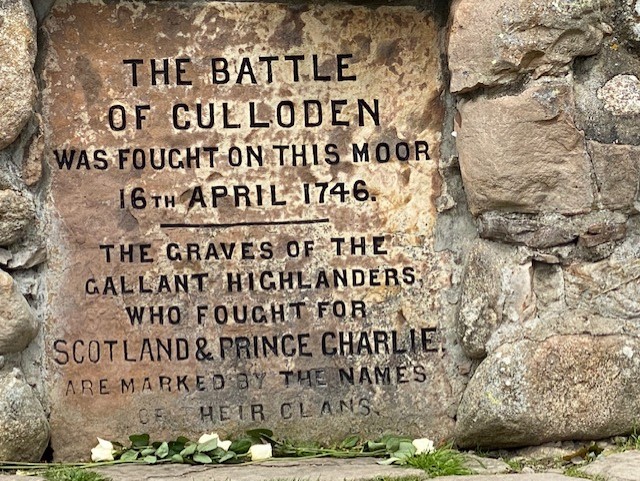
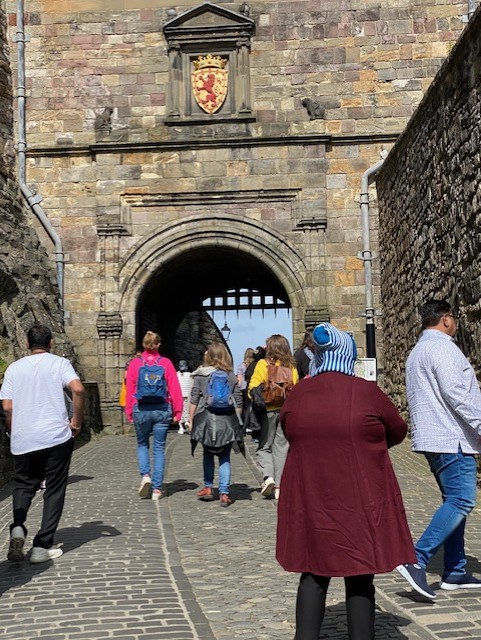
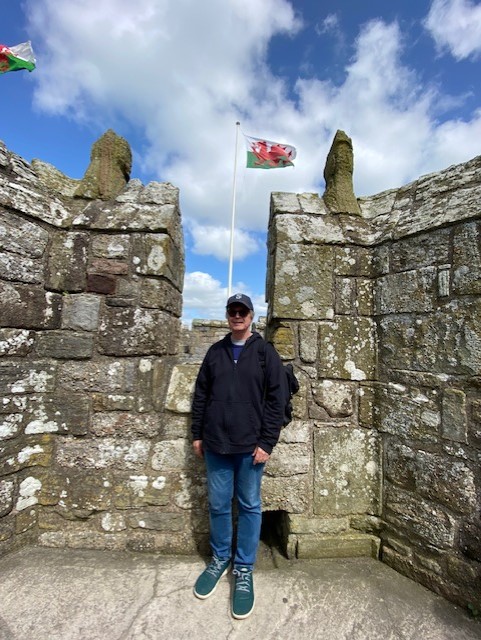
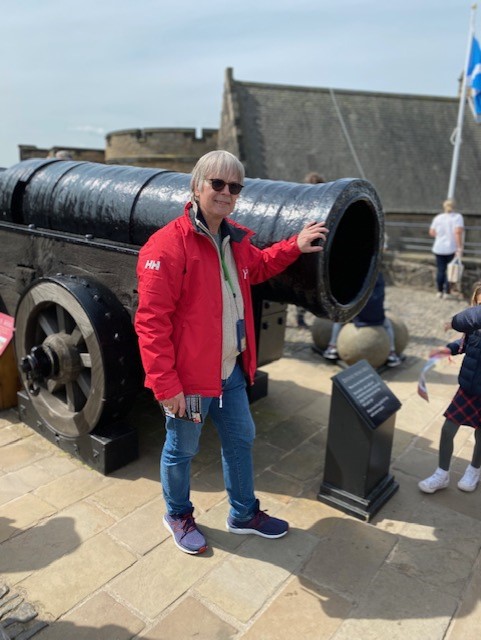
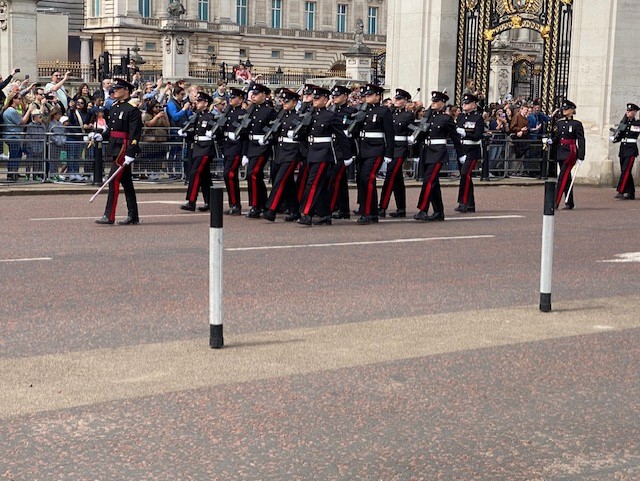
First, there was the wonderful trip to the UK. Flew to Begen, Norway, cruised around the British Isles, and ended with five days in London. Visited notable places such as Lerwick in the Shetland Islands. Went to Invergordon, Scotland and visited Culloden battlefield. Was reunited with my luggage in Edinburgh, but really enjoyed my visit to Edinburgh Castle and a wander through the Royal Scots Greys museum. We spent a day docked in Belfast and toured a lot of the County Antrim countryside en route to Giant’s Causeway, which is amazing. Truly a lovely spot. Then on to a day in Liverpool, which was far more wonderful than I imagined. Did some Beatles stuff (hah, of course I did!!!) but had a wonderful tour of the city which I really enjoyed. Then on to Wales and Castle Caernarfon, a day in Dublin and then we wrapped up our journey in Greenwich. Each of these places I could easily have spent a week exploring. That’s the nature of cruising-you can see a lot of places without unpacking, but don’t blink because you’re on to the next spot.

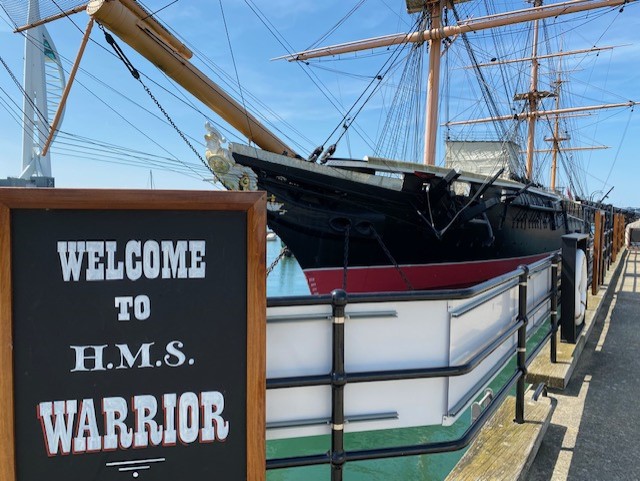
The five days in London were so far beyond my expectations. I thought a stay in a huge city would be overwhelming, but making our way on the Tube was easy. So many great sites. I finished at the Imperial War Museum, which I thought I would pass, but it was great. I also fulfilled a major dream by getting to Portsmouth and the Royal Navy Museum there. I was able to clamor about the HMS Warrior and the HMS Victory. It was fabulous. But the other big winner was the city itself. I’ve never been to New York, Tokyo or Beijing, so I was a little overwhelmed by the idea. We stayed in a lovely part of the city by Kensington Gardens. It was so cosmopolitan, and there is no experience I had that wasn’t right on. I even loved the food.

Since I’ve been home, my life has been stacked to the roof with to do’s. We had our two hobby rooms remodeled and I dragged my entire life out to a pod in the driveway. It took the better part of a week to put things back together. By June 6th I was able to officially move back in and it’s been great. I have the larger of the two rooms and it is much more comfortable to work in and move around. It’s a super place to work and listen to music.

Since returning from Europe I’ve managed a couple of games. I’ve gotten in one SAGA game. At the moment, that is the big thing. Our SAGA group which began small with four of us playing at Silver King game shop in Tacoma, has reached as many as a dozen. Everybody is having a good time with it. I’ll say a bit more about my own SAGA efforts shortly. The second game was with David Sullivan playing Xenos Rampant at Zulugames a couple of weeks ago. It was very much fun, and my first opportunity to drag out my small pile of Xenos Rampant troopers. Though I didn’t do well, I enjoyed the game and learned a lot from playing.

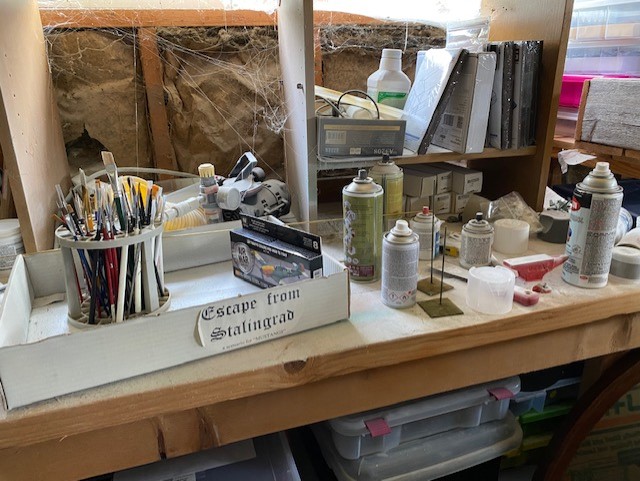
My desk of doom. A mix of Anglo-Danes and Picts

The rest of the summer has a lot of busy in it. Lots of family and community stuff. Weekend games look tough to squeeze in. However Wednesday SAGA days look more available when the puppies get older. What? I haven’t mentioned puppies??!! Last week Lorri and I brought home two miniature American Shepherd puppies. They are nine weeks old and truly delightful. However they do suck up some time that I’m happy to give.

As always I’m making plans for what to work on. Right now that means SAGA. At the present time, I have two painted armies: Norse-Gaels, and Irish from the Age of Vikings book. I’m working on one more army from the same book, the Anglo-Danes. They are about half finished. I’m also working on a Pict army for my dear friend Dave to honor his 75th birthday. These are Footsore figures and pretty fun. I’ve been trying to give them tattoos using a fine point pen. I’m not going to do anything else until these two armies are complete. I’ve made progress on both, but do have a ways to go on each.

I’ve made a commitment to do Camerone at Enfilade in 2024. There is some painting go with that, so after I’m done with the Picts and Anglo Danes I’ll be splitting time between Camerone figures and a final SAGA army, the Skraelings. I know I’m being ridiculous because SAGA armies are a lot of like a bag of Lays potato chips, but that’s all I have on my radar at the moment.

It’s hard to imagine June is nearly gone. It’s been a great if very busy month. Haven’t accomplished as much on the painting or gaming front as I would like, but I haven’t done nothing either.

Painting Withdrawal Syndrome

Wow! I can’t believe it’s been nearly two months since my last post. I gotta do better. This will have to serve as the big catch up.

So, I can’t paint. I haven’t been able to paint since Friday (3 days ago) and I won’t be able to paint until well after June 1st. No nothing bad. I had to dismantle my painting space, which is also my entertainment space, because we are remodeling that part of the house. We’ll also be gone to Europe for three weeks, and the work will be done while we’re gone. It works out great in the end, but no painting short term.

As one who actually enjoys painting little men, it’s like yikes!!! I find myself rummaging through the pantry a lot and wondering how to fill my time. Well, that is after I walked 6-8 miles a day for the past four days, while schlepping heavy boxes and furniture back and forth to the garage and a POD in our driveway. That’s a product of having 1,500 or so vinyl records in my painting area They had to go out to the garage for fear of the heat out in the POD. Nothing like a bunch of warped vinyl.

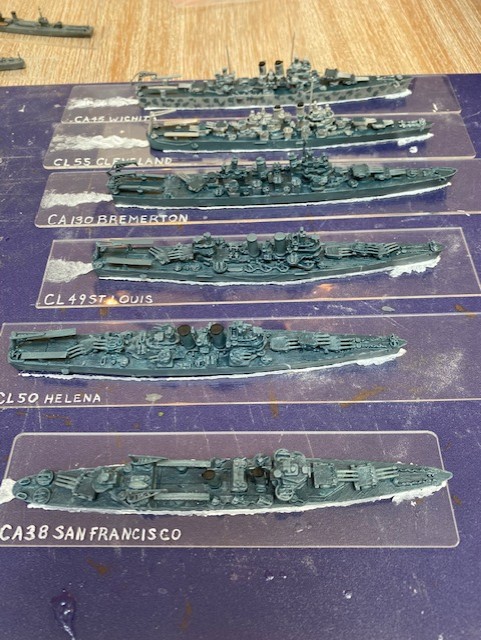
Six American cruisers finished in April. I’ve painted all my American and Japanese destroyers and cruisers. Together they total about 50 ships.

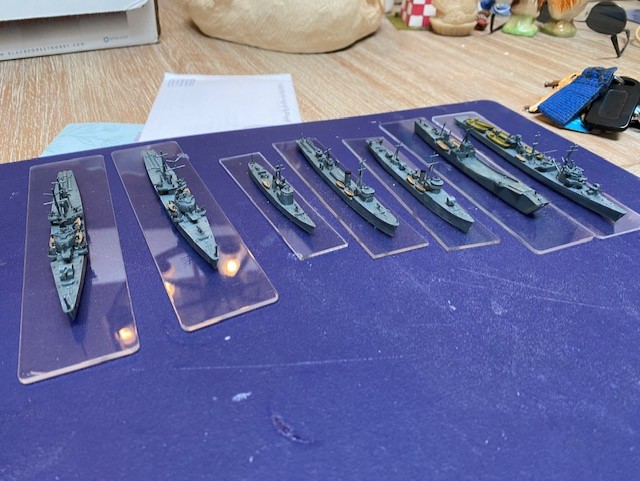
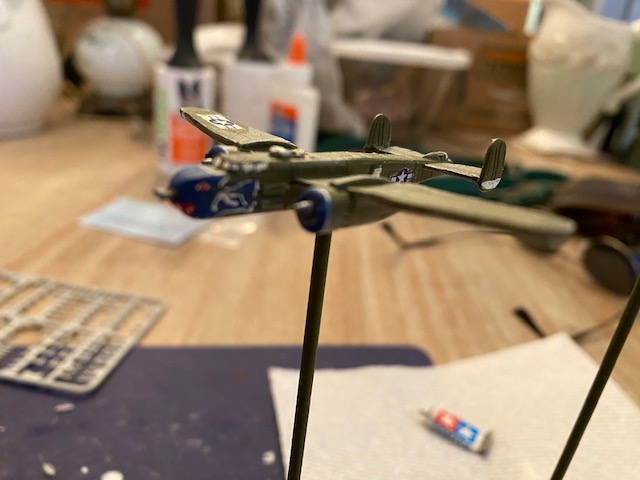
It’s been an interesting and fun couple of painting months. I have abandoned my usual focus in order to keep painting and enjoy it. No Enfilade, no Enfilade projects. I’ve painted all of my Japanese and American 1/1200 cruisers. I’ve sold off all the ships I don’t believe I’m going to paint. So, no Germans, British or French. I’ve also begun gearing up for a project Shoe and I talked intensely about–the air campaign against Rabaul. I assembled and painted nine Japanese ships in 1.700 scale. I painted a small handful (3) American planes, but ordered a bunch more Raiden planes from I-94 Enterprises. I even read a bit about B-25 development and acquired a couple of books of camouflage schemes. I’m stoked. They’ll be here when I get back.

My stash of Japanese 1/700 scale targets for a Rabaul scenario, top. One of my two completed B-25H’s to trash them. The rest arrived yesterday.

I’ve picked at my AWI figures. I’ve worked on some stray Maximilian figures. I finished my Xenos Rampant army. Each and every one of them have been fun.

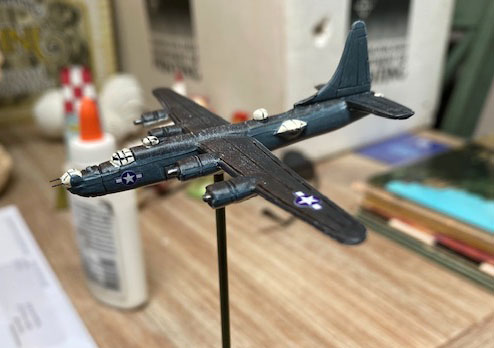
MSD PB4Y-2 Privateer Maritime bomber in 1/300. I’ve had this for a while and I enjoyed the heck out of painting it. Added fine wire to the nose and waist gun positions.

When I return from Europe, I’ll have lots more to do. I could make a big ol’ list, but honestly I just find so much fun in the doing. And I really miss doing. If I wasn’t able to paint regularly I’d be one of those bored retired guys, like one of former work buddies who is now driving 20 hours a week for Uber. Ack! Or watching the news nightmare all day long. Double ack!!!

Though I haven’t played a ton of games the past couple of months, I have played SAGA a couple of times. I’ve learned to love my ridiculous Irish. They are great missile troops but mostly have to hide in bad terrain. Not very good in a melee, though nobody has quite figured out how to get at them yet. I’ve been able to turn the table into a Gaelic shooting gallery, but it’s just a matter of time.

In any case, I’m taking a little break for vacation and as I have to re-set my painting area when I return. Lots to look forward to.
Rebase-o-Rama

I’m doing a re-basing thing. I used to think re-basing was akin to gaming the Holocaust. You could do it, but why?

Re-basing was always a challenge. However a lot of that early work was with 15mm figures mounted on balsa, slathered in white glue and ugh. Prying them off with sharp X-acto was a danger to the figures and my fingers. I eventually tried different mounting materials, but large scale changes was always more of a change than I was willing to endure.

I’ve changed my mounting materials to Litko bases, so 3mm plywood, and I use modeling paste as the build-up material. Doug Hamm changed my outlook on remounting when he suggested simply soaking bases overnight and then gently prying the figures off their bases. I tried it and, voila it works. Well, most of the time it works. But I’ve used far fewer bandages than I did in the old days.

I have had a few re-basing projects. Last year I remounted my Maximilian in Mexico figures. That was about 250 figures, individually mounted that I remounted for Rebels and Patriots, a Daniel Mersey game. I had played with them using Warpaint, and I put them in the 3-2-1 system I have come to rely on for several periods for R and P.

This year I’m remounting my 400ish Spanish and Aztecs. David Sullivan and I cobbled together a game system called Quetzacoatl Rmapant for the period, based on another Daniel Mersey system, Lion Rampant. Next year, I hope to remount my 600 or so Lion Rampant figures. They’ll all be 3-2-1’s.

I ‘m sure you are asking why, and that’s fair. Two reasons really. First, the single figures, even though the bases are magnetized, just rattle around a lot on their 25mm X 20mm rectangles. This will protect them better. Second, moving 400 singly mounted figures in a game just takes a long time. Turns will move faster if there are fewer bases to grab.

So here’s kind of a step by step how to of my remounting method. It, will kind of morph into a “hey, here’s how I base stuff” blather, but just think of it as a one guy’s view of how to do things.

Step One: the soak

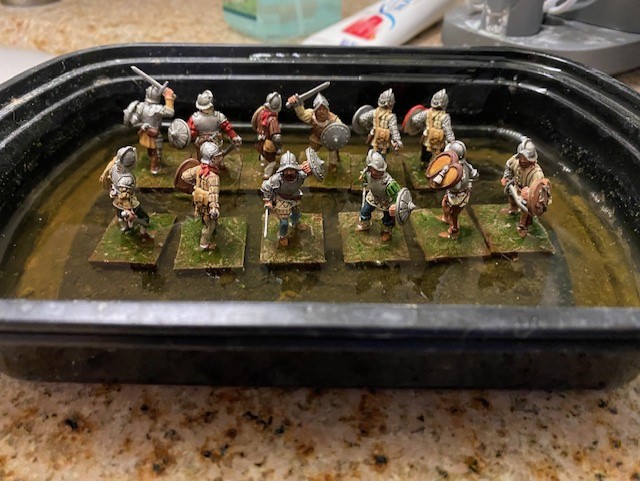
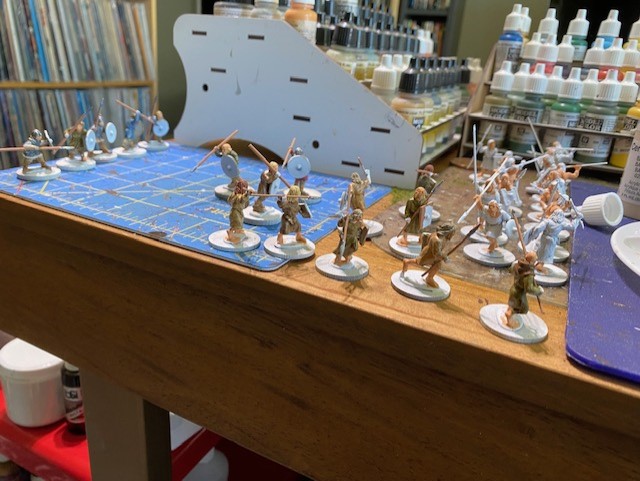
I usually do this a unit at a time, but the Spanish units are only six figures so I”m doing two units of Spanish swordsmen, by Eureka. I use a disposable food storage bin, plunk my figures down and make sure the water comes over the top of the base. No, the water shouldn’t hurt your paint. I often do this in the evening and the soak does its work by morning, but if you aren’t in a huge hurry you can let it go longer.

I usually use an X-Acto knife to pry the figures off, but the previous basing material is much softer than it was before the soak and the pry right off. Once in a while I get a sticky one and a Band-Aid and a break are called for, but that is rare. It also depends on the basing material used. If you used piles of white glue that has dried, your results may vary.

Step Two: Texturing the bases

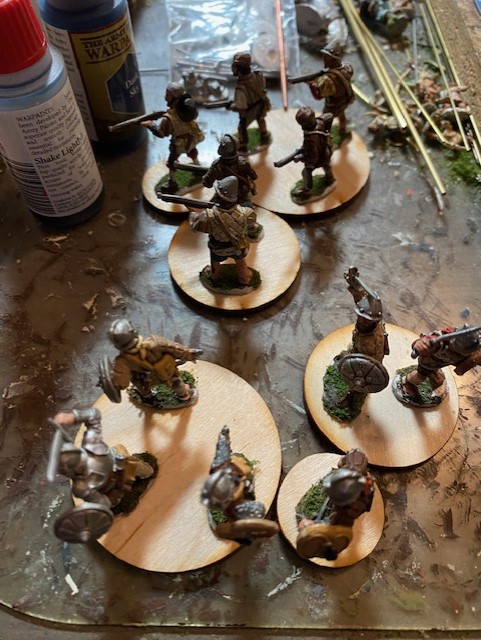
I use Litko bases. I would guess my Litko base budget is my second biggest expense in this hobby. I know, I know, I could cut my own, but just to be clear, I have done that. Art board, balsa, basswood, plastic, I did all of ’em and mostly I got bases with ragged edges that looked bad after a while Litko it is. I use 50mm bases for three figures, 40mm for two and 25mm for one. You could probably go smaller, but figures are big and I don’t like them to be crowded.

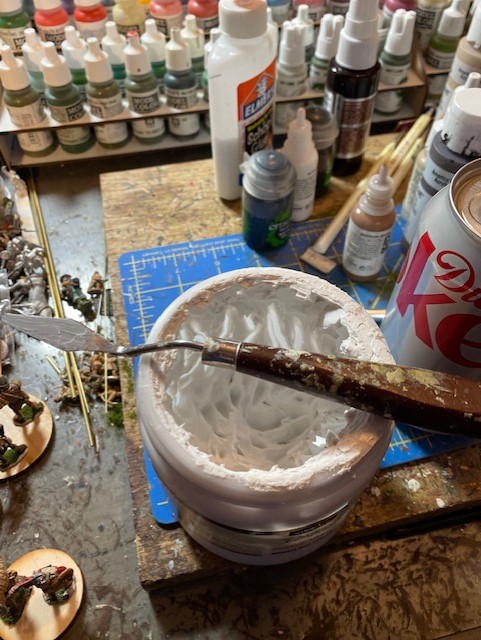
I use CA glue to stick figures on their bases. Yeah, yeah, that’s what I use, you can use something else. Once they are firmly affixed I use modeling paste to texture the bases. I’ve used other stuff. I’ve used different Liquitex artist media. I used Cellu-clay which is a form of papier mache. I’ve come down to using modeling paste, which is also an acrylic medium. My favorite brand is what I can get cheap. A 16 oz tub will last me an entire year, but it’s also available in 8 ozs. You can find it at Hobby Lobby, Michaels or Amazon.

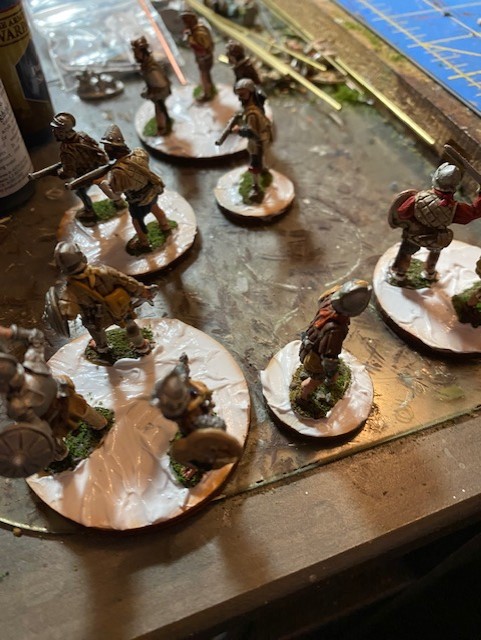
I use a metal artist knife. I prefer metal over plastic because it’s thinner and I feel like I have more control over where the glop is going. One real advantage to modeling paste is drying time. I usually try to apply it in the morning so it’s ready in the evening, but certainly it’s dry and hard within four hours if you’re in a hurry. Use a fairly thick coat to get the build-up you want because it will recede with drying.

Step Three: Paint

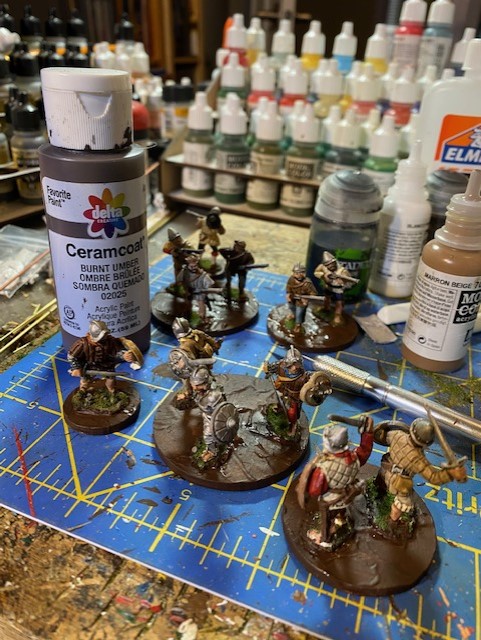
Pretty simple step. I paint the bases Burnt Umber. I don’t use a lot of craft paints, but when I do I try to use Delta Ceramcoat. For the most part I only buy basic colors, like Black, White, Charcoal and for basing I use Burnt Umber and Trail Tan. I’ve used other brands of Burnt Umber, but I just don’t get the coverage I do with Ceramcoat.

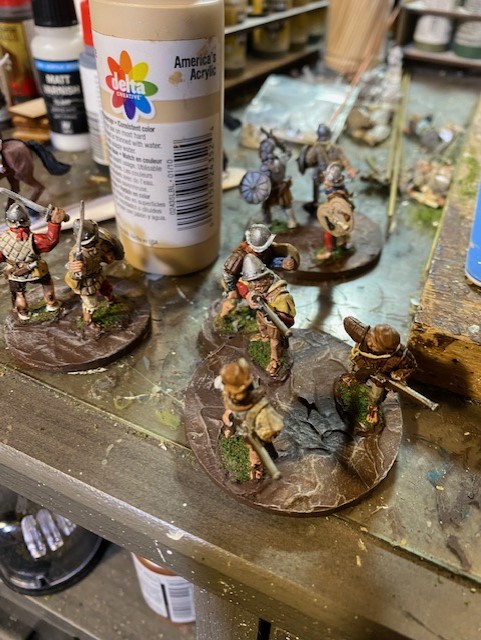
After painting the bases, and allowing for a little drying, I drybrush with Trail Tan.

Final steps

Wow, at this point we get to the matter of personal preference. Many folks like a fairly spare next step, add a rock or two and a tuft and call it good. If that’s where you are go for it. You’re gonna have your sticks and stones and a tuft or two while your dry-brushed dark stand shows through.

I tend to cover everything up, which raises the obvious question–why drybrush at all? It’s just force of habit I guess. I start with tufts. There are a zillion great makers of tufts. I’ve used Army Painter tufts, and I have no beef with them. There are lots of varieties but they are pretty basic. I really like Gamer’s Grass from the UK. They come in lots of different styles from short to very tall, from sparse to clumpy. Leadbear’s tufts from Australia are also very, very good, but right now the shipping is pretty spendy. AK also have some sparse, but really interesting tufts. So lots of choices out there, including plenty I haven’t mentioned.

I usually put 2-3 tufts on a large base, 1-2 on a 2 person base and one on a single base. Sometimes I vary it.

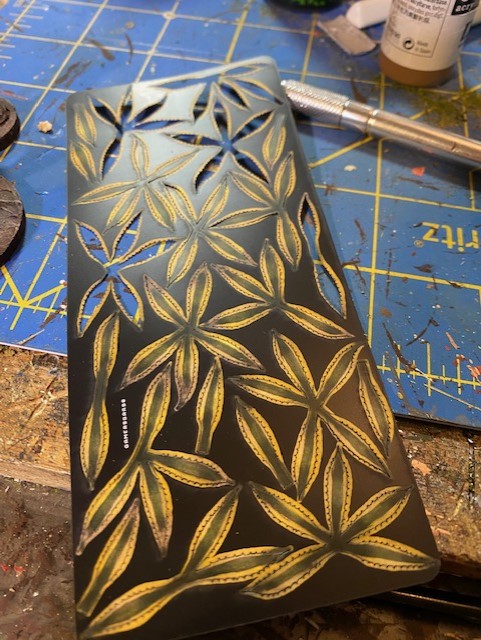
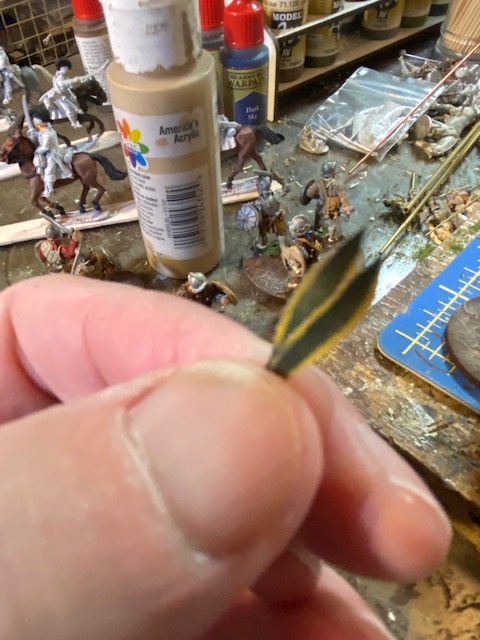
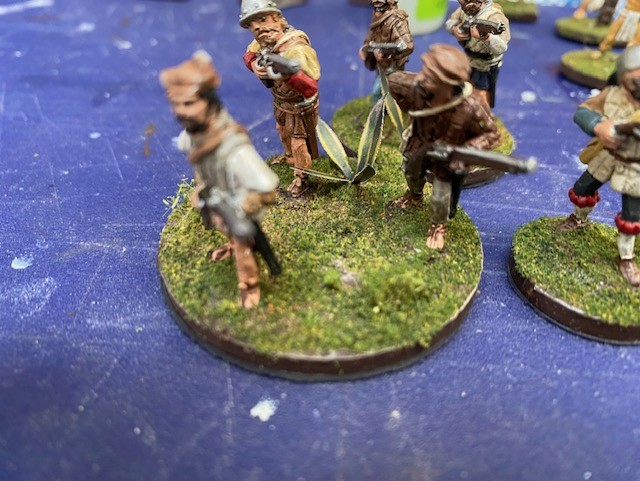
For my Spaniards I’m doing something a little different. I’m using agave plants in Mexico. These are from Gamer’s Grass. I’ve avoided using them for a year because they sure looked difficult. But really they aren’t. Just pull them off the little sprue, fold them up with your fingers. Hold them in place for 15 seconds or so to form the fronds into more of a bush then glue ’em down with CA glue. The first one was a challenge and then I figured out something that worked for me.
A two-frond Agave plant. Just squeeze the two leaves between your fingers and they’ll take the form you want. Then a drop of CA glue and you’re done.

I’m typically adding a tuft or two to the larger bases, and maybe one to the smaller. The last step is to apply Woodland Scenics turf. Again, you may say no! Please! Enough already. But heck, these are my figures and I say yes. I apply slightly watered down white glue to the base around the tufts and sprinkle blended brown and then blended green over the bases. I apply the glue with a paint brush and, one I don’t use for anything but basing.

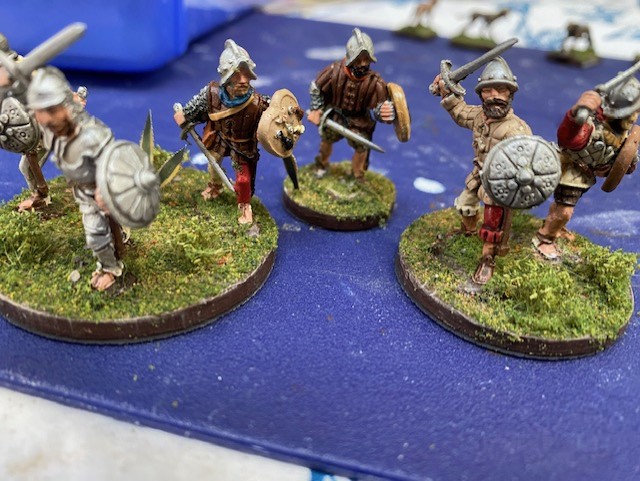
Spanish Swordsmen by Eureka
Blurry Spanish Arquebusiers by Eureka

When it’s all over I let it dry for a bit and take it out to garage for a spritz of clear lacquer. It just keeps it in place. When it’s all done I stick Litko magnets on the bases. I generally use plastic scrapbooking cases as storage and line them with galvanized roof flashing. The magnets stick well to these and we’re done.