Plodding toward the finish line

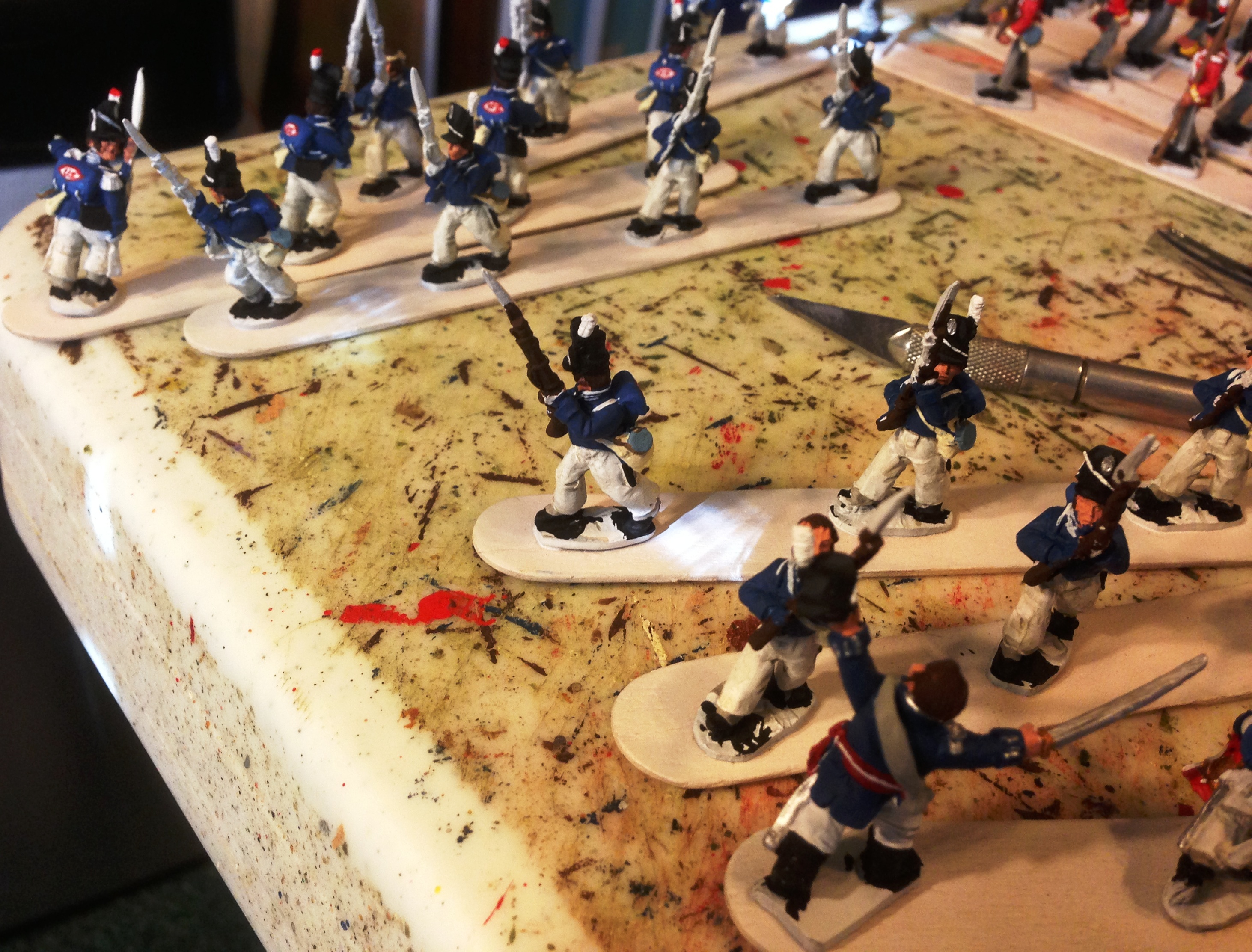
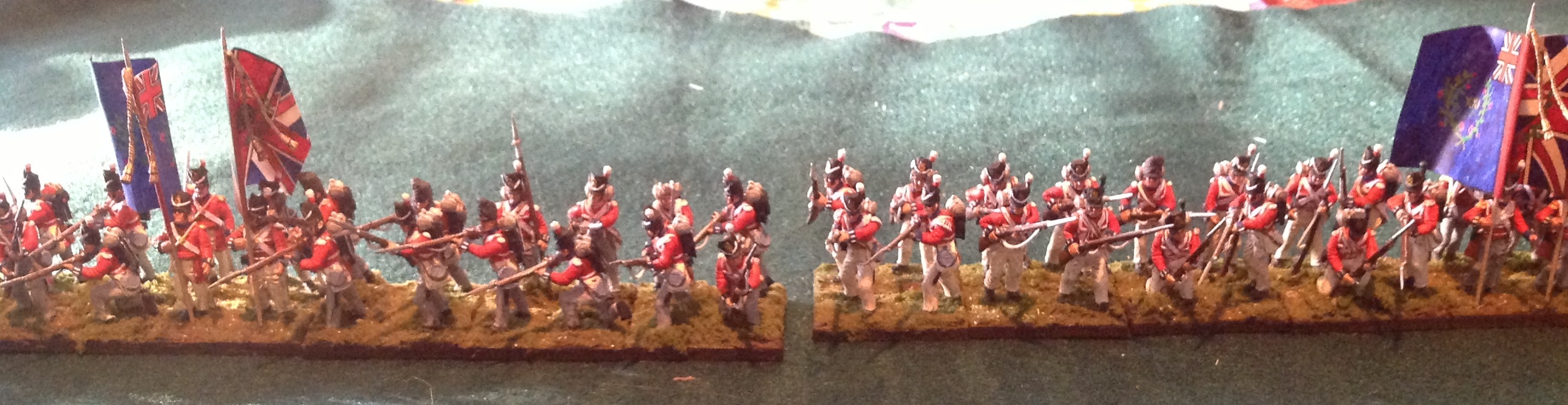
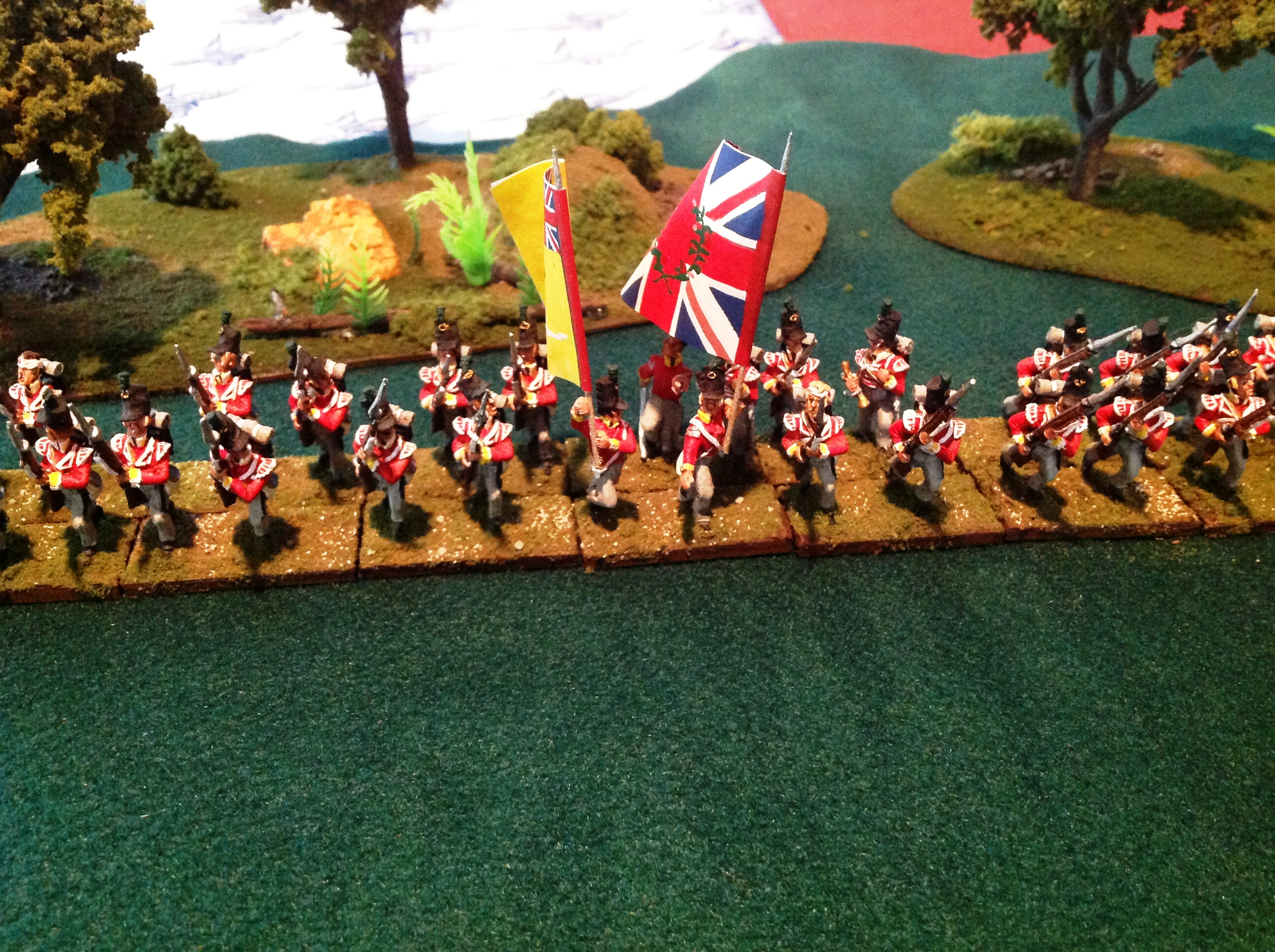
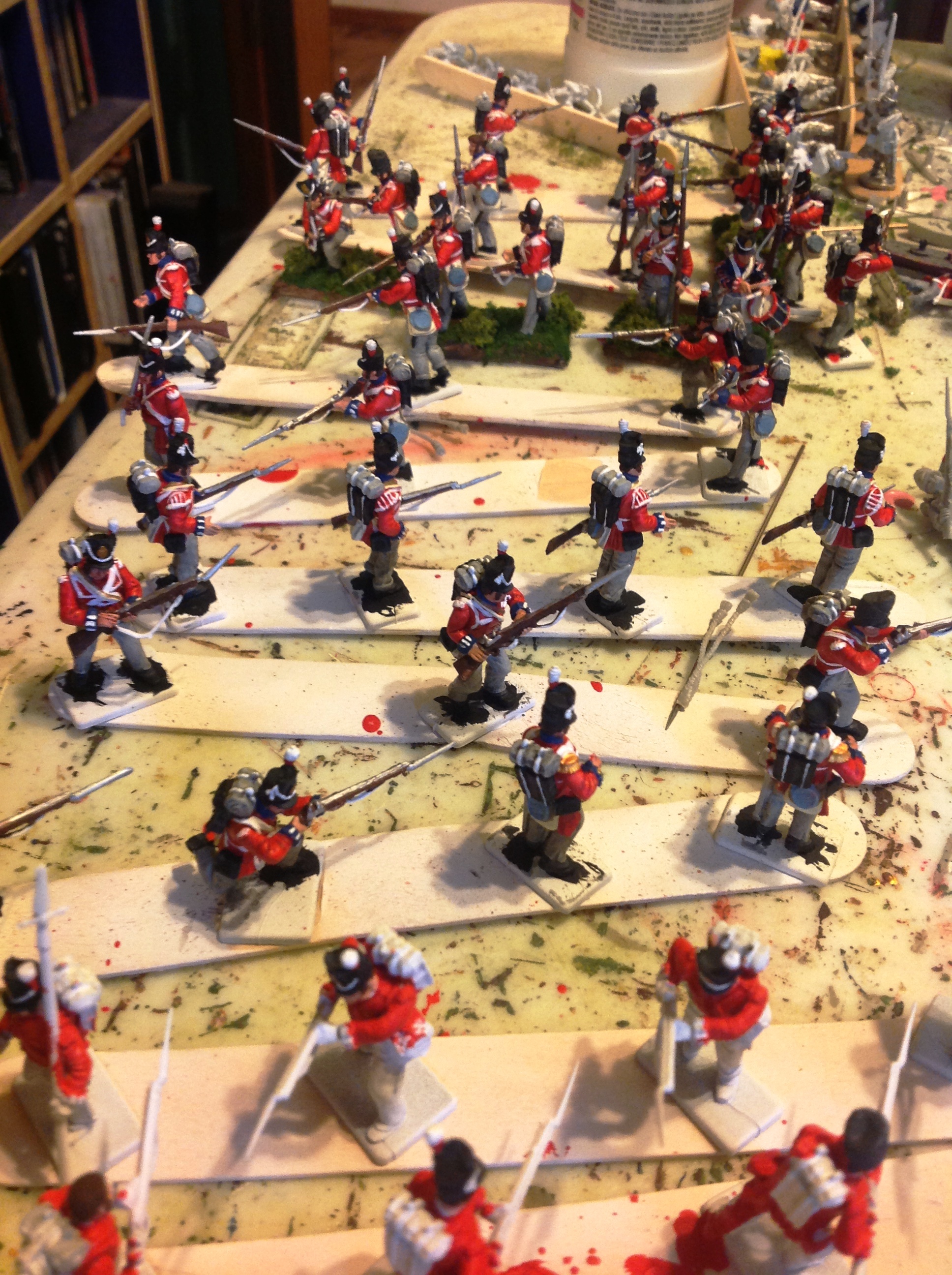
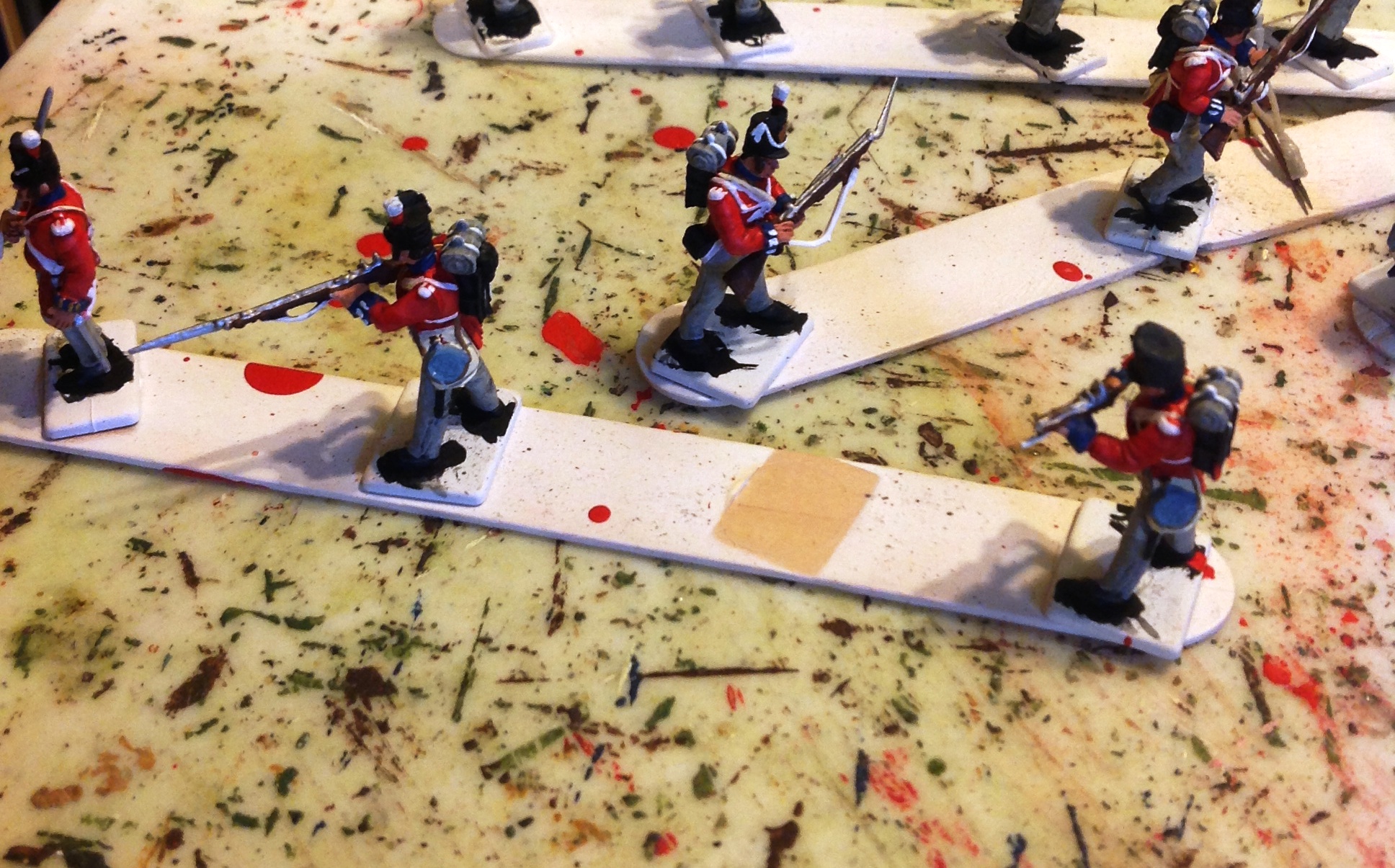
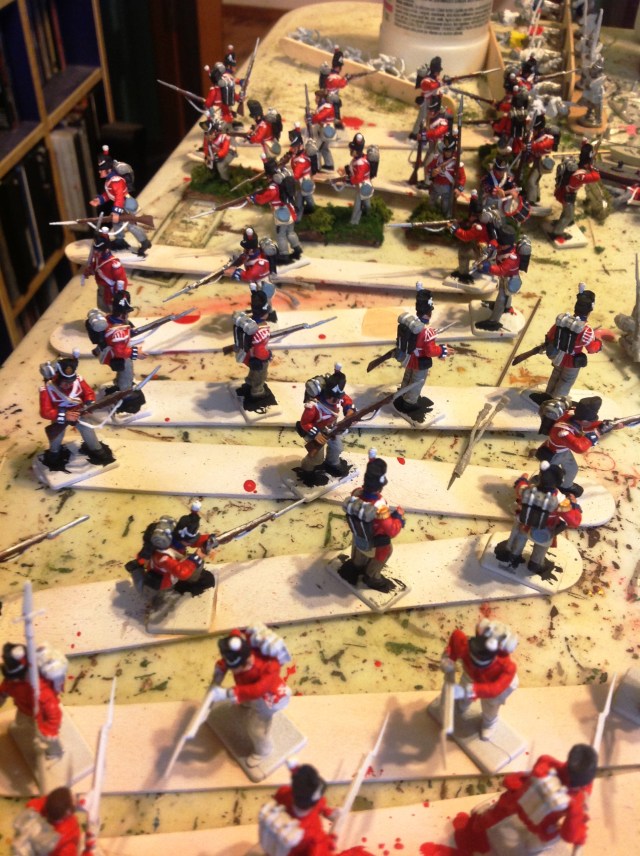
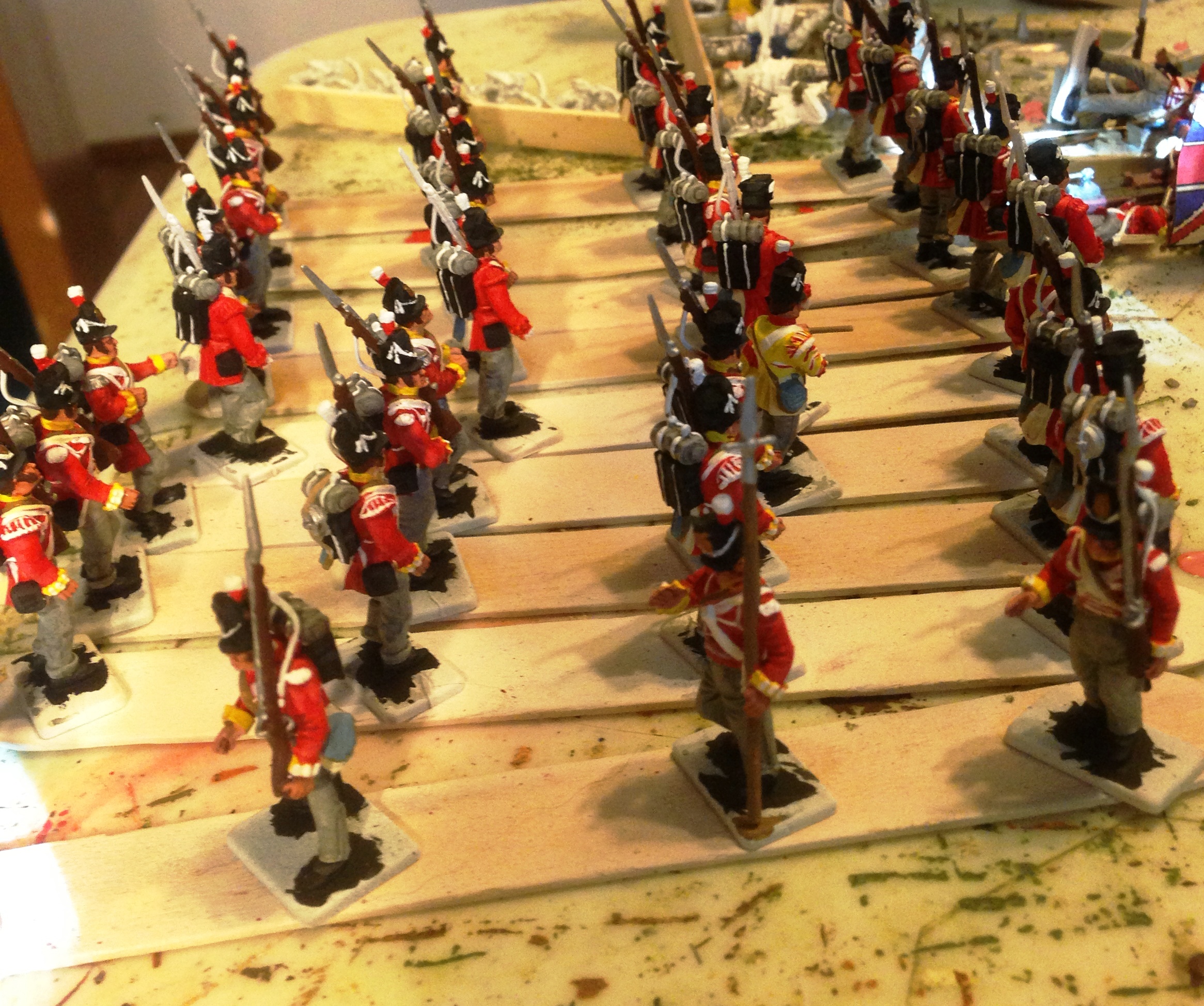
The 44th Regiment waits to be mounted and flagged.  There is an extra stand not quite finished in the middle of my painting sticks.

The 44th Regiment waits to be mounted and flagged. There is an extra stand not quite finished in the middle of my painting sticks.

I’ve been working on just my Bladensburg project since May.  With so many other things I want to do, it’s beginning to feel a little like the Chinese water torture.  Even though I seem to have acquired the September version of this year’s school-directed biological warfare, I’ll likely drag myself into my den for an hour or so painting.  Why?  So I can be free, of course.

I whine, I fuss, I whine and I fuss, but I have been productive.  Here’s what I have painted since Enfilade:

Two-24 figure un-uniformed battalions of Baltimore militia:     48 figures

One-48 figure British light Infantry battalion (85th Bucks L.I.): 48 figures

Three-32 figure British line infantry  (4th, 21st and 44th regts.) 96 figures

This weekend, all things being equal, I will finish Scott’s battalion of U.S. regulars (elements of 12th, 36th, and 38th regts.) 24 figures.

That will leave 24 more of the evil Victrix Brits to assemble and paint, and seven mounted British commanders by Old Glory.  All that will remain of Bladensburg is the playtesting and some terrain making.

Scott's regulars are nearly finished.  I'll probably put an hour or so into painting them tonight, sick or not.

Scott’s regulars are nearly finished. I’ll probably put an hour or so into painting them tonight, sick or not.

On the positive side of all this, I’ve always wanted to do Bladensburg.  Sheer distance between Surrey and Puyallup makes it difficult to playtest it effectively sharing figs with Doug, and it’s a damn fiddly game if the British are to have a chance.  So I’m excited to have the whole kit and kaboodle under my own roof.  Needless to say, when, it’s all over I’ll have painted 225+ figures toward completing the project as well.

Fix Bayonets: Back to the Future

I love Fix Bayonets.  It’s a small gathering hosted by the Fort Steilacoom Historical Association (or something like that,) a preservation group aimed at keeping up the oldest buildings in Western Washington.  Each year Lawrence Bateman and Damond Crump host a modest gathering in one of the original fort buildings and we play a day’s worth of games for a modest entry fee that goes toward the many needs of the maintaining the site.  It’s a nice fundraiser for them and we certainly have a good time.

I was particularly looking forward to yesterday’s event, because I hoped to see an old friend there.  Scott Appleby recently joined the NHMGS Facebook page, and I had my fingers crossed he would be at this event.  I played Fire and Steel Napoleonics with Scott back in the 70’s and 80’s.  But as I gradually became more involved with NHMGS and took on different projects we lost touch.  I hadn’t seen him in twenty years.  So when he came to the event I was thrilled.  It made my day.  A semi-truck could have backed over my hydroplanes, and it still would have been a very good day.

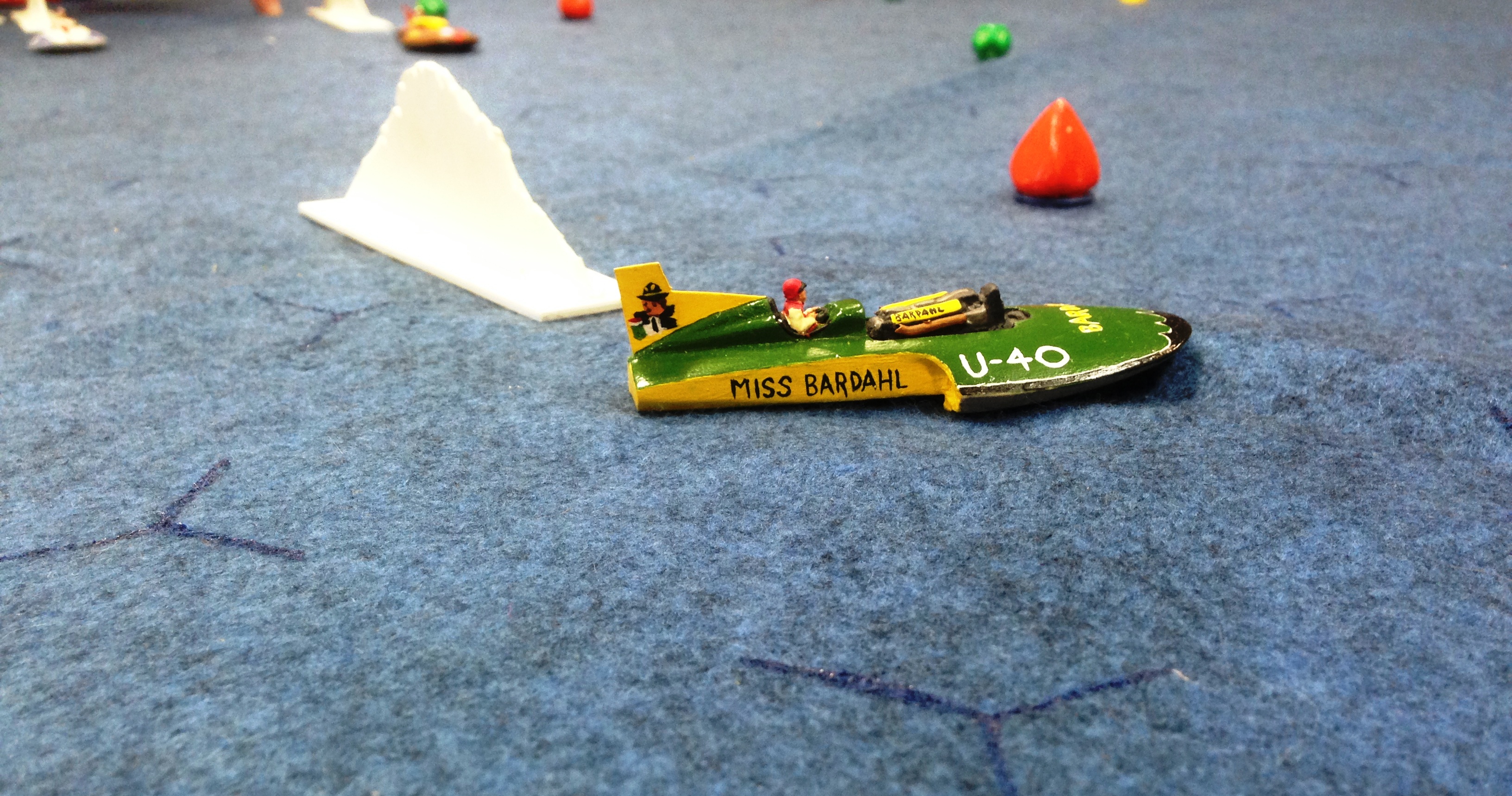
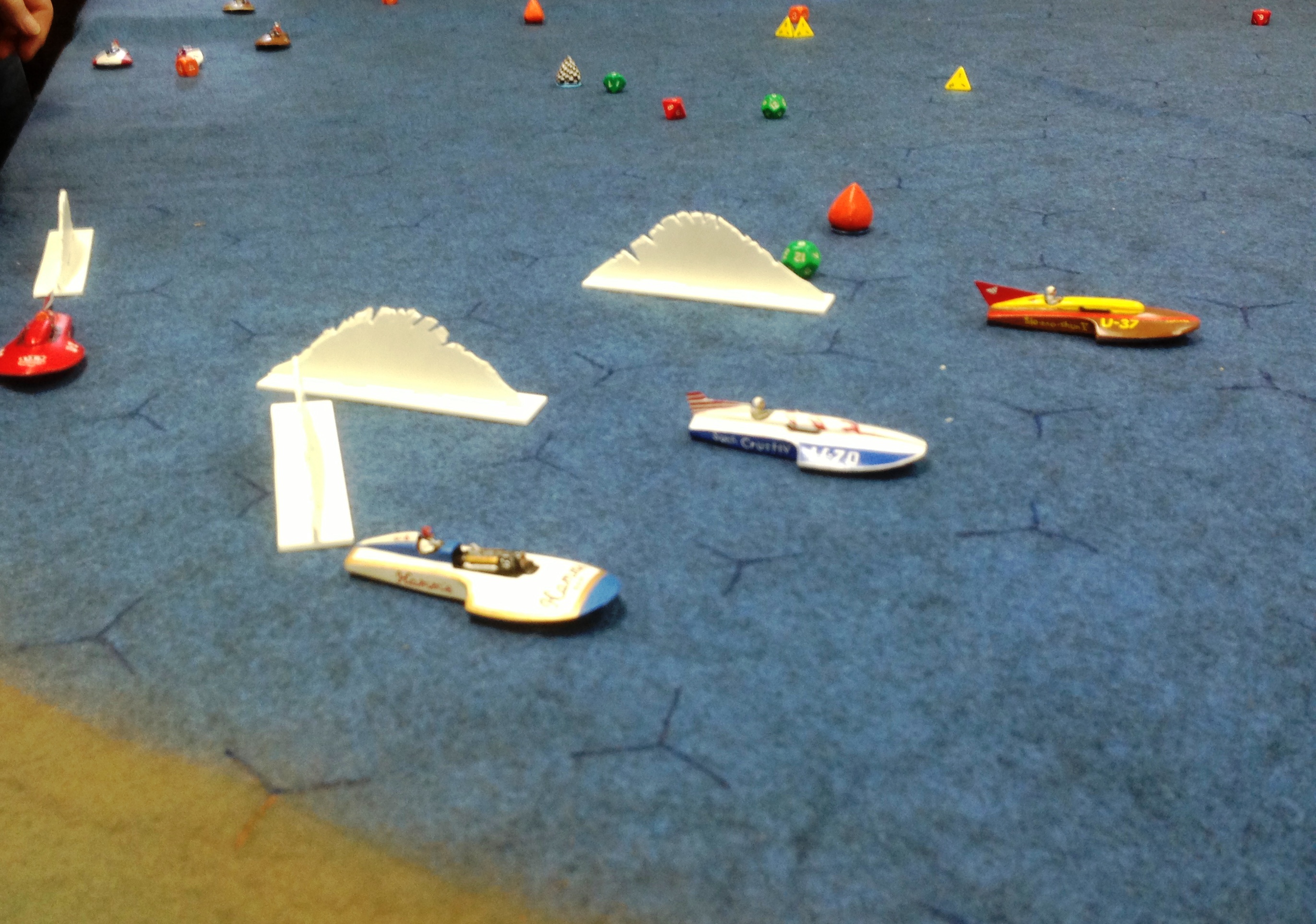
I ran a Thunderboats game in the morning period.  It’s a great game for gatherings like this because after the first twenty minutes it almost runs itself.  It was actually an exciting game because my friend Chris Bauermeister, who always has terrible die rolls in my games, had stupendously good die rolls.  He got off to an early lead in the Miss Bardahl that he never relinquished.  In fact it was never even that close.  Bill Vanderpool and Al Rivers both bought nitrous bottles, used them and both had some interesting moments with flames. There was lots of risk-taking, which makes for a fairly fun game.  I went through an entire deck of event cards-a first.  But, with a lot of risk taking goes a high attrition rate, and four boats did not finish.  Still a lot of fun, as Thunderboats usually is.

Chris Bauermeister rolled a twelve on a 12-sided die on turn one and never looked back.  Miss Bardahl won the race quite comfortably.

Chris Bauermeister rolled a twelve on a 12-sided die on turn one and never looked back. Miss Bardahl won the race quite comfortably.

A look at the also-rans coming into turn one.  Scott Appleby, racing Doug's Hamm's Beer boat didn't survive turn two.

A look at the also-rans coming into turn one. Scott Appleby, racing Doug’s Hamm’s Beer boat didn’t survive turn two.


There some other interesting looking games in the morning session. Scott Williams brought up his Galactic Knights game from Olympia.  Bruce Smith also ran a pre-dreadnought naval game.

We dashed down to Steilcoom to our favorite sandwich shoppe for lunch and I got to talk to Scott and some of the guys a bit longer.  Scott is also a teacher so we talked some shop, as well as about the Huskies.  So it was a good time.

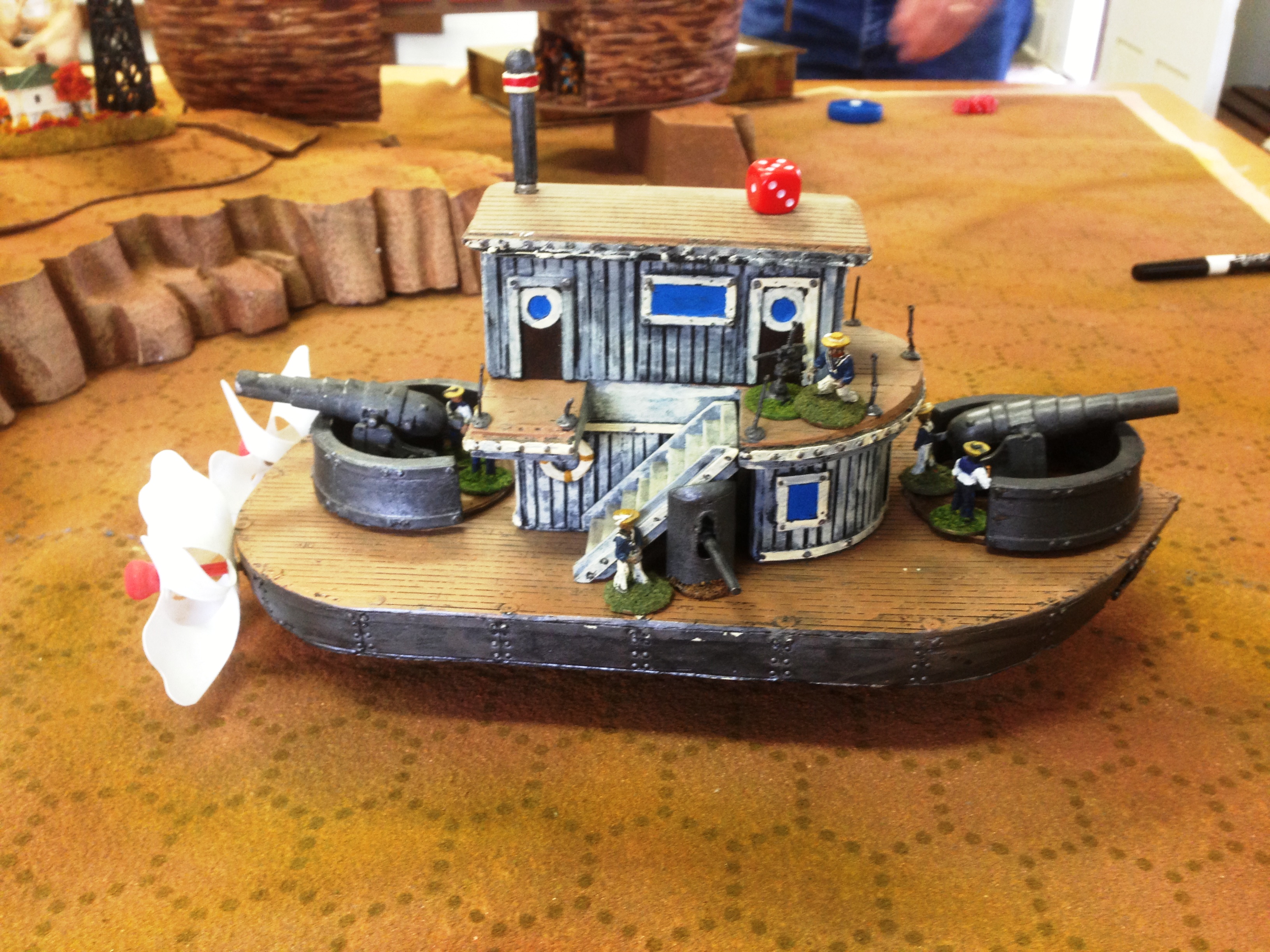
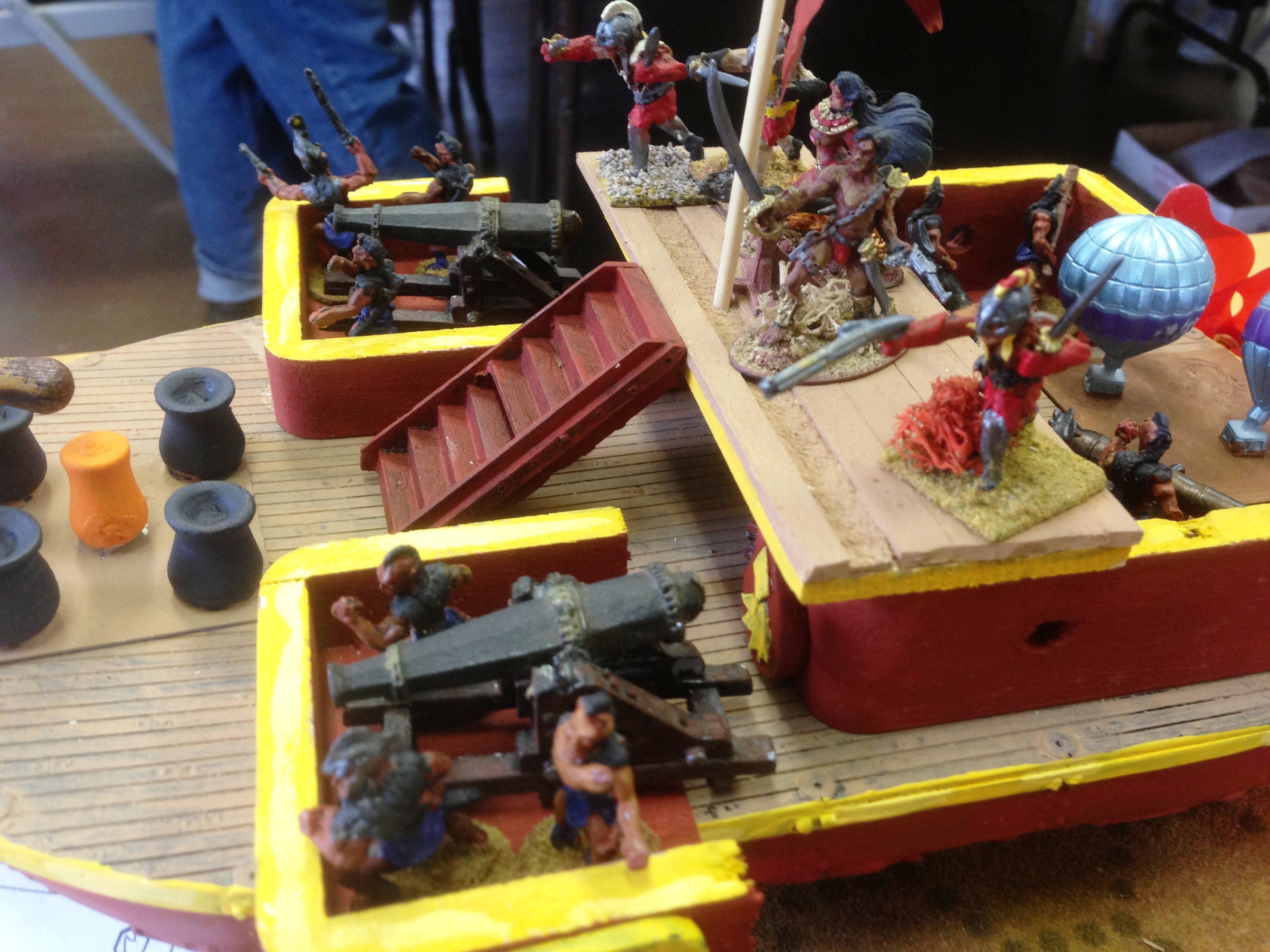
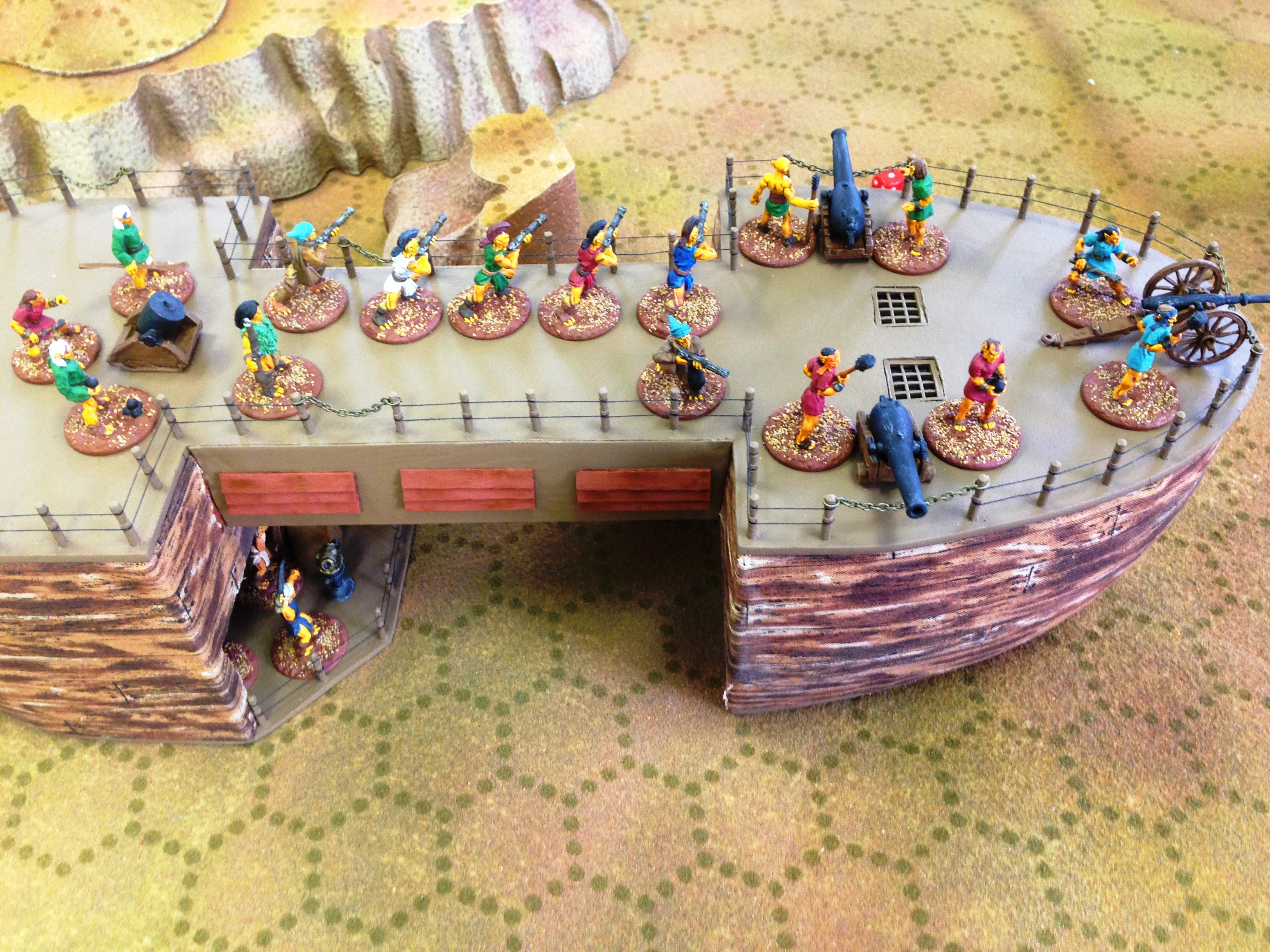
During the afternoon session I decided to play in Hugh Singh’s 28mm Sky Galleons of Mars game. I’m a sucker for SGoM, so it didn’t really take a lot to convince me to play.  Hugh converted  three Stonehouse Miniatures resin gunboats into flying vessels for Mars. He did a really nice job using some Houston’s Guns  and crew for the armament, as well as using some interesting bits for Martian tether mines and fire pots.  Very nice and very serviceable.

Hugh Sing's Austrian gunboat was quite a death dealer at Fix Bayonets

Hugh Sing’s Austrian gunboat was quite a death dealer at Fix Bayonets


I really liked the touches on Hugh's Martian sky galley.  The firepots fore and the tether mines aft are quite nice.

I really liked the touches on Hugh’s Martian sky galley. The firepots fore and the tether mines aft are quite nice.


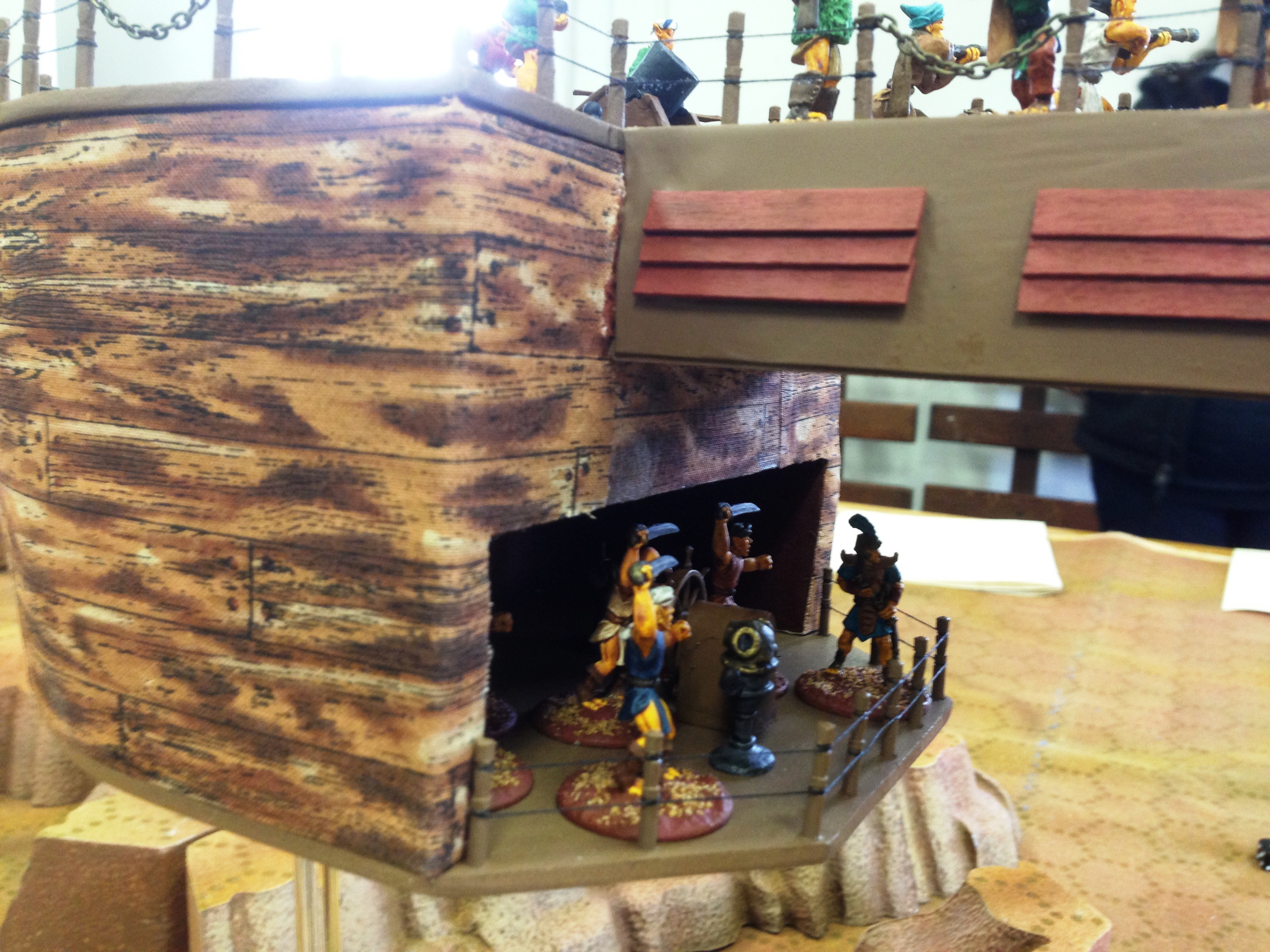
Gene Anderson brought up his vessel from Centralia, a gorgeous (and huge) Endtime screw galley.  Gene constructed the deck and skeleton from plans and covered the hull with planking fabric and coated it with liquid starch.  It looked amazing, and takes its place alongside Mark Waddington’s Aphid and Ranger as examples of superb modeling.

Gene Anderson's Endtime gunboat is an exquisite model.  Constructed using fabric coated with liquid starch, Gene was able to achieve the unique shape of the most common Martian ship.

Gene Anderson’s Endtime gunboat is an exquisite model. Constructed using fabric coated with liquid starch, Gene was able to achieve the unique shape of the most common Martian ship.

The nicest touch to the Endtime model is Gene's creation of the bridge in the lower hull.  Great work Gene.

The nicest touch to the Endtime model is Gene’s creation of the bridge in the lower hull. Great work Gene.


Unfortunately bad things often happen when a single Martian vessel takes on an Earth gunboat.  I commanded Hugh’s Austrian gunboat with two long 4″ guns.  It was fast enough to keep the bigger Martian craft from closing and with superior firepower, slowly began to pound the Endtime to pieces.  When we decided to call the game, the screw galley lost all but one of its guns and the crew was about 50%.  It was having difficulty maintaining altitude, and with about a third of its turncranks dead, was half the speed of my vessel.  I took only slight damage to my hull and crew.

Word is out that there are plans for a big 28mm Sky Galleons game at Enfilade. That would be pretty to see, but we sure need to plan how to run it. That will require quite a bit of room.

There were some other great games in the afternoon period too.  Chris B. hosted a Cold War armor battle.  Bruce ran a big Korea vs. Japan ancients game with some pretty smooth looking rules. Paul Grandstaff hosted a Check Your Six game.  Bruce Smith ran a very cool looking post-apocalyptic game in a very trashed city.

Everyone seemed to have a good time, and the organizers were pretty happy with the support.  It was an early in, early out kind of day, and I was able to be home by 3:30 to see most of the Huskies game.

The Ol’ Perfesser Explains His Project

One of my projects is the hypothetical conflict between the United States and Spain.  No, not the Spanish American War of 1898, the one that didn’t get fought between say 1795-1810.  Yes, I know, no blood was shed in this conflict, but it could have and nearly was on several occasions.  I shared this project on my old Blogger site (God rest its soul, and thank you Google,) but I took a break from it last year as I focused on other things.  However, as Bladensburg begins to wrap up and I can look forward to other plans, I am drawn back to this project.  I envision this post as one of several that explains a bit about this period, and my thinking around it as potential games using miniatures from the era, so bear with me.  But if you see something interesting here, or have some ideas of your own, let me know.  I’d love to hear about it.

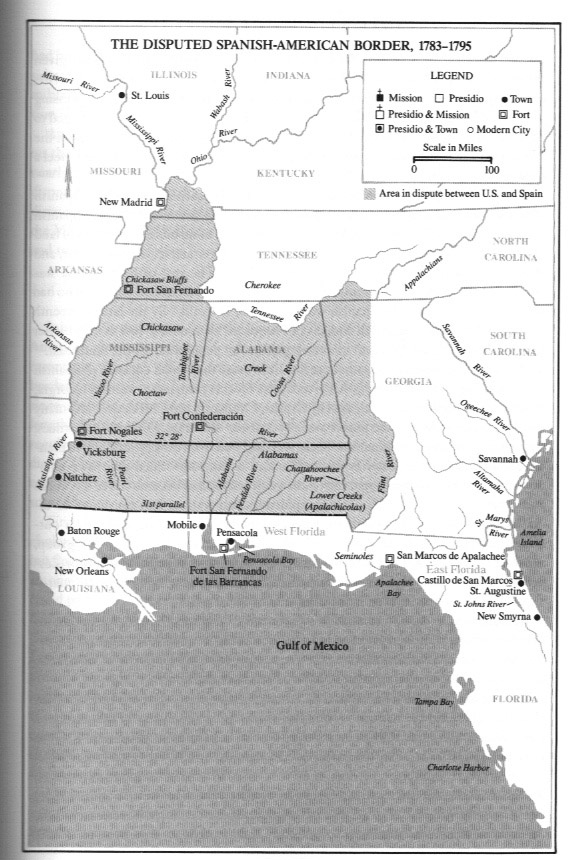
We all know the British, by the terms of the Treaty of Paris that ended the American Revolution ceded its territory south of the Canadas and west to the Mississippi River to the United States.  Unfortunately, that did not include all of the territory on the east side of the Mississippi.  There was still some prime real estate that remained in the hands of that sometime American ally, Spain.  The fortress of Pensacola, the excellent harbor of Mobile, and the real gem, New Orleans, were all controlled by Imperial Spain.

This map shows the disputed territory between the U.S. and Spain 1783-1795.  Map from The Spanish Frontier in North America by David Weber.

This map shows the disputed territory between the U.S. and Spain 1783-1795. Map from The Spanish Frontier in North America by David Weber.

By 1783 the Spanish Empire was more than a little bit rickety.  Unable to compete economically with France and Great Britain, many of the Spanish settlements in the borderlands were weak, and barely able to defend themselves against aggressive Native American tribes such as the Apaches and Comanches.  Spaniards were always a minority in their own provinces, had difficulty attracting settlers, and lacked the resources to entice colonists or adequately maintain defenses.  Though a series of reforms in the 1780’s allowed the Spanish to make peace with their native neighbors, by the late 1790’s the United States, having won their own peace with their northern native enemies, was knocking on the door of the Spanish borderlands.  Lacking a large professional army, Americans frontiersmen frequently penetrated and settled Spain’s frontier, challenging Spanish authority and threatening Spanish rule.

Though the Paris peace of 1783 awarded Spain, as a victorious American ally, the key strongpoint of Pensacola, as well as East and West Forida, they persisted in claims of land in upper Alabama and Mississippi. American settlement and economic development, well beyond the subsistence level in the Ohio River valley, required getting goods to market through Spanish New Orleans. It made that port city a target for war cries from the new west.  Historical face offs at places like Nacogadoches, Natchitoches, and the Burr plot to seize New Orleans, Louisiana and Mexico itself make a hypothetical conflict with Spain seem less like a historical maybe, and more a miracle war didn’t actually happen. Though Spain gradually retreated from its borderlands through a series of diplomatic negotiations until Mexico’s independence finally put an end to Spanish rule in America in 1821, a potential conflict with the United States makes for interesting game possibilities.

The Bladensburg Report: Three down, three to go

The 4th Regiment and the 21st Regiment are both blue-faced line infantry units that served at Bladensburg.

The 4th Regiment and the 21st Regiment are both blue-faced line infantry units that served at Bladensburg.

Today is the official beginning of school, though I’ve spent a lot of time at Emerald Ridge for the past couple of weeks.  It’s been a busy summer, with a month of solid preparation for J-camp and the week of camp itself, plus the time devoted to painting the house, moving furniture for the re-done flooring and all the silliness that goes with that.

Even so, I made lots of time for painting figures.  My goal was to get the big light infantry battalion finished and at least two of the three line battalions at Bladensburg done.  Voila, I have accomplished that. Below are pictures of the 4th and 21st Regiments, each at 32 figures.

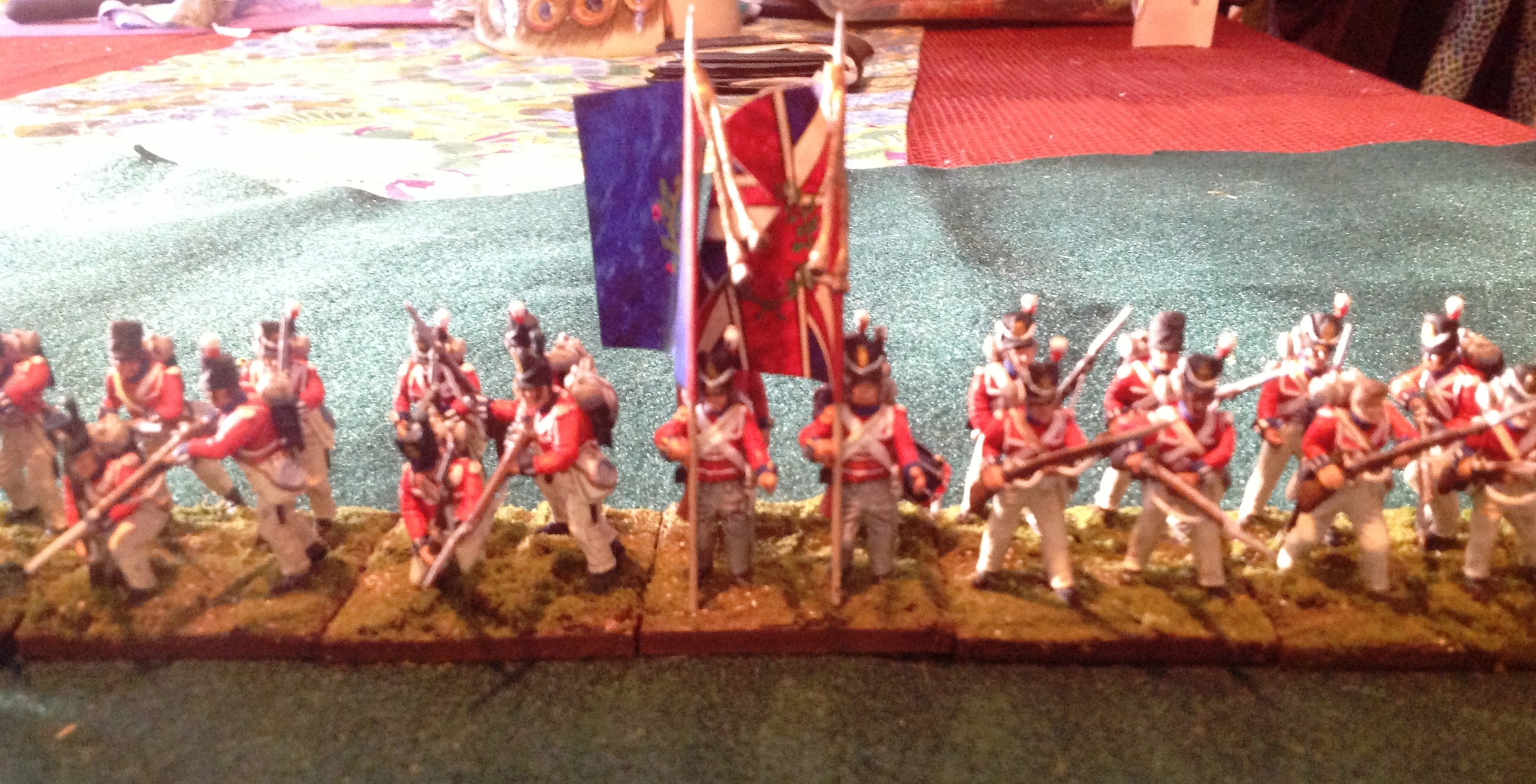
The 4th (Kings) Regiment.  Flag is from Warflags.  Staff is a North Star 200mm lance with the cords snatched from the Victrix standard bearer.

The 4th (Kings) Regiment. Flag is from Warflags. Staff is a North Star 200mm lance with the cords snatched from the Victrix standard bearer.

They are the two of four units created with Victrix figures for the battle.  I am working on the third, the 44th Regiment, also with 32 figures.  A smaller unit, a converged light infantry unit will follow.  The lights aren’t assembled yet, which I am sure will take most of an evening to do.

Just a final critique of the Victrix figs, and then I’ll shuddup about them already.  Basing them is not a pleasure.  I tried to arrange them on their little 40mm square piece of heaven so that they’d resemble a firing line, sort of.  Unfortunately, getting the firing figures to shoot sort of directly forward is impossible, so they are all facing about 22 degrees to their right, as though they were firing at a stag running directly across their front.  The bases, on pretty sizable rectangles, often have to be twisted a bit in order to get everyone moving in sort of the same direction.  The whole lot seems pretty disorganized for a well trained unit. Chalk it up to lessons learned.

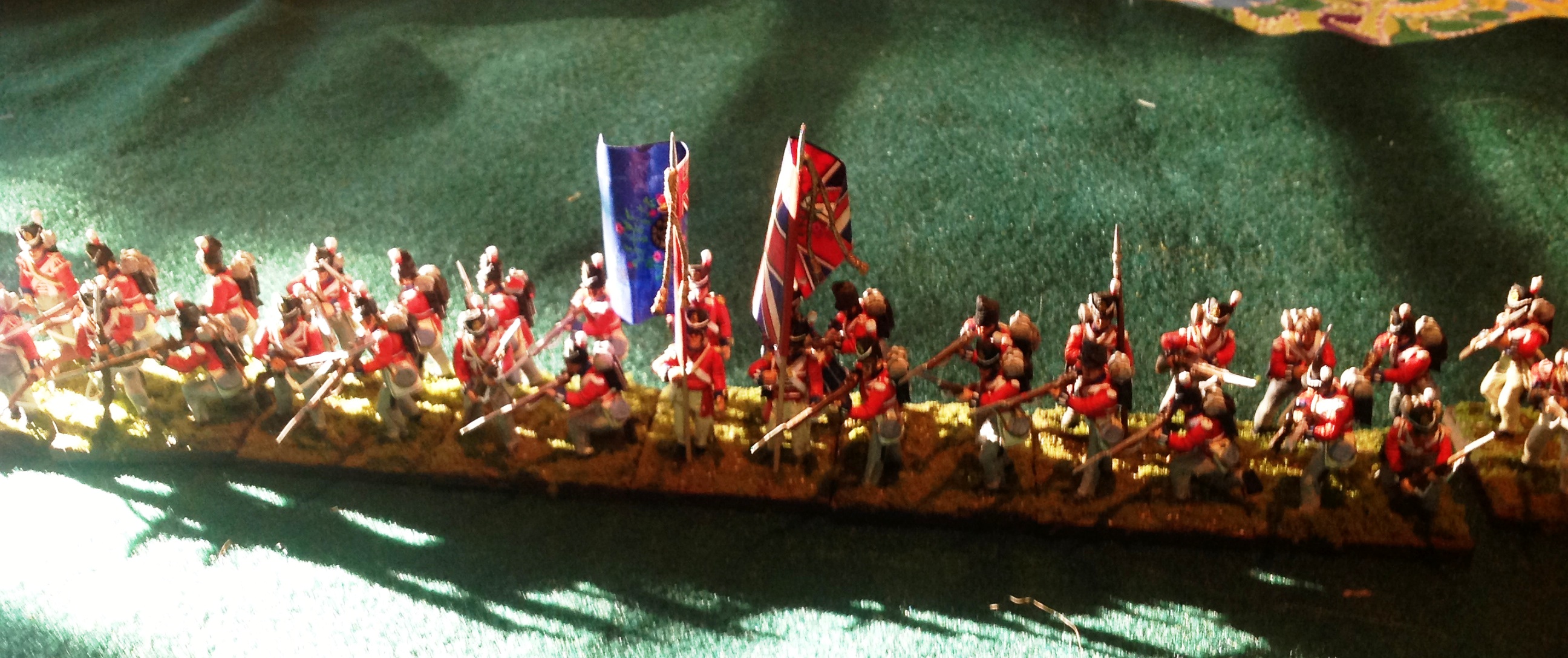
21st (Royal North British Fusiliers) Regiment.  Had a difficult time with the lighting, which makes it see a bit like the lights of heaven are shining.

21st (Royal North British Fusiliers) Regiment. Had a difficult time with the lighting, which makes it see a bit like the lights of heaven are shining.

So I have two more British units to finish for the battle, and then one remaining unit, an American line infantry unit of 24 figures to complete for the battle.  After that it’s a few British generals and I want to re-do my rocket batteries before taking the winter to playtest a few times.  I’m shooting for no later than Thanksgiving to have the lot finished, perhaps much earlier.

My board game renaissance.

For the last 30 or so years I’ve stayed away from board games.  Don’t get the wrong idea, I like to play ’em, but I’ve generally stayed away from buying them. I always admired my friends, mostly named Dave, that had big collections of board games and were heavily into game design.  But I felt I needed to make a choice–board games or miniature games.  There’s a reason for the choice.  The first is cost.  If I was going to sink a lot of money into miniatures and all the paraphernalia that went with them, I’d have less money for board games.  The other big problem is storage.  Miniatures, books, records and assorted memorabilia really sucks up all the room I have for keeping stuff. Board games compete for that space too, and, I confess, I’m pretty much all full up.

Twilight Struggle is a card driven game from GMT about the Cold War.  Two player game, relatively easy to play, but a fair amount of tension.  Very influential game system.

Twilight Struggle is a card driven game from GMT about the Cold War. Two player game, relatively easy to play, but a fair amount of tension. Very influential game system.

Nevertheless, I’ve played lots of wonderful games over the years, other peoples’ games mostly.  But in the last 18 months or so, I’ve taken more of an interest.  I’ve been sparked by our trips to Cafe Mox, and for whatever reason, I’ve just been intrigued with the topics of many historical board games.  I’ve probably bought or gotten as gifts one game a year over the past five or so years, But this summer II got some birthday cash, used some of my camp stipend and added a bit besides to pick up several board games the past two months.  To be truthful, I’ve played exactly none of them, but I have some plans to tackle them.

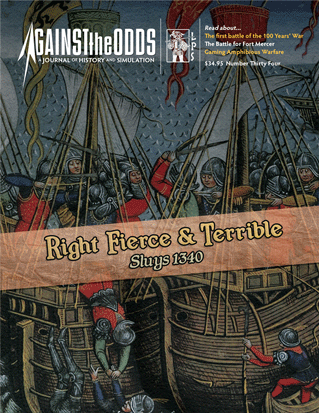
The first game I got was from a copy of the magazine Against the Odds # 34.  Right Fierce and Terrible is the name of the game and it is on the Battle of Sluys.  For those who know me, you realize I have a deep interest in battles of the Hundred Years War.  Sluys is a 1340 naval battle that greatly resembles a land battle of the era. It’s important because I also ran a miniatures game of the battle three years ago, and I wanted to see how the board game matched up with my game. So far I’ve read the article about the battle, but haven’t punched out the game or read the rules.

Right Fierce and Terrible is an Against the Odds magazine game on the naval battle of Sluys in 1340.  Ted Henkle brought this to my attention after I ran Sluys at Enfilade in 2011.

Right Fierce and Terrible is an Against the Odds magazine game on the naval battle of Sluys in 1340. Ted Henkle brought this to my attention after I ran Sluys at Enfilade in 2011.

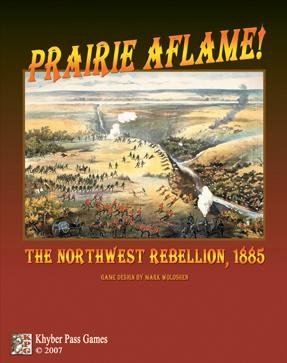
The second game I got was a birthday gift from a friend.  It is Prairie Aflame about the Riel Rebellion in Canada.  My friend and I have both been intrigued with this topic for years.  We both seem to have an abiding interest in hopeless rebellions, such as this campaign and the Spanish Civil War.  In any case, I haven’t had a chance to take a look at it all, and I feel greatly remiss.  I think tomorrow, Labor day is the perfect time to look inside and get an idea of what it will take to play it.

Prairie Aflame, designed by Mark Woloshen for Khyber Pass Games is now available as Northwest Rebellion from Legion Games.  Not many games published on the Riel Rebellion of 1885, but this looks interesting.

Prairie Aflame, designed by Mark Woloshen for Khyber Pass Games is now available as Northwest Rebellion from Legion Games. Not many games published on the Riel Rebellion of 1885, but this looks interesting.

One game I have that I’ve played a lot and really like is GMT’s Twilight Struggle about the Cold War.  It is a CDG or card driven game.  I’ve actually played several games that use this mechanism, including We the People, on the American Revolution, and Making of the President 1960 by Zman Games.  I love the mechanics.  Twilight Struggle and Making of President actually helped me learn a bit more about the period as well, so I found this kind of game to be fun and interesting .  I was at Game Matrix one day and saw 1989: Dawn of Freedom, a political game about the fall of Communism in Eastern Europe.  It uses the CDG system from Twilight Struggle, and is on a topic that really interests me.  I’ve looked through some of the rules, but haven’t punched it out yet.

1989: Year of Freedom uses the same system as Twilight Struggle.  The topic is just as fascinating as the Communist player tries to stay in power, while the forces of democracy try to speed the move to more representative government.

1989: Dawn of Freedom uses the same system as Twilight Struggle. The topic is just as fascinating as the Communist player tries to stay in power, while the forces of democracy try to speed the move to more representative government.

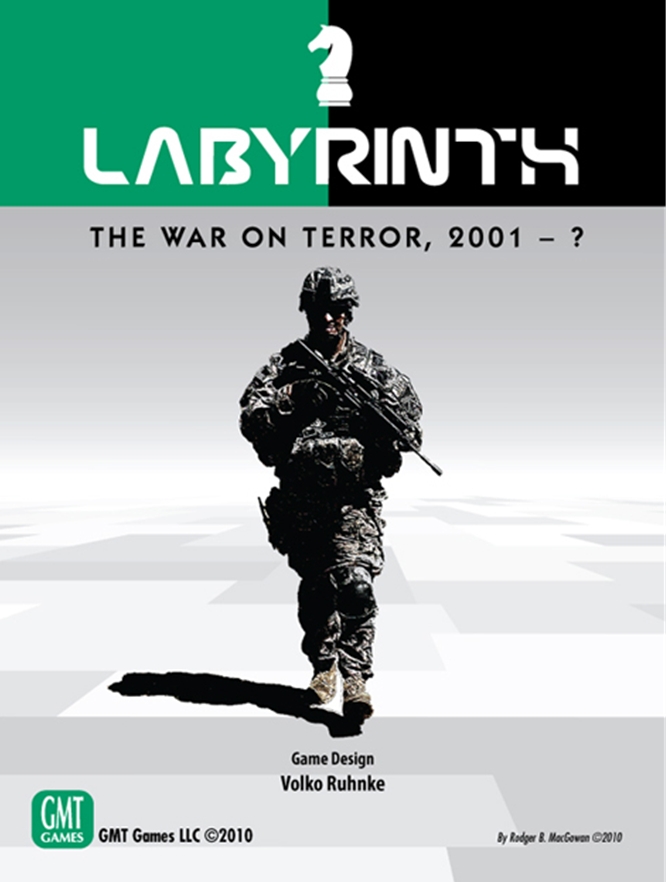
The last game that I got was GMT’s Labyrinth: The War on Terror.  This is another CDG game, an award winner from 2010 that is again derived from Twilight Struggle.  I read some reviews of the game and checked the ratings on Board Game Geek.  A real advantage of this game is that in addition to head to head gaming it is possible to play a solitaire game, though it is a tough game for the U.S. to win.

Labyrinth is another CDG game.  It has the virtue of being played solitaire.

Labyrinth is another CDG game. It has the virtue of being played solitaire.

While I won’t let board games take over my life, they are a nice distraction.  However, I will note my number of days painting for school year 2012-13 was down.  While I still paint most nights (I’d guess 250 or so days per year) that’s still less fewer days than the past. Most other nights I read quietly until bed time or spent too much time being unproductive on the computer.  This is one more evening activity I can take on instead of wasting untold hours Googling cures for male pattern baldness or Donald Trump’s birth certificate.    With our little home renovation, I now have a space big enough to play them.  I’m considering devoting one evening a week to working through a game at my dining room table, or getting together with someone to play a bit.

One big damn unit: The 85th Regiment

48 figures in 12 stands means a frontage of 18" . Double that when in extended order.

48 figures in 12 stands means a frontage of 18″ . Double that when in extended order.

In my Bladensburg summer I’ve focused on painting some British regiments.  First on the list was the 85th Regiment, (Buck’s Volunteers) light infantry.  For a Regimental Fire and Fury game it’s  enormous, with 12 bases to represent it’s thousand man stated strength.

These are Old Glory 28 mm British Light Infantry figures.  They are painted more or less straight out of bag.  The figures aren’t terribly imaginative, but they are relatively easy to paint.  The main color is Vallejo Vermillion, a color I like very much for it’s brightness, without getting too light or too orange. and then washed with Ceramcoat Moroccan Red.  I always add some Liquitex Matt medium to break the tension to the paint and water mixture.  I add just a tiny bit of Charcoal Gray to darken it and then wash it on with a big brush.  The trousers are Ceramcoat Quaker Gray, again, washed with Charcoal Gray.

If I have a complaint about the miniatures at all, it is that they are quite weak at the ankles.  It’s important to be careful as you’re straightening them out.  Otherwise they’re pretty easy cheesy.

The 85th was one of Wellington’s veteran units sent to America in 1814.  It was the chief unit in the leading light brigade at Bladensburg, along with a small battalion of converged light companies, and an even smaller battalion of Royal Marine Light Infantry.  Together the three units took the brunt of fire at Bladensburg while crossing the lower branch of the Potomac River in the face of entrenched cannon and militia.  They quickly moved to the flank of Pinckney’s Marylanders, setting them to flight before moving on to Stansbury’s Baltimore brigade. Absolutely one of the vandals that burned Washington, they were quite heroic on the battlefield.

My summer of figure gluttony

I’ve made a big deal of not falling into the gamer’s trap of amassing huge quantities of new minis to decorate my considerable pile of unpainted lead. I am not holier than thou, trust me,I have lots of unpainted miniatures. Thousands for sure. But I’ve made some rules for myself-no new projects, and buy ’em as you need ’em. My goal is to paint 400-600 28mm figures per year. Sometimes I’m successful and sometimes I’m not. My ultimate desire is to slowly reduce the number of figures I have stockpiled.

This summer I’ve failed. Yes, I’ve continued to paint. I’m still immersed in my Victrix nightmare, but making slow and steady progress. However, sometime in May, my common sense rapidly fled the reservation.

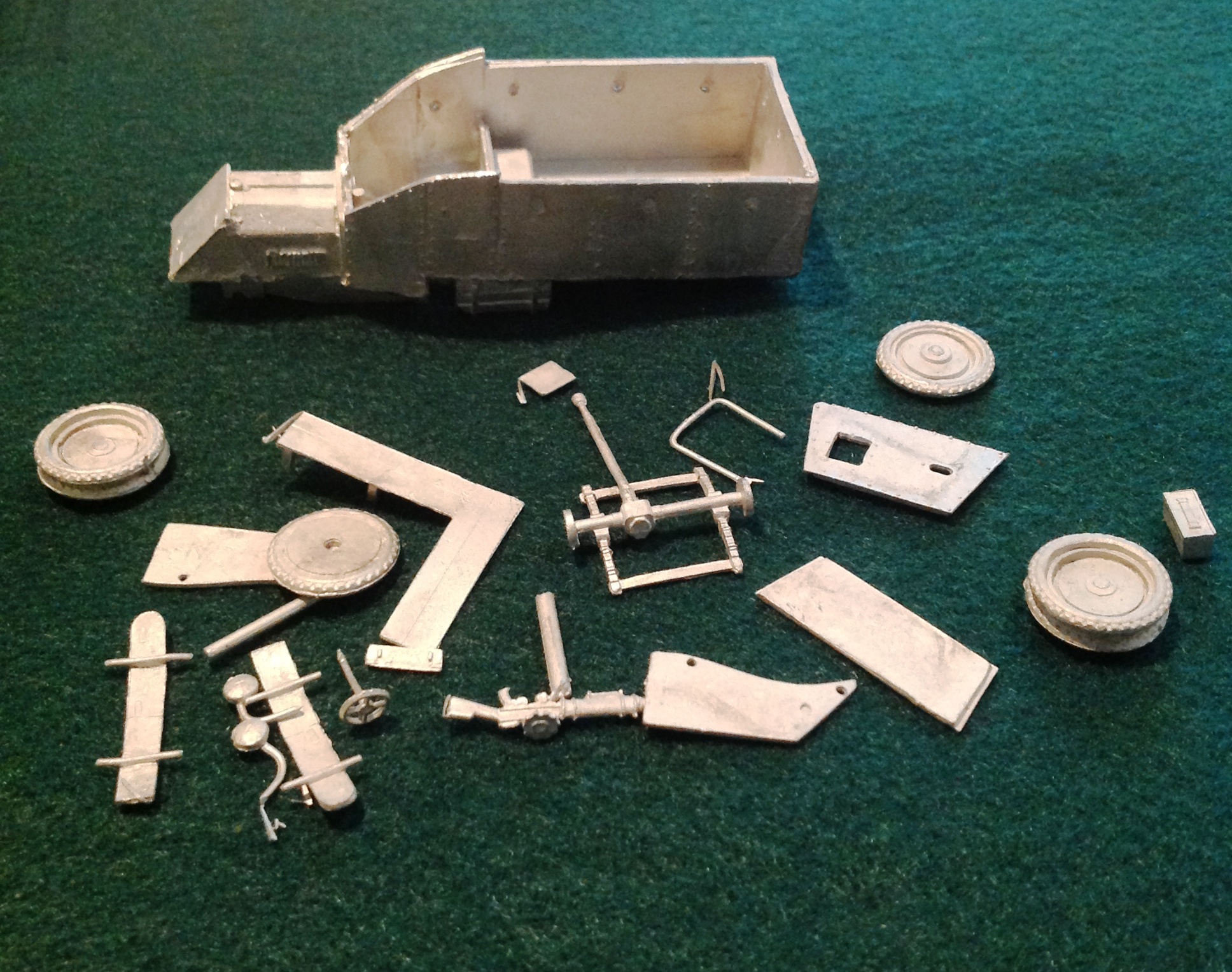
I’ve made several sizable figure purchases this summer. The first came in May when I purchased some of the very nice IRA range of miniatures from Musketeer Miniatures. I bought about 40 or so figures plus a beautiful Lancia armored lorry. I got all the different IRA minis, plus some of the Royal Irish Constabulary figures.

Though it is fairly fiddly, the Lancia Lorry by Musketeer Miniatures is a thing of beauty.

Though it is fairly fiddly, the Lancia Lorry by Musketeer Miniatures is a thing of beauty.

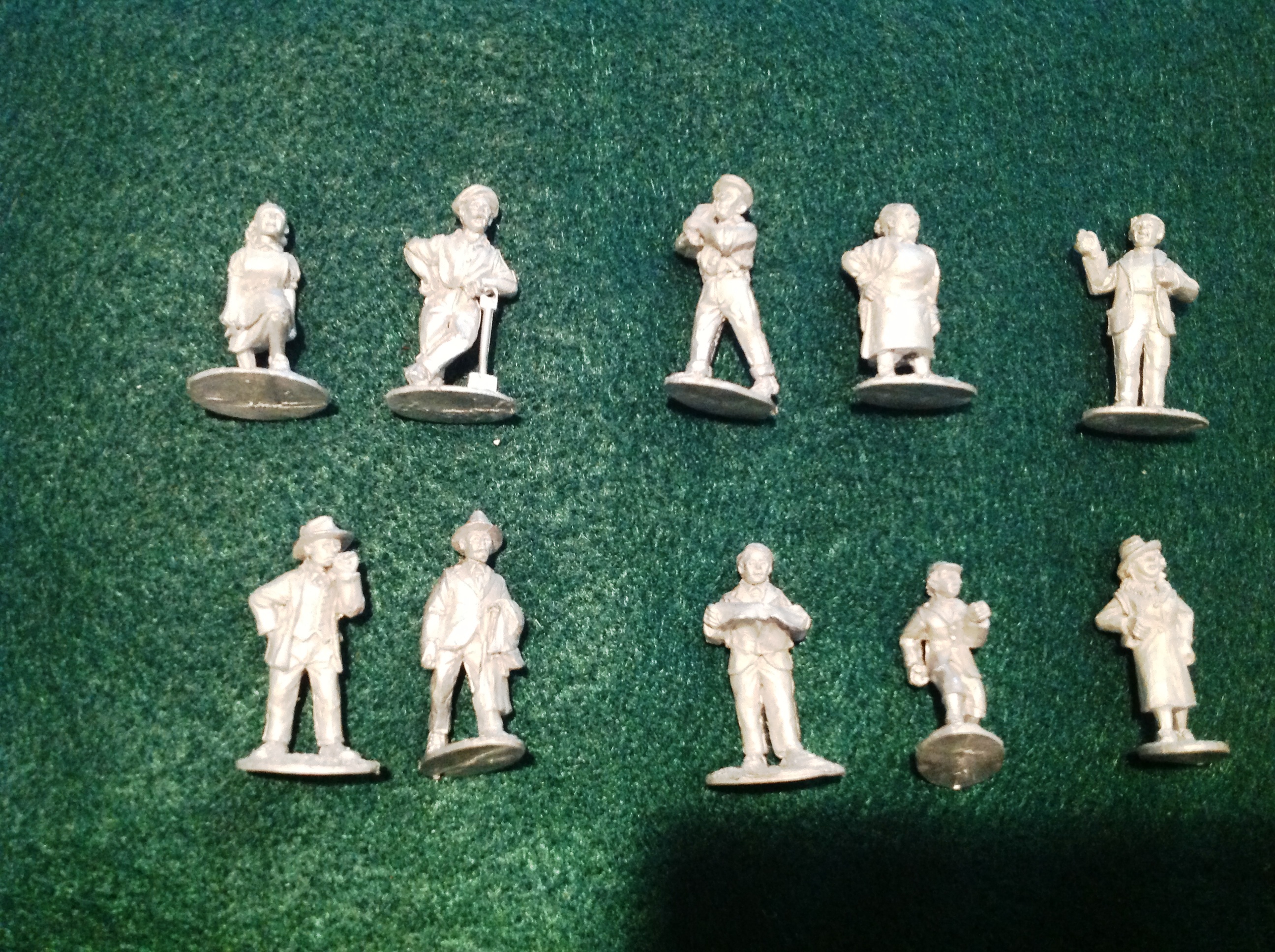
Musketeer offers a couple of nice packs of civilians for this range included in it's Uncivil War line.

Musketeer offers a couple of nice packs of civilians for this range included in it’s Uncivil War line.

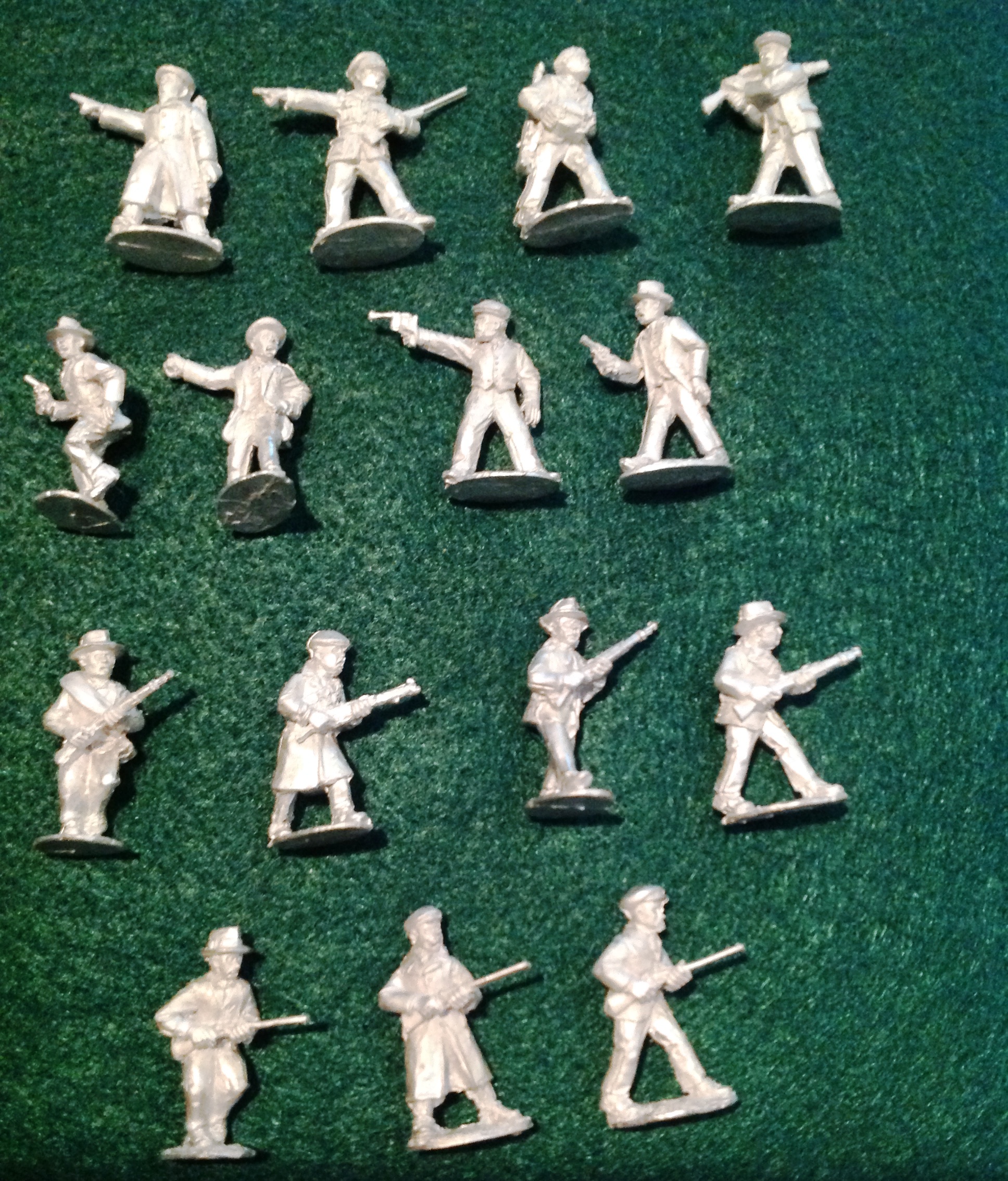
The Musketeer IRA range is very nice.  The IRA with Shotguns figures are fairly fragile and I managed to break off a barrel.  The figures aren't cheap, so that's a disappointment.

The Musketeer IRA range is very nice. The IRA with Shotguns figures are fairly fragile and I managed to break off a barrel. The figures aren’t cheap, so that’s a disappointment.

When we knew Lorri was receiving a sizable severance package, she passed on a few bucks to me. One of the projects I’m really interested in broadening (once I’m finished with Bladensburg and escape my Victrix hell,) is giving attention to my hypothetical War With Spain 1797-1807. To that end, I picked up about 80 figures from the Dayton Painting Consortium. These are nicely proportioned miniatures, maybe a tish small by today’s standard. I picked up musketeers and grenadiers, as well as a unit of dragoons to balance out my growing numbers of American troops.

Though they're hardly state of the art, this range of Spanish figures by Dayton Painting Consortium are very serviceable and highly paint-worthy.

Though they’re hardly state of the art, this range of Spanish figures by Dayton Painting Consortium are very serviceable and highly paint-worthy.

After I worked at summer camp, as I do each summer, I invested some of my stipend in miniatures. I made two orders, one to the Warstore, the other to Old Glory 25’s. in the spring the Perry Brothers released the Loyalist Volunteers of Ireland for their AWI range. The VOI have a distinctive uniform with their funky bearskin headwear and their oddly laced tunic wit green Brandeburg knots. I ordered 24 figures of this unit which fought at Hobkirk’s Hill and Eutaw Springs, two of my battles.

Half my unit is backordered but, these Volunteeers of Ireland will make a nice addition to my American Revolution in the South project.

Half my unit is backordered but, these Volunteeers of Ireland will make a nice addition to my American Revolution in the South project.

The OG order was aimed at fleshing out a few of my projects. I need American line infantry and British commanders to wrap up Bladensburg. I ordered French mounted commanders for the Hundred Years War. I also added more Americans to the War With Spain project.

Lots more unpainted figures. Kind of embarrassing. The good news is I continue to paint regularly. I’ll have a painting update on my War of 1812 Brits in the next week. My goal, which I believe is quite achievable, is to have two finished Victrix line battalions, plus my completed 85th light infantry by the first day of school, September 4th.

How do you really feel about Victrix figures?

Very few things drive me straight up the wall, but my experience with Victrix Napoleonics is absolutely one of them. I persuaded myself to buy them three years ago when I traded off my unpainted pile of Old Glory British Nappos to a friend and used proceeds from the Enfilade bring and buy to purchase four boxes of the Victrix figures-three of center companies, one of flank companies-reasoning that I’d need more OG figures than I had to paint up the British regiments at Bladensburg, and here were these bright, shiny plastics waiting for me to jump in with both feet.
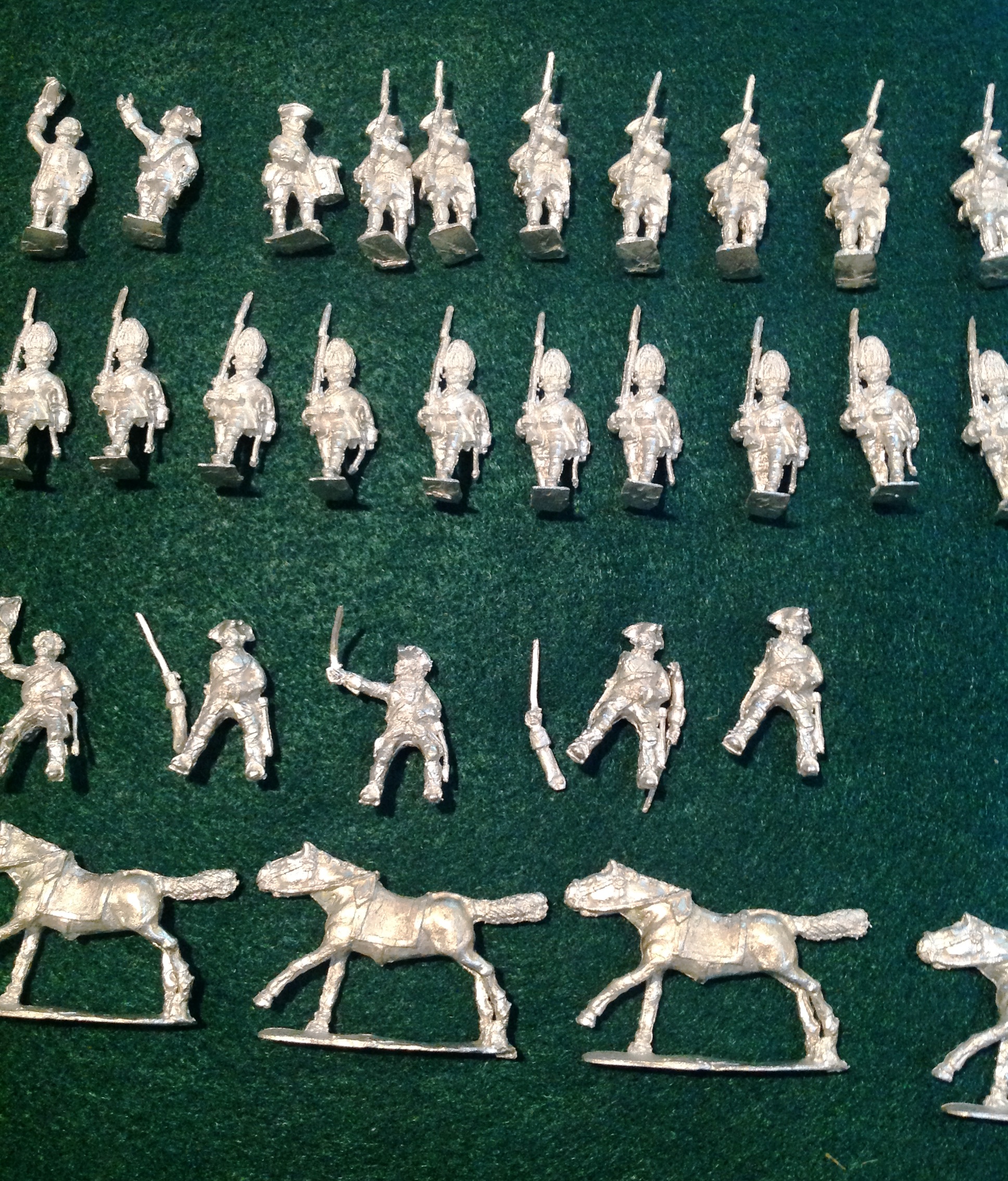
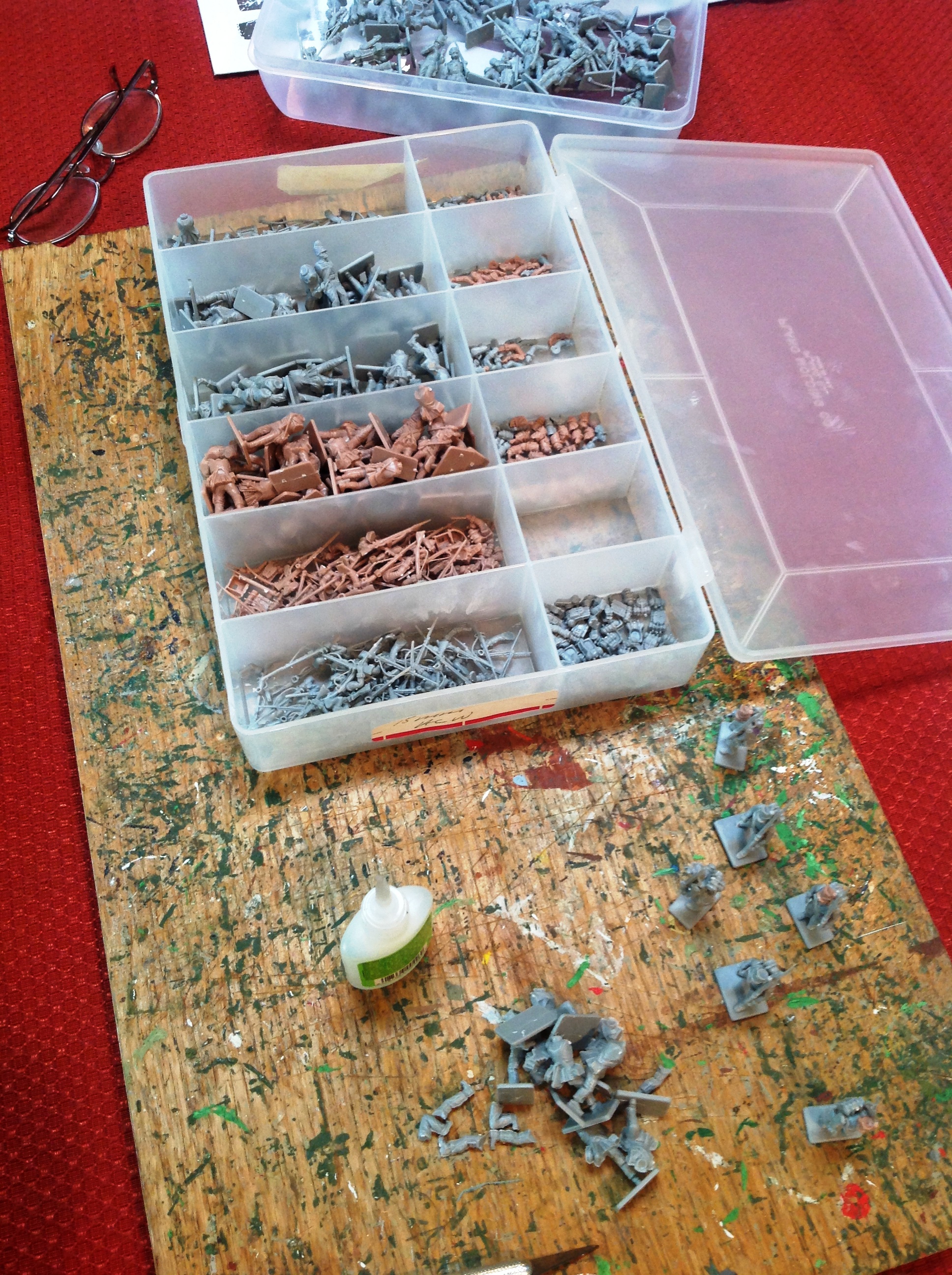
Assembled Victirx figures in various stages of dress or undress.

Assembled Victirx figures in various stages of dress or undress.

Pah!!

There is little question the detail and cost of the Victrix minis makes them attractive. However the negatives are many, and let me just walk you through them.

1. Assembly. It’s at the very least time consuming. Though my friends suggest using your basic adhesive for polystyrene, aka model airplane glue, my very brief experience with this was unsatisfactory. I simply didn’t have time while assembling a dozen or so figures at a time to hold an arm in place for 5-30 minutes until the glue set up. Nope. Strictly CA glue for me, which set up a host of other problems. There is the inevitable Edward Scissorhands factor as small bits occasionally (but not often) stuck to my fingers. The biggest issue I have is the time involved in assembly, and that is significant. Without question , these are fiddly, and needlessly so.  I painted up ten Perry hussars for my American War with Spain project, and they seemed far more sturdy iwth fewer stick ons.

2. Posing. When building units for Sharpe Practice or some other single mounting system, having a wide variety of poses-advancing, firing/loading, march attack works fine. In more traditional rules sets, those that require multi-figure mountings, this is not so great.   There aren’t lots of spare arms or other bits in the boxes, so you’re stuck with the what you have, which means that allowing for a few march attack figures (I believer there are six per box) needs to be your plan, or you need to plan on not using six figures.  Do I really need three drummers per box?  I’m working with 32 figure units, so even though I should have plenty of miniatures, it feels a little tight.

3.  Fragility.  I didn’t even think of this when I bought the figures.  Lots of friends expressed concern about how light they were, they didn’t feel weighty as metal figures do.  Before I leap into the pitfalls of plastic figures, knowing that others won’t handle them as kindly as I will, we need to concede that metal figures aren’t perfect either.  I have plenty of figures with casting problems.  Bayonets that are really Swiss Army knives.  Massive mold marks across faces  Broken bayonets, Figures that break off their bases at the ankles.  Metal figures do have their problems.  However, I’ve never had figures break just from touching them.  I broke a bayonet off while I was painting.  Not able to afford to lose an arm and hence a figure, I quickly glued that baby on, though it is at a strange angle.  While carrying my newly painted unit in from being dullcoated in the garage, I  fumbled one of my painting stands.  As I grabbed I broke one figure’s musket off all the way back to the flintlock.  I now have 31 painted figures instead of 32.  Though these will be mounted on sturdy 40mm square Litko bases, I am concerned how these figures will survive games in which other gamers touch them–specifically at Enfilade where I plan to run my game.  Will their heads pop off?  Arms? Backpacks.  Or will they just be disarmed?  These are legitimate questions
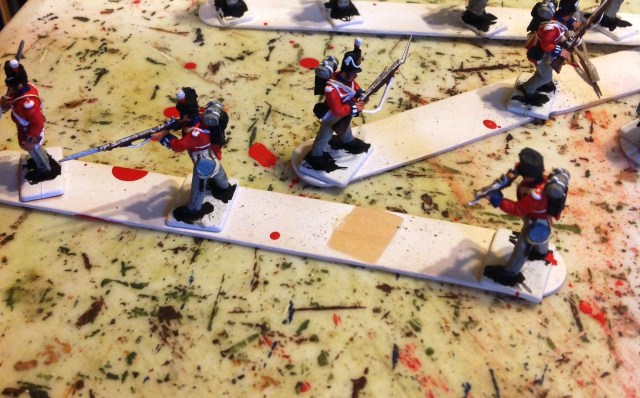
Photo shows my bayonet glue job (center) and busted musket (right.)  These occurred through casual handling.  In fact the bayonet ibreakage occurred during painting.

Photo shows my bayonet glue job (center) and busted musket (right.) These occurred through casual handling. In fact the bayonet ibreakage occurred during painting.

This is just my view of this range.  On the other hand they are nicely proportioned.  They are well cast, with no big molding errors.  I’ve looked at 150+ figures and none were unusable.

Here are a few suggestion to ease your use of Victrix miniatures if you choose to go that route. Your box of Victrix figures is composed of six sprues.  On three of the sprues you’ll find the bodies and backpacks.  On the remaining sprues you’ll find the heads and arms.  Yes, other stuff too, but generally that’s how a box is divided.  I encourage you to get yourself a Plano box with lots of divisions or its rough equivalent and begin separating out arms heads etc. Put the figures in one or two groups.  All the action arms can be in another group.  All the heads.  All the backpacks.  Drums, standards, drum arms together.  Separate the non-action arms-right arms, left arms, support arms (they don’t have hands and glue into a musket arm.)

Do yourself a favor and take the time to assemble all your miniatures together.  It will be time consuming.  It will be a pain in the ass.  You will curse at these tiny little men.  But when they are done, you’ll know what you have, how you want to organize them, and then you can get on with painting them.
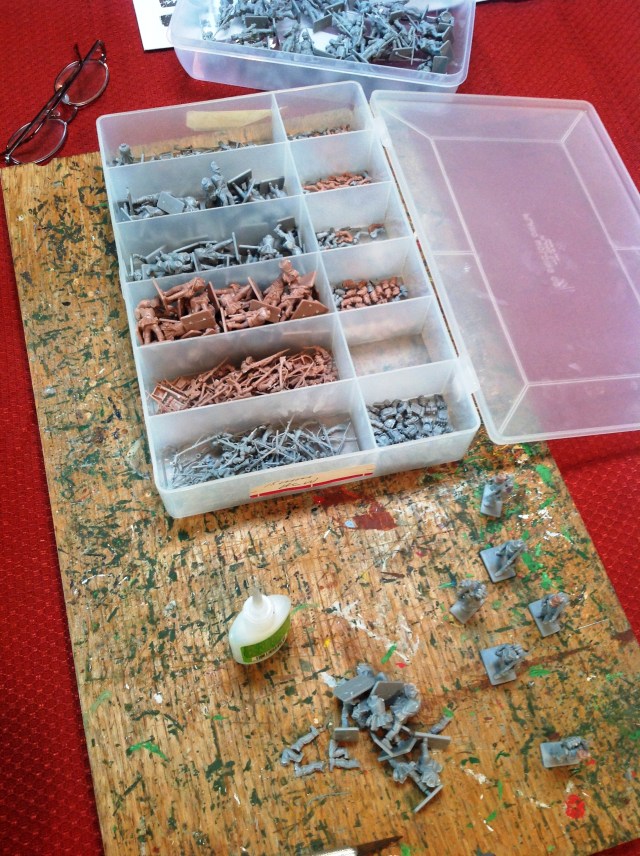
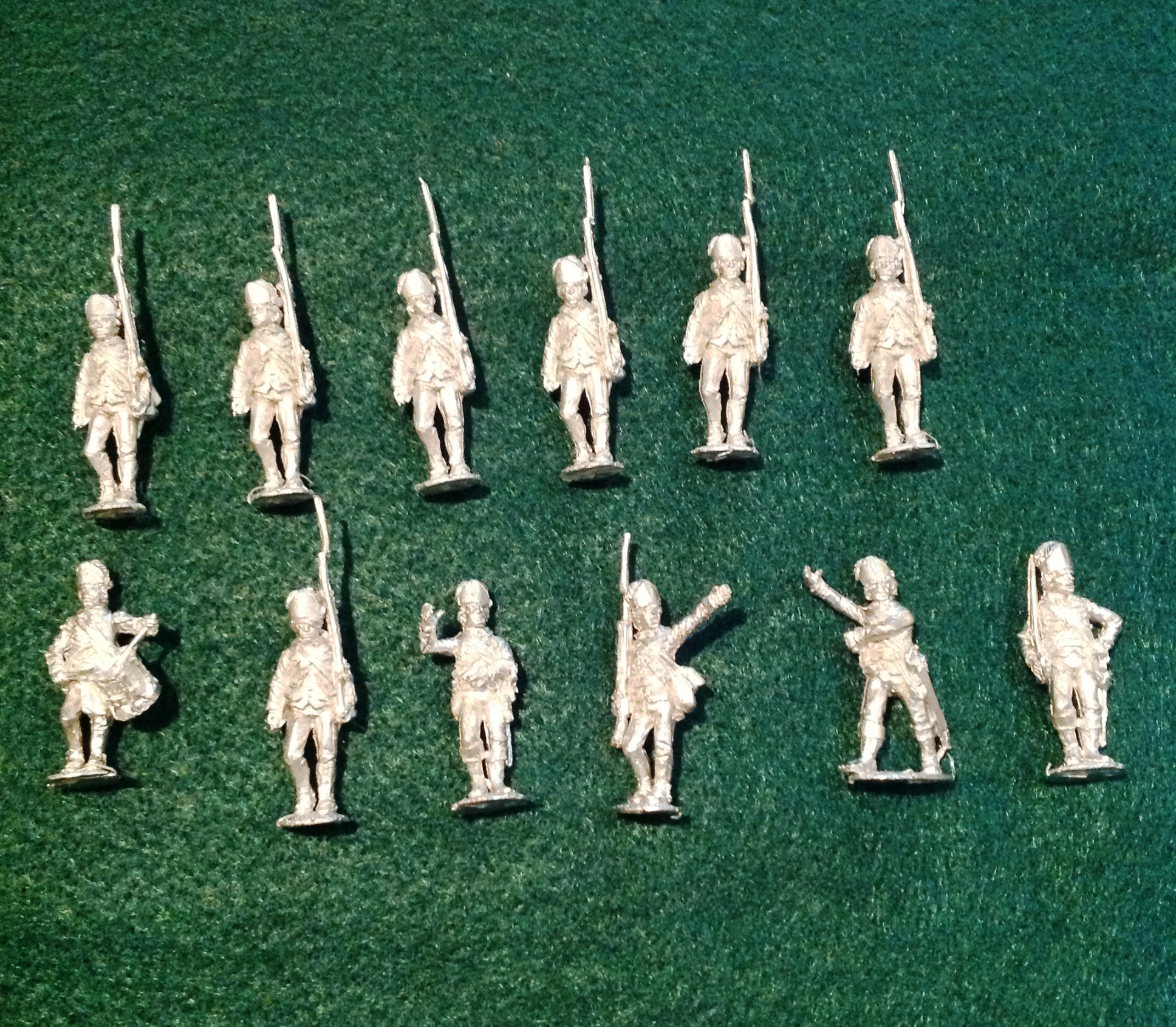
This is my effort at organizing my Victrix bits for assembly.

This is my effort at organizing my Victrix bits for assembly.

I didn’t find them difficult to paint them at all.  I mount mine four to a craft stick.

Note: I used white glue to mount them on the sticks and they practically fell off after the glue dried.  That led to my severe musket breakage incident.  I ended up re-gluing them with CA glue, and then they didn’t fall off. I haven’t yet removed them from the sticks which could lead to future difficulties.

I primed them as I do all my figures, with Testors flat white spray enamel, and just painted them with acrylics.  No problems, though some of the detail can be a bit hard to get at, and there is actually more of it than you’d find on a metal figure. When you’re done, coat them as you would normally, and voila, you’re good to go.

I don’t like to trash a product just to trash it, but I can say with certainty the Victrix ranges are not for me.  For those with more patience or a more creative bent toward their modeling, this may just be what the doctor ordered, but once these are finished I’ll stay away.
At last, summer break

Today is the day all teachers look forward to: the beginning of summer vacation.  My duties at school will end at about 1:00 this afternoon.  All the grades are submitted, my classroom is nearly cleaned.  Things are coming along nicely.  Actually, I’ve voluntarily delayed my summer beginnings by a day because I’ve opted for a class tomorrow morning, but the end is clearly in my crosshairs.

So what does that mean for game projects this summer.  First of all, there are the Truants, our summer game group that will meet every other Friday at the Game Matrix.  That should allow me to get some gaming in at least every other week.  I promised to host an ACW naval game some time in July so I better figure it out.

Lorri is currently unemployed and she has some duties for me to perform.  We have two major room renovations we’re doing, but I’m hoping those might be done by July 1st.  I’ve also taken organizing the WJEA Journalism summer camp.  This work has already started, but not much so far.  It will doubtless kick into high gear next week as student applications begin piling in.

I’m most interested in my painting projects, however.  The big game on my horizon is Bladensburg for Enfilade.  Here are the units I need to paint for this game

Three British line units @ 32 figures each

One British light infantry unit @ 48 figures

One American militia unit @ 24 figures

One American line unit @ 24 figures

My goal is to pare this list down considerably.  I’m in the middle of painting the militia unit, and could probably have them done in a few days IF I can make myself focus a bit more on painting.  I’d like to turn to the British line units.  Victrix figures, ugh.  I’ve started doing some assembly, but there is considerably more to do.  If possible I’d like to complete all three units before our first deadline begins in October.  To keep myself interested I’ll also be working on other projects.  I have some HYW French knights, foot and mounted, on the painting table, as well as a few planes and some 15mm fantasy figures I’d like to get done as well.

Yesterday my order of Spanish figures arrived from Dayton Painting Services.  I really like these figures, and I’ll offer up a review in the next few days.

A view toward 2014

It’s now post-Enfilade and time to begin looking toward what I may have on the docket for next year.  Yes, I know it seems early, but I’m heading into summer vacation, my most productive time of year, and I really am a planner. So here are a couple of ideas for the convention

Director again. I’m going to take on the role of Enfilade director one last time.  My goal was to continue on with the people we have in place and find successors willing to take on the jobs for at least three years 2015-17, and I’ve done that with Dave and Lloyd of Astoria.  My other goal is to extend our contract if at all possible at the Red Lion so Dave and Lloyd don’t have to worry about dealing with it during their tenure.  That’s still up in the air but we may have some information soon.

Those are the big picture items I have my eye on, but the small picture is determining how my duties will affect my game-running role at the convention.  Usually I’m involved with four or so games and I can see a fistful of games I’d like to do, but I definitely have some commitments for the War of 1812 bicentennial.  They may take up all the time I have to run stuff at the con.

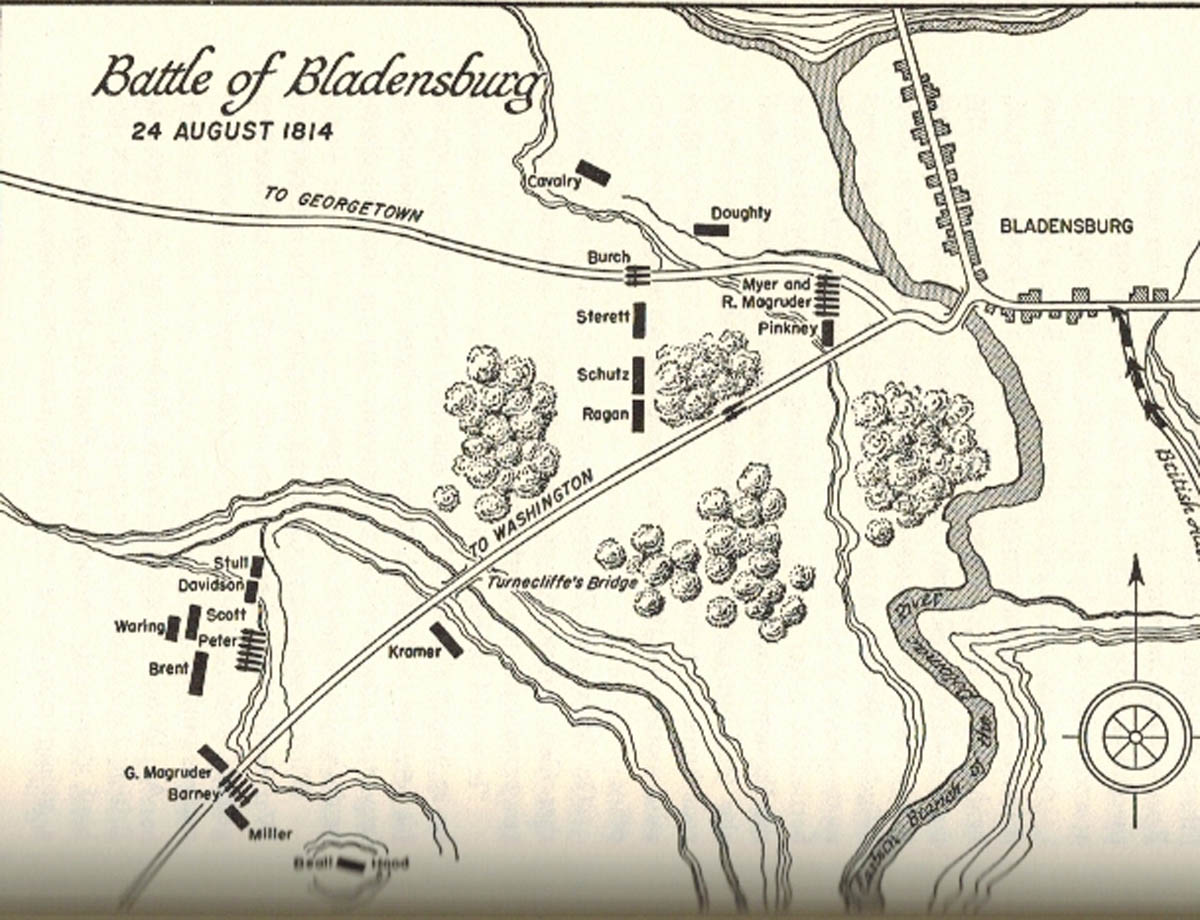
Bladensburg and beyond.  By agreement I’m hosting the Battle of Bladensburg, the action outside the District of Columbia that led to the burning of the capital in 1814. I’m painting Brits and Americans, which I’m happy to do.  I just finished painting the last of the four British Marine units that show up in the third wave of British troops that make their appearance. My chief task is to paint the three British line units (Victrix plastic figures) and massive light infantry battalion present at the battle.  I also have an American line unit and  one more unit of Maryland militia.  Ideally I need to have these figures finished by the first of the year, so I have some time to try out a playtest or two leading up to the battle. The Americans outnumber the Brits, but not by a huge amount, and the Brits definitely have the not stupid and unit quality factors on their side. 

Mark is also hosting Sackett’s Harbor and Doug is waffling about hosting Chippewa.  I may get tied into these games as well.  Or not.  Still 11+ months to go to see what happens.

Hero of Weehawken. This is the name of a solo board game on the Burr conspiracy.  But I was thinking that maybe there was an interesting way to make it a multi-player miniatures game.  I’m hoping I can talk Daveshoe into helping me craft something with varying victory conditions per player as Burr, commanding a force of loyal militia followers as American regulars under a loyal commander, American regulars under say, James Wilkinson, and Spanish forces close in on him.  I probably wouldn’t have to paint many more figures to make it work, and there could be enough choices to make it really interesting.

Hydroplane racing.  I would really like to run Thunderboats at Enfilade again.  I think there’s a lot of enthusiasm for the game and it would give me a reason to finish the nine boats I have.  I’ve already decided on a design for the JagWire boat in Emerald Ridge colors–my own fantasy boat using the old hulls.  It’ll take some research and work to put together my picklefork fleet.

Just some thoughts going forward.