Counting down to the end of the year: A look ahead

With the Bladensburg project behind me, I’ve been working on the Spanish-American Project.  To make it easy, lets just call it the Louisiana War.  I’ve managed to acquire quite a few figures for this project, and I see myself putting most of 2014 working on them.  I’m not quite sure how many figures I have, but I think when it’s all over it will be something like this:

Spanish Forces

6 X 10 Spanish regular infantry units

2 X 12 Spanish grenadier units

3 X 10 Spanish dismounted militia units

1 X 10 Spanish colonial dragoon units

3 X 10 Spanish mounted militia units

1 X 10 Mexican Hussar unit

2 X 10 mounted Comanche warriors (Spanish allies)

2 X 10 dismounted Comanche warriors (Spanish allies)

12 X 10 Chickasaw warriors

4 sections Spanish light artillery

2 sections Spanish heavy artillery

This is a lot of stuff, and quite a bit of it is painted, but very little, like none, of the Spanish horse is ready. The units provide the maximum flexibility for scenario making.  Some would not be combined.  For example, the Chickasaw would not be combined with the militia or the Comanches. In any case, there is plenty here to develop some scenarios.  Spanish uniforms remain nominally the same for the entire period, except for the Mexican Hussars.  It’s unclear this unit was ever raised to replace the frontier militia or Cuera soldiers.  It was suggested, but it isn’t clear the proposal was ever adopted before Mexico gained her independence.

Americans

12 X 12 Regular Infantry

8 X 10 dismounted militia (included rifle armed)

2 X 10 U.S. Dragoons

3 X 10 mounted militia rifles

4 sections light artillery.

Americans are pretty much same-same regardless of when or where they fight.  There are some serious changes that occur throughout this period 1797-1810.  After the Treaty of Greenville that ends the Indian campaign in the Northwest Territories, the army economizes.  The light infantry and light battalions go away.  The uniforms stay roughly the same for the regular infantry throughout the period, keeping red facings only, and the colorful designations of the sub-legions going away.  The army organizes the infantry into three regiments, downsized to two during the Jefferson administration (1801).  The light dragoons likewise retain their colors until Secretary of War Alexander Hamilton designs them a new uniform in 1797.  Their uniforms, issued in 1798, are green.  Green.  GREEN. With black facings and yellow lace.  Go figure.  They retain these uniforms until Jefferson disbands the dragoons altogether in 1801.  Rifle units are re-introduced to the army in the latter part of this period, but their uniforms are odd, so I’ll likely avoid them.

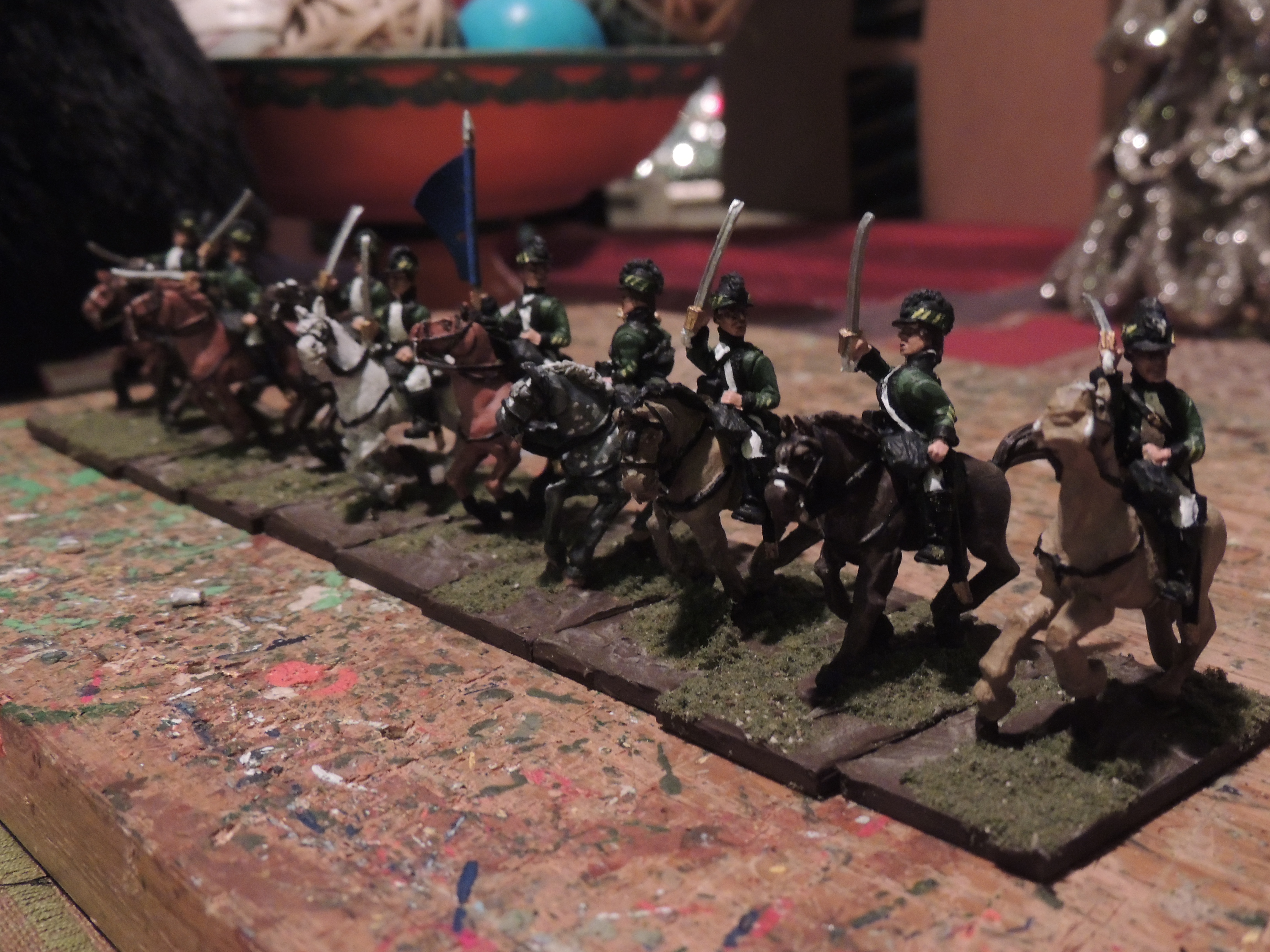
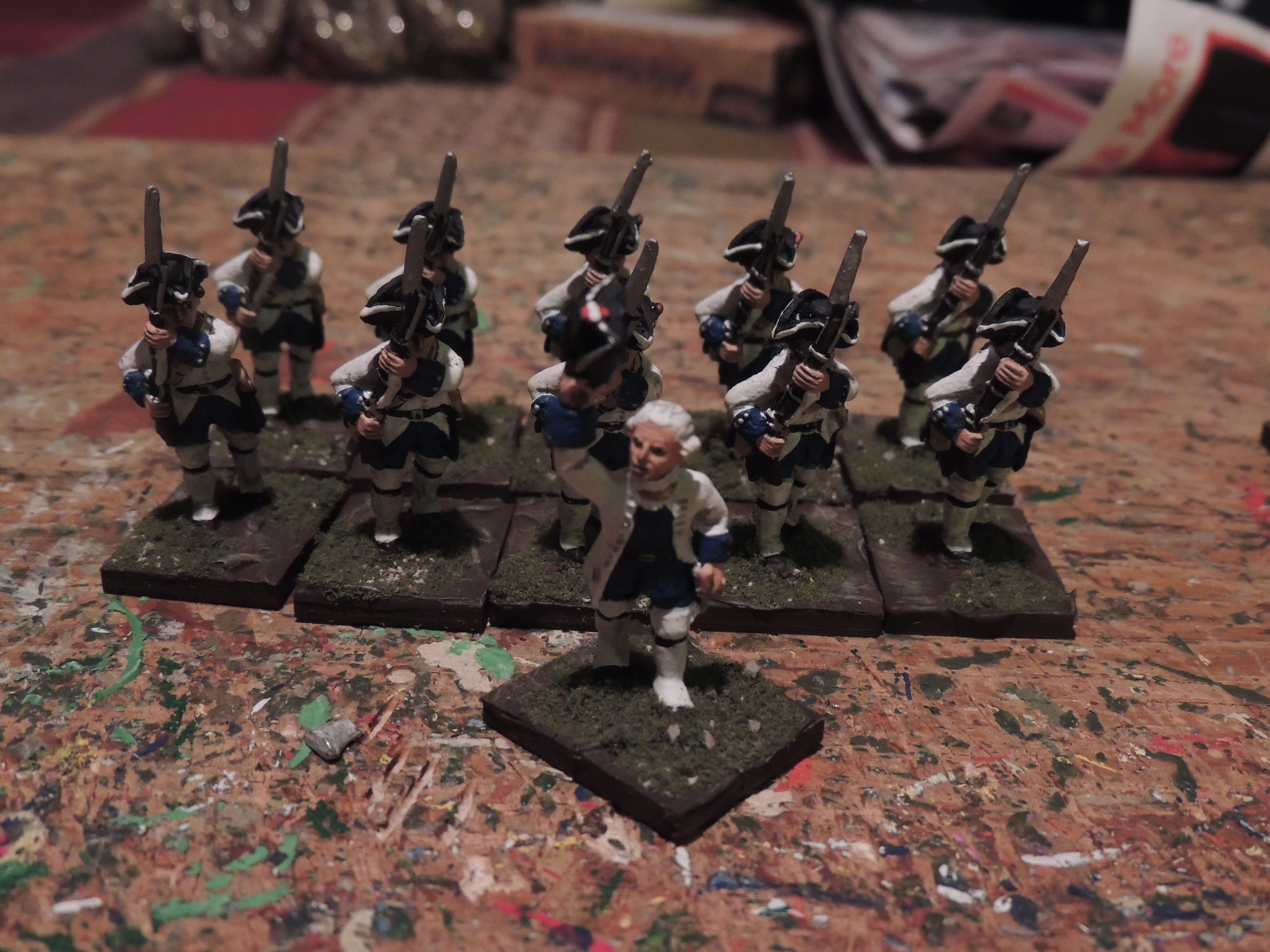
I’ve included some photos of some of my newly painted units. Dragoons and the Luisiana Regt 108These are the green-coated American dragoons I mentioned.  the lighting for these photos was poor, so I apologize for their darkness.  The are the Wayne’s Legion dragoons by Old Glory.  They do quite nicely.  I used German Luftwaffe Camo Green as the base color.  It’s a lighter green than the picture shows.  The flag is all hokum.  Nobody knows what a U.S. dragoon flag looks for this period.  The earliest recorded U.S. cavalry flag following the Revolution is for a militia dragoon flag in 1819, and seems unlike most other cavalry flags. Thankfully you can’t see it in the dark.  I went with a mid blue flag with scroll work similar to War of 1812 infantry battalions in red.  It’s possible I’m just wasting my time doing a flag at all, but one of the figures does carry a pole for a flag. I actually really like the way these turned out.
Dragoons and the Luisiana Regt 110Dragoons and the Luisiana Regt 112

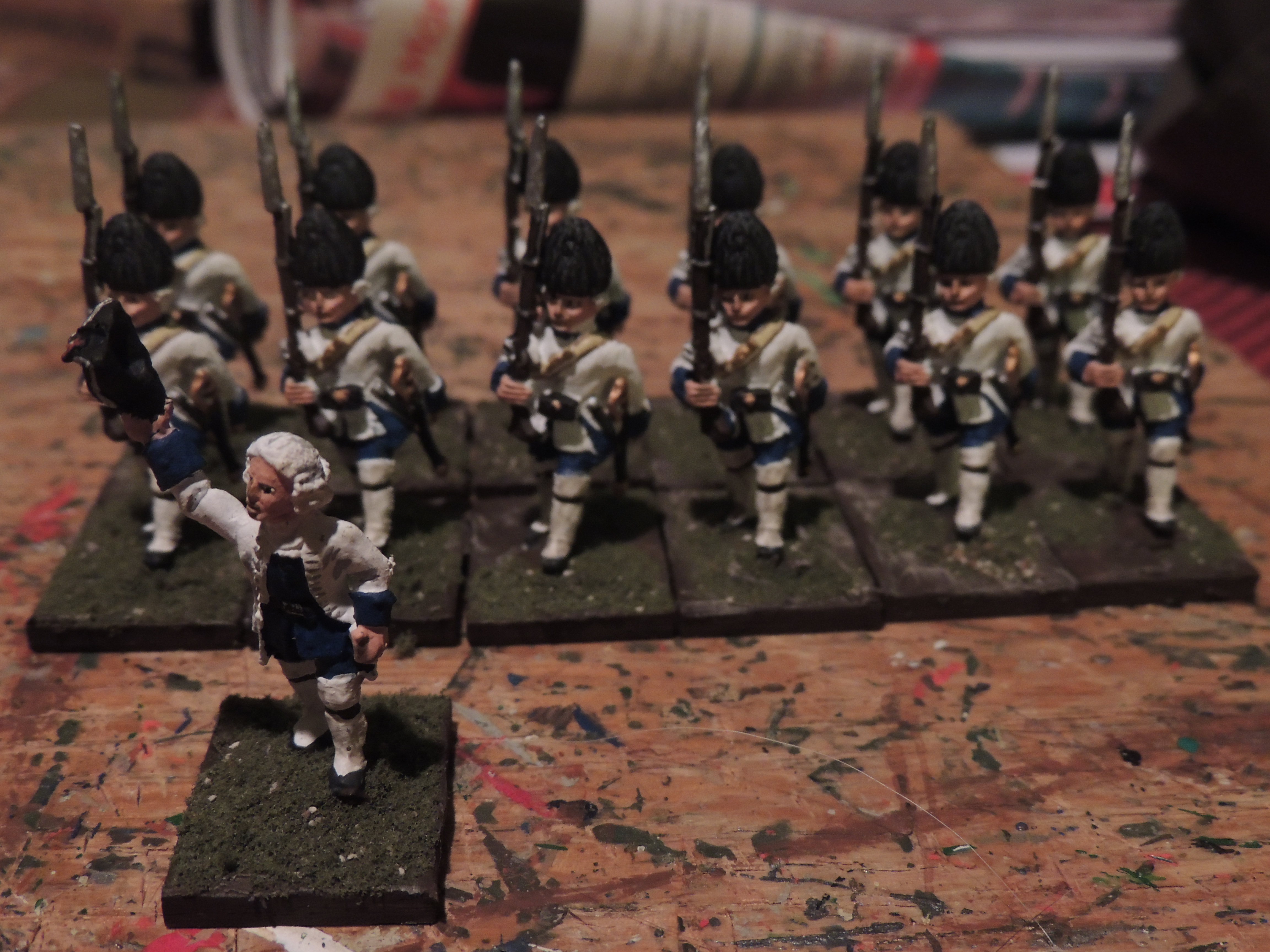
These two units represent the grenadier company and a fusilier company from the Luisiana Regiment.  This was a trained, disciplined militia unit raised in the New World.  They are RSM figures cast under license by the Dayton Painting Consortium.  They are simple, straightforward units, as most Spanish units are.  They tend to be white, usually with colored facings, waistcoats and trousers.  The Spanish militia in North America were chronically understrength.  My regiment will consist of four companies including a grenadier company that is a bit larger than the fusiliers.  The Lusianans are now complete.  The next regiment will be a mix of two companies from the Irish Hibernian Regiment in their red regimentals and two companies from another militia unit.

I’ve primed my first mounted militia unit.  I plan to complete it during the Christmas break. I’ll post photos when I’m finished.
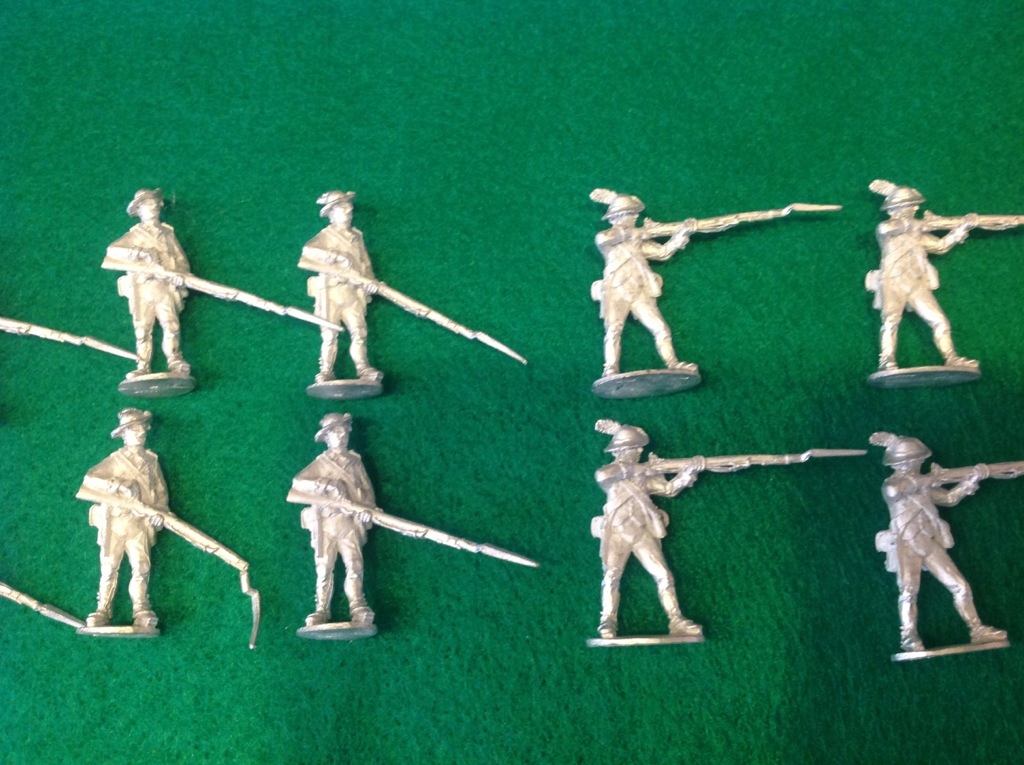
Figure Review: Fife and Drum AWI British Guards

This Christmas my wife and I are trying something a little bit different with our gift-buying, including allowing each of us to buy a gift for ourselves that will be wrapped and put under the tree. I opted for figures. So I put together an order for some British Guards from Fife and Drum Miniatures.

There is something magical about Fife and Drum. I don’t know a ton about them, except they were conceived from the prominent war gaming mind of Jim Purkey of Lake Forest, Il. You may know him as Altefritz on TMP. He’s always offered considerable knowledge of 18th century military matters including the 7 Years War and the American Revolution. I became aware of the Fife and Drum range when he launched a highly successful Kickstarter campaign to fund his range of Hessians for AWI.

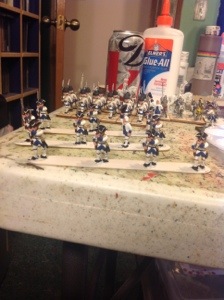
20131208-063318.jpg
Line companies, including one fairly mangled bayonet.  But, I think I can fix it.

20131208-063406.jpg

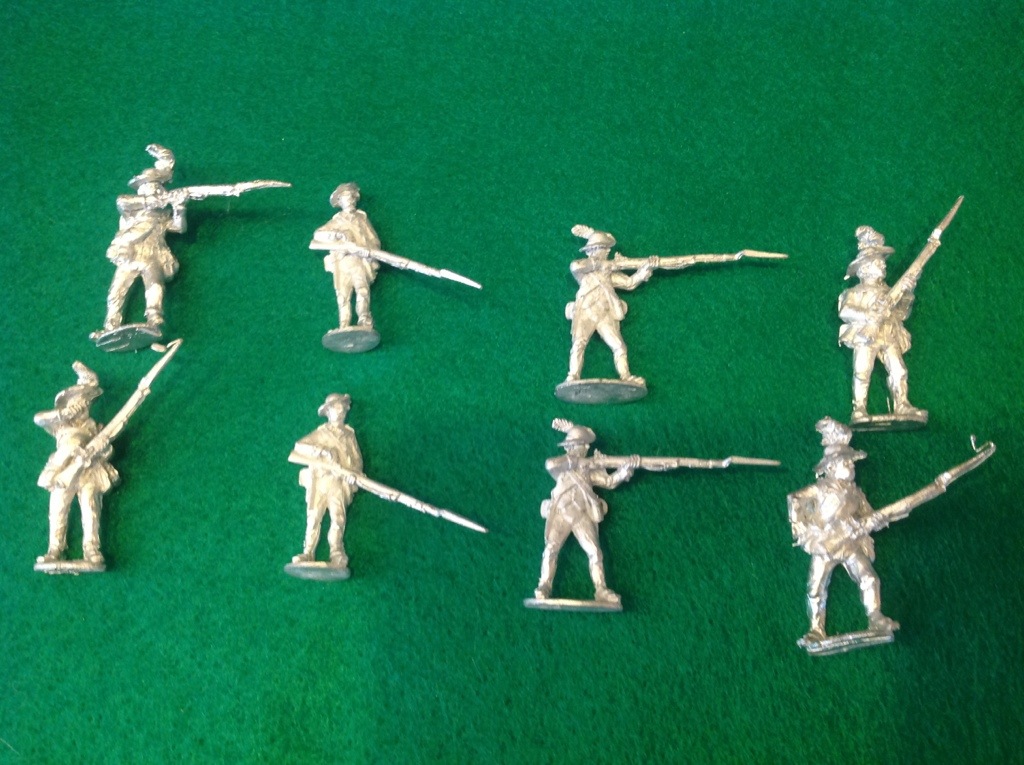
Guards light infantry company, including an NCO figure.

I have units from many different manufacturers in my AWI collection, but I chose Fife and Drum for a couple of reasons. First, I know Jim chose to depict his figures in the non-traditional cut down uniforms adopted for the 1777 campaigns for Philadelphia and Saratoga. These and the slouch hats replacing the tricornes work well for the South, 1779-81. Second, I admired his work assembling this range, seemingly from scratch, and I wanted to support his effort.

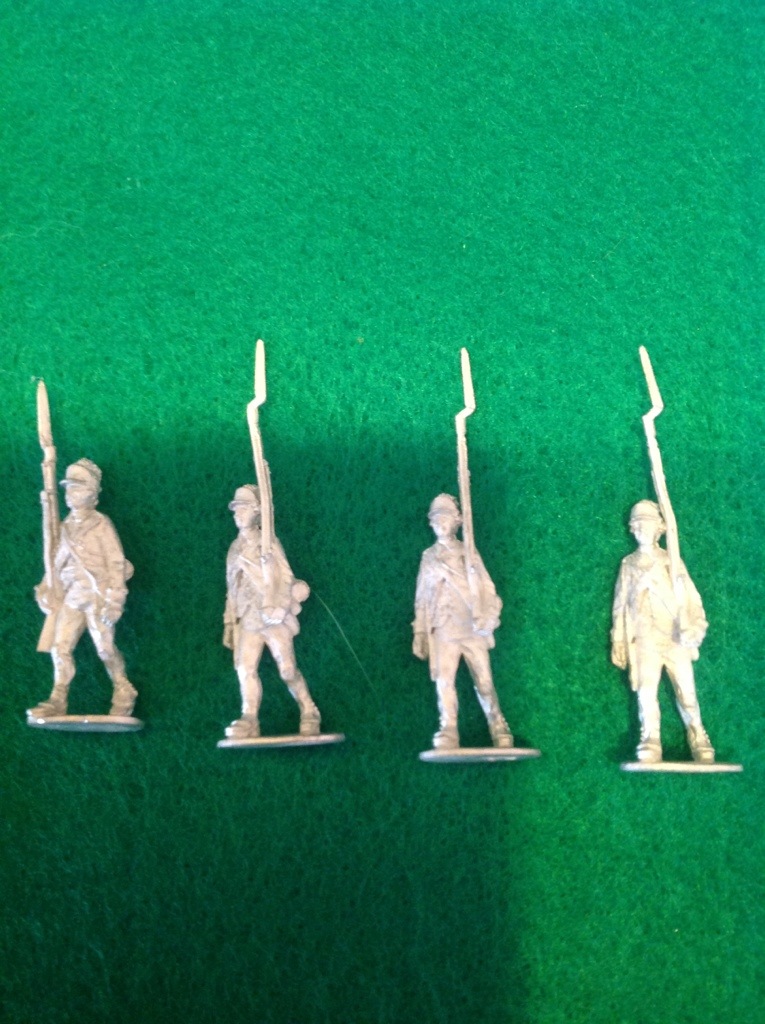
I need the Guards for Guilford Courthouse and Weitzel’s Mill. Two battalions of 24 figures each was their game strength. I ordered the first battalion. Unlike any other range, Fife and Drum offers flank companies specifically for the Guards. Because these companies were active at places like Weitzel’s Mill, it’s nice to have unique figures with their peaked caps and horsehair crests. Though the Guards are offered in several positions, I chose the firing line. These come with figures priming their muskets, and figures firing. The command figures are a bit problematic with the officer shouldering a musket and the drummer in the Guards range. I had to add the standard bearers from the line infantry.

I really like the detail on these figures. It’s quite good, but not over-done. The simplicity of the uniforms should make them easy to paint. The faces will be hidden by the large hats. Posing is pretty simple, without a variety of head and arm positions. These figures will look very uniform on multiple figure bases, which is quite a nice departure from the Victrix Napoleonics I’ve been working on.

20131208-065703.jpg

Comparison between Fife and Drum figures and Perry miniatures from the same period.  You can see they are about the same height but the Perry figures are beefier.

20131208-065729.jpg

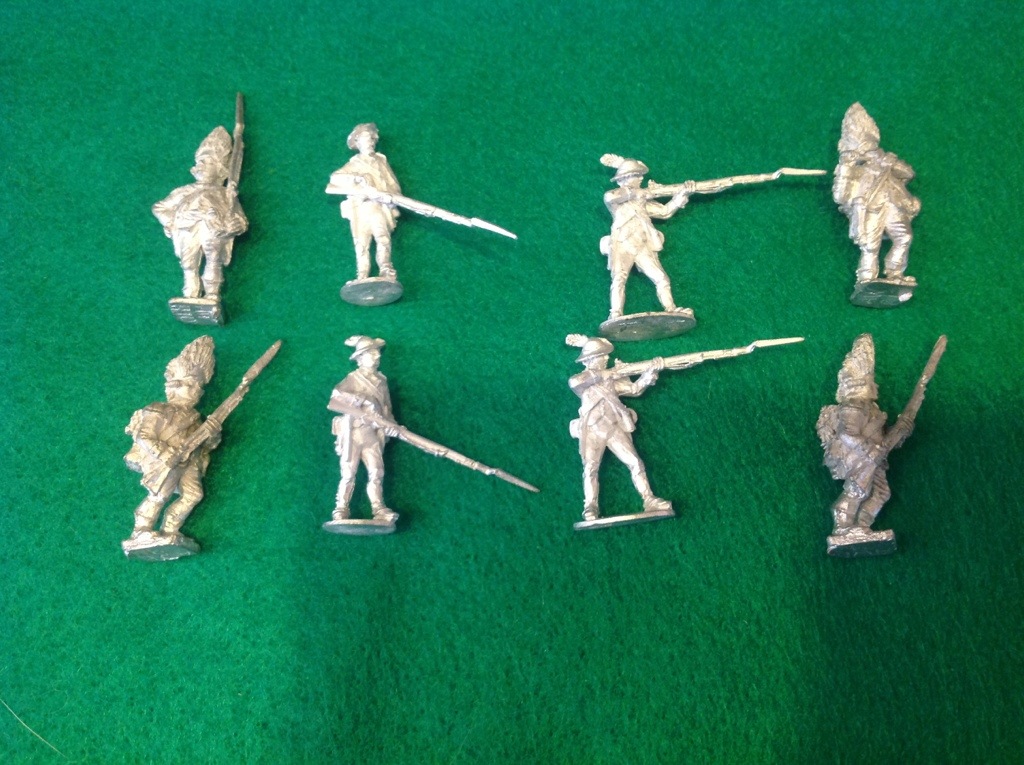
A comparison of Fife and Drum figures and Front Rank grenadiers.  Yep, the Front Rank guys are big.  Bill Stewart always called them corn-fed.

If the Fife and Drum range has a flaw, it is in their size. I have figures from Perry, Old Glory, and Front Rank in my collection, and they aren’t going to match well with any of them. It won’t deter me from using them, or ordering a second Guards battalion, but it’s important to acknowledge the difference. The Fife and Drum figures are 28mm tall, but their physiques are pretty slight. Compared to the Perry 23rd Regt. figures in the first comparison photo, they seem fairly small. The second picture compares the F and D guardsmen with the Front Rank grenadiers. We’ve always considered them robust, compared to the other ranges.

I’ll close with a shout out for the customer service I received. I e-mailed Jim on Black Friday about my order. He responded within an hour or so. I sent him my payment that evening, and he had my figures out to me on Saturday. They arrived by US Mail on Wednesday. I live in Washington State, so a pretty painless experience. Shipping was only $4.

Very nice figures and superb service. If you can live with the size differential between manufacturers or if you are entering this period, I would easily recommend this range of miniatures. Cost per figure is $2, about the same as Perry.

The Story of Loafing Friday

Americans have it all wrong. The day after Thanksgiving now has this commercial connotation of Black Friday. Piffle. I wouldn’t go near a commercial venture today unless they were giving away free packs of Perry AWI figures, and maybe not even then. Since that isn’t happening today, or any other day (sigh), I’m staying home. Like most Americans, I am off until Monday. Saturday and Sunday I have plenty to accomplish on my calendar, but today I’m determined to do almost nothing that isn’t restful, relaxing and fun.

This means painting. I’m gonna work on the last company of the Louisiana Regiment, and take some pics as I go.

It’s also going to be a movie day. I picked four movies to watch between now (about 10 AM) and the time I go to bed (about 10 PM.) My goal is to have an awesome day, doing little that isn’t fun, and a little lazy, and try to finish my 11 figure unit of Spaniards.

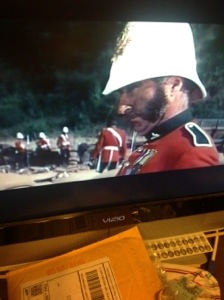
20131130-053130.jpg

My first movie was 1964’s Zulu. I love this movie; it’s absolutely one of my favorites. Based on the 1879 defense of Rorke’s Drift by about 100 British soldiers against 4,000 Zulu warriors, the movie is 2 hrs. 16 min. of intense action. The performances by Stanley Baker, Michael Caine, Nigel Greene, and others give the movie considerable life. It’s almost the perfect movie about battle because it’s scope is limited to such a small space with a handful of defenders. We get to know the characters well. The movie is aided by a strong score by John Barry, and stirring narration by Richard Burton.

The movie has flaws. The first is the treatment of the Zulus. Though the movie does begin with a look glimpse inside Zulu culture and a tone of respect, the native defenders of Zululand rapidly become little more than faceless, menacing, bullet catchers. I know, very 21st century PC perspective. The other flaw is that the movie is not filmed on location. That is a bit of a problem because the actual mission station sat on a rock ledge that gave a tremendous height advantage to the defenders, and terrifically complicated the attackers’ challenge. To be sure, the British were under intense pressure, but the Zulus lost as many as a 1,000 soldiers, while Chard’s command suffered 15 dead and 10 seriously wounded.

Even so, Zulu is a fine movie, one of my top five of all time. I chose it first because it fit into my time slot well. The movie would be finished just as the Apple Cup came on.

20131130-061646.jpg

Unfortunately we can’t control what we can’t control. About half an hour into the movie, as Jack Hawkins is being locked up for interfering with defense preparations, I got a phone call from an old friend. It was great to catch up and make plans. Unfortunately it also took 22 minutes and messed up my carefully constructed schedule. It also distracted me and led astray enough so that by the time I was done dorking around on the computer, I had enough time to finish the first half of Zulu before the big game came on. The attacks had begun, but the hospital was still intact.

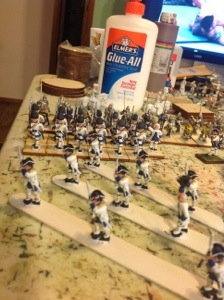
At 12:30 my figures had progressed to this:

20131130-062749.jpg

Things are coming along. I’ve finished all the shoes and completed the buff belts and haversack (you can’t see) and a brown strap that runs along the belting. In the background you also notice I’ve popped the grenadiers off their Popsicle sticks and glued them to their individual bases.

12:30, time for the Apple Cup. I cop to being a Husky fan. I loved the Don James era, and respected Jim Lambright. I attended school there-not as an undergrad, but I did some post baccalaureate work there and my MA is from UWT. It’s been tough to love them since Neuheisel became coach. But I like Sarkisian and a lot of the Husky players. They’ve had a tough year and their losses were against good teams. I figured that if they could run the football and keep Cougars quarterback Connor Halliday off the field, they’d win. If not, things would at best be interesting, and at worst quite ugly. WSU is improving, offensively and defensively. These ain’t Paul Wulf’s Cougars.

I started the game painting in my den. But by the middle of the second quarter, and things going decidedly awry, I moved my stressed out self to the living room, plopped myself in my recliner and watched the rest of the game there. During commercials, I took care of the last of the Thanksgiving clean up. I ordered 24 AWI British guards from Fife and Drum Miniatures, and I made an order for Litko bases.

By half time I was pretty discouraged. WSU was handling the UW running game, and Keith Price turned the ball over twice. There were times when Halliday looked very sharp, and the Cougs had a halftime lead. In frustration, during the break I moved stuff from the garage out to our new storage shed.

After the halftime break the world seemed to right itself a bit. Bishop Sankey started to get some telling run yardage, and Keith Price connected on some key throws. But it wasn’t until Halliday tossed his second interception late in the fourth quarter that I felt confident enough to head back into the den to wrap up Zulu-Hook’s ferocious defense, burn the hospital, slaughter the Zulus in front of the redoubt, Bromhead is ashamed-and plan for the next movie.

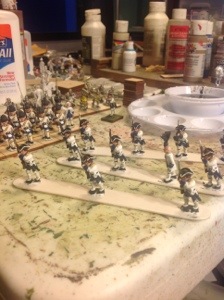
By the time the movie was over, the Spaniards moved along a good deal.

20131130-070949.jpg

I’ve finished all the belting, the cartridge boxes, bayonet scabbards and sword cases.

Time to take a break for dinner. Thanksgiving leftovers, of course, one of the best parts of Thanksgiving. Quick too.

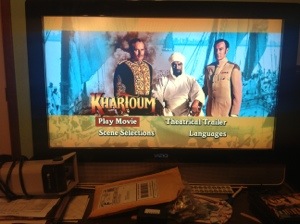
Time for episode two of Loafing Friday Movie Madness, and I’ve chosen Khartoum as my next flick.

I have a special fondness for Khartoum. My parents took me to see this in the theater in 1966, and I’ve always loved it. It’s the story of General Charles “Chinese” Gordon sent to evacuate Egyptians from that Sudanese city in the face of a massive Islamic uprising. Led by the charismatic Mahdi, the tribesmen promise death to those who oppose them. Gordon was sent, without the promise of aid, to get all foreign nationals out of Khartoum, and the movie is the story of his ultimate failure to do so and his death.

They don’t make movies like Khartoum anymore. Shot in a variety of locations, with plenty of action, from the slaughter of William Hicks’ column in the beginning of the movie, the attack on the Camel Corps desert column at Abu Klea, to the final assault on Khartoum itself, the movie is an example of 60’s epics at their finest.

Yet the real strength of the movie, and what sets it apart from most of Khartoum‘s ilk, is the performances. With Charlton Heston as Gordon and Lawrence Olivier as the Mahdi, there is a natural struggle between two outsized egos. Add Ralph Richardson’s role as the perpetually flummoxed Prime Minister William Gladstone, and there is more than just scenery and shoot ’em up to draw you into this film. Add to that Frank Cordell’s magnificent, if occasionally bombastic score, and the 2 hr. 11 minute movie flies by.

20131130-075611.jpg

As I explained, things don’t always go according to plan. My friend Tim called to check in on my recent run of bad luck. As usual, we discussed a wide range of topics, including the Apple Cup, WSU (he’s an alum), Christmas, and books we’d like to read. Our phone conversations are never brief. But this was really important because I got a superb idea for what to get him for the holiday. Unfortunately, it also meant dashing out of the house to Target to take advantage of a Black Friday special.

Alas I broke my own Loafing Friday rules. Thankfully I found what I needed right away, and was able to get in and out in about 20 minutes.

I dashed back home, watched the Nile fall, Khartoum assaulted and Gordon killed by about 9:30. Unfortunately that was about all I had energy for.

20131130-104759.jpg

I didn’t get done with my unit, but I did finish a lot. Tomorrow I’ll try to wrap up the shading, faces and other goodies I need to complete, as well as starting all the basing for the two Spanish units and the French knights. After that I’ll begin working on the first of two American dragoon units. I also didn’t finish my movie list.  I hoped to watch Breaker Morant and Gallipoli too.  So it goes.  Sometimes we just have to live with our choices.

Despite some plan changes that kept Loafing Friday from meeting the full lazy experience I envisioned, it was a pleasure.  I enjoyed the football game, saw some movies I love and made pretty good progress on the movies I wanted to see.  Beats Black Friday any day. This post was entirely done on my iPad and I apologize for the small pictures and any other goofiness that may have occurred as a result.

Back on track

It’s been an eventful few weeks since my last post. I was pretty sick for the better part of a week. Then we moved on to deadline for the paper at school. While we were on deadline I had wrap up my residual doctor issues relating to my kidney problems. At the same time our much loved 12 year old Australian Shepherd, Lucy became quite ill and we had to have her euthanized. More going on than I needed.

Somewhere in there I managed to squeeze in our first trip to the Heritage Flight Center. It is located in Everett at Paine Field. It’s a working collection of flyable warbirds, and some drivable AFV’s chiefly from WWII. We hosted eight games and brought about thirty members to the museum. The feedback I received from members was universally positive, and it is my hope we can do it again sometime in the near future.

Dealing with my other issues, I spent a good couple of weeks mostly unable to work on my projects. I was also in one of my rare moments when I wasn’t quite sure what to do next. I have plenty of miniatures to paint, and lots of projects to work on. I was caught betwixt and between the Hundred Years War and my Spanish-American project, and not making progress on either. I finished a batch of French knights, but it didn’t excite me, so I glommed on to some Spanish infantry and decided to press on.

I’m nearly finished with the final two companies of the Louisiana Regiment. It’s an elegant looking unit in white with blue facings. I, use the Brother Against Brother rules, a single figure game. The Louisiana Regiment has three companies of ten figures each, plus a grenadier company with twelve figures. It was a militia unit, but one of quality, raised in America.

I’ll have a second battalion composed of four companies, but from two separate regiments. They will include a couple companies from the Hibernian Regiment, stationed in America for a time. Their attractive uniform-scarlet, with green facings-will enliven the two remaining companies which will be a pretty boring white.

In addition to the Spanish foot, I’ve assembled a sizable number of mounted Spanish and allies. I picked up a couple companies of mounted cuera militia that would have seen service on the frontier against the Apaches and the Comanches. With their lances, carbines and shields, they will be a formidable, if overloaded lot.

I also snagged enough figures for a company of the Luisiana Regiment of dragoons. They’re in bright blue coats, and should add some color to the army.

Finally, as the last gasp from my summer buying binge, I added a mounted Comanche war band to the Spanish army. The figures, from Conquest miniatures are quite promising. There are 21 figures in the unit, and I think they will add considerable flexibility to scenario ideas for this project.

Needless to say, I also have a few Americans to paint, but I want to remain focused and try to make big progress on this project. I’m shooting for completion by the end of summer 2014. I’ll have some terrain bits to wrap up for Bladensburg, but should be able to stay on track.

On the DL

I hoped that Veterans Day might be a great day to get some work done. As we breezed into the weekend I made some work around the house plans to prepare the living room for a new couch. Mission accomplished and the couch looks great.

Then it was off to Terra Crux Games. Located in downtown Tacoma, some friends agreed to meet and play some multi-player board games, and give the place a try. It was okay, I give it three stars out of five. Then down to the Orange Door for Thai food at about 9:00. Though the food was good, the service was comically bad.

While eating, however, I began to feel not so good. I needed to urinate a lot, and it kind of hurt to go. No it’s not what you are thinking. Shame on you. Went home and went to bed feeling lousy. Woke up Sunday morning feeling not much better, and maybe a little feverish. By 11:00 I thought it best to head off to an emergency clinic. After a wait that took me through the second half of the Seahawks dismantling of the Atlanta Falcons, I was eventually diagnosed with a kidney infection.

No doubt about, it’s unpleasant. Fever, headache, and more symptoms I won’t mention. More importantly it’s the fifth kidney incident I’ve had in my adult life, and the third in the last seven years. Time to take this seriously. In any case, the time I would have had for painting Spanish grenadiers and basing French knights, I’ve been laid up and unable to do much more than watch television. Even reading kind of hurts. Harry Harrison too; the good stuff.

Bummed.

Museum of Flight Day

November 2nd was our annual day at the Museum of Flight.  I have explained many times that this is my favorite venue.  It is a different gaming experience than our other events.  I love the museum with its surrounding planes and the inquiring museum guests.  It somehow makes the hobby seem less isolated from the public, and there is less pressure than managing 300 gamers and 130 games at Enfilade.

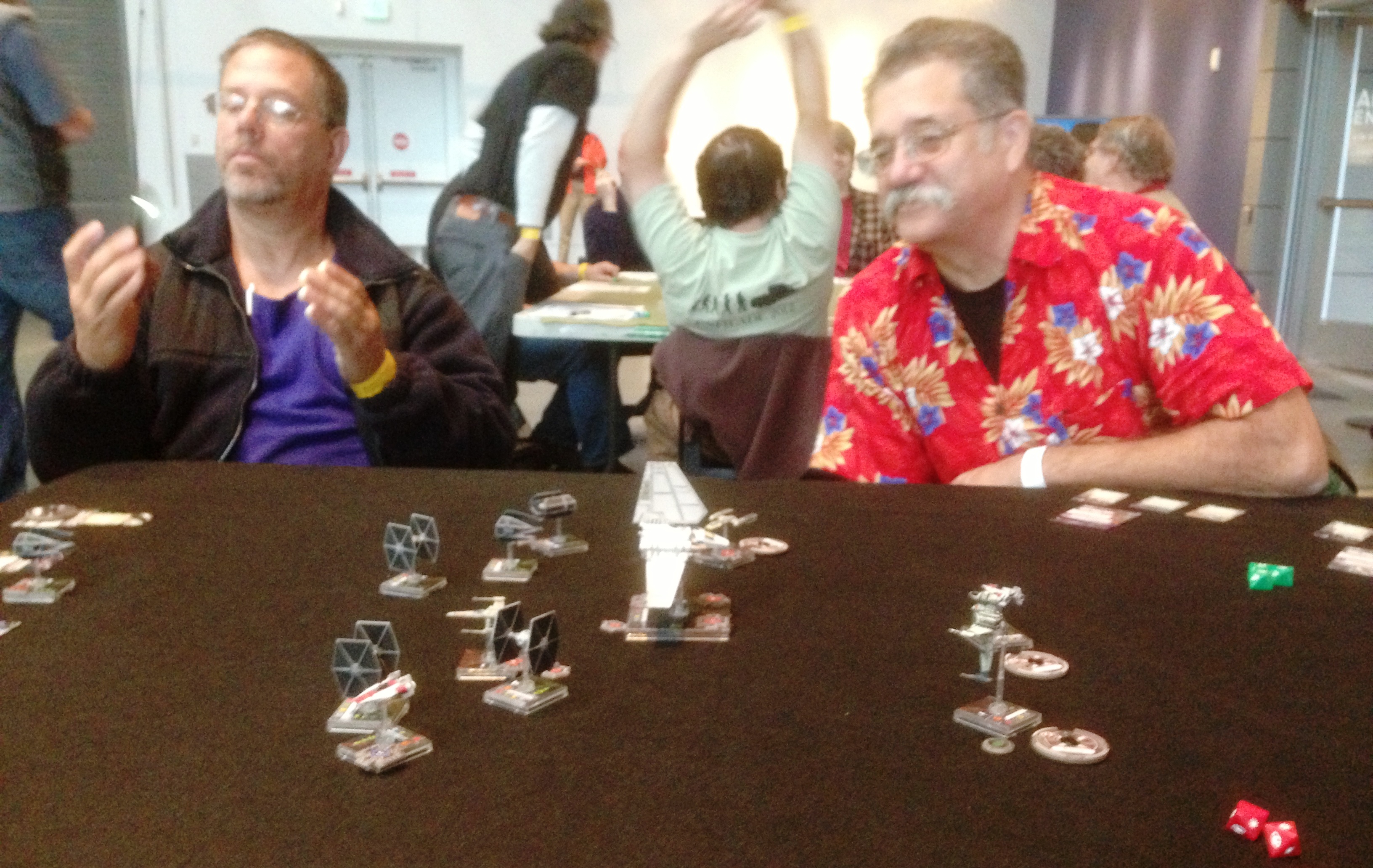
Hugh Sing, right, watches Scott Murphy's X Wing Fighter game.

Hugh Sing, right, watches Scott Murphy’s X Wing Fighter game.

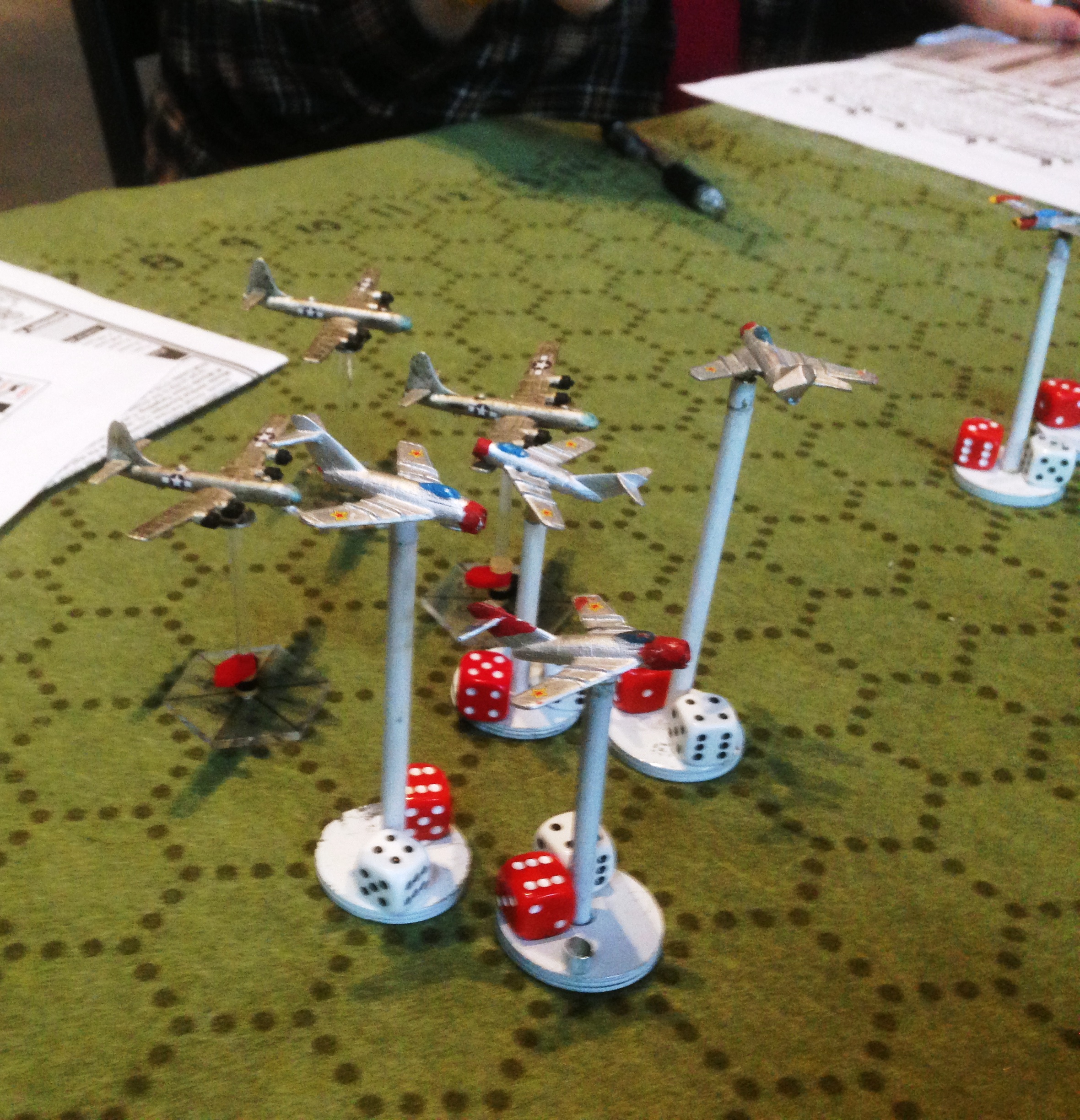
MiG 15's engulf American B-29's in Paul Grandstaff's Check Your Six Korea game.

MiG 15’s engulf American B-29’s in Paul Grandstaff’s Check Your Six Korea game.

Three weeks ago I got the word there was a glitch at the Museum.  Our normal space in the Great Gallery was only available with strings.  We’d have to end our day early, and because so many members had already committed, I didn’t want to do that. We moved our gathering across the street to the Space Center, so we had a new a new adventure at MoF.

It was actually fairly normal.  The weather was gawdawful–pouring rain and high winds.  That tends to be the case forMoF Saturday. Attendees either read the directions and parked at the Space Center, or gradually drifted over from the main parking lot. We had games for each table in each period,  All were well attended and, as I made my way around the room, it seemed everyone was having a good time.

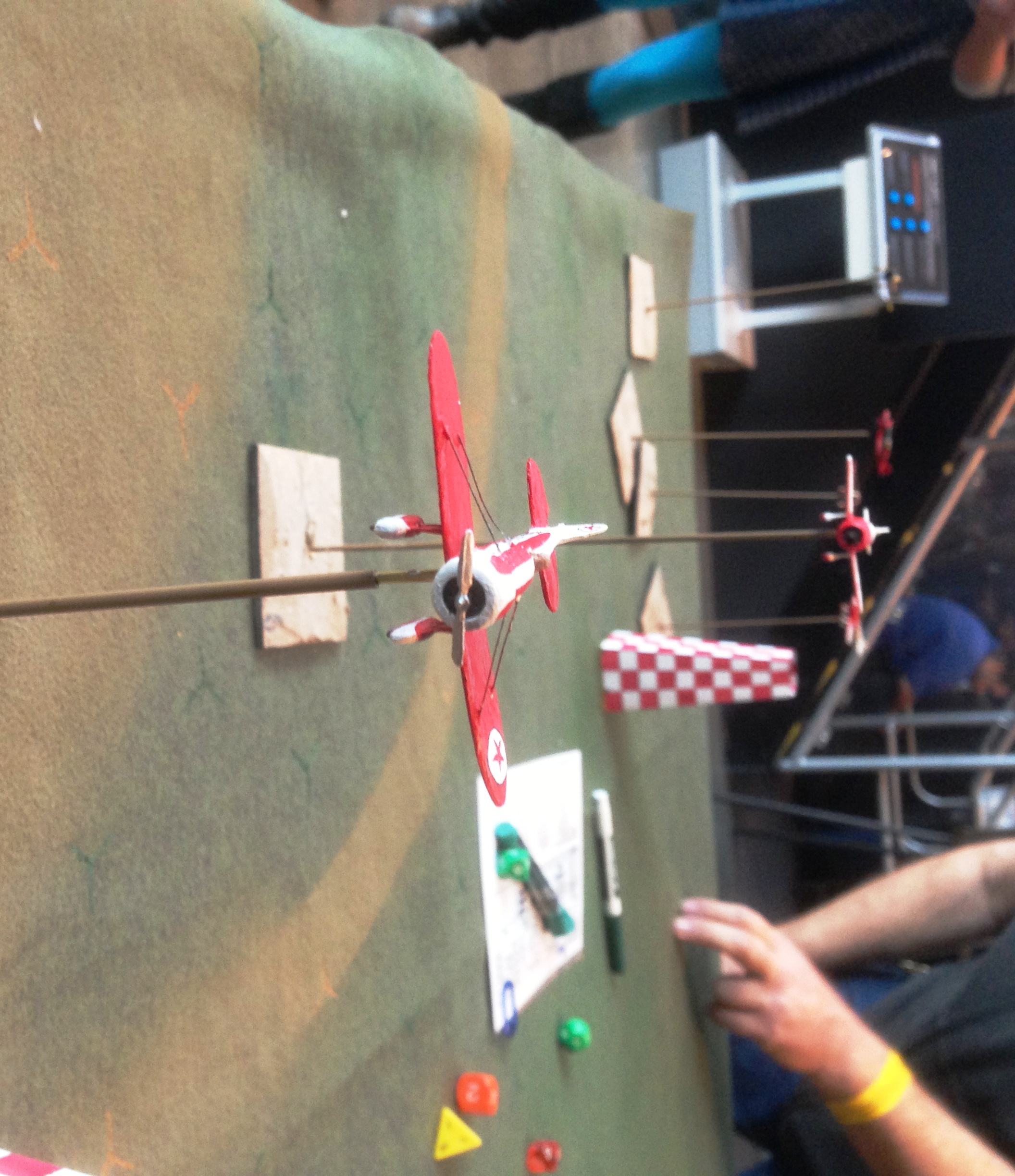
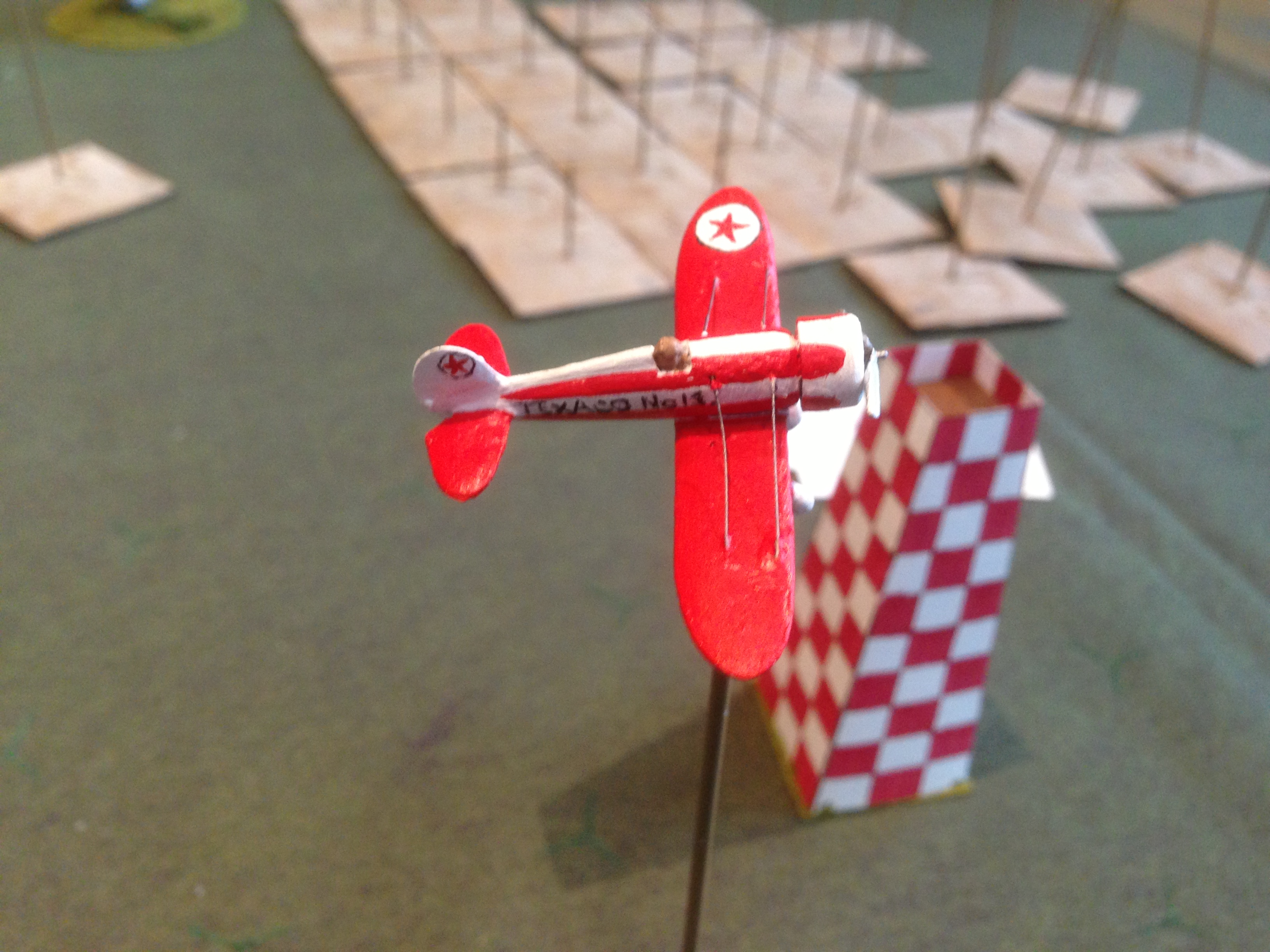
Joe Waddington led wire to wire in the annual Air Racing event.  He flies the Texaco Travelair 14

Joe Waddington led wire to wire in the annual Air Racing event. He flies the Texaco Travelair 14

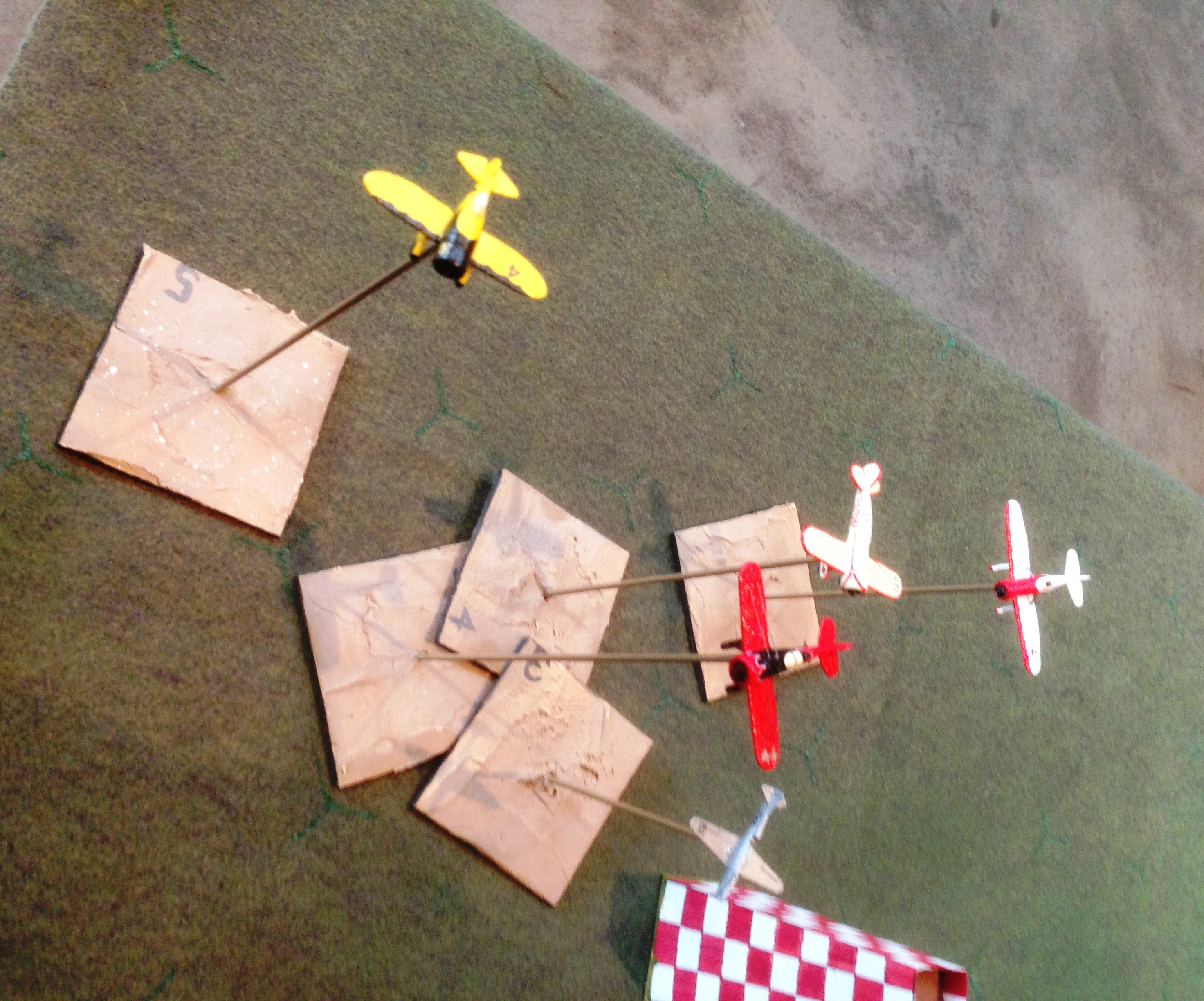
Scrum in turn one.  One of many furballs that kept the pack from catching Joe.

Scrum in turn one. One of many furballs that kept the pack from catching Joe.

Texaco Wins!

Texaco Wins!

The morning session included our annual air racing game.  This year it was won by Joe Waddington who ran a magnificent race.  Joe, usually a victim of his annual lap two crash, led from the get go in the Travelair Texaco 14, and finished a full half lap ahead of the competition.  Not even close. Paul Grandstaff ran a great looking Check Your Six Korea game featuring MiG-15’s attacking a B-29 raid. Scott Murphy ran an X-Wing Fighter game, and Lloyd Bowler and Dave Mebust ran Wings of War.  The afternoon featured more great games.  Andy Hooper ran an Axis and Allies game based on the air raids on Truk Lagoon.  Scott Williams ran a Galactic Knights game.

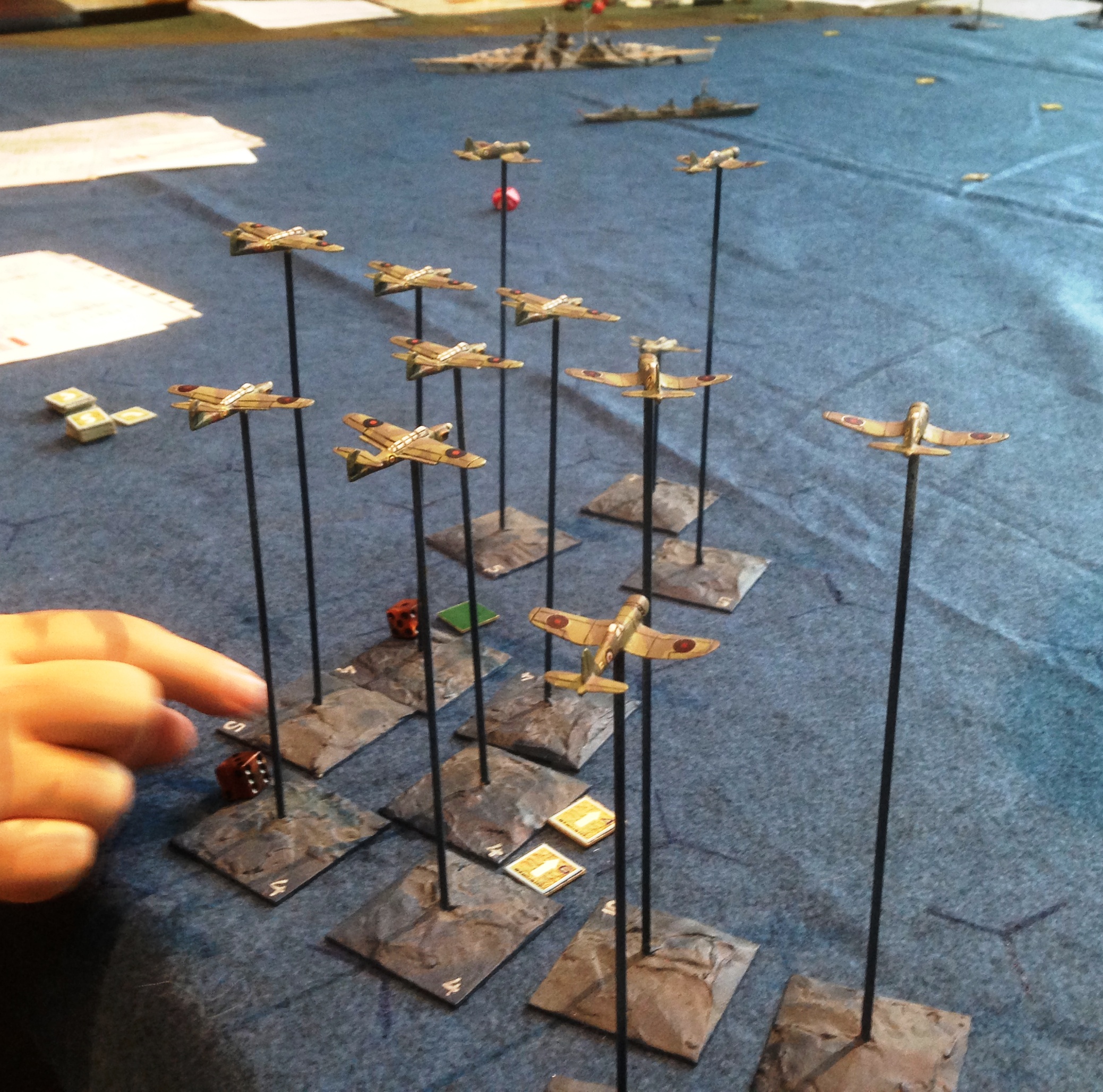
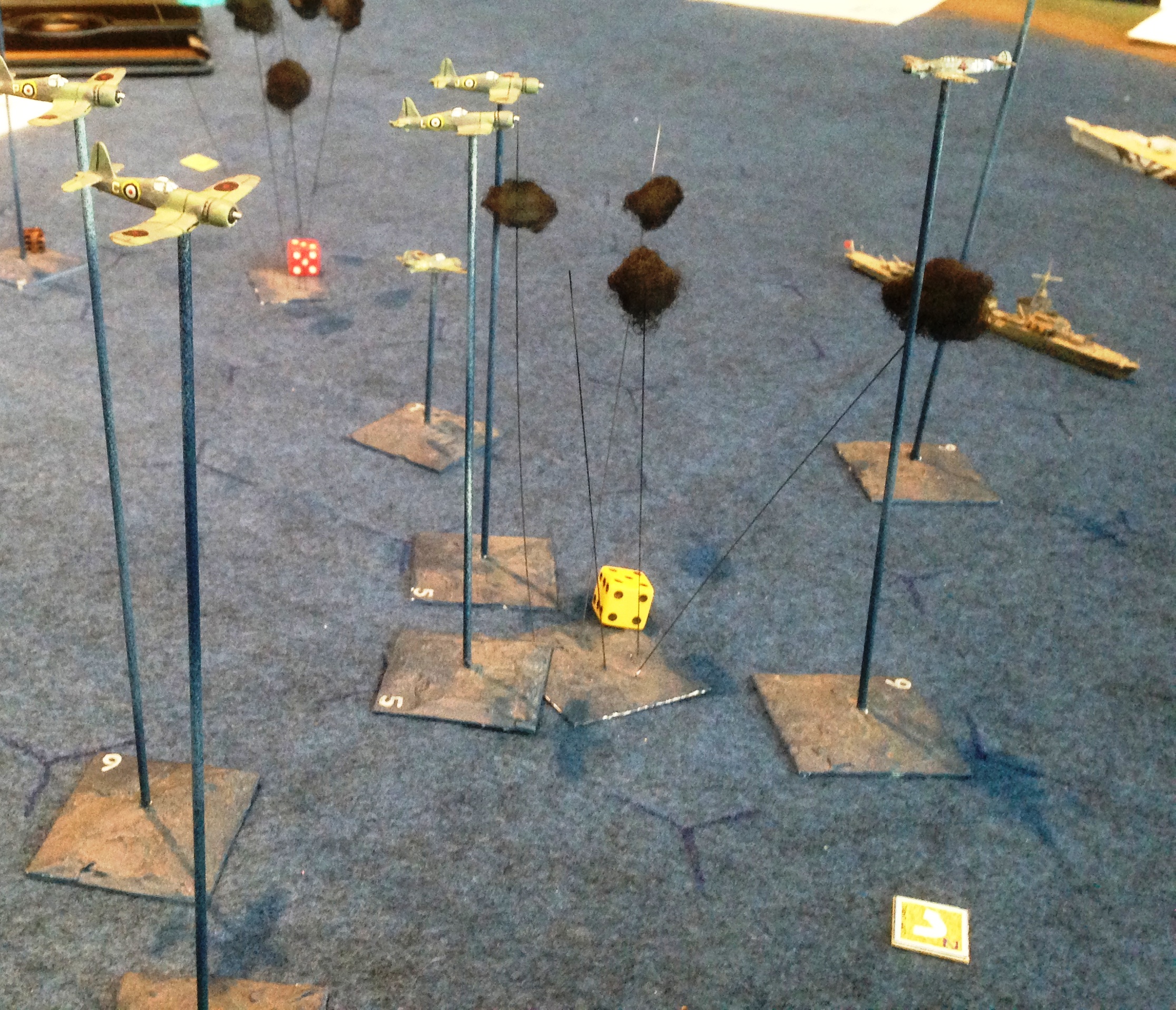
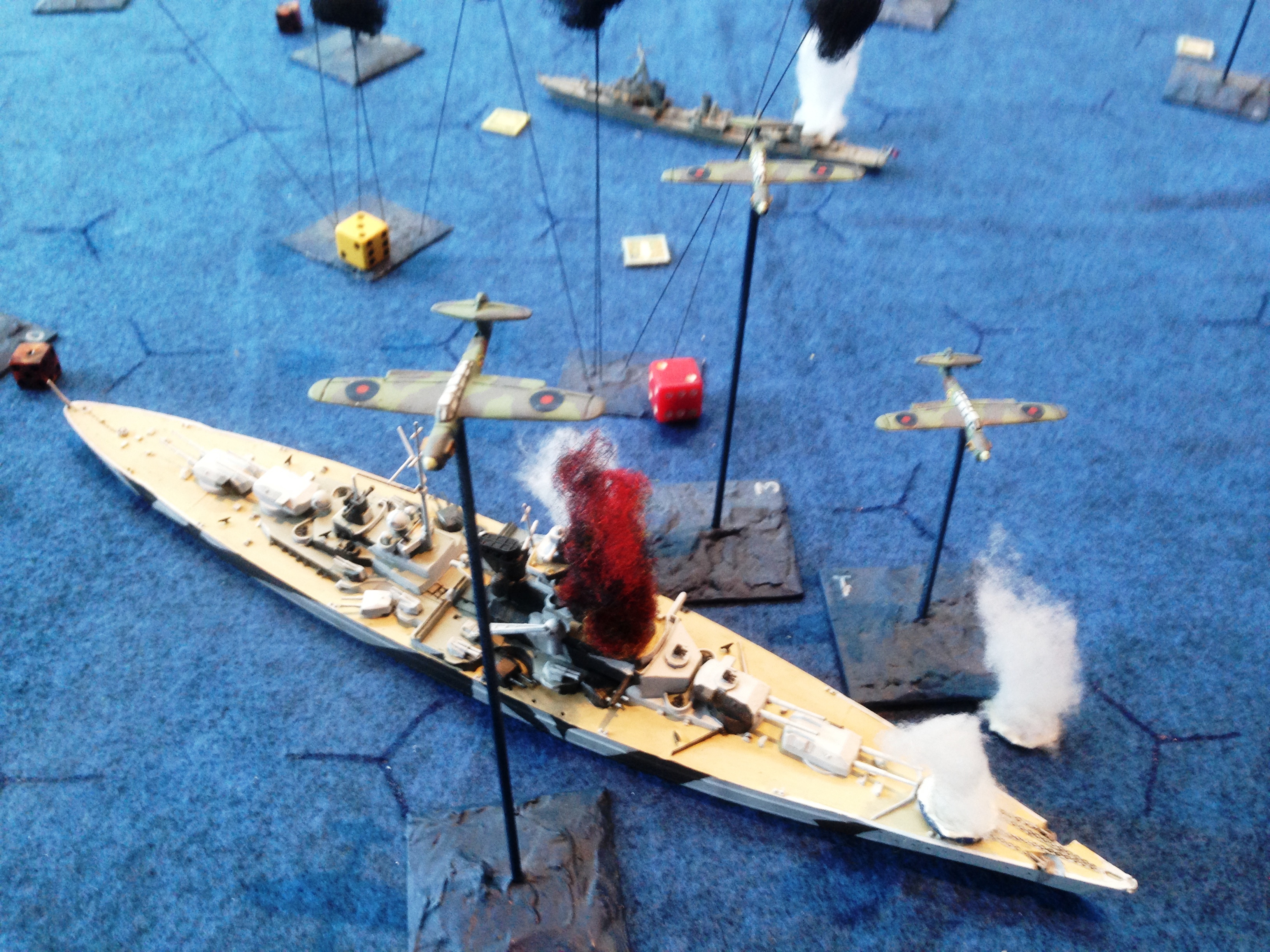
Dave Schueler and I reprised our air attack against the Tirpitz.  This time the Germans had a bit more luck as the British failed their navigation rolls, forcing the forcing the attacking Fleet Air Arm planes to come much farther and face much more flak than at Enfilade.  The intercepting fighters were much more effective at engaging the British defending fighters, and even managed to inflict damage on the bombers.  Though the British did score a couple of hits on the Tirpitz, there was only one critical bomb hit and the Germans were awarded the day.  However, it was determined the Tirpitz was too damaged to be moved and would succumb to the Lancaster raids to follow. Paul

Hannah ran DBA all day.  Some great looking games all around.

Failing their navigation role, the FAA planes plan their course across the board to hit the Tirpitz

Failing their navigation role, the FAA planes plan their course across the board to hit the Tirpitz

The British attack encountered flak and fighters along the way.  The Germans lost two fighters, and the Brits lost a fighter and a bomber before they reached their target.

The British attack encountered flak and fighters along the way. The Germans lost two fighters, and the Brits lost a fighter and a bomber before they reached their target.

The Tirpitz suffered two hits, one critical.  The Germans won a minor victory.

The Tirpitz suffered two hits, one critical. The Germans won a minor victory.

That said, I wouldn’t choose the Space Center again. The floors are concrete and uncomfortable.  It’s darker; players had a hard time seeing the hex grid on my air-racing mat.  We didn’t have quite the walk through traffic and interaction with the museum visitors.  We have a tentative scheduled day with the Museum for Nov. 1st 2014, hopefully in the Great Gallery.  I’ll look forward to returning to our comfort zone under the SR-71.

A Break From the War of 1812


Lights at BladensburgI did it.  All the figures for Bladensburg are done.  I’m freeeeeeeeeee!!!!!

What does it mean?  Project done.  Really, that’s very cool.  I live for projects and when I finish one it’s very exciting because  I can move on to something else.  The real challenge is to stay focused on something long enough to finish it.  Since May, all I’ve painted is 28mm War of 1812.  I’ve completed three American units and four British units, totaling about 225 figures. It’s time to move on. I hoped to have these done by the end of October, and look it’s Halloween.

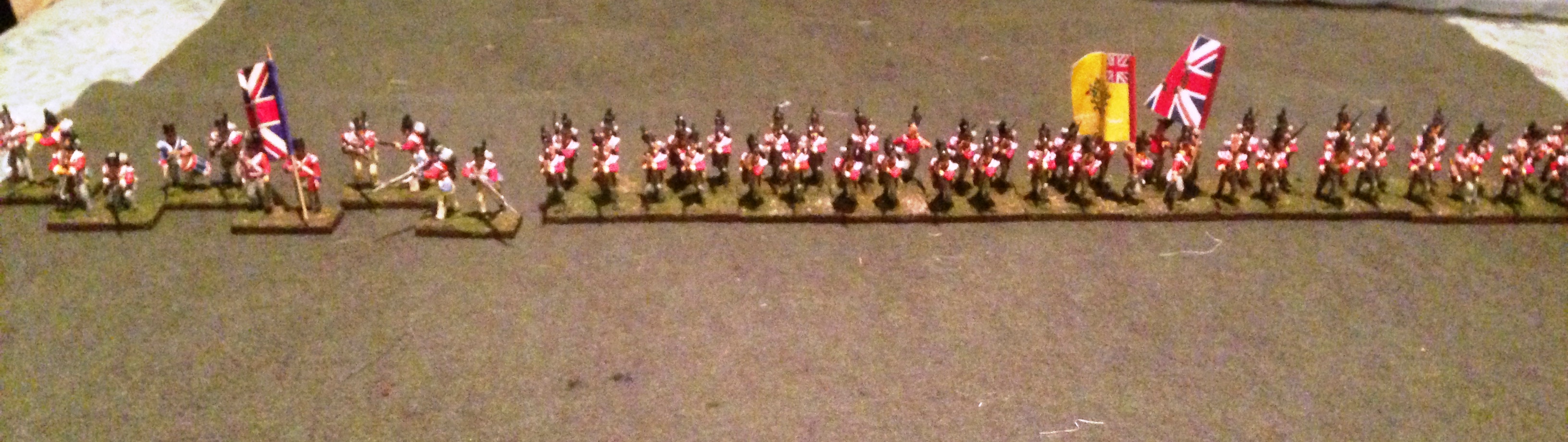
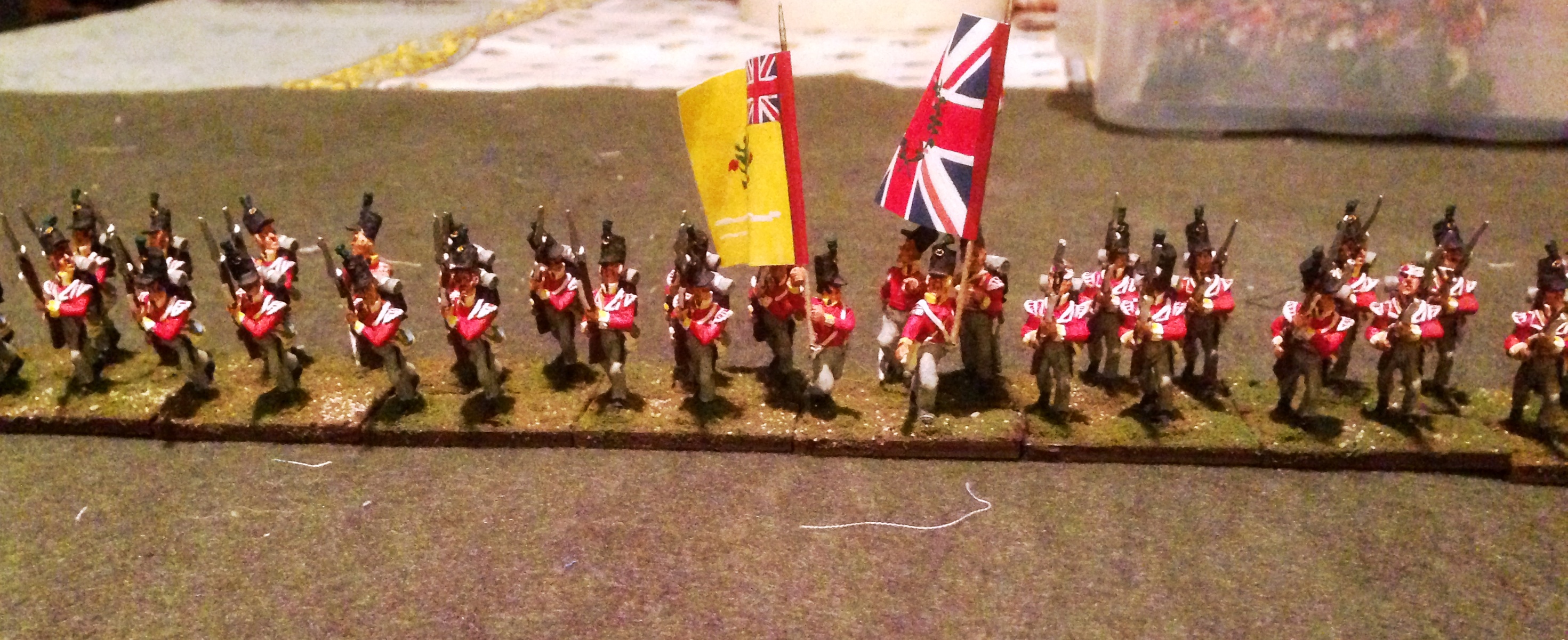
The 85th Regiment is 48 figures, twelve stands.  If I was to extend out the 24 half bases, it would be 36 inches wide.  These are Old Glory figures, traditional, metal 28's

The 85th Regiment is 48 figures, twelve stands. If I was to extend out the 24 half bases, it would be 36 inches wide. These are Old Glory figures, traditional, metal 28’s

I’m probably not going to be quite so disciplined moving forward.  I have some Hundred Years War figures I’m working on, as well as some 28mm Spanish for my War with Spain project.  I have a dozen French knights primed and about half finished.  They’ll contribute to the vanguard division at Poitiers.  I also have the remaining 25 or so figures remaining to paint for the Louisiana Regiment for the Spaniards, and I hope to be done with them in November.

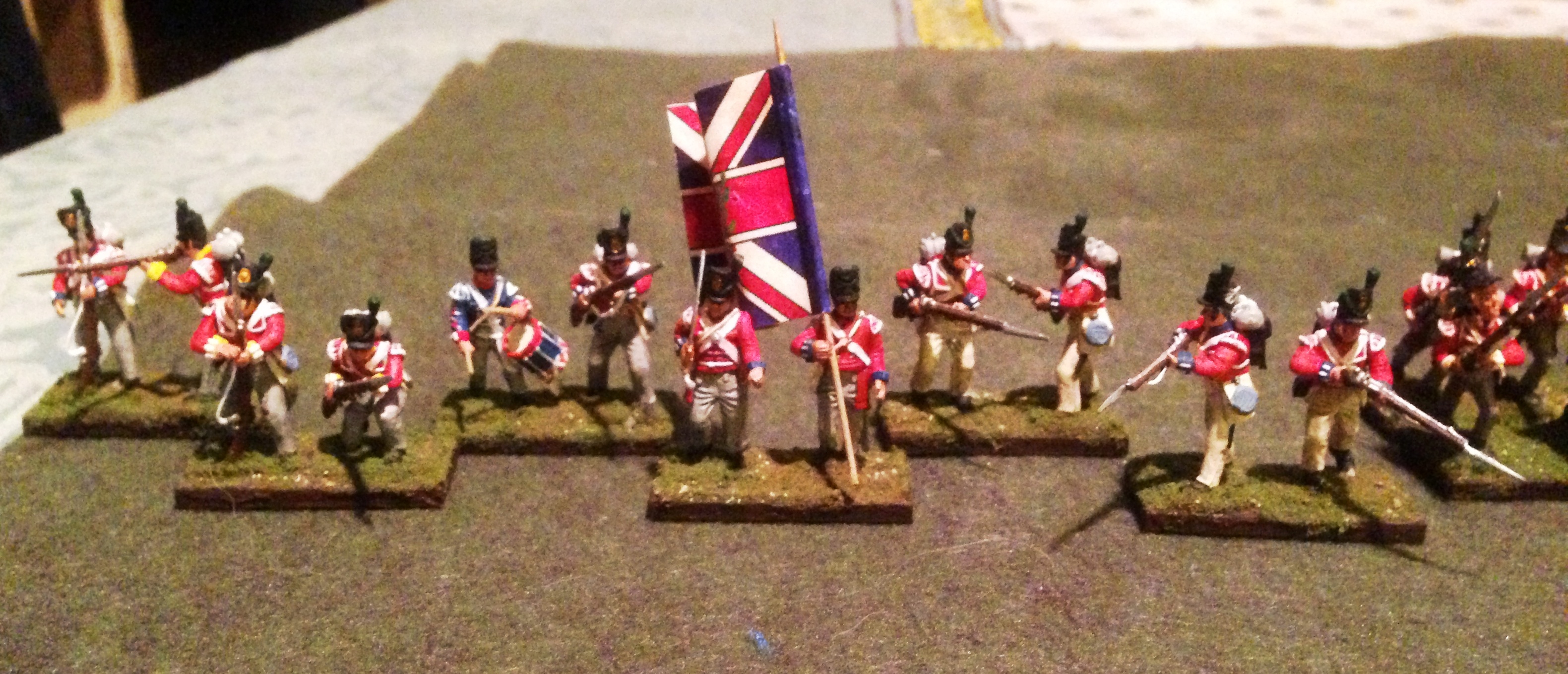
This small unit of converged light infantry is composed of Victrix figures.  They were much easier to work with on the smaller bases.  They actually look kinda nice.

This small unit of converged light infantry is composed of Victrix figures. They were much easier to work with on the smaller bases. They actually look kinda nice.

My goal is to continue working on both these projects until Christmas break.  Sounds like a long time but November 1st is Friday.  Not such a long time.  Then I’ll have to go back to Bladensburg as I ready some terrain pieces and begin play testing.

November is going to be an important gaming month for me.  This weekend, November 2nd is our annual visit to the Museum of Flight.  We won’t be under the SR-71 this year due to a scheduling glitch.  We’re going to be in the Space Center, near the Space Shuttle simulator.  Should be fun.  I’ll be running air racing in the morning and then bombing the Tirpitz in the afternoon with Dave Schueler.

Two weeks later we’re at the Flying Heritage Center in Everett. We reached an agreement with that air museum to host at least one event in their unique space.  I’ll post pictures from both events as we work through them.

Bladensburg and the myth of the rockets

The Battle of Bladensburg was fought under a blazing sun on August 24, 1814. It was a river port town on the East Branch of Potomac River and lies in a valley between two commanding heights to the north and south.  I had the good fortune to visit Bladensburg twice, in 2004 and again in 2012.  It is still a quiet Maryland town that’s seen better days just outside the District of Columbia.  But in 1814 it was a bustling commercial town with warehouses alongside the river trading tobacco, like many other river towns in the Tidewater region.

By the end of of August 1814, many of the waterborne defenses to Washington and Baltimore were gone.  Joshua Barney’s fleet of row gunboats were in ashes.  The naval and land forces commanded by Rear Admiral Cockburn and Major General Robert Ross determined to capture Washington and inflict a humiliating defeat on President James Madison’s government.

Writers across two centuries have spilled many words about the battle that became known as the Bladensburg Races–to denote the speed American militia displayed in departing the battlefield.  My first exposure to this humiliating American defeat came when, as a boy, I read Robert Leckie’s Wars of America, volume 1.  In that book, the journalist historian noted that the American militia were overcome with fear when British rocket troops fired their unreliable missiles at the American defenders and simply fled.  Leckie noted that not even the Zulus at Insandlwana showed more than contempt for these primitive projectiles.

Down through the ages we’ve bought into the notion that the Americans, despite their superior numbers and defensive dispositions, were driven off by a bunch of over-sized skyrockets. Wrong.  Though the Americans held highly defensible ground, their poor dispositions and their lack of training combined with superb British qualities of fire and movement  to doomed the American defense and the nation’s capital. Rocket fire was just a marachino cherry on the sundae.

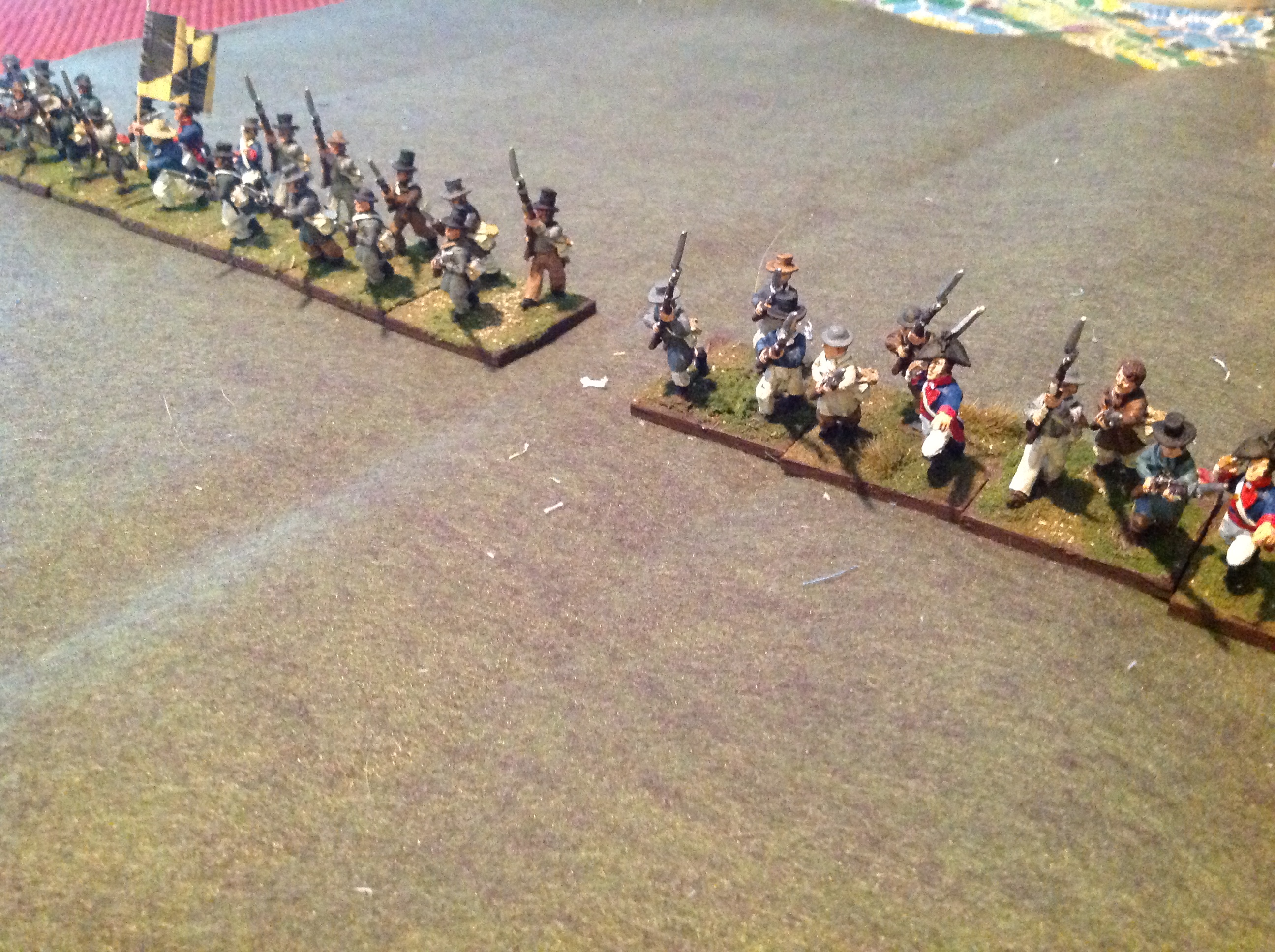
Ragan's and Schutz's regiments of Maryland militia.  That they are un-uniformed represents their general lack of preparedness for action.

Ragan’s and Schutz’s regiments of Maryland militia. That they are un-uniformed represents their general lack of preparedness for action.

First, let’s take a look at the numbers involved in the battle. The Americans numbered some 7, 000 troops, while the British totaled about 4,400.  In addition, the Americans had 18 guns on the battlefield from 6- to 18 pounds, the British had only three light guns that arrived late, plus the 60 or so inaccurate rocket launchers. In game terms the differences become more stark.  The Americans have 72 stands of infantry and 10 sections of artillery.  The British have considerably fewer troops and guns: 54 bases and one section of artillery, plus three sections of rockets.

However, when we break down the armies in terms of quality a vast difference appears between the British and Americans:

Rating/Quality      British bases     American Bases

Elite                        18                        0

Veteran                  35                       9

Trained                    3                       15

Raw                          0                       48

With the exception of Barney’s naval guns, all the American artillery is raw.  Raw troops, infantry or artillery, are likely to shoot poorly, move more slowly and panic under stress. Elite and veteran units are more likely to move faster, accept casualties and shoot better. Add to this, the high quality of the British commanders, the poor quality of the American commanders and the British are much better disposed to move quickly under fire and take advantage of poor American troops.

Though the Americans outnumbered and outgunned the Brits, it’s instructive to examine the battlefield and the American positions.

The battlefield is pie-shaped, with the Americans fighting in depth.  The British enter the field across a bridge at the apex of the pie.

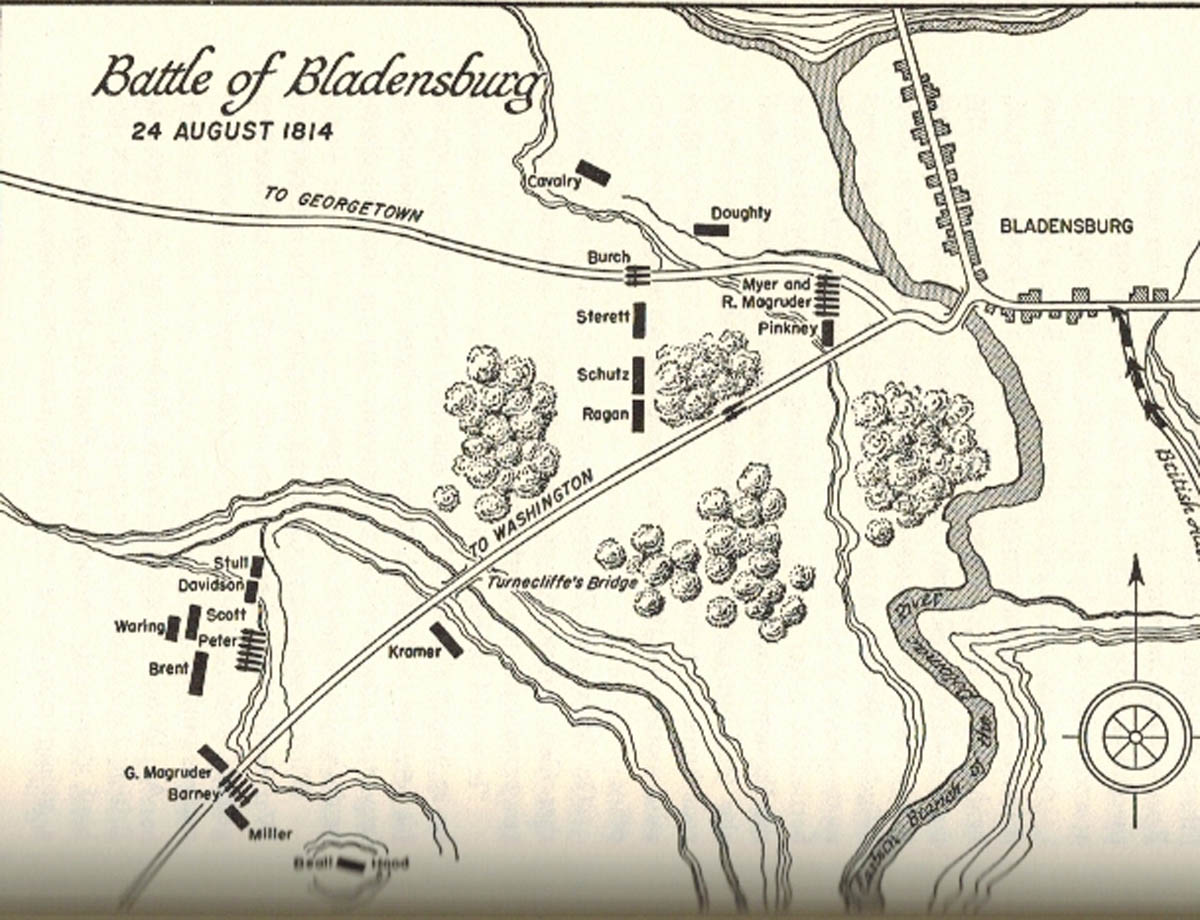
A re-run of the Muller map clearly shows the Americans’ position.  The Light Brigade marched straight up the Washington Road, while Brooks’ Brigade works around the American left flank.  Though Barney’s third line inflicted casualties on Thornton’s advance across Turncliffe’s Bridge, they were doomed when Brook’s advanced against his flank from the Georgetown Road.

The American defense is divided between three non-supporting positions.  Facing the bridge over the East Branch are Pinkney’s three stands of raw militia riflemen and three sections of 6-lb artillery behind a poorly constructed earthwork.  Directly behind them, out of supporting musket range is Stansbury’s Maryland militia 23 stand of mostly raw troops and two stands of raw artillery.

The British had to cross a narrow bridge over the East Branch of the river and go through or around the Americans.  However, there were 37 stands of high quality troops to oppose them.  Historically, the light brigade attacked and was driven into the town by heavy fire.  However, when Brooks’ brigade came up in support, they recrossed the bridge and formed skirmish order while Brooks’ brigade moved quickly around the American left flank to the Georgetown Road.  Outflanked and outnumbered, and probably peppered by the annoying rockets, the raw American troops bolted, running away down the Georgetown Road.

It’s unlikely the British even saw the American third line forming on the hillside south of Stansbury’s position.  Eventually Winder would assemble his best troops, Barney’s flotillamen and Miller’s Marines along with semi-trained regulars and raw militia on the high ground blocking the Washington Road.  The Americans 37 stands, mostly raw troops and five sections of artillery held back the Light Brigade for a time, but were flanked out of their positions by Brooks swinging around their left from the Georgetown Road.

American defenses crumbled, despite stubborn resistance by Barney’s troops, and the Americans retreated down the Washington Road.  The road to the capital was wide open.

The British won the Battle of Bladensburg, but the rockets played a very minor role.  The Americans lost because their troops were of generally poor quality, and their disposition was such that their opponents were  were able to fight the Americans in small packets that gave the British qualitative and quantitative superiority against each of the three American lines.

A quick look at the Bladensburg battlefield

I borrowed the map from Charles Muller’s excellent book The Darkest Day so the reader could suffer along with me as I plot some of the challenges of gaming Bladensburg.

The American dispositions require a fairly deep table.  I’m going to try to cram it all on to a 7 1/2′ X 8′ table.

The British enter at the apex of a trianglular road net and must cross the bridge over the East Branch of the Potomac River (the Anacostia.)  Facing the bridge withing a foot will be three sections of artillery and three stands of militia riflemen.  Fifteen inches behind  them are three large battalions of militia infantry and more guns, filling the triangle between the Georgetown and Washington roads before climbing the hill to face the second American position manned by Joshua Barney’s sailors, a few Marines and a host of raw militia.

The challenge is to allow enough space for the British units to maneuver on both sides of the Washington and Georgetown roads and not have them slaughtered by the superior numbers of American cannon. Another challenge is to factor in the poor quality of the American militia, without having them vanish at the drop of a hat.

The battlefield is pie-shaped, with the Americans fighting in depth.  The British enter the field across a bridge at the apex of the pie.

The battlefield is pie-shaped, with the Americans fighting in depth. The British enter the field across a bridge at the apex of the pie.

A Bladensburg OOB

Believe it or not I’m just a few short steps from the finish line on completing my Bladensburg painting.  I may try to make some terrain pieces: possibly some warehouses for Bladensburg town, and a second wooden bridge for the second crossing over the ravine on the Washington D.C. road.  Pictures will follow soon.

Late last week I took a night off from painting and put together an Order of Battle for Regimental Fire and Fury.  It’s my plan to use these rules for our Enfilade game.  Mark used them successfully for Crysler’s Farm and I’ve run Hobkirk’s Hill using these rules. In any case here is what I came up with. Incidentally, Osprey will be issuing a battle book on the Chesapeake Campaign of 1813-14, so I’ll be interested to see if they come up with some numbers.

The Americans have a superior tactical position to the British and vastly outnumber them in artillery.  However, most of the troops, including the guns, are raw, which is a minus both to fire and morale. The British Army is very good, and though they must cross the lower bridge under fire, maneuver quickly, and must take advantage of their superior mobility.  I’ll post a map and some pictures soon.

Americans

C in C General Winder-poor

Pinckney’s Command-poor

Pinckney ‘s Rifles (3 stands)

3/-/2  Raw

Myer and Magruder’s  Maryland artillery

Three  sections light guns-raw

Doughty’s Rifles (smoothbore armed)

3/-/2  Raw

Doughty begins the scenario as independent and must move out of command

Stansbury’s  Brigade-able

5th Maryland  Militia Regt.

9/7/5     Trained

Schutz’s  Maryland Miliitia

7/6/5 Raw

Ragan’s Maryland Militia

7/6/5  Raw

Burch’s Maryland Artillery

Two sections light guns-raw

Winder Arrives with reinforcements on turn one

Scott’s Regulars

6/5/3 Trained

Joshua Barney-Gallant

Miller’s  Marines

3/-/1  Veteran

Barney’s  Flotillamen

6/4/2  Veteran

Barney’s Naval Artillery

One section siege gun, one section heavy gun (move as siege guns)

Turn three arrival

Magruder’s  Brigade–poor

Beal’s Annapolis Militia

6/5/4  Raw

Morrison’s Annapolis Militia

6/5/4  Raw

Kramer’s  Maryland Militia

4/-/3  Raw

Peter’s District artillery

Three sections light guns-raw

Turn four arrival

Smith’s District Brigade—poor

Waring’s  Battalion

4/-/3  Raw

Stull’s  Battalion

4/-/3  Raw

Maynard’s Battalion

4/-/3  Raw

1.        Pinckney’s command  begins behind an earthwork 8” in front of the lower bridge across the Anacostia River.  Myer and Magruder’s  artillery may not fire at targets closer than 4” because their embrasures were poorly constructed.

2.       Stansbury’s  command was recently placed in “improved” positions by Secretary of State Monroe and may not advance until turn seven, or unless personally led by General Winder

3.       Magruders Brigade and Smith’s Brigade may not deploy if they are outside Winder’s command radius

British Order of Battle

Commander in Chief

General Ross-Gallant

Thornton’s Light Brigade-Gallant

Converged Light Infantry

6/4/2  Elite

85th Regiment

12/8/5  Elite

Marine Light Infantry

3/-/1  Veteran


Arriving turn 2

2nd Brigade-Brooks-Able

4th Regiment

8/5/3  Veteran

44th Regiment

8/5/3  Veteran

Royal Marine and Royal Artillery Rocket troops

Three sections rocket artillery

 Arriving turn 5

3rd Brigade-Patterson-Able

21st Regiment

8/5/3  Veteran

3rd Battalion Royal Marines

8/5/3  Veteran

Colonial Marines

3/2/1  Trained

One section light artillery

Turn one begins with the Light Brigade in march column attempting to force the bridge crossing over the Anacostia.  Turn three, the British can discover the ford guarded by Doughty’s pitiful unrifled riflemen.