Museum of Flight Game Day: A Bit of Heaven on Earth

Sunday's Museum of Flight gathering was a bit sparse after a date change.  But all would agree it was a good time.

Sunday’s Museum of Flight gathering was a bit sparse after a date change. But all would agree it was a good time.

I had a miserable Saturday night.  I woke up sick to my stomach and got very little sleep. Sunday was our scheduled annual day at the Museum of Flight, and all I could think of was whether there was a way I could get out of it.  Hmm, I’m the lead contact person.  I’m hosting two games.  Nope, I was in up to my neck, so I had to make the best of it.  At least by 7:00 A.M. I was starting to feel a little better.  So on about four and a half hours sleep I stopped at Starbucks on the way out of town and headed for South Seattle.

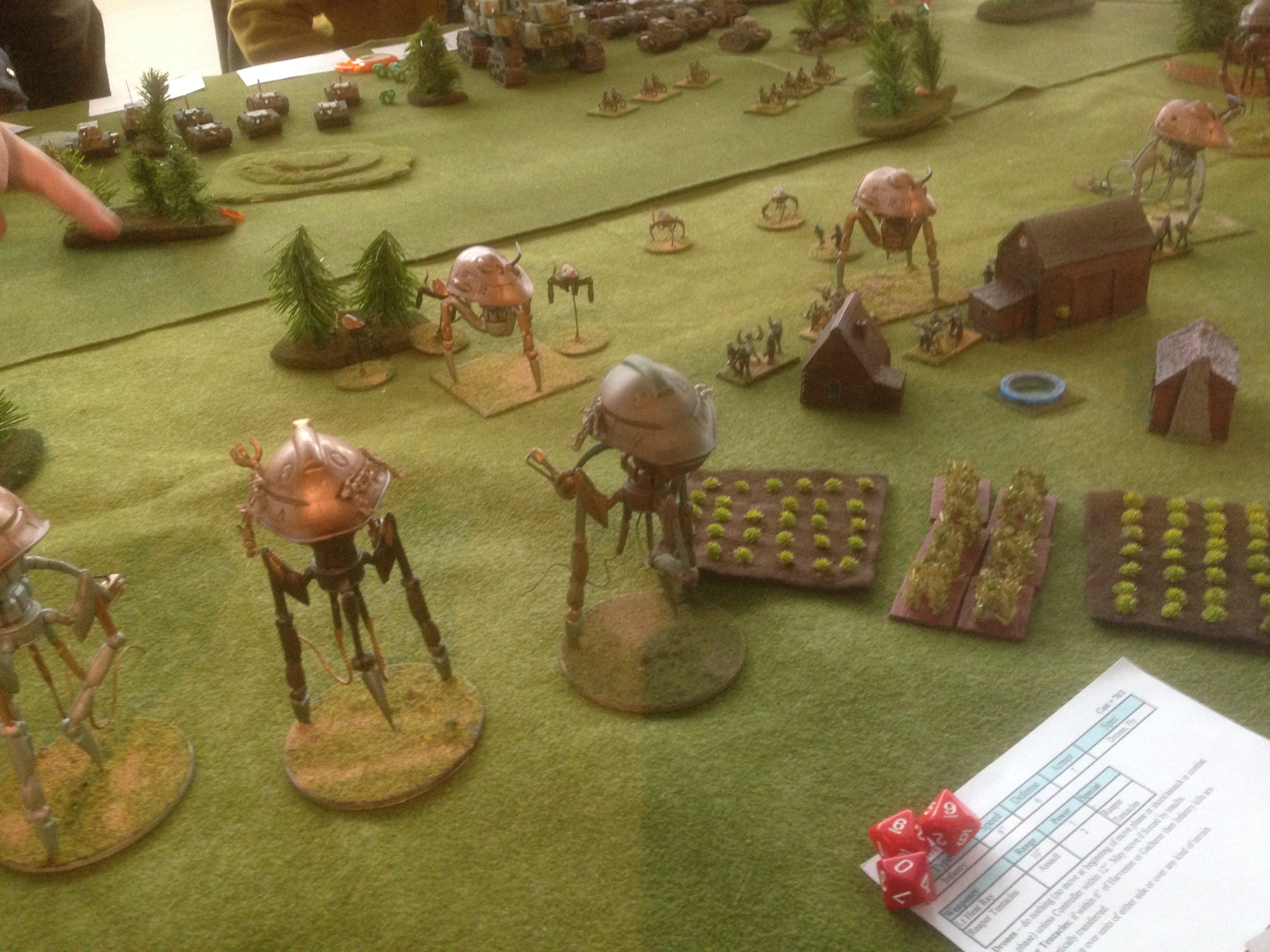
Sven Lugar's gorgeous All Quiet on the Martian Front.

Sven Lugar’s gorgeous All Quiet on the Martian Front.

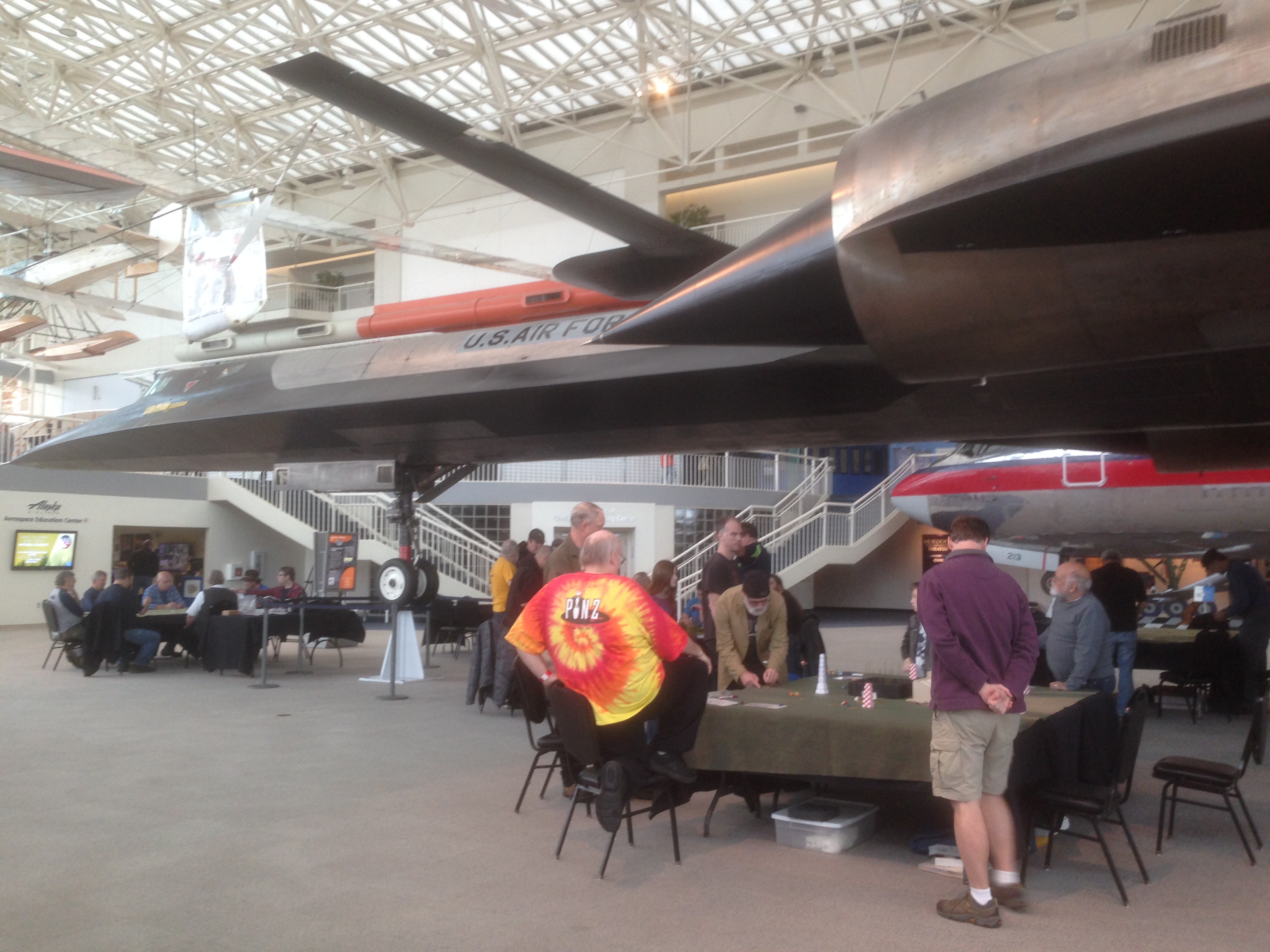
I think I write about the Museum of Flight every year.  I’m not sure I have tons of new stuff to say about it, except this: we are incredibly lucky to be there every year.  It’s super difficult to find an inexpensive venue in the middle of Seattle to host gaming activities.  Yet the Museum folks ask us back every year.  They give us a wonderful space in the Great Gallery under the SR-71, which can be good and bad, but mostly good, and they pay for our admission.  That’s right my guys get in for free to do the things we love to do: spend time together and play games. That doesn’t mean things are always perfect.  This year we got booted from our planned November 1st day due to an emergency memorial service planned by a board member.  But generally the folks there work with us.

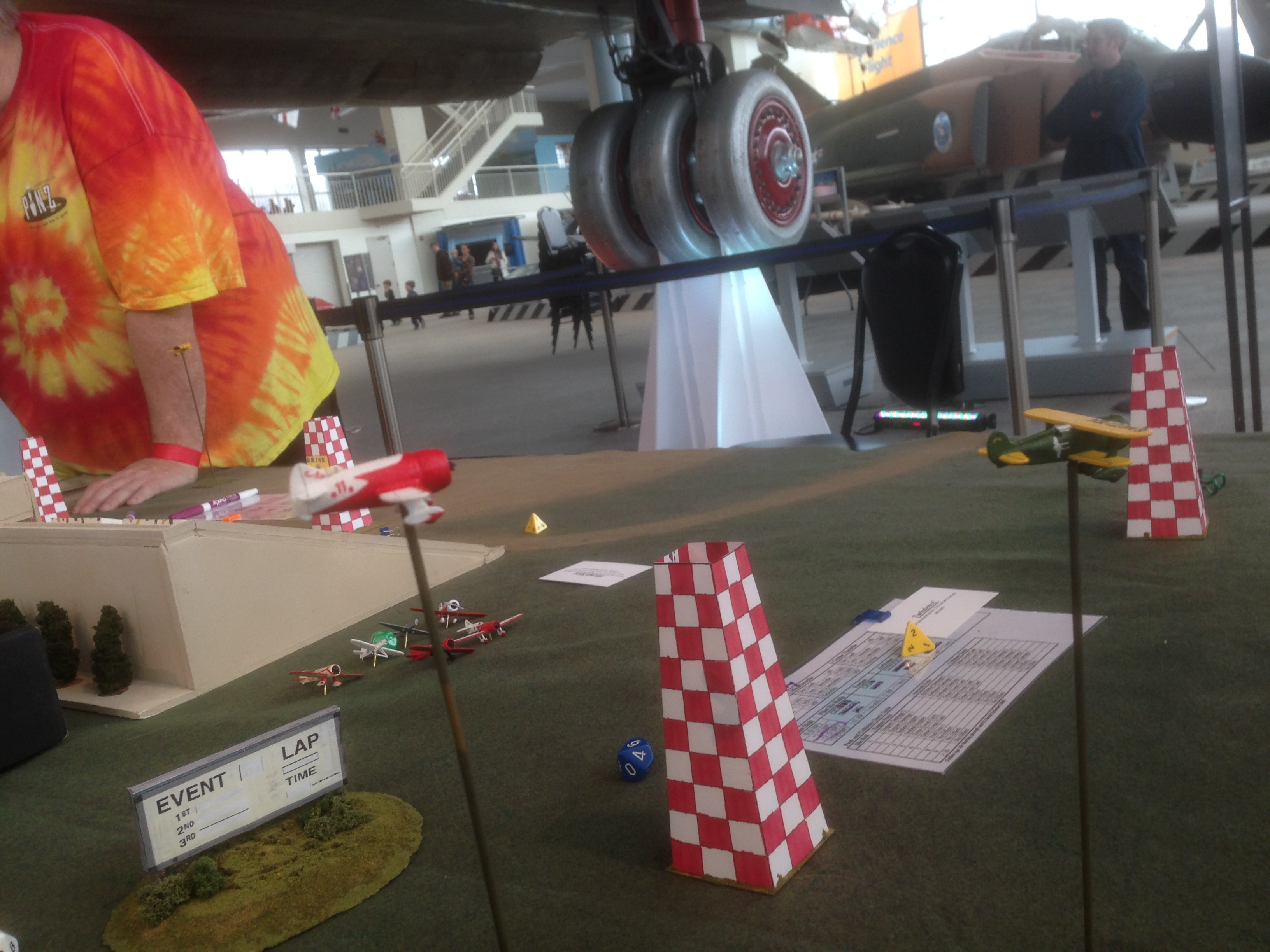
The Gee Bee R-1 makes a steady advance Laird's Super Solution.

The Gee Bee R-1 makes a steady advance Laird’s Super Solution.

The date change reduced our attendance, but it was still a very fun day.  Sven Lugar ran his very attractive All Quiet on the Martian Front, while Lloyd Bowler, making the trip up from Astoria, ran Wings of Glory. Paul Grandstaff and Al Rivers ran some WWII Check Your Six, while Scott Murphy ran an afternoon game of Star Wars Armada.  Armada and WOG attracted nice audiences of Museum attendees and we saw groups of parents and grandparents gathered around tables to help their kids play the games. Dave Schueler manned the information desk and talked up the hobby with Museum visitors.  For the first time attendees said they timed their visit to the museum to coincide with our game day.

I ran two games.  In the morning, it was a full six person crowd of air racers.  Friends, many I’ve known and gamed with for decades ran my little Shapeways planes around the board. As always, my role was to keep the game moving and goad the players into various acts of folly.  Not many crashes today, though a couple players ran of out of gas.  Scott Abbott, leading the race all the way, ran out of gas on the last turn and landed his plane a hex short of the finish line. Gary Griess motored past him in the Gee Bee R-1 for the win.

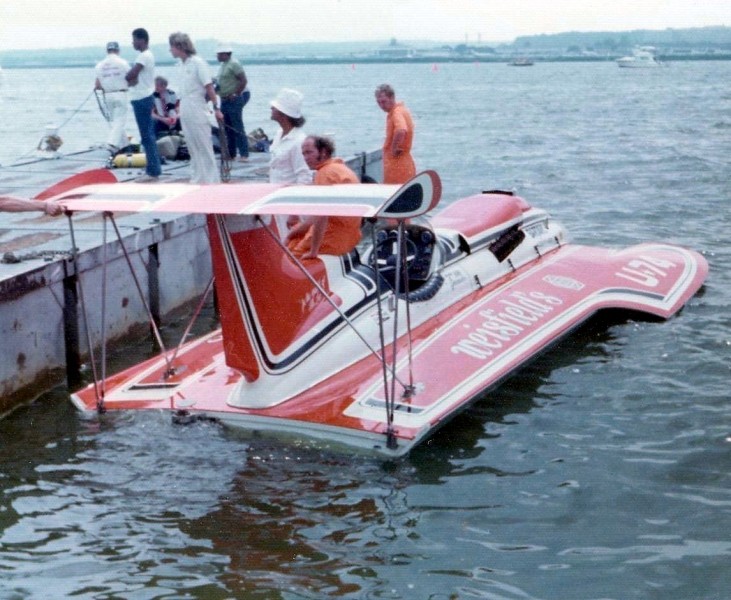
in the afternoon I ran Thunderboats!! The game is always popular with visitors.  There are lots of memories of the early boats I have.  One observer had been a member of a pit crew in the 70’s, and gave the game his seal of approval. That made my day.

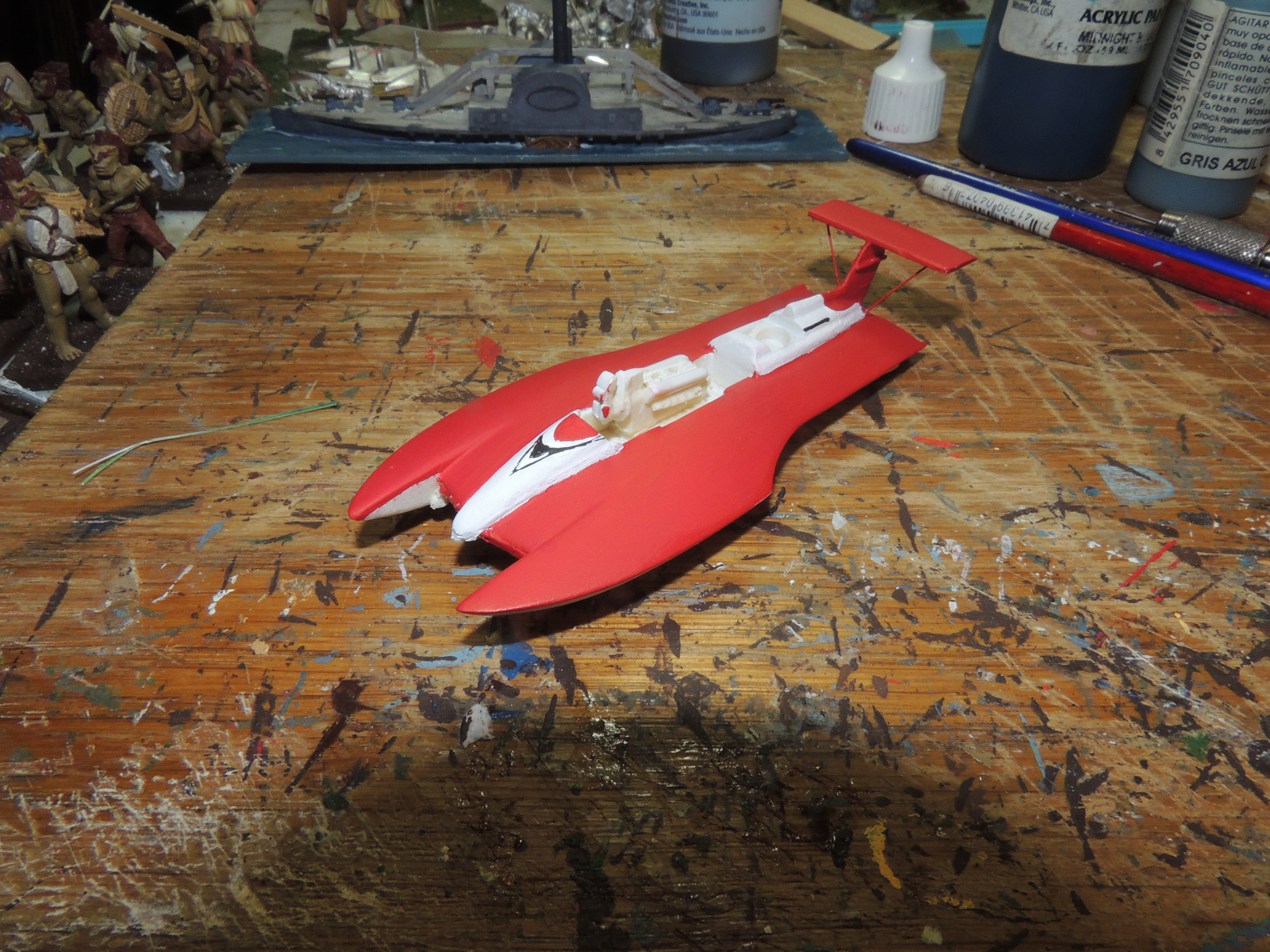
We had only four racers, so I decided to play too. I chose the brand, spankin’ new Squire Shop boat.  But you know how it is with new miniatures.  If they perform poorly in their first action, they are cursed forever. Thankfully, that didn’t happen. Everyone seemed to take nitrous bottles for their boats.  The nitrous oxide additive gave bursts of power for boats in the late 60’s, but the highly flammable material could also have some deleterious effects, including fire and explosions. It seemed every other turn a boat was zooming ahead, but then slowed as they tried to douse the fire from nitrous oxide explosion.  I didn’t take a nitrous bottle, but stuck with my tried and true plan of going as hard as I could, pushing each turn with a great driver until my boat was in serious danger of breaking down.  I got some good movement die rolls as well as consistently strong die rolls to support the risks I took.  Squire Shop took the lead in the second lap and won the race despite a couple of late nitrous fueled charges.

It was a good day, and we wrapped up early.  I’ve given up most of my NHMGS responsibilities in the last year, but I’ll probably hang on to the scheduling the Museum day.  It’s always a lot of fun, and I am always grateful for the opportunity to game there.

Yes You Can Paint Almost Anything: The Checkerboard Comet

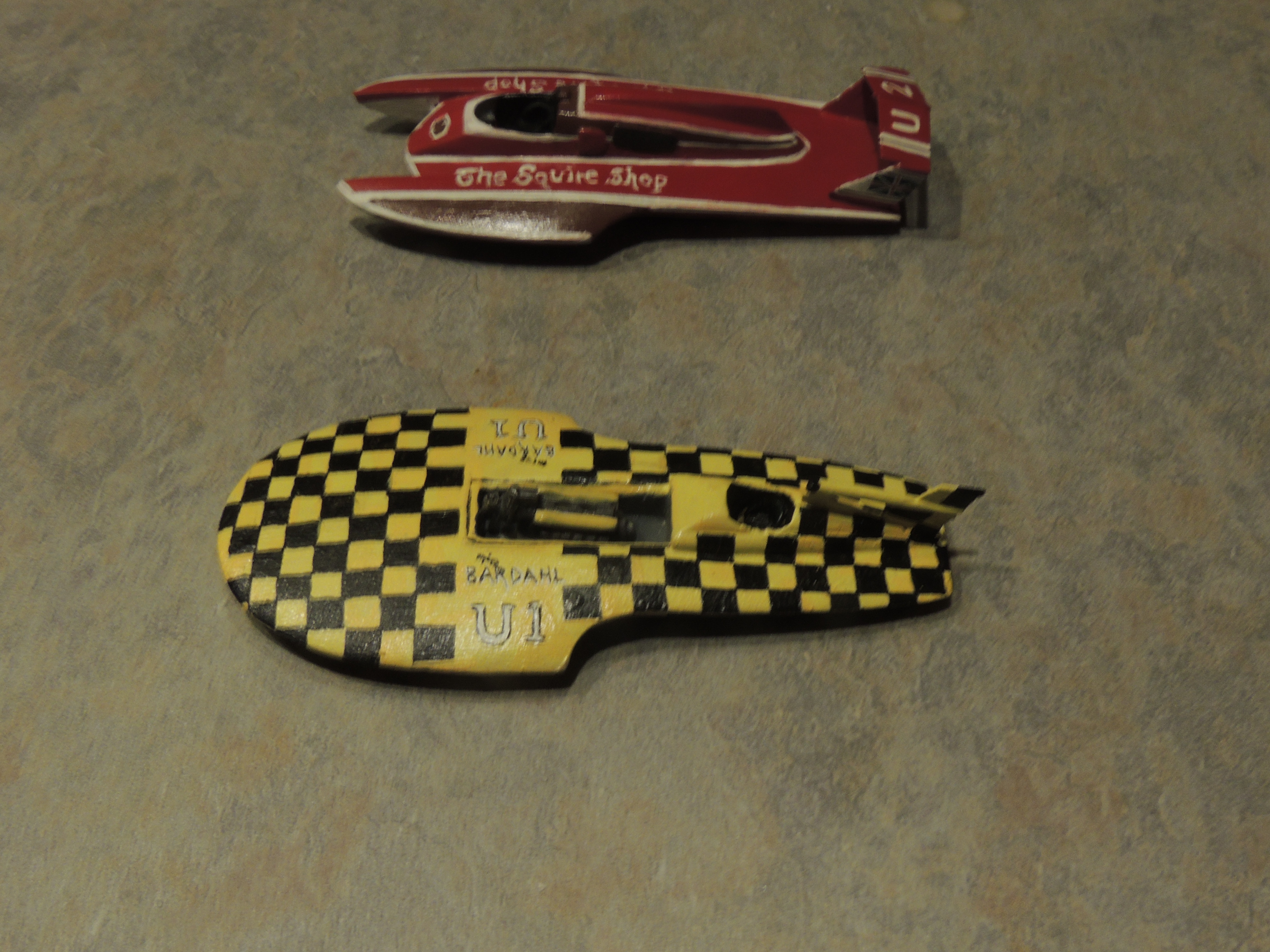
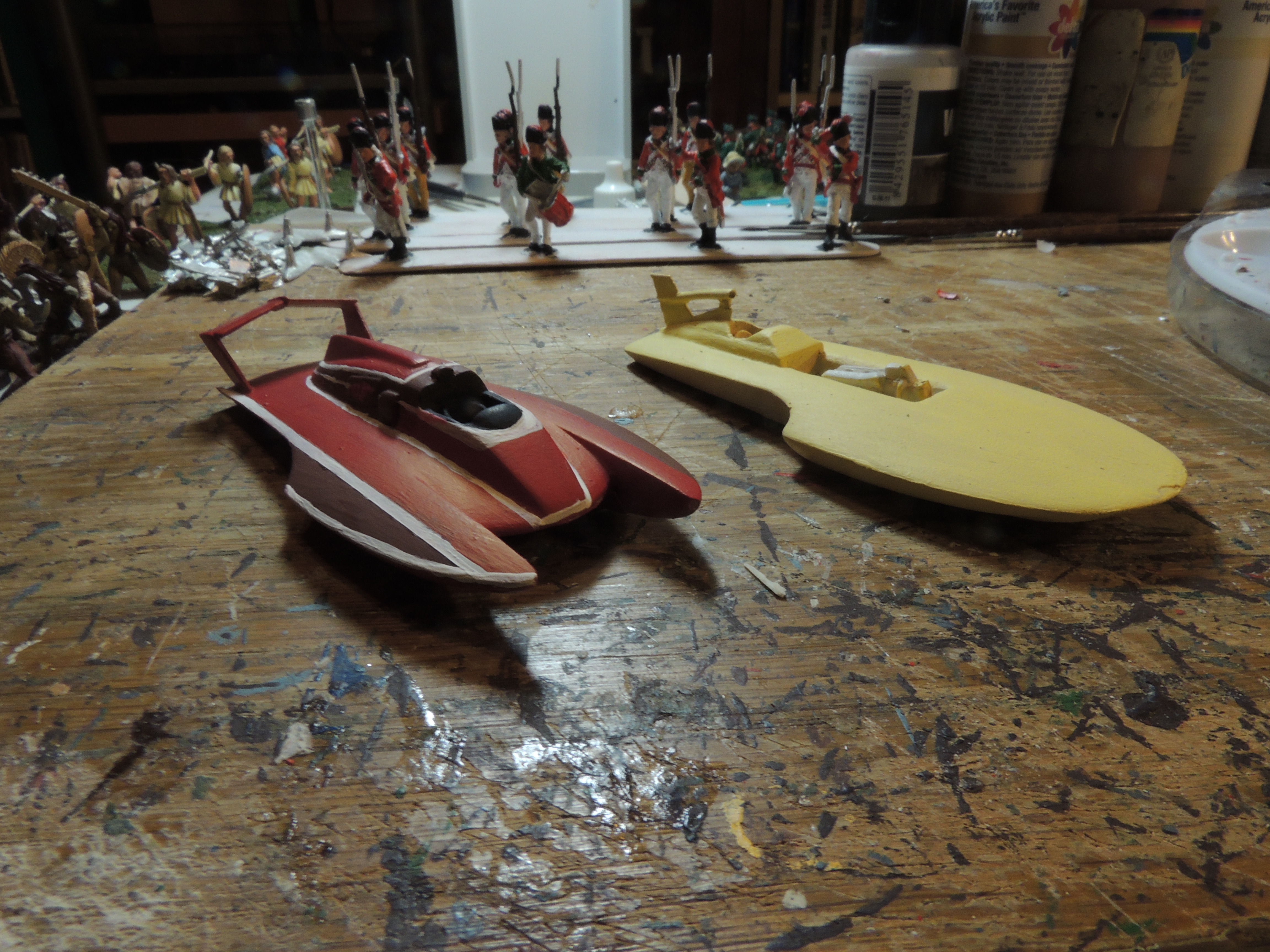
Two recently completed boats--The Squire Shop and the Bardahl.  About a a decade apart in racing years, a lifetime apart in hull design.

Two recently completed boats–The Squire Shop and the Bardahl. About a a decade apart in racing years, a lifetime apart in hull design.

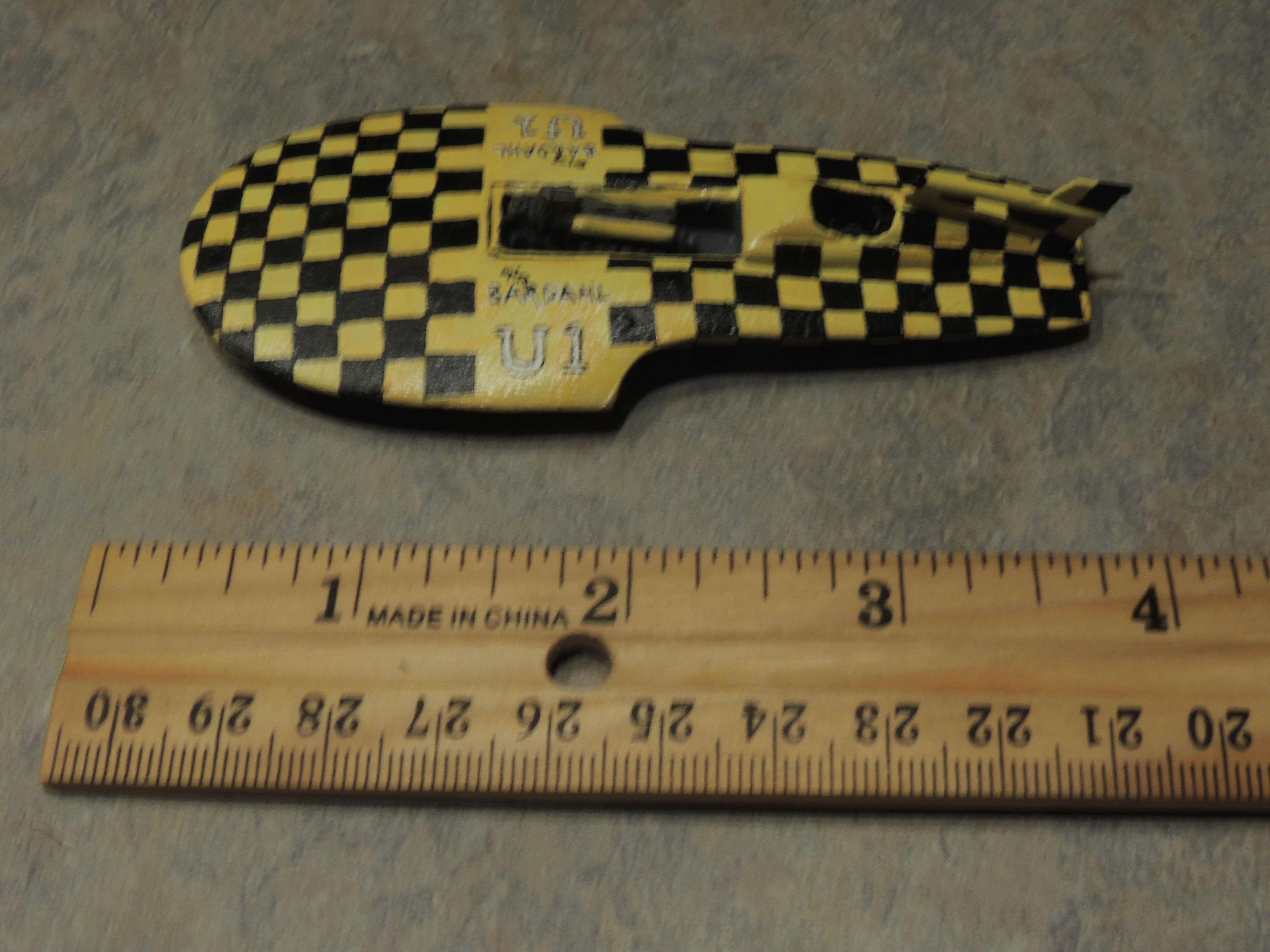
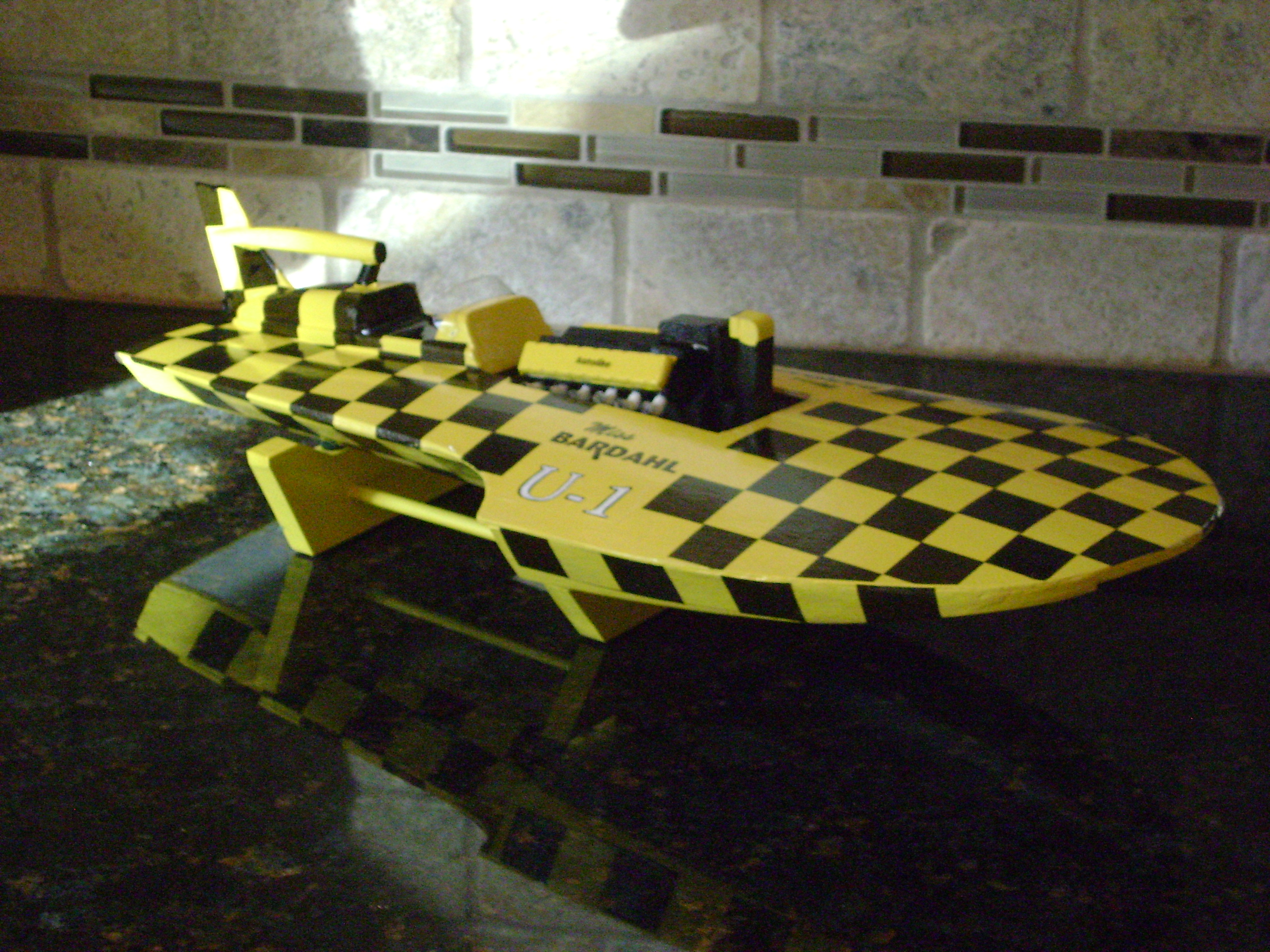
Just a quick post because the paper is on deadline this week and time is at a premium.  But sometimes I just have to show off.  I’ve had the base yellow coat for the 1968 Miss Bardahl on this hydroplane for nearly three years, but been in a quandary over how to go about actually painting it. The answer is, of course, just do it.

Yep, it's pretty small.  Not a lot of room to work with in Smyth boatworks.  But it turned out well.

Yep, it’s pretty small. Not a lot of room to work with in Smyth boatworks. But it turned out well.

The miniature, cast by Shawn McEvoy of CraftWorks models, is not very big.  It took me some time to wrap my head around getting a straight and uniform checkerboard on a 4″ by 1-2″ hull.  I’m not sure I ever came up with a firm strategy, but I simply used modeling masking tape to help get the horizontal line straight and masked off the verticals by hand and eye. I also brought out my seldom used 000 brush.  The bow of the boat was fairly easy, but as it is divided by the engine and cockpit, things got a lot trickier and that’s done entirely by hand and eyeball.  They don’t match, but don’t look too closely.

The miniature is based on Ole Bardahl’s 1968 entry into the unlimited racing world. It was an Ed Karleson designed hull that was designed for the 1967 racing season.  The ’67 boat, known as the “Blonde Bombshell” was all yellow, replacing the traditional Bardahl green scheme, and was very nimble, winning the high points championship.  The Bombshell appeared with the new paint scheme in ’68.  Though not as completely dominant as the previous year, it was something to see.  “The Checkerboard Comet” won four races, driven by Billy Schumacher, including the Gold Cup and high points championship.  It was the last year Bardahl’s boat would dominate the sport, and Bardahl would retire after 1969.

Pretty cool  I’ll take it on the road this weekend to our annual game at the Museum of Flight.

Perry figures Volunteers of Ireland Review

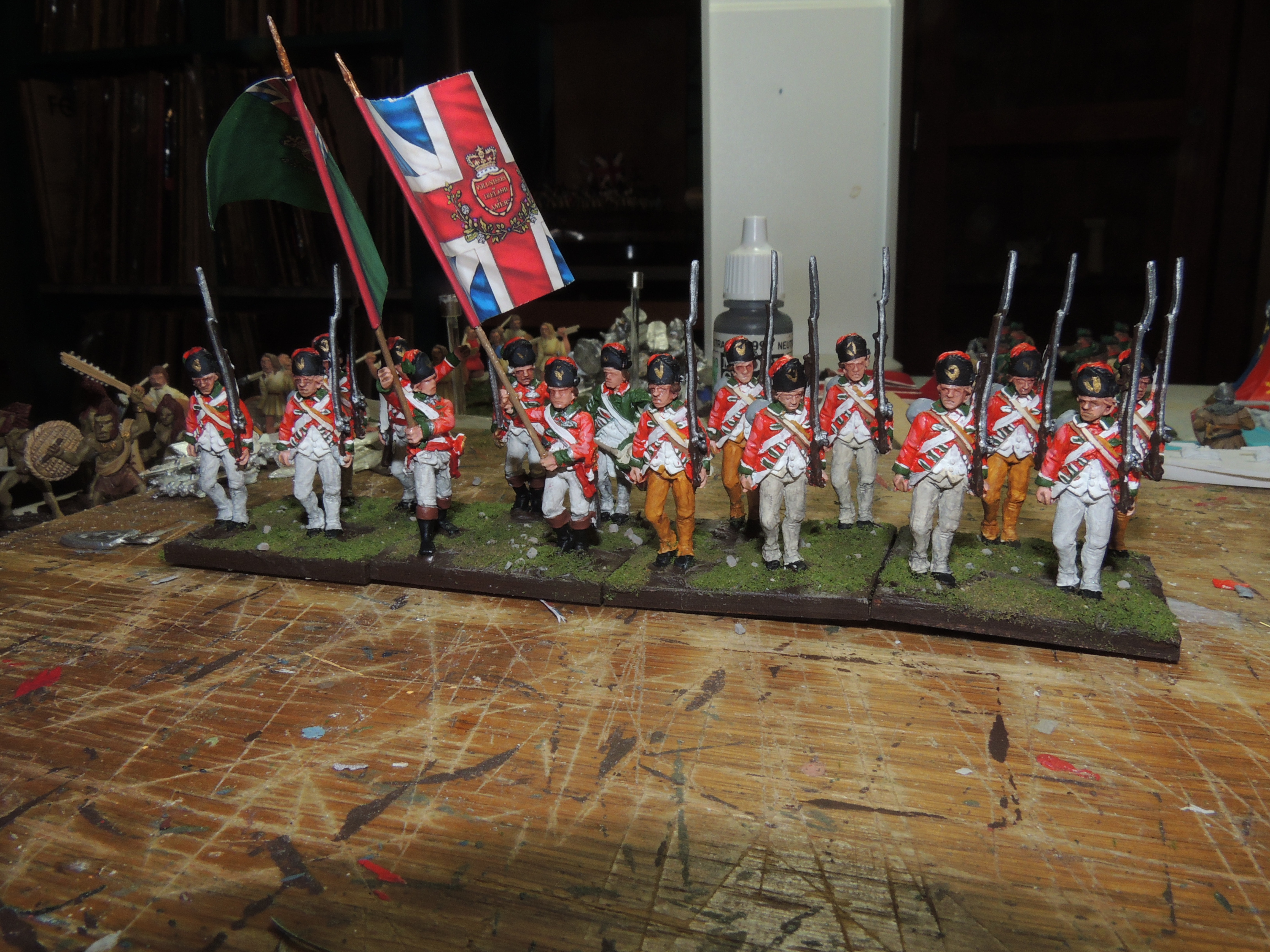
Are my brushes too big?  Are the figures too small?  Are my 60 year old eyes too bad?  Dunno, but I found the Perry Volunteers challenging and hard to paint. Flags by GMB

Are my brushes too big? Are the figures too small? Are my 60 year old eyes too bad? Dunno, but I found the Perry Volunteers challenging and hard to paint. Flags by GMB

I’ve painted hundreds of Perry figures.  I would say that over the very long time I’ve been painting little men, Perry and Front Rank figures are my favorites to apply paint to. I’ve painted miniatures from the Agincourt to Orleans range, many American Revolution figures, even the Death of Gordon vignette.  Last night I finished painting the Volunteers of Ireland figures from the AWI range, and they are my least favorite Perry figures.

Look, don’t get me wrong, they are nice figures.  They are well proportioned–not super beefy.  They capture the uniqueness of the loyalist unit, with their funky leather caps, and Brandenburg lace.  But these guys just seem small.  Everything about them, from their faces to their cartridge boxes felt little and hard to get to, and therefore more difficult to paint.  One other criticism is that that detail on these figures, unlike other Perrys that I’ve painted, just didn’t seem to pop.  I’ve never felt the detail on their miniatures were exaggerated, but on these, I felt I really had to go looking.  An example of that would be the belting across the front of the figures-the blanket roll, the haversack, the canteen straps, were simply difficult to distinguish–so I did the best I could.

In the end the figures will be fine-just don’t look too closely at ’em.  But I’m glad to be done with them. The figures do fill an important niche-the Volunteers of Ireland were an important loyalist regiment that fought at a number of important actions. Now I just need to play a few games with them.

What’s next on my painting table.

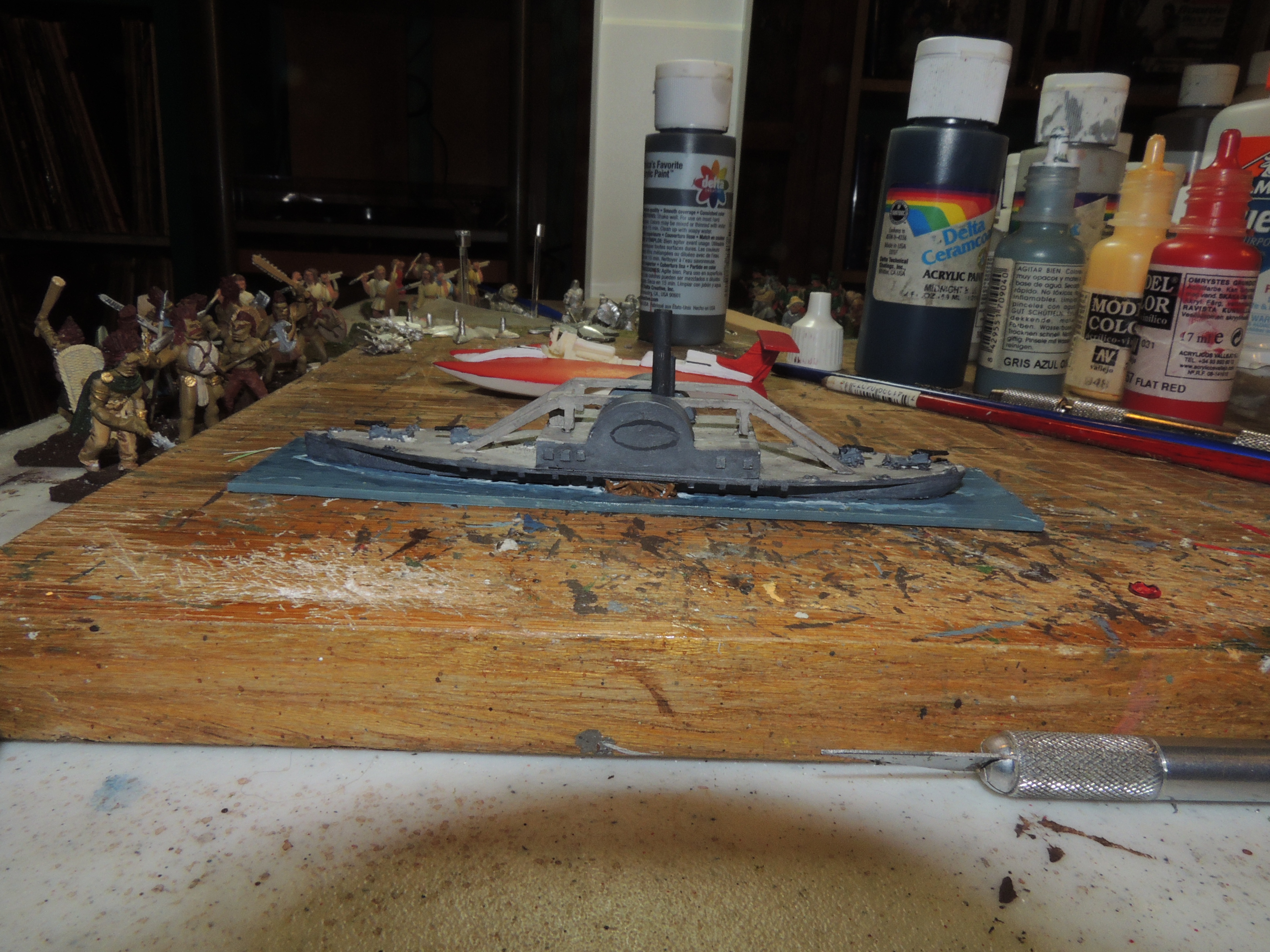
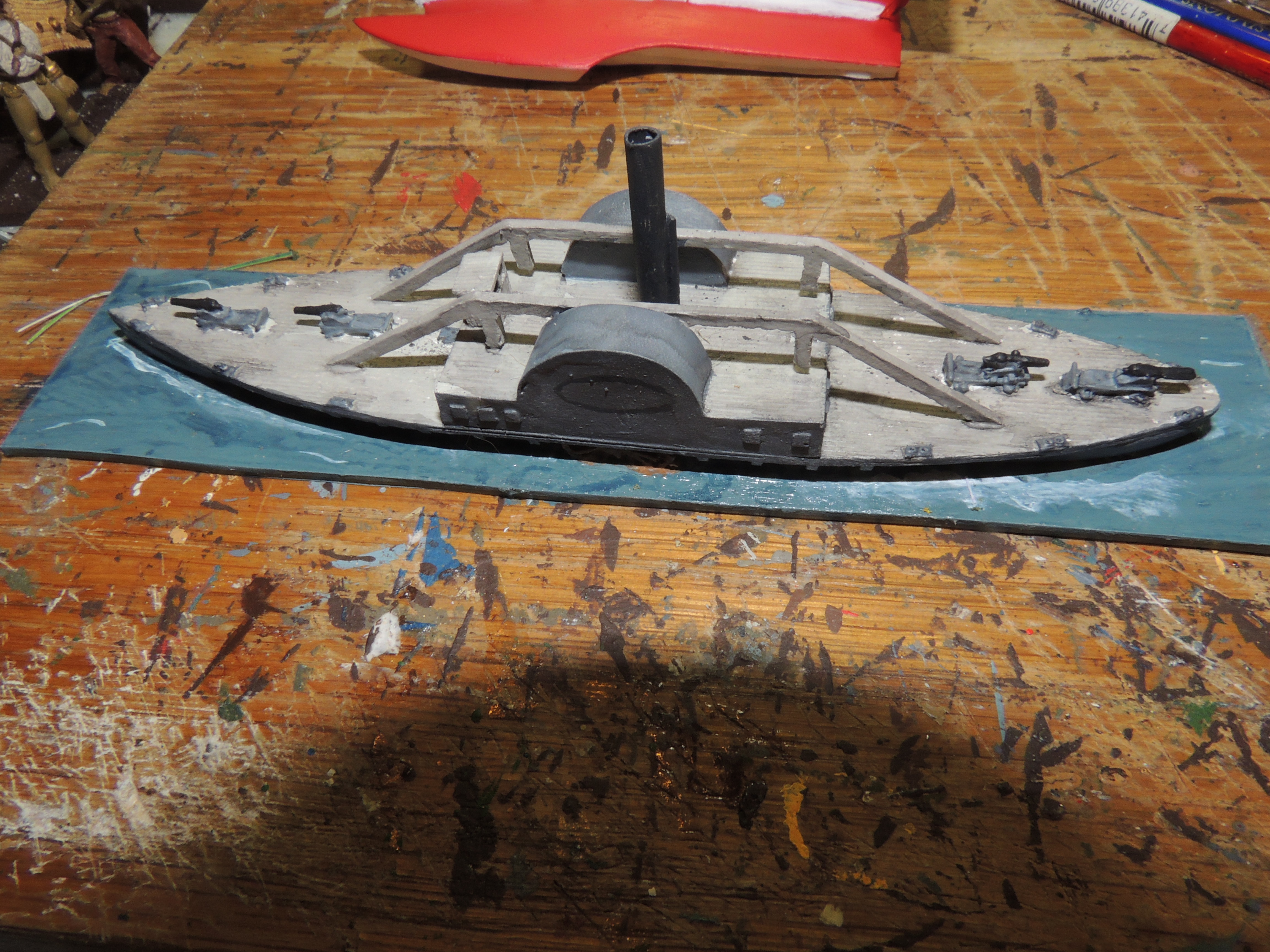
Planner that I am, I’ve put together a work plan for the rest of the year.  At this very moment, I have Miss Bardahl and the Squire Shop hydroplanes that desperately need to be finished. I also hauled out my Bay Area Yards CSS Selma that I hope to assemble this weekend.  All are needed for my Enfilade games, so it’s important to make progress with them.  Looking ahead, here’s what my list of do’s for November and December:

  1. 16 dismounted men-at-arms for the HYW (French)
  2. 1974 Notre Dame and 1981 Atlas Van Lines for Thunderboats
  3. 12 Lee’s Legion figures
  4. Fort Jackson by Bay Area Yards for Ironclads game
  5. 16 dismounted men-at-arms for HYW (French)

That should keep me off the streets.  Nothing to buy, I have them all.  In addition, during this time I also hope to begin buying the airplanes I’ll need for the Channel Dash.  They’ll have to come from different sources including from Great Britain, so I definitely can’t wait until the last minute.

And now for your listening pleasure

To be truthful, I’ve been pretty distracted from music by television.  I’ve been watching the excellent World Series, and have even squeezed in a binge watch of the first season of The Flash on Netflix.

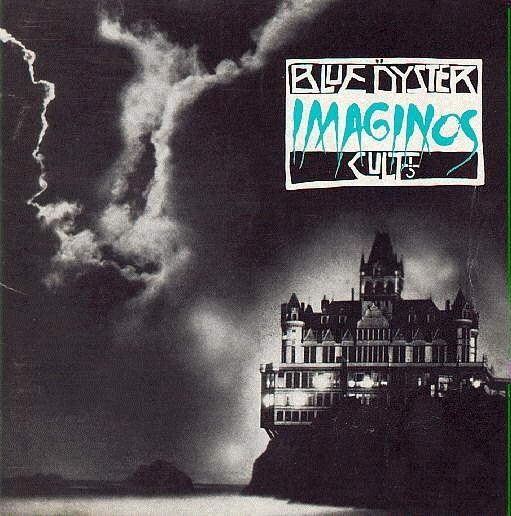
But there’s always time to toss some vinyl on the Rega and I’ve listened to some great records.  I have a lot of mini collections in my vinyl stash.  For these I’m not a completist and don’t try to have everything, and one of them is Blue Oyster Cult, the proto-metal band out of New York. If you don’t remember their name, maybe you remember their best known song “(Don’t Fear) The Reaper,” a staple of classic rock radio for decades.

Blue Oyster CultTheir 1972 debut, Blue Oyster Cult, is a record worth listening to.  It is the prototype for what the band will become.  Surrounding themselves in an aura of dark, sinister threat, they put together some amazing rock.  BOC featured the twin lead guitars of Eric Bloom and Donald “Buck Dharma” Roeser, and the writing of Sandy Pearlman and Richard Meltzer.  Between the interesting and kind of scary writing and the intense, powerful, but ultimately extremely accessible musicianship, this is a very good intro to the band’s catalog.  The band opens with the sinister “Transmaniacon,” and follows with a host of great songs, including “Cities on Flame With Rock and Roll,” and the strangely wonderful “Workshop of the Telescopes.”

Blue Oyster Cult is heavy and hard, but it’s not difficult to listen to.  It’s melodic, it’s interesting.  Later records will include songs co-authored with Patti Smith and Michael Moorcock.  All of their albums between 1972-81 are a pretty good listen.  They stand on their own as pretty unique.  And there are lots of well known singles. “Godzilla,” “I Love the Night,” and “Burnin’ For You” are all songs that got airplay, so you may have heard BOC and just never recognized them.  It’s good stuff.

Thunderboats v. 2.0: Painting the Pickleforks are hard

I really enjoyed painting the 1950’s and 60’s hydroplanes for our Thunderboats! games.  I’ve painted 23 of the 1/72ndish scale boats cast by Sean McEvoy for the game.  I found them to be a joy to take on.  Mostly blocks of color with some numbers and lettering and often a symbol or emblem to paint.  Kind of like painting HYW heraldry only a little easier.

But as I move on to paint those 70’s boats, they are definitely different. The new hulls with the picklefork noses are larger-longer and broader-as they become a bit more stable and safe after the carnage of the middle 60’s. The wider hulls sit deeper in the water, so almost all the detail on the boats are now on the decking.

Not only that, but the paint schemes of the 60’s definitely change during the 70’s.  Instead of the nice block styles, the paint schemes are linear and colorful.  Often lines run the entire deck, and boats like the Pay ‘N Pak have their name in huge multi-colored lettering along the entire deck.

The 1979 Squire Shop and the 1968 Miss Bardahl in the Smyth boatyard.  Not far on either yet, and both will take lots of extra TLC.

The 1979 Squire Shop and the 1968 Miss Bardahl in the Smyth boatyard. Not far on either yet, and both will take lots of extra TLC.

No big deal for a graphics designer working 1:1, a bit more of a challenge for an old blind guy like me working at 1:72.

1981_U-2_The_Squire_Shop_Hull_7902_

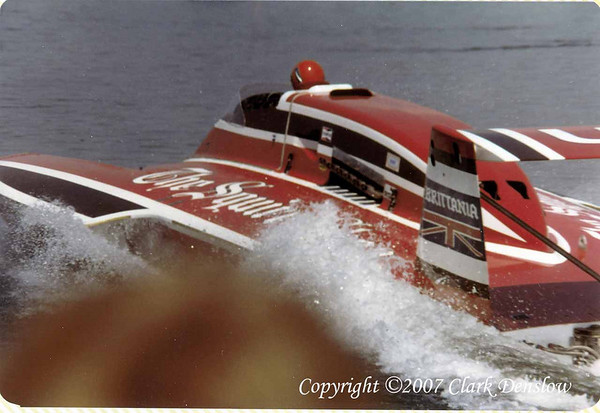
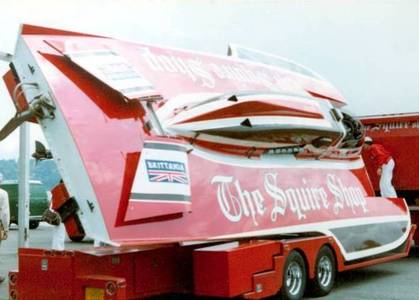
Both of the above pictures are of the 1979 Squire Shop.  In a year that was swept by Bill Muncey's Atlas Van Lines, a very young Chip Hanauer drove the Squire to victory in the Seafair Race.  It is a beautiful boat with striking, hard-to-paint markings.

Both of the above pictures are of the 1979 Squire Shop. In a year that was swept by Bill Muncey’s Atlas Van Lines, a very young Chip Hanauer drove the Squire to victory in the Seafair Race. It is a beautiful boat with striking, hard-to-paint markings.

The first boat I’m painting is one of my favorites, The Squire Shop from 1979.  As you can see, the boat has some nice red and mahogany (I’m using both colors from Vallejo,) but it’s also a plethora of white lines, that have to show up against that background and remain pretty straight.  There is a Squire Shop emblem and then an Olde English font.  I’ve been working away at it as you can see, and probably have a couple of hours into the cab forward hydroplane.

MissBardahl1968bow

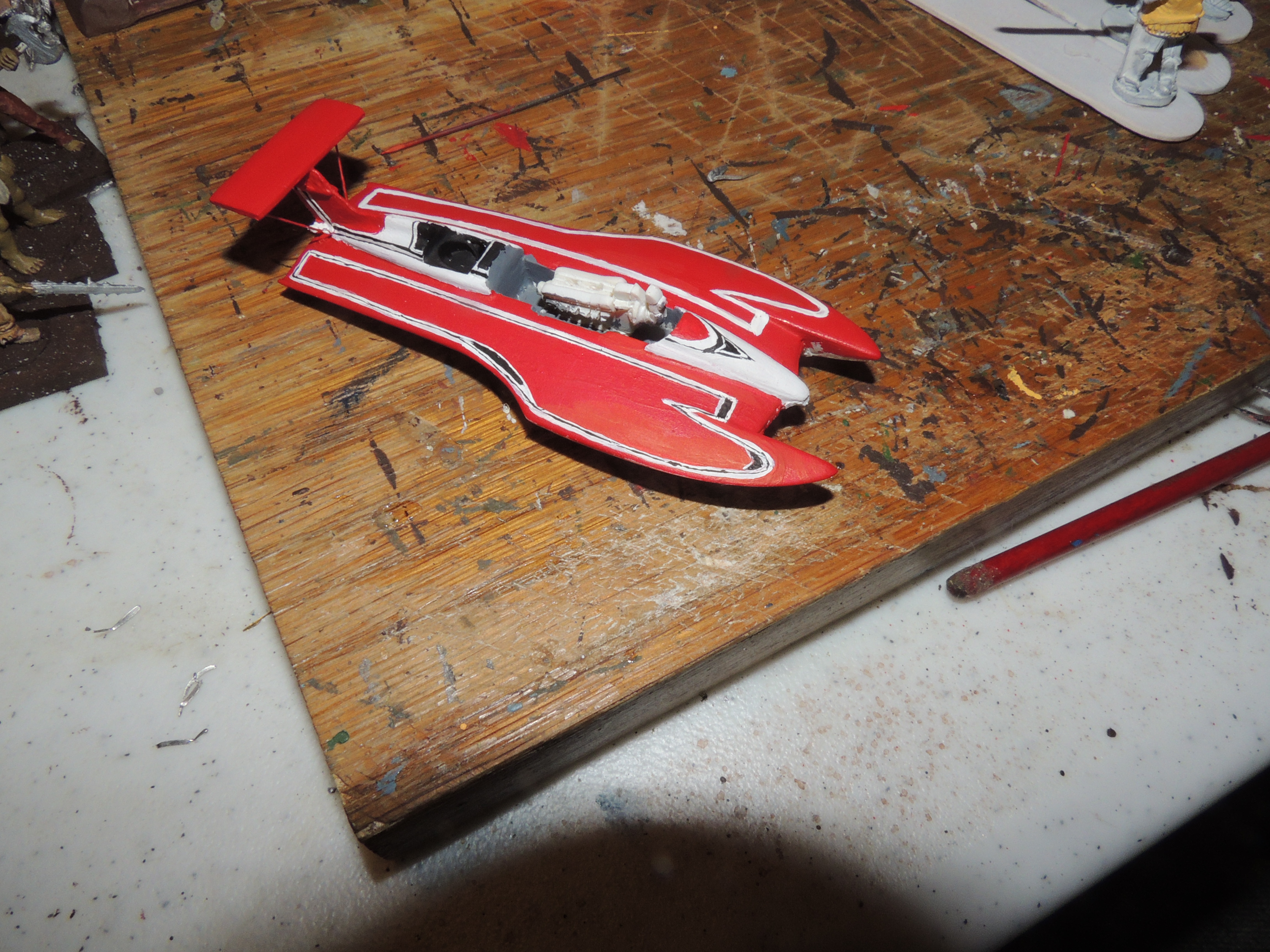
If I was going to imagine a boat guaranteed to make me tear my hair out, it would probably look like this.  But it is somethin'.

If I was going to imagine a boat guaranteed to make me tear my hair out, it would probably look like this. But it is somethin’.

The next boat I’ll take on is the 1968 Miss Bardahl.  Slight change in hull design from the classics, but not the picklefork hull. Again, there is the more daring graphics, a departure from the block coloring and lettering.  Not quite sure how I’ll paint the checks all over, but I’m certainly excited to give it a try.

I’ll keep you posted.

What’s On My Painting Table?

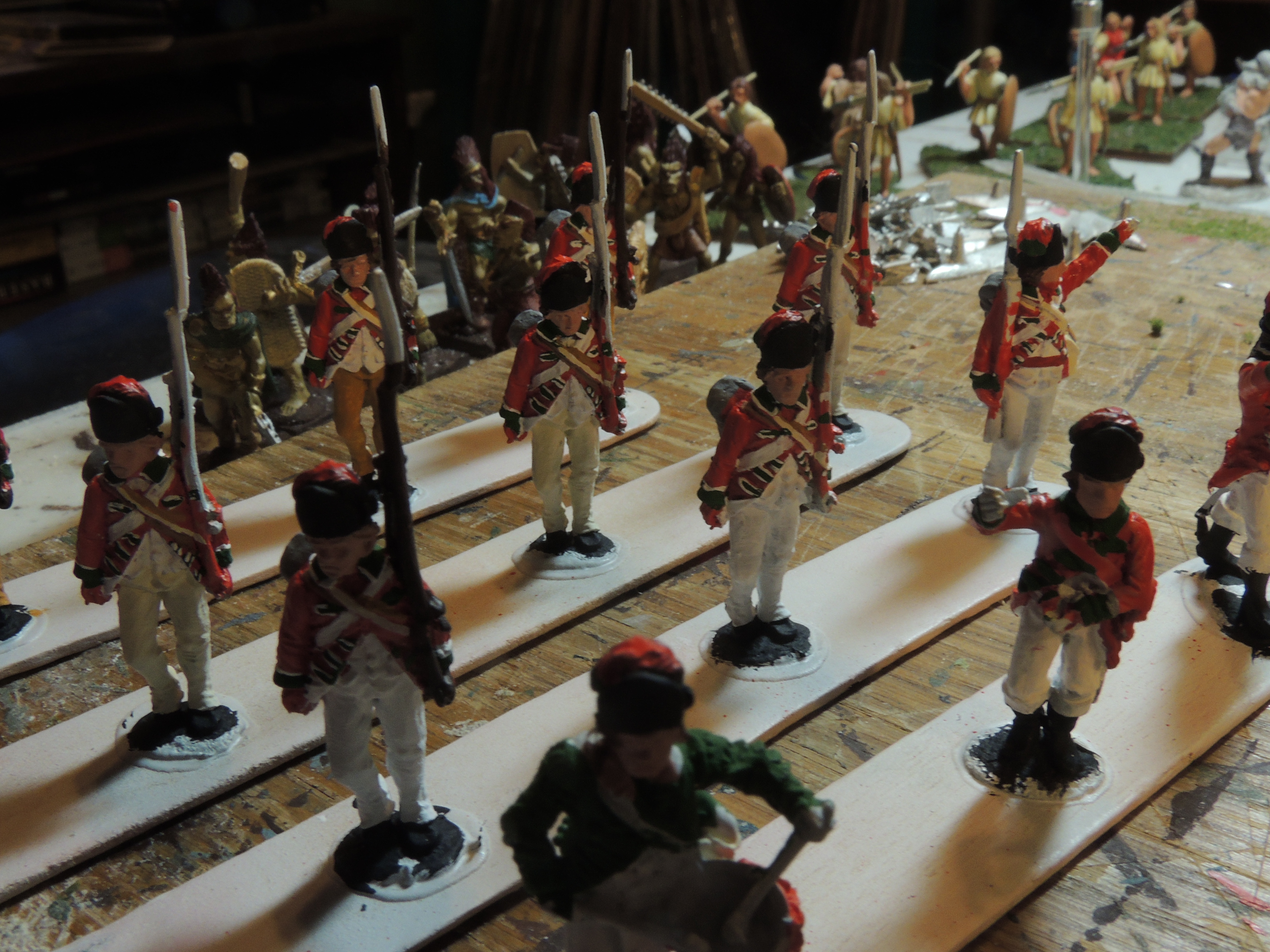
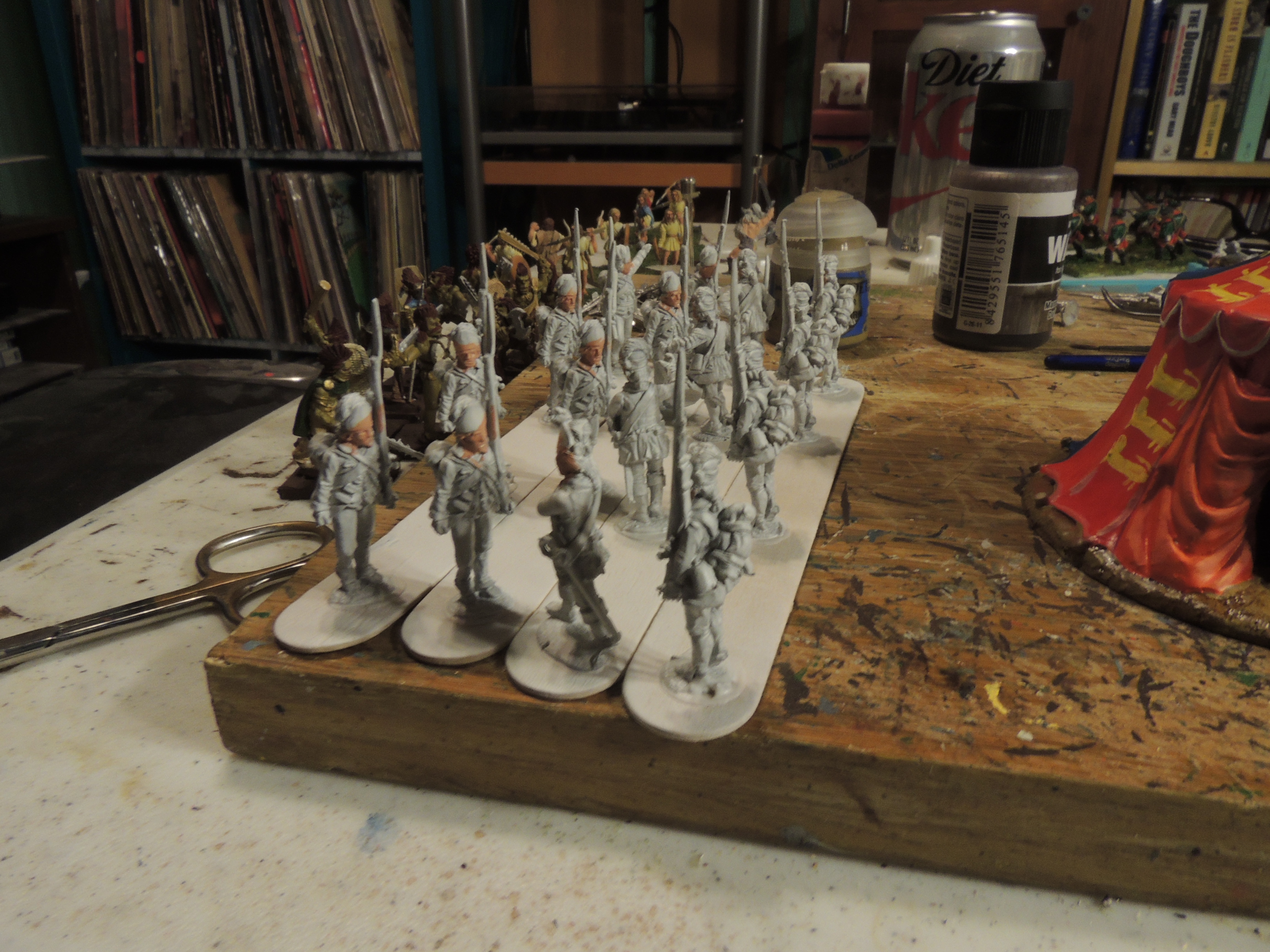
I know the picture is dark, but hopefully you can see the minis are coming along. Perry Miniatures Volunteers of Ireland.

I know the picture is dark, but hopefully you can see the minis are coming along. Perry Miniatures Volunteers of Ireland.

Well, hydroplanes of course.  Yes, you’re right, I do have issues with painting ADHD, so I usually have something else going on as well, and it is those same Perry Volunteers of Ireland.  I’m making progress, and hoping to maybe even finish painting the sixteen figures tonight.  They’ve gone fairly quickly, but are not without challenges.  The Brandenburg lace is a bit hard to see, and these figures feel smaller than my other Perry AWI figures, almost as small as the Fife and Drum British guards I painted a while back.

Even so, the painting has gone pretty smoothly. The lace wasn’t horrific to paint except for the silver on the officers.  There won’t be a lot to highlight.  Looks like I won’t finish tonight but after a super painting day, they are at least close.

And For Your Listening Pleasure

I’ve always liked the idea of The Pretenders, and have a copy of their 1994 CD Last of the Independents.  But I’ve never really had a chance to give a good listen to the music that made them famous.  I picked up a copy of their first record, titled simply The Pretenders and gave it a good listen.

It’s a solid record steeped in new wave, punk and solid pop music.  With semi-autographical lyrics by frontman Chryssie Hynde, it blends some great musicianship with snarling vocals.  There is a solid cover of the Kinks hit, “Stop Your Sobbing,” and “Brass in Pocket” became a big MTV hit. My favorite song, however is “Kids” which combines some snarling guitar with some wise and prescient words about the loss of privacy that comes with celebrity.  There is some anger on this record and there is some introspection, but most of all it’s a collection of excellent, pointed songs that represents some of the best of its era.

Making my Enfilade plans

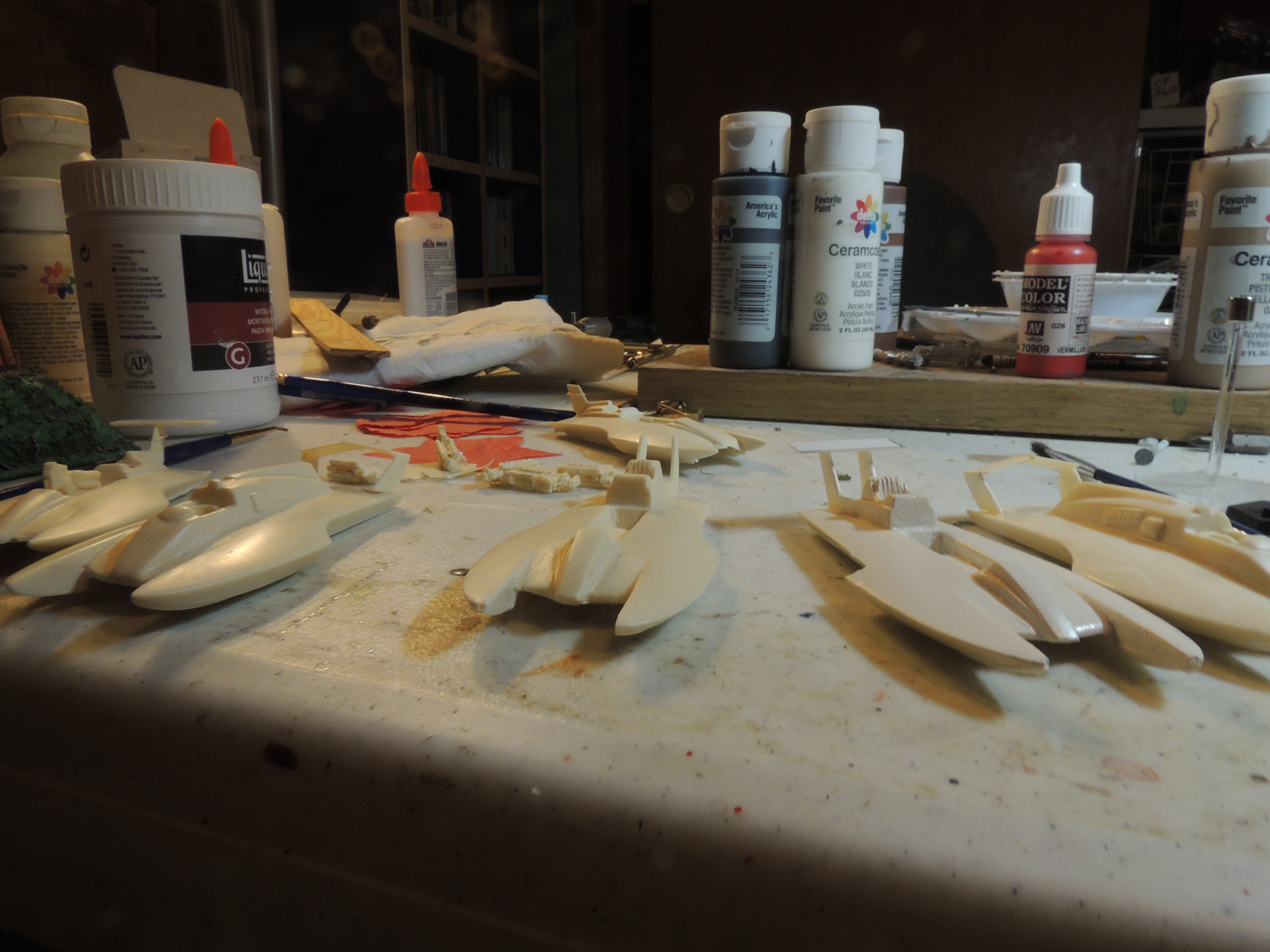
One of my Enfilade projects will be to assemble and paint these 1970's era hydroplanes courtesy of Sean McEvoy.  It will be fun.

One of my Enfilade projects will be to assemble and paint these 1970’s era hydroplanes courtesy of Sean McEvoy. It will be fun.

I’m a planner.  Always have been when it comes to convention games.  Last year I helped Dave with the St. Nazaire game, and ran a pair of sizable Lion Rampant games.  They both required some prep time, but I made plans early and didn’t have to rush, except to get in a last minute play test. It involved hundreds and hundreds of miniatures and a car load of stuff.

I’m already making my Memorial Day plans and I’m aiming for a much smaller carload of stuff.

Here is what’s on the docket and what I’ll need to do to prepare

At least one session of Thunderboats!

  • This is my hydroplane racing game and I already have dozens of painted boats.  But a couple years ago I bought the next generation of boats–all picklefork hulls and cab forward designs from the 1970’s from Sean McEvoy.  I’ve been working on assembling them today.  There are seven of them, and I’d like to get them all done for the con.  Likely will run this game on Friday night.
  • May run a second session early Friday using the older boats.  I have a couple of older boats to paint, including two drop sponson hulls and the huge Thriftway Two, which is  one of a kind.

The Channel Dash 1942

This game will be modeled on the flight of the two German battleships Scharnhorst and Gneisnau and the heavy cruiser Prinz Eugen from the Breton port of Brest to German North Sea ports. Likely a Saturday afternoon and evening game.

  • This is probably a two session game I’ll do with Daveshoe.  Dave is going to tackle the big ol’ models of Scharnhorst, Gneisenau, and Prinz Eugen.  There are also some auxiliaries.  Don’t know how many will need to be done.  I’ll focus on painting some Royal Air Force planes.  It’s shaping up to be a bunch of Spitfires, Whirlwinds, Beauforts and Swordfish.  I may opt for a few more planes including some Wellington bombers just for the hell of it. Maybe two dozen planes in all.
  • The second period will be the attack of the British light naval forces on the forces screening the large German naval units.  Not quite sure what my painting responsibilities will be here. I do have a great model of a German torpedo boat to assemble and paint.

A big ol Ironclads game

I’ve been negotiating with David Sullivan about dragging out some of our 1/600 scale ACW ships for an Ironclads game.  I know, we mostly play Sail and Steam Navies around here these days, but I still have a fondness for the old Yaquinto rules.  It’s going to be mostly hypothetical, though the ships will be mostly historical.  It will involve forts and reversal of roles. I’m hoping to persuade David this should be a Sunday game, but I have more flexibility than he does.

  • Doesn’t look like my painting responsibilities should be too bad.  I’m thinking a big Bay Area Yards star fort and a couple of ships, one of which I don’t own.  Not sure, there may be more I have to pick up, but we’ll have to see.

What’s On Your Painting Table?

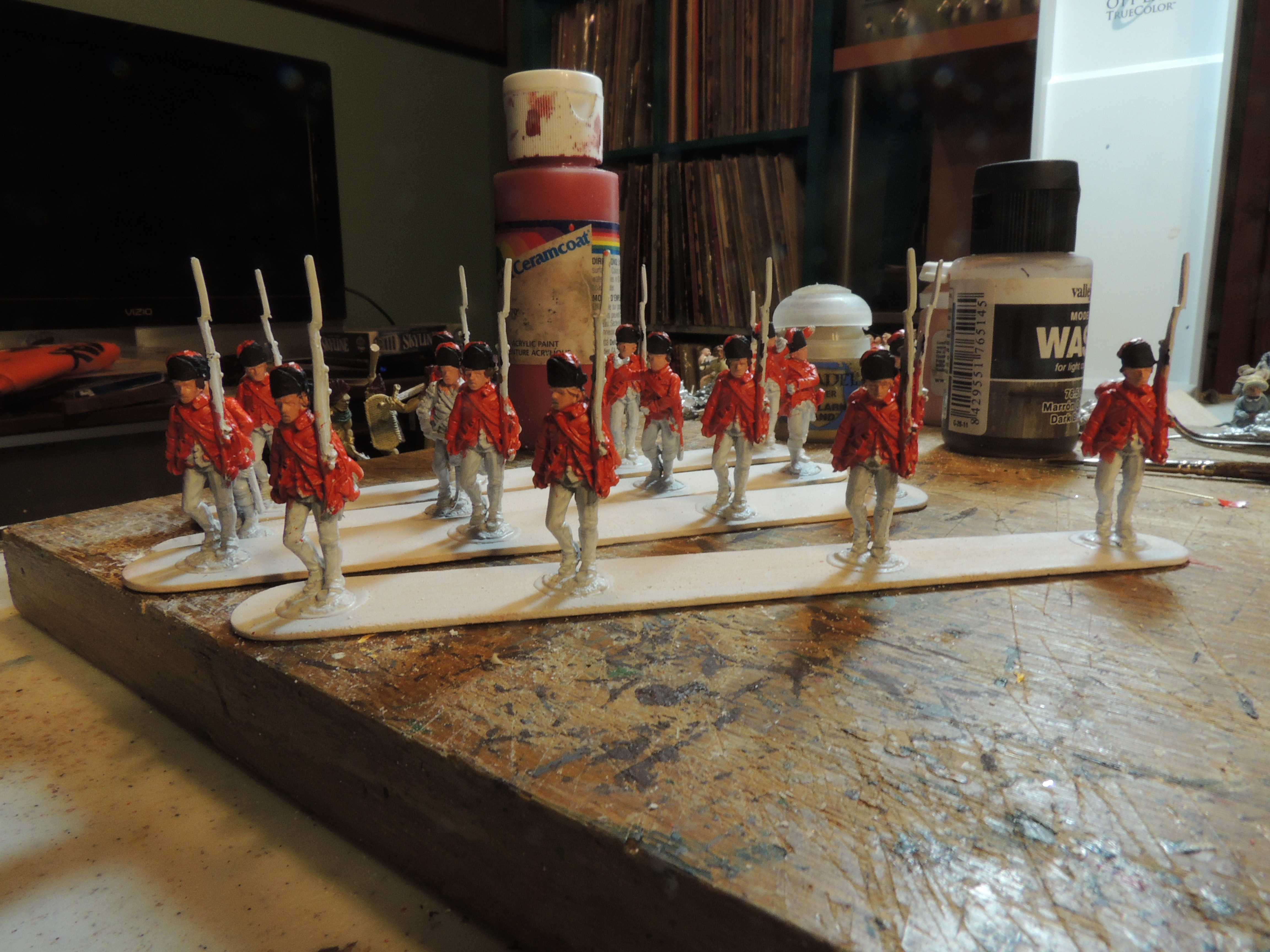
Stalled out painting the Volunteers of Ireland today.  Will make progress this week.

Stalled out painting the Volunteers of Ireland today. Will make progress this week.

With the Baueda tent safely painted and tucked away . . . somewhere, I moved on to working on my next project–Perry’s Volunteers of Ireland.  Haven’t gotten too far with them.  I worked on them for a couple of hours on Saturday during the Huskies apocalyptic failure against Oregon.  Bleah.  Made progress.  Got very little of anything done today (Sunday.)  Just not feeling great.  Nursing some sort of weird virus that is giving me some nasty headache action.

Rather than paint, I decided to start working with the resin hydroplanes I’ll need to do for my racing game.  These are all blank resin kits.  They mostly require some sanding, but they also had much different tails from the hydroplane minis from the 60’s, so there is some assembly required-not my long suit.  I’m not quite sure what boats I’ll be painting and I’ll definitely need some reference photos but, I’m leaning toward the following: Miss Pay N’ Pak, Atlas Van Lines, Squire Shop, Oh Boy Oberto, Miss Bardahl (checked version) and others.

And Now For Your Listening Pleasure

Especially For YouIn 1986, the New Wave, the New Romantics, and disco had passed on.  The Police were breaking up, and U2 was getting ready to record one of the best records of all time. The musical scene was fluid and and was fertile ground for an American band called The Smithereens.  Especially For You was their first record and it is quite good.  If you are of a certain age, remember the British Invasion,  or have a fondness for bands like The Beatles (early phase,) the Kinks, or the Hollies, or even early Elvis Costello, you would recognize their influence in the music. It tends to be up-tempo and  instrumentally straightforward, with lyrics that are anything but happy and carefree.  There aren’t any throwaway tracks, and my favorites include “Strangers When We Meet,” “Time and Time Again,” and “Blood and Roses.”  I’m actually interested in trying Green Thoughts, their second record. Definitely worth a listen.
Regimental Fire and Fury in the 100 Years War: Playtest One

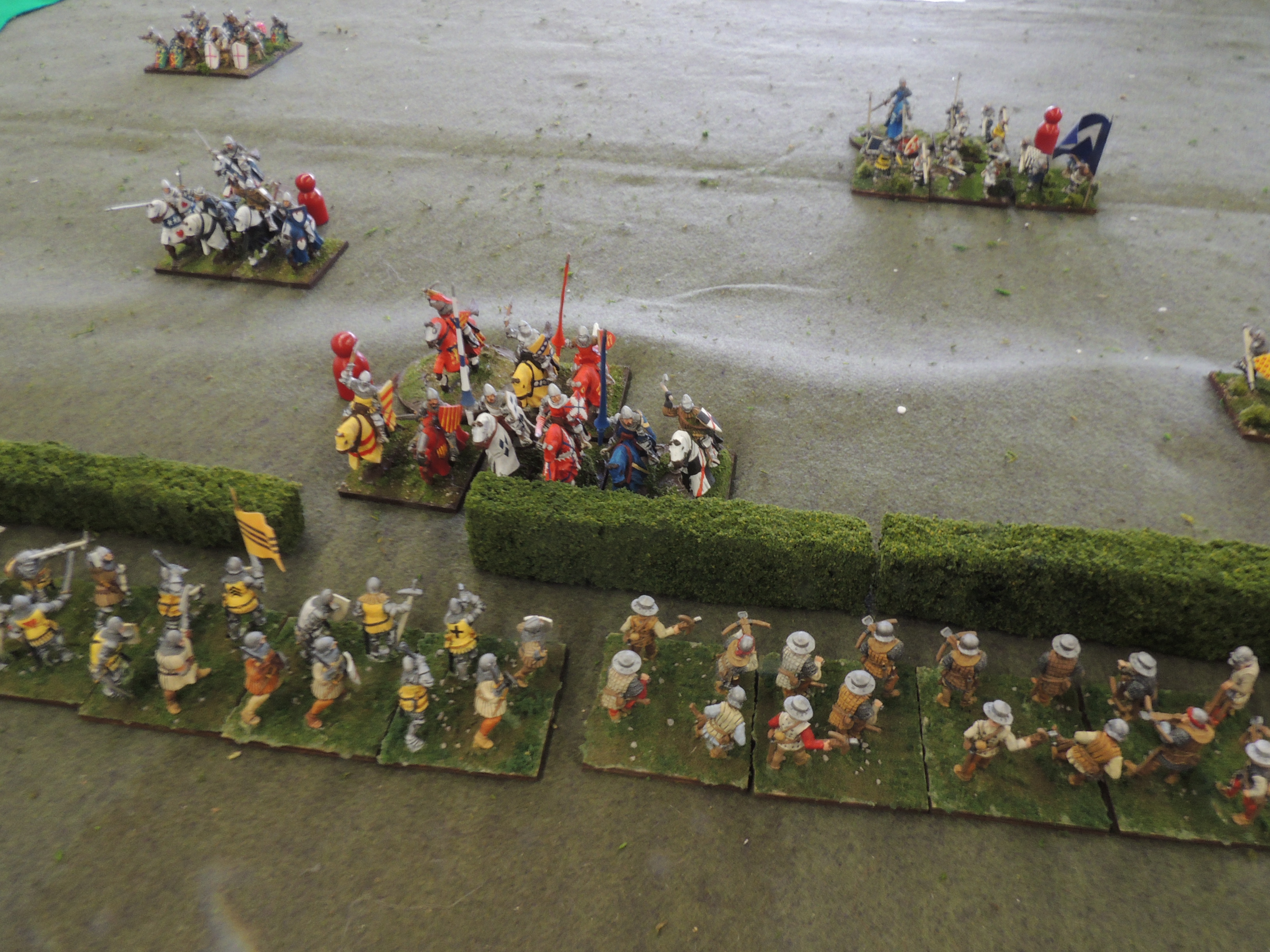
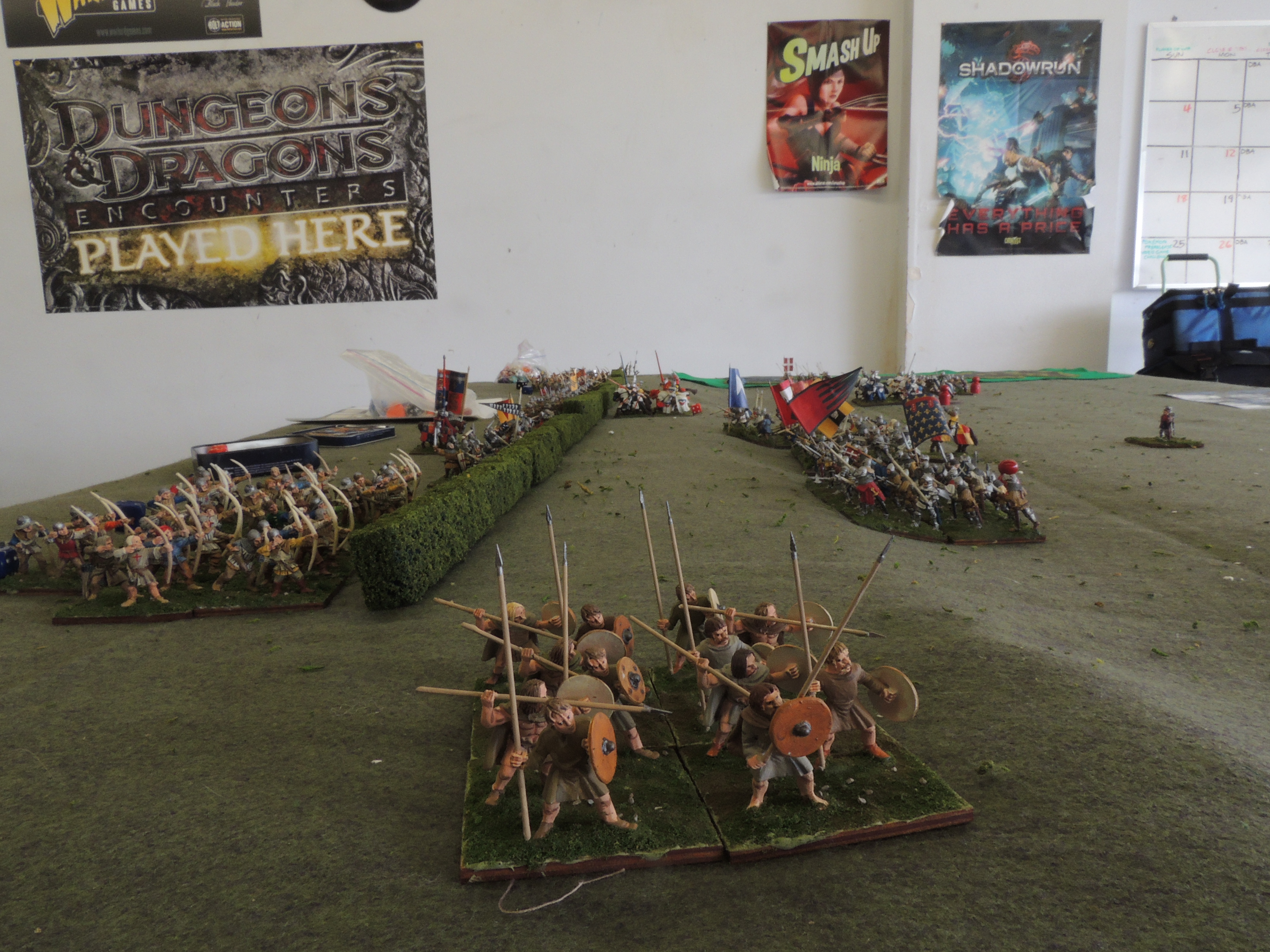
Marshal Clermont tries to coax his shaken mounted men-at-arms across the hedge to attack the English dismounted knights.  They don't seem to want to follow.

Marshal Clermont tries to coax his shaken mounted men-at-arms across the hedge to attack the English dismounted knights. They don’t seem to want to follow.

As promised, I’ve been tinkering with a set of rules for the Hundred Years War.  I turned to a set of rules I really like, Regimental Fire and Fury and purloined some of their rules engine to help me move this project forward.
There are some basic principles I wanted to incorporate in my big battle rules.

  1. Longbow fire was devastating but not in the way many believe.  It wasn’t masses of bowmen shooting and Frenchmen suddenly dying–unless you happened to be lightly armored troops like crossbowmen.
  2. The effect of longbow fire was to render the French knights, on foot or horseback, less effective (well sort of, horsemen mostly died.) They would slow, clump together, close their visors, be less aware to flank attacks, raise their shields against the rain of arrows-they might be pounded by arrows, but most would be deflected by armorer, though some would find soft spots, wounding and in some cases killing.
  3. The real killing would happen when the French went into melee, impaired by their pounding, blundered into the English lines as an ineffective mass–unable to fight their waiting English cousins and would be dispatched accordingly.

What I hoped to capture with my rules was this idea that English bow fire could be very tough on the French, without masses of stand removal.

I’m not sure I did that.

Yesterday I met Dave Schueler at Game Matrix in Tacoma.  I set up the English behind hedge on top of a hill a la Poitiers with one flank covered by a stream and a marsh.  We played on an 8 X 5 table, which was probably too wide for the number of figures I had.  I ran the English, of course, and Dave ran the French.  He had two units of mounted knights, three units of dismounted knights, a couple of units of crossbows and a unit of town militia, rated as light infantry.
The English had three units of dismounted knights, a unit of Welsh foot, rated as light infantry, four units of longbows and a small unit of Gascon crossbowmen.

Together it represents everything I have painted–I need more.

Dave started his advance to dislodge me from my position, knowing that charging across the hedge line offered a significant tactical advantage.  As Dave advanced, I began firing my longbows from their position on either flank.

The two chief “engines” I used from the Fire and Fury rules were the Maneuver Chart and building of the fire around target quality rather than the shooter. I did change a couple of things.  I did not use the Fresh/Worn/Spent designations, and instead gave a simple -1 for each stand loss on the maneuver chart.  Rather, a unit would be in good order/disorder/shaken based on fire and melee combat results.

Dave had no difficulty moving his fresh units, but in defensive fire, began to suffer disorder from long range fire.  More fire in my movement phase was pretty ineffective, mostly because of bad die rolling.  As Dave advanced, his horse increasingly took a pounding, I seemed to have a few really great die rolls and a bunch of really stinky ones.  But it was enough to shut down the French advance.  Only one of Dave’s dismounted knights made it to the hedge.  It was untargeted by bow fire, but became disordered as it crossed the defended obstacle.  The defenders had a slight advantage and the roll off was also close resulting in a repulse.  At that point the French attack stalled out.

The results were a bunch of shaken and bloodied French units and the English relatively untouched.  We talked through some changes to the fire table, and I’m thinking about additional fire changes.  I made allowance for an arrow storm rule that wasn’t needed under the current structure of fire, so I need to look at that too. But Dave suggested not making too many changes at once, because it becomes unclear whether the correct problem is being dealt with. But in most respects I feel like I’m on the right track. Movement rates and missile ranges seemed to work. It was an encouraging beginning and I hope to try it again soon.

My silly Welshman moving out on the flank are about to be shot full of crossbow bolts.  Mostly took this as a look at the battlefield from the flank.

My silly Welshman moving out on the flank are about to be shot full of crossbow bolts. Mostly took this as a look at the battlefield from the flank.

Upcoming Hundred Years War Titles

I’m kind of in a leaving my books alone moment.  I haven’t bought any in almost a year, and find myself with plenty to read.  But out on the horizon are some must have Hundred Years War titles.

Before I leap into discussing the books and their importance, let me just offer this warning.  Act fast. These will be limited pressings on small publishers and when they are gone, they’re gone.  Case in point: Edward III and the War at Sea: The English Navy 1327-1377 by Graham Cushway snuck under my radar when it was published in 2011.  But at 200 or so pages, this extremely useful sounding book was probably a lot less than its current $98-$115 price tag.  Don’t miss out because you didn’t act quickly enough.  Both titles are on my Amazon Wish Lists.

The first book that will come out is Henry V’s Navy: The Sea Road to Agincourt and Conquest  There are bajillions of books on Agincourt, fewer on the Conquest, but none focus on Henry V’s naval campaign.  Though there was an active naval campaign throughout the Hundred Years War, simply mounting a new land campaign in France became a gigantic naval undertaking for the English.  By the end of Richard II’s reign in 1399, the English navy, through relentless budget cuts by parliament, ceased to exist.  Learning about English shipbuilding under Henry V, as well as assembling the 1,500 ships necessary to move the English army to Harfleur in 1415 would be fascinating. This book will be released February 1, 2016.

The second book tackles a well-known topic, the Battle of Crecy.  But is it really the battle we think it is. Americans Michael Livingston and Kelly DeVries have edited The Battle of Crecy: A Casebook.  This book will re-examine over 80 contemporary sources from the Battle of Crecy, and most importantly, challenges the traditionally held site of the battle, placing it more than five miles from the currently believed site.  In his biography of Edward III, Richard Barber acknowledged the lack of certainty about the battle site,  This is some serious shit.  It challenges what we know about the topography of the battlefield and how it must have influenced the English defense and how Philip VI must have committed his troops to action.  This book was released earlier this month in England.  It is scheduled for an April 1 2016 release in the States.  Trust me, it will not last long. $101.62 in hardcover, $36.43 in paperback. I’d keep an eye on it too, the release on Amazon doesn’t seem certain.

What’s on Your Painting Table

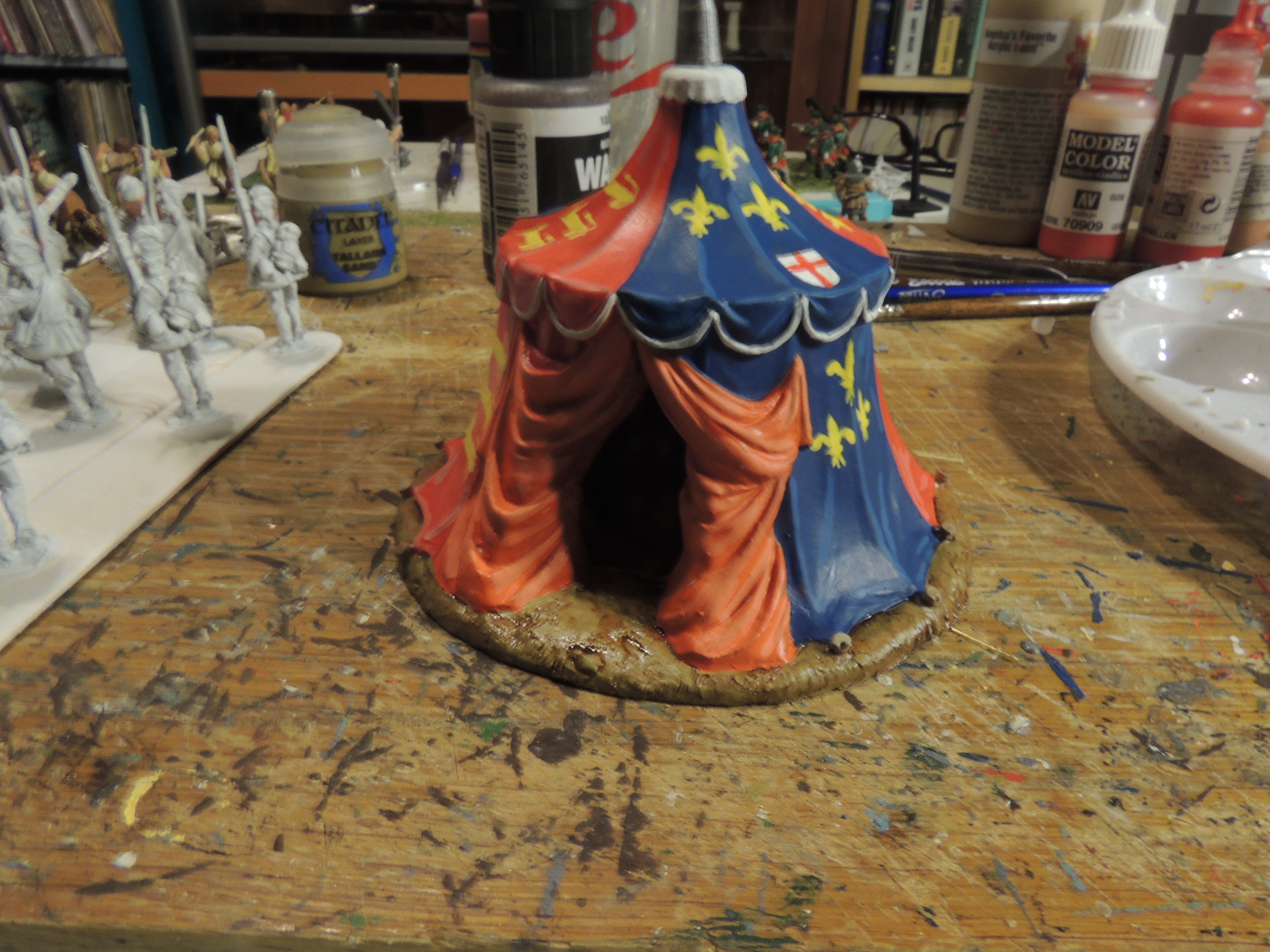
Baueda's medieval tent for 28 mm.  Try not to look too carefully a the markings.  Not my finest moment.

Baueda’s medieval tent for 28 mm. Try not to look too carefully a the markings. Not my finest moment.

I finished the Miami earlier than planned, so I took on a couple of new tasks.  The first was painting up a Medieval fancy, schmancy tent for my Poitiers army.  It is in colors for Prince Edward at that same battle.  It’s the 28mm offering by Baueda.  The chief colors are Vallejo Vermillion and Vallejo Prussian Blue.  I practically brush my teeth with these colors, I use ’em so much.  The yellow is Vallejo Deep Yellow.  The cover is lined with Purpleheart Red, also by Vallejo.  It wasn’t super hard to paint, or even particularly time consuming, but let’s just say I rushed through the heraldry and am not too happy with the yellow lions. But if you look at it from a distance . . . The miniature is nice, as Baueda stuff tends to be.  I’d like to have three of these for each side.  Of course, if there was a wargaming god of fairness, Baueda would make a 28mm version of their awesome King’s pavilion. I still need to add the Prince’s standard.

I also got my next little project ready to go.  I’ll be painting the

Perry's excellent Volunteers of Ireland.  I'm anxious to paint these guys.

Perry’s excellent Volunteers of Ireland. I’m anxious to paint these guys.

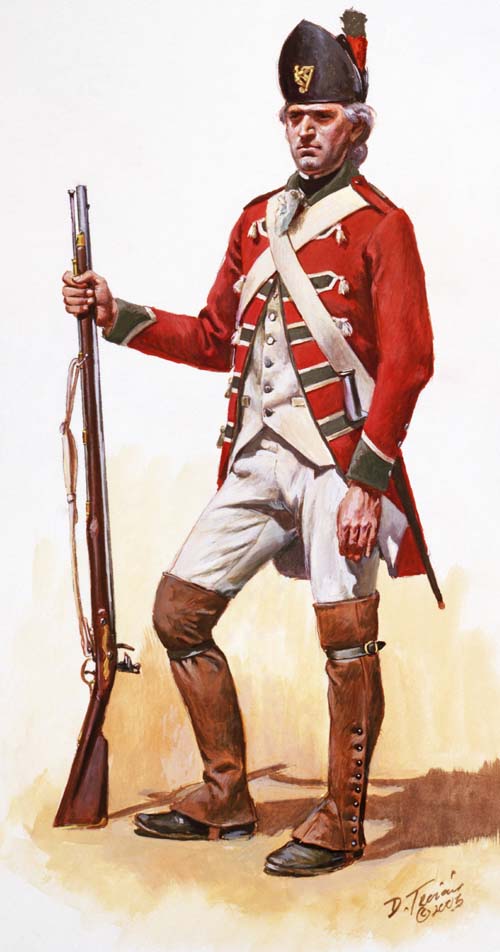
excellent Perry Miniatures version of the Volunteers of Ireland.  This Loyalist unit served in the South in the British army and appeared in a number of “my battles,” including Hobkirk’s Hill and Eutaw Springs.  As you can see, their uniform is unusual with the tall leather cap and the Brandenburg lace.  Haven’t gotten much further than priming and mounting the fellas for painting, but I’ll keep you posted.

Troiani print of the Volunteers of Ireland

Troiani print of the Volunteers of Ireland

And Now For Your Listening Pleasure

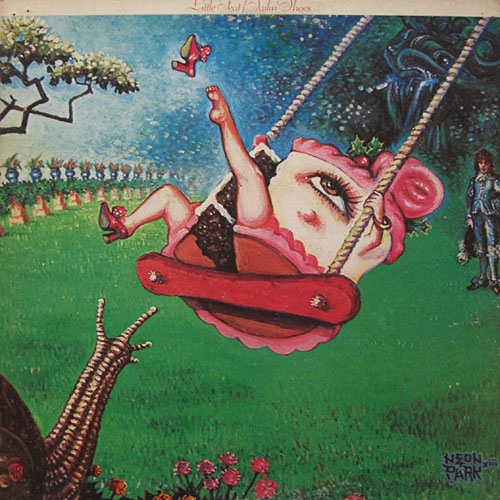
About 15 years ago I picked up a used cd copy of Waiting For Columbus by Little Feat.  I absolutely loved it and have moments when I just blare it from my car or at home.  It’s one of the few records I purchased to duplicate my cd when I ratcheted up my vinyl collection in February.  But dang it, Little Feat just doesn’t sound a lot like that live album.  The songs are the same, but Waiting is just a little over the top, with for focus on the instrumental jams, something that lead singer Sailin' ShoesLowell George really didn’t like.

If you want to hear a more typical Little Feat record, grab a copy of Sailin’ Shoes. It was their second album, and is a great mix of musical styles-country, blues, folk and rock. My favorite song is a “Tripe Face Boogie” which has a lot of energy and is fun.  But one of the band’s trademark songs, recorded by everybody seemingly, is “Willin.” The rest of the record is very good too, with contributions from George and the rest of the band. A very pleasant listen while painting medieval heraldry.

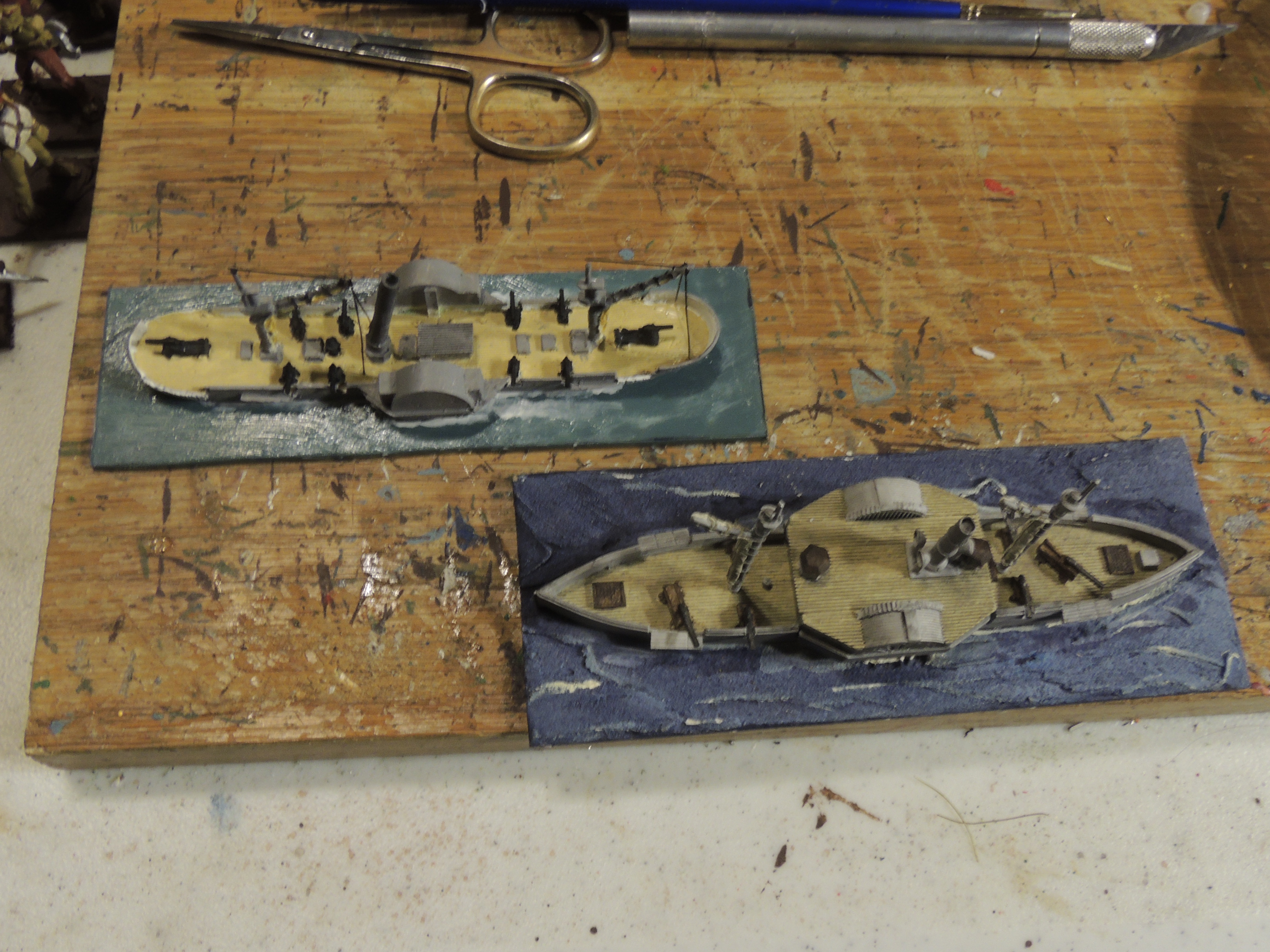
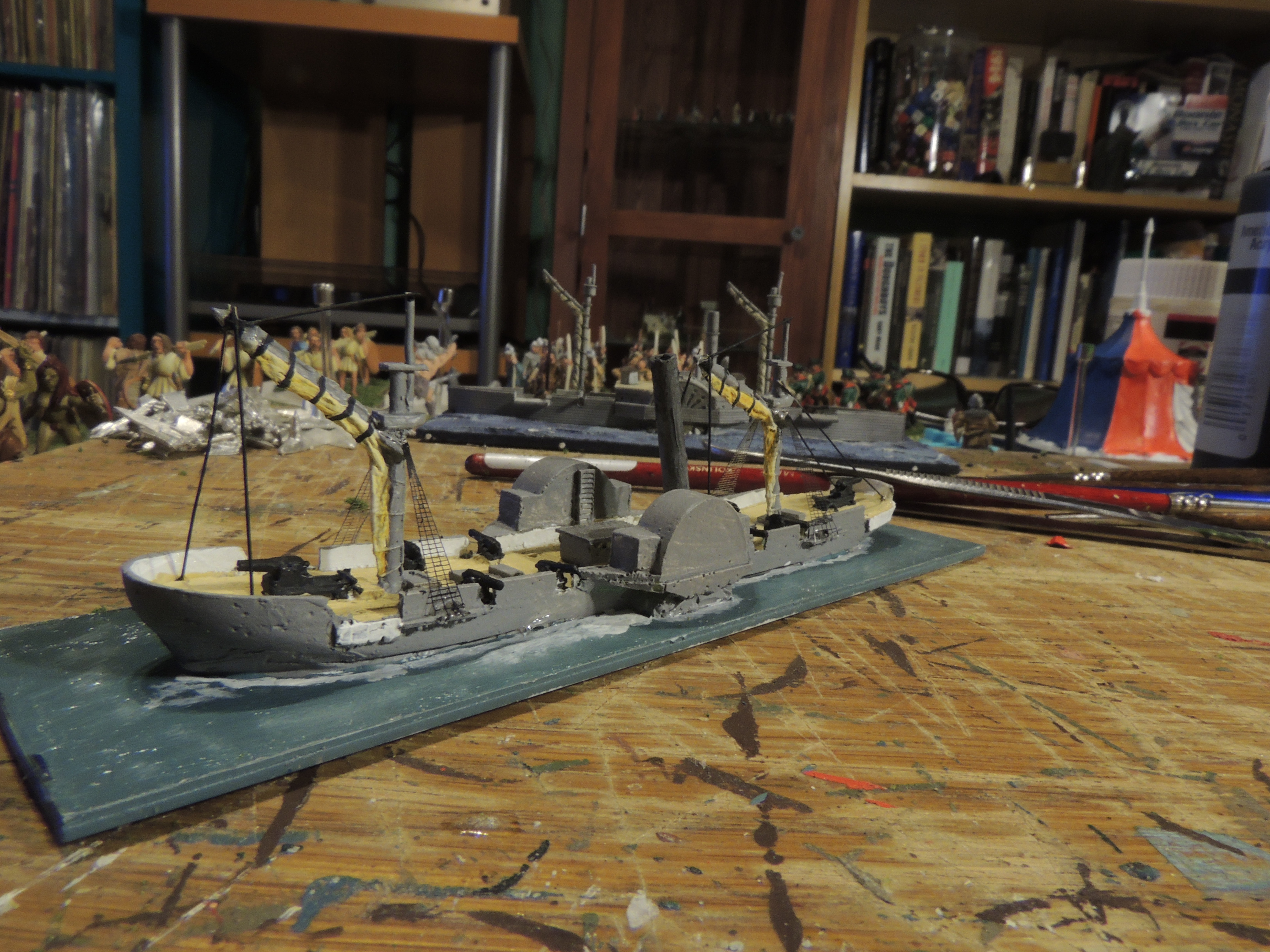
Finishing Bay Area Yards’ USS Miami

The U.S.S. Miami was a double end gunboat intended to patrol America’s coasts and inland waters during the American Civil War.  With rudders at both ends, the intent was to avoid having to turn the good-sized gunboat around in narrow waters.  Most were built of green wood and deteriorated rapidly after the war.  But some had long and productive careers.  The gunboat Monocacy served on China’s inland rivers until the the turn of the 20th century.

A quick comparison between the Thoroughbred Sassacus double-ender (front) and the less massive Bay Miami (back)  Both are very nice models

A quick comparison between the Thoroughbred Sassacus double-ender (front) and the less massive Bay Miami (back) Both are very nice models

I’ve shown you a few pictures of my Bay Area Yards miniature of the Miami.  I believe it’s my fourth double end gunboat.  There were more than forty built in four different classes. I also have two of the Sassacus class by Thoroughbred Miniatures and one that is a scratch-built model. It’s good to have plenty because they were fairly ubiquitous on the rivers off Chesapeake bay and the Atlantic coast.

Portside view of the Miami.  the base colors are all there, but no additional work on the base and beginning to think about rigging.

Portside view of the Miami. the base colors are all there, but no additional work on the base and beginning to think about rigging.

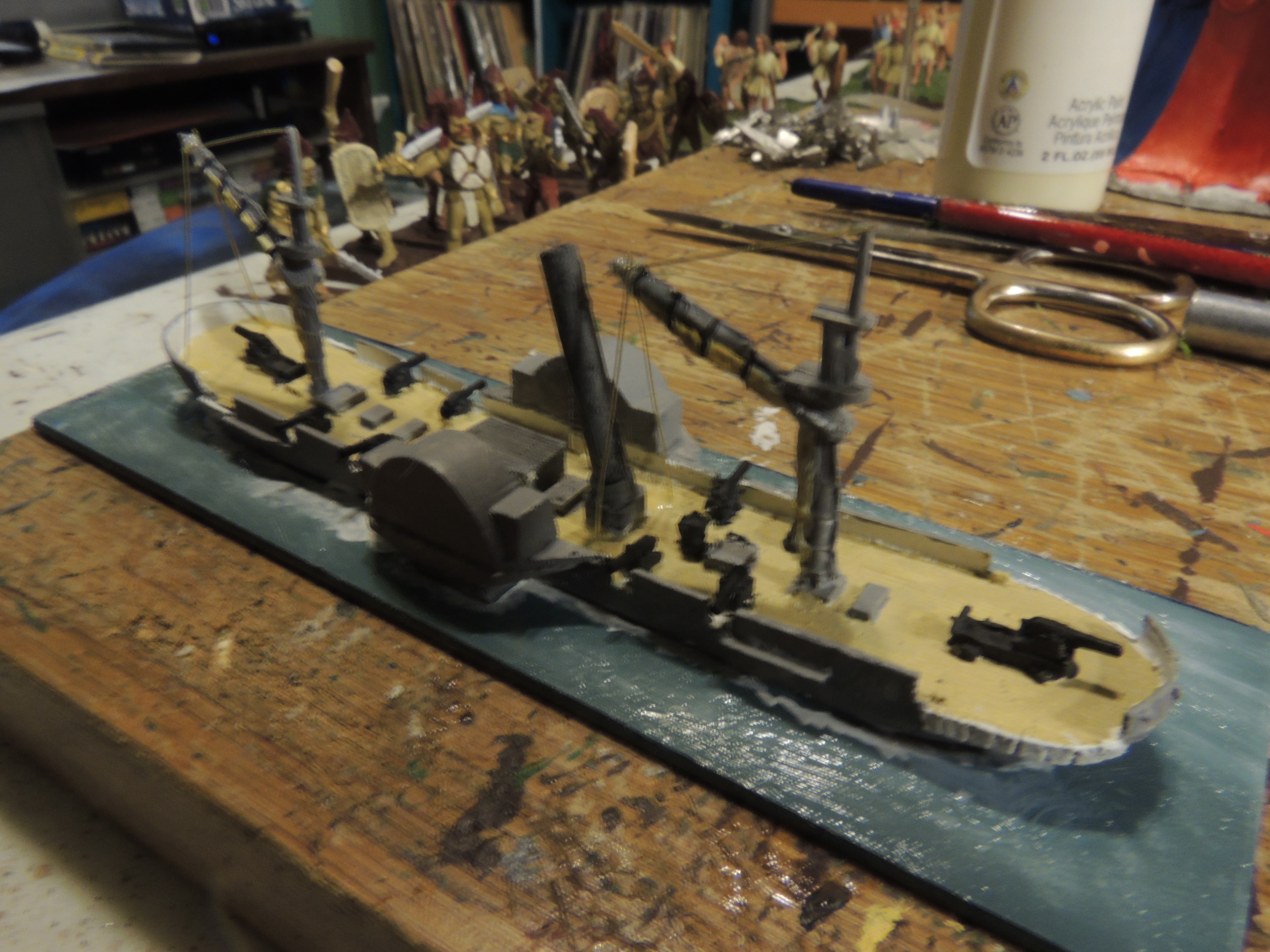
The Bay Model is the only one made of the Miami and her sister the Octarora. It’s considerably different in configuration than the Sassacus miniature pictured.  It is relatively easy to build.  I purchased the resin hull separately and purchased the masts, also from Bay.  I had quite a collection of Bay guns, if not those would be separate purchases as well. The ship has only two masts, and I had to place them appropriately.  I probably cut too much off the ends of the masts–they should definitely be taller. I used my pin vise to drill holes in the resin deck.  Not difficult. Then I placed large rifles on pivots at either end of the ship.  The Dahlgrens mounted on Marsilly carrigages were glued at each gun port.

After priming the whole business I started work.  I used Vallejo Buff for the deck.  Then I painted the interior bulwarks white. I feel like I erred on the color of the gun carriages.  I should have used the Vallejo Neutral Gray color, which is a nice middling shade and a better contrast with the black of the gun tubes than the Ceramcoat Charcoal I chose. I used Vallejo Sea Gray for the overall exterior color, including the stack which I washed black.  I chose not to do an overall wash.  I normally would, but there isn’t a ton of detail to bring out in this miniature, so I was afraid it would just make a pool, except maybe on the decking.

This picture shows the brass wire going up around the two masts.

This picture shows the brass wire going up around the two masts.

With the painting done, I contemplated rigging the ship.  For the most part I’ve rigged my models in recent years. I try to keep it simple.  I don’t use thread.  Pre-stretched, cotton, acrylic, it doesn’t matter to me, thread rigging sags.  I have a beautiful model of the Hartford to prove it.  Instead, I use brass wire, glued with CA glue. I buy .010″ brass wire from Metal Shapes.  It’s available at Hobby Lobby, and is the only product which drags me in that store. I try to cut the length of wire as close as I can to the length I need it, glue it in place and use floss scissors to cut the wire as close as I can get it. I let it dry a good long time.  If I don’t want to end up with bristles glued together;  who needs that? Then I paint it black.  I always try to do what is easy with rigging, because ultimately it’s a wargame model and not a showpiece behind a glass case.

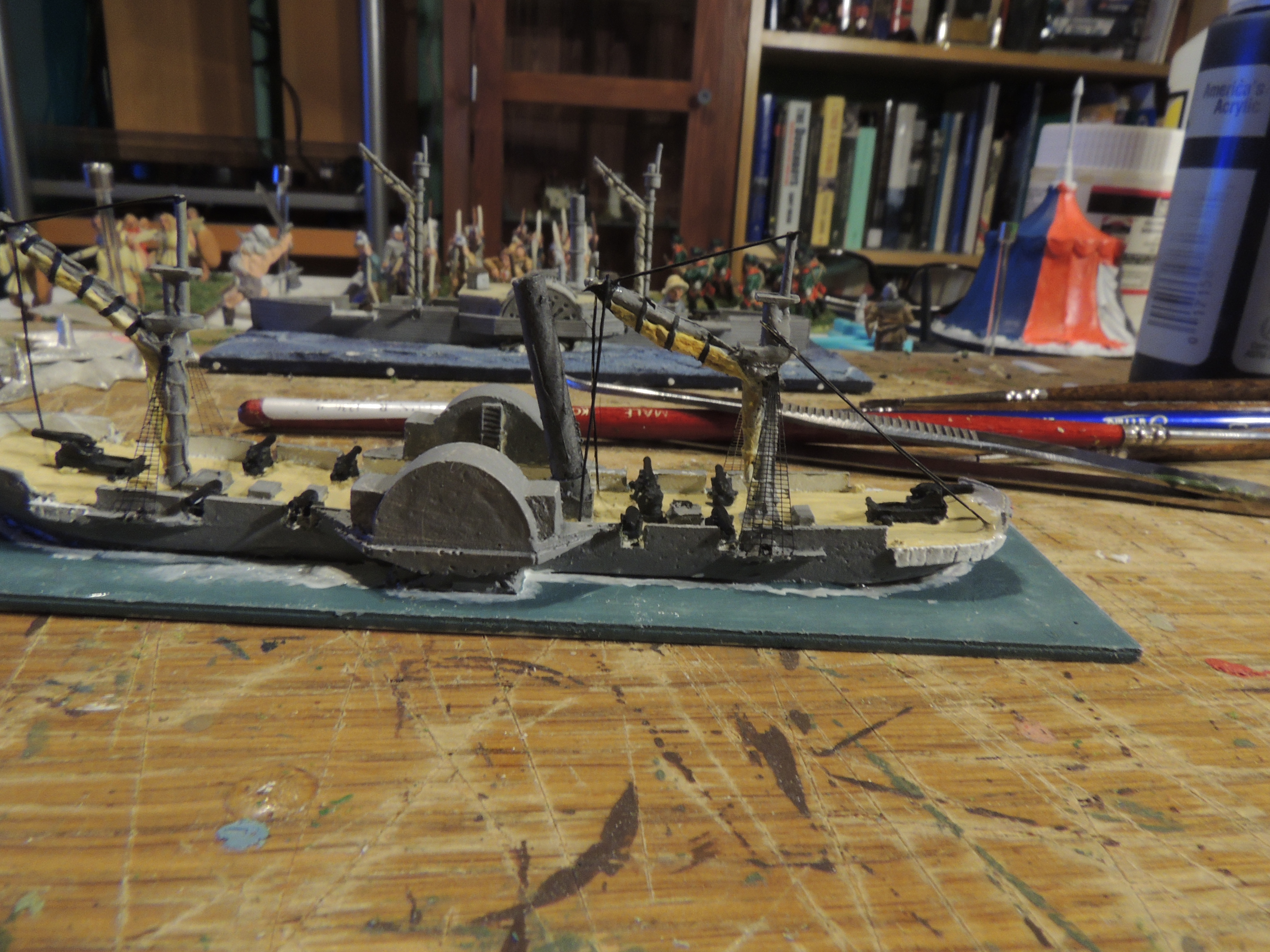
A broadside view of the finished Miami.  The ratlines are clearly visible

A broadside view of the finished Miami. The ratlines are clearly visible

A final port quarter view of the Miami.  I'm pretty happy with the results.

A final port quarter view of the Miami. I’m pretty happy with the results.

In addition to taking on standing rigging, I also add ratlines. I wasn’t sure there were ratlines on the double ender’s simple pole masts, but I checked photos and drawings, and they are there. Battlefleet Models makes 1/700 scale ratlines, so scalewise they are a bit small, but really do add something to your model.  They are photo etched brass and taking a bit of patience to work with.  The ratlines come in a variety of sizes, choose yours carefully.  Use an extremely sharp knife or floss scissors.  Again I glue them in place with CA glue. Painting the ratlines can be a real challenge.  They are metal and almost impossible to prime.  I paint them black, and try to thin down my acrylics.  The ratlines are very fine and easy to glop up.

Finally, you can mount your minis on a base or not–entirely up to you.  I do.  I mount my ships on thick styrene bases.  I like to leave a bit of a margin around the ship.  I painted the base a nice coastal Vallejo Blue Gray.  I also scrubbed the base a bit with Vallejo Pale Blue, before going around the ship with your basic white. When it’s all over I paint over the base with Liquitex gloss gel

Longbowmen finished and other cool stuff.

Longbowmen

I finally finished these guys last night.  I made their bases a bit busier than I usually do.  They are supposed to be able to fight in difficult terrain, and at Poitiers–always a guiding star for me-were able to navigate swampy terrain They aren’t brilliant, but the first rule of miniature wargaming is that any painted unit is a WELL-PAINTED unit.

Old Glory longbows on half stands, ready to go.

Old Glory longbows on half stands, ready to go.

Escodida Versatil Brushes Arrive

So my Dick Blick order arrived in an enormous padded mailer.  Inside were my carefully packaged 0 Escodida Versatil brushes.  I carefully pried them out of their packaging and was singularly unimpressed.  They are the right size but as miniature gamers we live and die by brush points.  No brush point, much less detailing. These didn’t come with one of those little protective plastic thingies that fits over the ferrule, so one of the brushes had any potential points squashed right out of it.  The others retained something of a point, but only one of the three brushes seems to have “winner” exuding from it.  I’ll have to work with them.

My Escondida Versatil brushes  arrived from Dick Blick yesterday.  I am not optimistic, but they're the brushes I have . . .

My Escondida Versatil brushes arrived from Dick Blick yesterday. I am not optimistic, but they’re the brushes I have . . .

Re purposing My Den

My den/painting area/ music room is tiny.  It’s 8′ X 8′ and is crammed full of miniatures, board games, my stereo, a television, dvd’s all my Kevin stuff. It had also become virtually unnavigable.  As my music consumed a bigger and bigger portion of my time and resources, the situation I had in there with my painting table plunked right in the middle of the space made accessing my stereo difficult. So I did some switching, moved my table to a place that renders the rest of the room more accessible and doesn’t negatively impact my ability to work efficiently and comfortably The lighting is probably better, and will be better still when we emerge from the great darkness of the Northwest winter, which seemed to begin yesterday and will last until June.

It's hard to tell from this photo, but I've pushed my painting table toward the back of the room and near the window.  It's opened up the space so it's more walkable without interfering with my work space.

It’s hard to tell from this photo, but I’ve pushed my painting table toward the back of the room and near the window. It’s opened up the space so it’s more walkable without interfering with my work space.

Enfilade Plans

Yes Enfilade is in May, but I like to have things worked out well in advance.  Dave Schueler and I always work together on at least one game.  We’ve done two super successful rollouts: the bombing of the Tirpitz–which was just gorgeous–and the prize winning Raid on St. Nazaire from last year.  This year it looks like we’ll do The Channel Dash of the Scharnhorst and Gneisenau and various auxiliaries from Brest in Brittany to the German port of Wilhelmshaven where they could threaten North Atlantic convoys.  It turned into a disaster for the British who could muster little naval power to threaten the German battleships, and whose repeated air attacks were driven off with heavy losses by defending elements of the Luftwaffe.  The sheer variety of British aircraft–Wellingtons, Spitfires, Hurricanes, Swordfish, Whirlwinds, Hampdens and Blenheims make it all pretty attractive.

Beyond the Channel Dash, I’m not too sure what I’ll do.  After last year’s “fill the car” excitement, I may stick to something a little less demanding.  I have a bunch of 1970’s era hydroplanes to paint–I could update my Thunderboats!, which is always a crowd-pleaser.  I could also do some ACW naval stuff.  I still have some ships to paint, and I’m sure David Sullivan and I could do something.  He was interested in an Ironclads game.  Now that would be retro.

What’s on Your Painting Table?

With the longbowmen finally completed, I’m just dorking around with things I want to do. The Miami (gunboat) is a step closer to completion.  I’m getting ready to base some figures for Mars. I’ve primed a big Baueda pavilion for a potential camp for the Hundred Years War.  Not terribly focused, eh?  It shouldn’t take forever to paint them.  I think after I do that, I’ll paint the Volunteers of Ireland for the American Revolution.  I bought the GMB flags for them, they have a different looking uniform, and they are pretty small for the period. After that, it’s the gunboat Selma from the Battle of Mobile Bay.  That should get me into November.

A bit more done on the Miami.  My goal is to be finished, based and rigged by the end of the week.

A bit more done on the Miami. My goal is to be finished, based and rigged by the end of the week.

And Now For Your Listening Pleasure

The Power StationI have a bunch of mini collections in my pile o’ vinyl.  Little Feat, Steve Miller, Boz Scaggs and a few others.  One guy I really like who is kind of under-appreciated is Robert Palmer.  He’s a British blue-eyed soul singer is best known for his lounge-lizardish appearance on some early MTV videos.  “Addicted to Love” is his best known video with the long legged, pretend backing band. But before that he made some very good R and B influenced albums.  Before his MTV fame, however, he teamed up with two former members of Duran, Duran John Taylor and Andy Taylor, and Chic’s Tony Thompson.  Together they formed The Power Station.  Their first album, titled, simply enough, The Power Station (1985) is pretty enjoyable.  It is energetic synth-pop, but not so much as to be annoying.  Palmer’s vocals are powerful and the two Taylors have enough guitar influence to keep things interesting.   My favorite song is a cover of TRex’s “Bang a Gong.” Good stuff, worth a listen.  Picked mine up for half a buck at the Goodwill Outlet.

Five Essential Books on the Hundred Years War

Divided Houses

Got a request a couple days ago about books on the Hundred Years War.  I’ve been meaning to post something about what I was reading, and maybe I’ll follow up with that at the end of that post.  I’m going to preface my examples and remarks with a couple of quick observations

First, there are a ton of great reads on this conflicts.  Not just lots of books, but lots of good reading. So if you are interested in military history and are looking for another period to learn about, there is ample material.

Second, the core historians writing about he Hundred Years War in English are, not surprisingly, Brits.  Their research and willingness to shatter old myths perpetuated by Shakespeare, Alfred Burne and others changed our perception of this conflict.  It’s what keeps me buying books and reading their stuff.

Anne Curry

  1. Jonathan Sumption.  Yes that’s an author’s name and not a book title.  Sumption is the pre-eminent narrator of the period and has four books 1) Trial by Battle, 2) Trial By Fire, 3) Divided Houses, 4) Cursed Kings.  I have read the first three, and the first book twice. Sumption is so good at telling the story and helping us understand the political, social, economic as well as the military strands to this conflict.  It’s big picture stuff that’s complex but he somehow masters the contemporary sources and pulls it together into a readable, cogent narrative. Expensive and dense, not for the faint of heart, but definitely the best. Cursed Kings was released in August 2015, which I just learned as I was writing this article.
  2. War Cruel and Sharp by Clifford Rogers is an analysis of the English military system as it evolved under Edward III, and how it was used tactically and strategically.  Gone is the view the English army was small, outnumbered and beleaguered. It was an offensive weapon that sought battle.  Rogers traces the development and employment of the army from its development on the Scottish border to its ultimate victory at Crecy. I got my copy used, which helps with cost.
  3. Arms, Armies and Fortifications in the Hundred Years War edited by Anne Curry and Michael Hughes.  This book is a collection of essays by many different writers on a variety of military topics relating to the Hundred Years War.  There is an essay on battlefield tactics and two more on the composition of the English army 14th and again 15th Century. The war at sea and defense of the English coast are covered.  It is a real wealth of information in very manageable chunks.
  4. Agincourt: A New History by Anne Curry.  Curry takes one of the best known stories, told by Shakespeare, re-told by Col Burne in the 1940’s and kicks the props out from under it.  Curry has investigated and written about Agincourt for decades, but this narrative of the campaign and battle challenges long held beliefs about the size of both armies and tactics used by English and French armies.  A great book. Honorable Mention: Henry V and the Battle that Made England is a more traditional history by Juliet Barker.  Like Curry’s book, this was released in 2006.  It takes a more conventional look at Agincourt, but is also a broader examination of Henry V and events that shaped his decision making-his wounding at Shrewsbury, the usurpation of Henry IV and its role in the Southampton Plot. A great narrative. The two books are great together.
  5. Conquest: The English Kingdom in France 1417-1450 by Juliet Barker.  This is a great topic nobody else covers well. Maybe Sumption will. Barker focuses on Henry V’s second invasion of France and resulting conquest of Normandy as well as efforts to conquer all of France.  Yes, Joan of Arc makes her way into the narrative, as does the social impact of colonizing Normandy.  Barker doesn’t let us forget that England lost the war and focuses some attention on France’s reconquest. The only single volume history I’m aware of that covers this period.

One last entry–and I’ve said this over and over again-that is worth a read is the Agincourt chapter from John Keegan’s Face of Battle.  If that doesn’t stir some interest in this period, I don’t know what will.

There are loads of other histories that cover battles, soldiers and armor as well as interesting biographies. It is a historical era awash in great historical writing.  There are some items not covered well in English and that is the war from a French perspective. There should be biographies of the Valois kings from Philip VI to Charles VII, with a really great one on Charles V.  There should be a great study of the Bureau brothers and how their artillery changed the course of the war.  There should be a great study of the evolution of the French army during the Hundred Years War.  A People's History

What I’m reading now:

The Hundred Years War: A Peoples History by David Green.  This is a great book that takes a broader look at the social impact of the war on England and France.  Because we don’t have the sources to focus on the lot of Piers the Plowman, Green tends to examine the very small middle class, but the picture he paints ain’t all jousts and feasts.  Tough to live in the 14th century.

Divided Houses by Jonathan Sumption.  This may be the best of Sumption’s work.  It covers the years between the Treaty of Bretigny and the fall of Richard II and the House of Plantagenet. Packed in its 800+ pages of text are the English obsession with Castile as well as the strategic vision for its possessions in France. The emergence of Charles V (the Wise) as a great king and war leader and how he transformed French economy and military system into a winner and drove the English to the brink of defeat.  Not an easy read.  It took me six weeks to finish.  But it is just a great book on little known topics.