Playing alone better than not playing at all

Yesterday I said I’d give a quick shot to Jim Purky’s Fife and Drum rules for the American Revolution.  Just to be clear, I am a Fire and Fury Regimental guy.  But I don’t play them often, and if I take them off to a convention they can be a little overwhelming.  Jim sent these to me when I ordered from his excellent range of figures a few years back, and they’ve mostly sat out in my painting room staring at me. I’m sure I’ve heard them whispering, “Well?”

Since I’m home alone this week, I thought I’d drag them out and give them a try. I set my dining room table up for “Action at Lizzard’s Farm.” It was great.  I dragged out all kinds of stuff and littered my 76″ by 40″ table with it. I even used one of my 4Ground buildings.

The scenario was simple. Lizzard’s Farm was defended by a brigade commanded by Otho Williams including a battalion of North Carolina militia, the 5th Virginia, the 5th Maryland and a section of artillery.  They were reinforced by Lee’s Legion dragoons and foot.

The British had two brigades including loyalist battalions Volunteers of Ireland and the New York Volunteers, a battalion of the 71st regiment (highland), the 21st regiment, and converged battalion of light infantry.  They kept Coffin’s South Carolina Dragoons in reserve and also had a section of artillery.

I’ll review the game with some photos, but right now I’d just like to focus on the rules.  Let me just say I like ’em.  They are easy without being ridiculous, they are logical and they work pretty well.  As with any one page set of rules, however, there are a few items that aren’t clear to me, and because I wasn’t playing with the author I didn’t have one of those a-ha moments.  So there are a couple of things I’d clarify

  • Units have to charge to initiate melee
    • Units who charge would receive an advantage in melee
    • Units who charge can’t shoot
    • Units who “lose” a melee after two rounds become shaken.

It’s possible that’s what Jim meant, but it isn’t clear to me. There is the right amount of death, but not so much as to be silly.
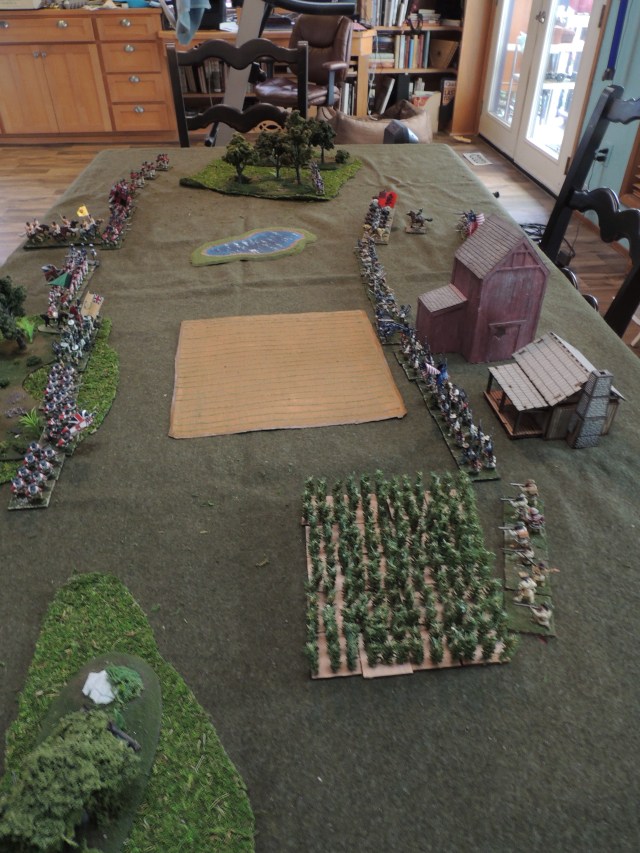
Big Set up

The set up extends across both sides down the table.  I wasn’t trying to be subtle.  In the British center right, they are trying to carry the American position by main force while the British light infantry and the 21st Regt. try to sweep up a thinly held American left flank. The Americans stuck riflemen in the cornfield, hoping to slow the Highlanders’ advance, while screening their right, holding a Continental regiment in reserve.

The British advanced briskly.  The Highlanders quickly emerged from the woods with the Irish and New Yorkers moving quickly with them. The American line units were out range, but the Brits came under fire from the artillery and the riflemen, andsuffered no casualties.

The following turn, however the 71st had to decide whether to engage the riflemen who shot so poorly or advance directly on the 5th Virginia.  A die roll of 5 meant huzzah! Damn the riflemen and charge the Virginians.  The two loyalist units followed suit.  An exchange of musketry found the Brits receiving decided the worst of the firefight.  With the aid of artillery fire, a bit of luck from the militia, and flank fire from the bypassed riflemen, the English line was staggered, but continued their advance.

On the British left, the 21st Regt. marched smartly around the pond as the light infantry prepared to engage Lee’s Legion light corps.  Outnumbered two to one and likely to be outflanked, the infantry began looking for friends.
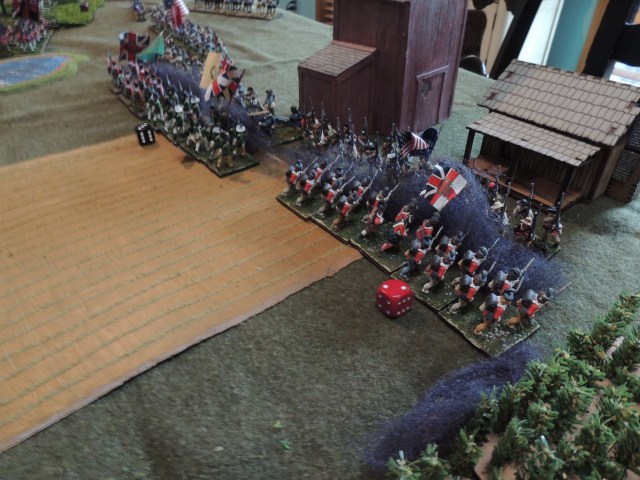
The Charge

Hightlanders, New York Loyalists and The Volunteers of Ireland advance against Williams’ thin line. The Highlanders also take flank fire from the cornfield.

Turn four was the climactic turn.  The British decided on attack, and that’s where I was unclear about the rules.  The Americans gave them another dose of fire, causing the Highlanders and VOI to become shaken  Though the New Yorkers drove off the artillery crew, they were alone as their flank supports melted away.
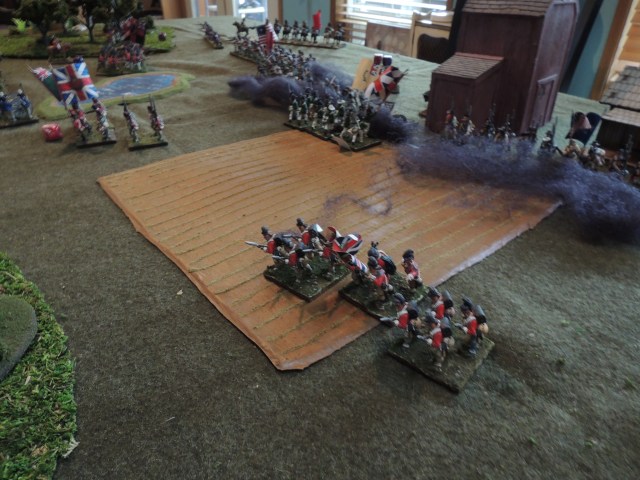
Repulse

Repulsed!! The Highlanders and Volunteers of Ireland were simply shattered by fire and unable to effectively charge the defenders. The New York Loyalists had more success, capturing the American artillery.

On the British left, the Lee’s Legion infantry corps withdrew from British reach, and the dragoons fell back to support them.  Williams committed the 5th Maryland to face the 21st Regiment.

At that point it was clear the main British assault failed and I called it good.  It was much fun and I’m glad I gave it a try. It was super to pull the figures out of the box again. Would I play a solo game again–maybe if the cards aligned correctly.
Spring break at last!!

So spring break has finally arrived.  I’m looking forward to some painting and some gaming. And some sleep.  And catching up at work. And just not having to account for somebody else for my time. Anyway, after today it’s seven more fabulous days of not being at school . . . sort of.  Here’s what’s on the docket:

DSCN1529

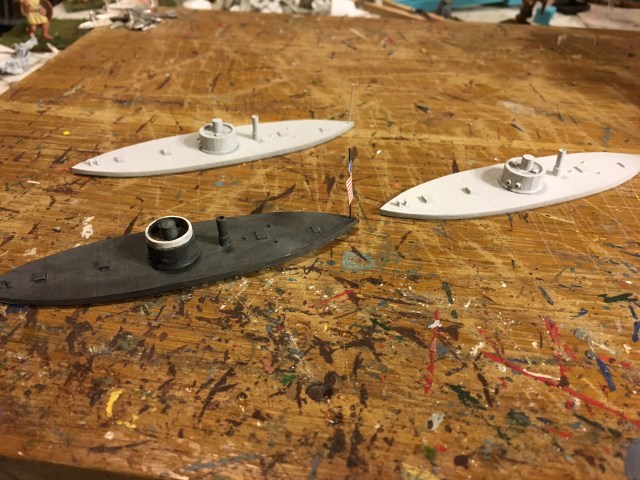
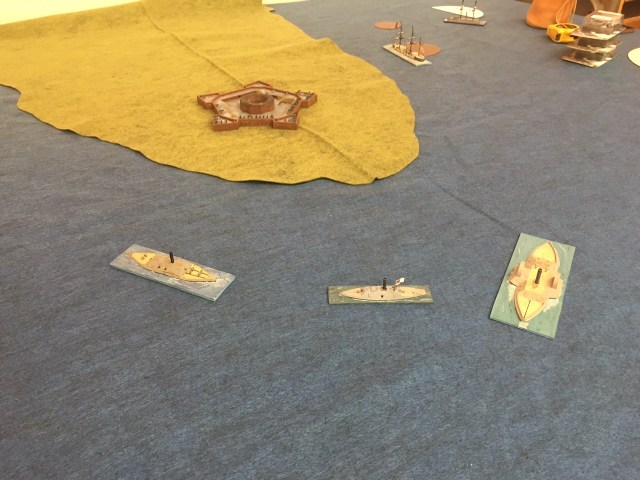
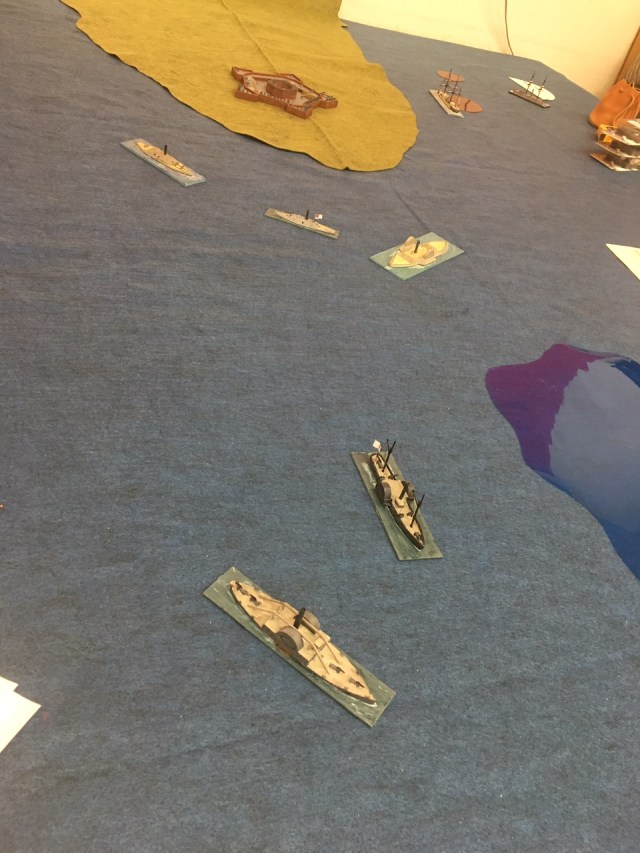
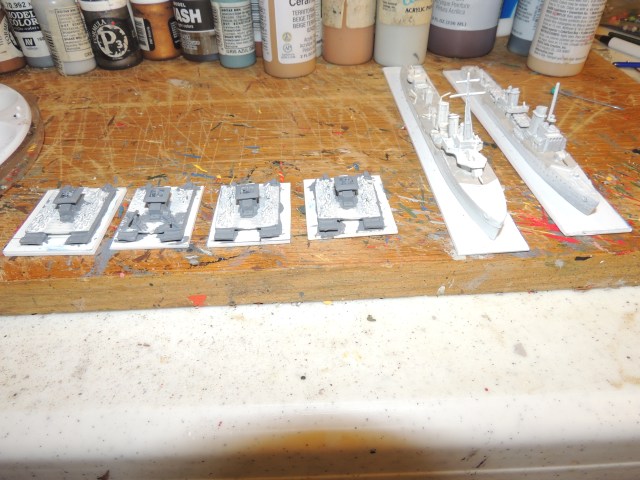
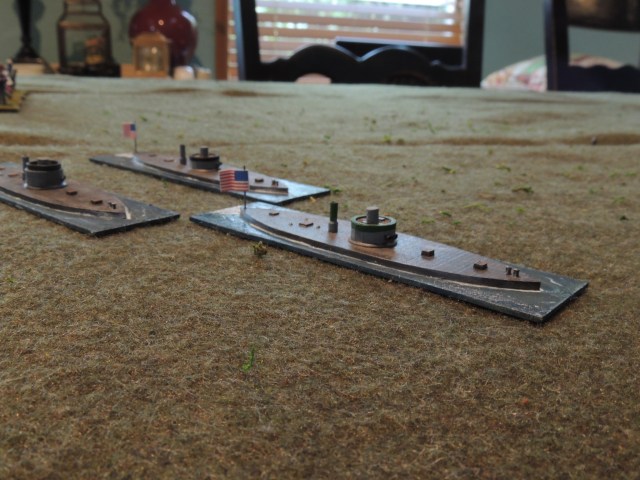
Three Passaic class monitors by Thoroughbred Figures.  The leading ship is the Nahant with its green striping.  The ship to the left, Lehigh, is an older version of this miniature.

Painting stuff

Actually I’ve finished a couple of things the last couple of days. First on the list are three Passaic class monitors.  These are the smaller of the Ericsson built vessels that followed the original monitors.  Generally, they were pretty robust. Armed with an 11-inch and a 15-inch Dahlgren smoothbore, they compelled the surrender of the ironclad ram Atlanta, were absolutely pummeled in a seaborne assault on the Charleston defenses. Most of them had very long lives.  The Nahant was still in service in 1904.

I had three Passaic class vessels to paint, including my original model from twenty or so years ago.  The earlier model is different, featuring a more sheltered turret top, but generally pretty much the same. I had to remount it because the original balsa base was starting to get pretty warped, so I re-primed it and went with the same color scheme as the later two.

I decided to approach it the same as the pics in Kevin Dougherty’s Ships of the Civil War 1861-1865.  This shows the monitors in an iron color, rather than a dark gray or black. I gave them a couple of coats of Formula P3 pig iron.  After that I gave them a couple of good washes of Vallejo black wash. I painted the funnels and turret faces Rain Grey by Delta Ceramcoat.  I also referred to a description of the monitors in Donald Canney’s essential Old Steam Navy, vol 2 and painted a stripe on the turret top for each of the ships.  Lehigh had a black stripe, Nahant had a green stripe and funnel top, Catskill had a lead color (which I interpret to be charcoal gray.) When it was all done, I gave a quick dry brush of Cold Steel by Formula P3.  Mounted them all on thick plasticard bases.

DSCN1532

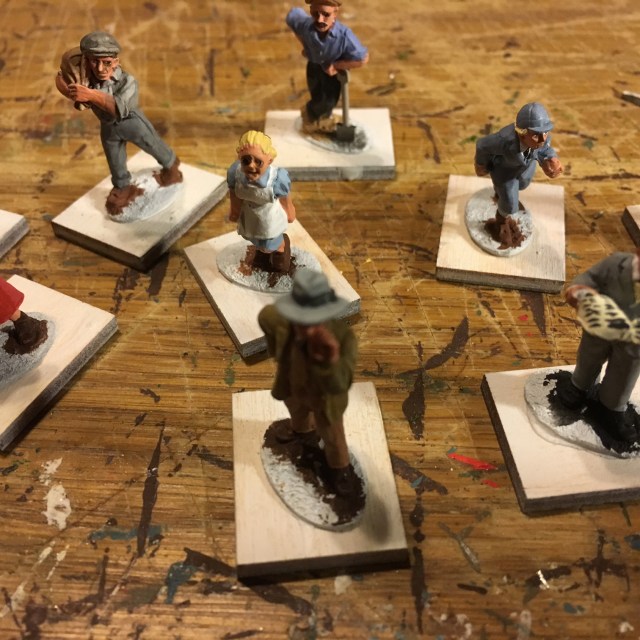
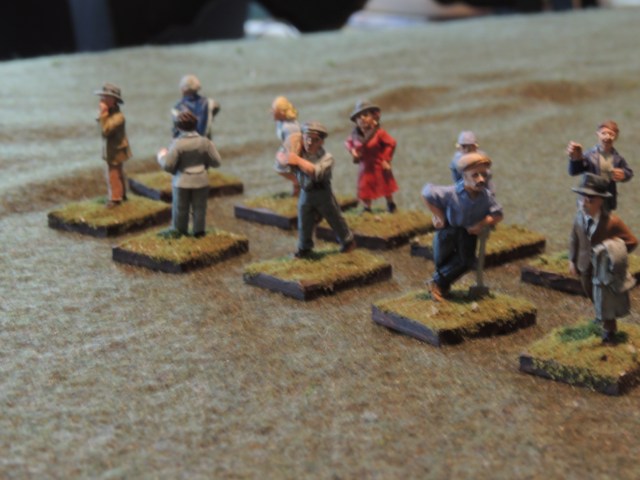
Completed civilians by Musketeer Miniatures

I also finished the ten civilians by Musketeer Miniatures for the Irish Civil War.  Honestly, they were pretty easy to paint and went pretty quickly.  I enjoyed painting them.

A Solo Game

Monday, I’m going to play a solo game.  Never done that before, but I am tomorrow.  I haven’t had out my Revolutionary War figures in about five years, and I want to try out a one page set of rules I got from Jim Purky (De Alte Fritz) a few years ago when I ordered some Fife and Drum Miniatures from him. Honestly, they look pretty straightforward, so I’d like to give them a try.  It will be a simple meeting engagement with five or six units per side. I just want to get a feel for the mechanics and whether or not I could easily run them with a group. I’ll keep everyone advised on this.

On the painting table

Spring break should always be a good painting week.  And I do have my plans made. I’ve begun working on some Eureka Spanish conquistador figures for Lion Rampant.  I’ve charted the Spanish for the conquest of the Aztecs.  David Sullivan is working on this also, so we just need to swap some notes.  I have a dozen arquebusiers I’m working on, which is enough for two units of six.  They are nice figures and I’m about a third done with them.

I’m going to try something new with these figures too.  I’m going to apply the dip.  I’ve got my Tudor Brown acrylic stain, and I’m anxious to see how the figures work.  I saw David’s ECW figures after using the dip, and they look quite nice.  The colors pop and some natural shading happens.

It shouldn’t take too long to paint these figures, and then it will be on to  my last two hydroplanes for Enfilade.  They are the same hull.  The Pay n’ Pak from 1973, and the Atlas Van Lines for 1976.  A lot of white on both, but also a lot of lining (boo) and some lettering (double boo.)

If I finish these with time to spare, I’ll either work on the Bay model of USS Mississippi or some Musketeer Auxiliaries.  I have fifteen of these paint. .

Music to Paint By

I’ve snagged a few records recently.  I reviewed Buck Dharma’s solo record, Flat Out over on Tails From the South Sound.  When I snagged that record, I also picked up Green Thoughts by the Smithereens.  I reviewed an earlier record by the powerhouse 80’s band, Especially For You.  This is one of those bands that I didn’t know anything about before I launched on my vinyl addiction tour last year.  Green Thoughts is a very good record.  The Smithereens are sort of formulaic.  They are a very good power pop band.  The songs are almost always about messy relationships and bad break-ups, which sounds like a recipe for boredom, but they are really good at it.  Strong guitars, driving bass lines, good vocals.  There isn’t a super song on this record like “Blood and Roses” on Especially for You, or “A Girl Like You” on 11, but “Only a Memory” and “Drown in My Own Tears” are very good.  I’ve purchased a copy of 11 on Ebay to wrap up my Smithereens mini-assortment because “A Girl Like You” is so damned awesome.

Dragon Rampant down payment

IMG_0519

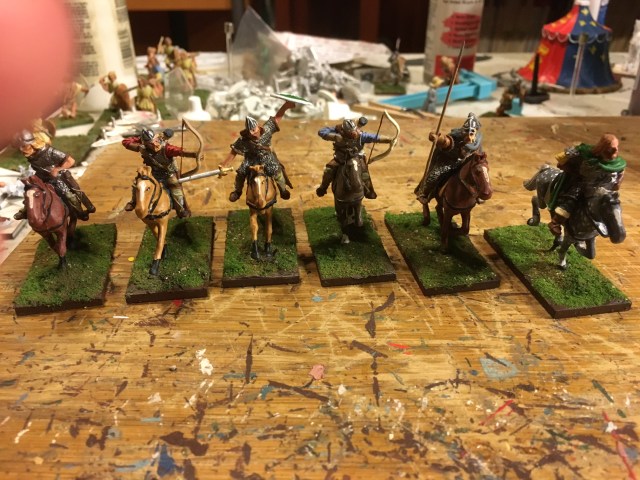
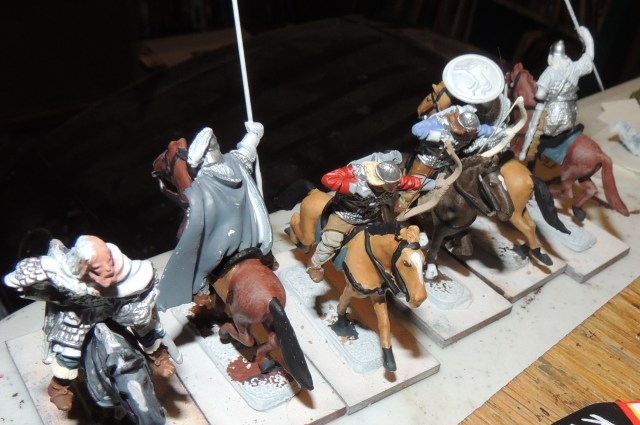
Mithril Rohirrim, painted and finally seeing the light of day after about two decades of darkness. Nice to get them done.

March is always a slow month for me.  Actually the middle of February to the middle of April is difficult because so much is going on at school  The newspaper usually has a deadline week.  There is loads of preparation for the national convention in April.  With the addition of the yearbook there are more deadlines.  Students need letters of recommendation.  It’s just busy.

And at home it’s not much better.  Sunday is the first day of spring.  I haven’t mowed my back yard yet and there is tons of stuff to do.  Gah!

So, I know I’m behind in my posts and I haven’t painted as much as I’d like to.

However, I have finished my first Rohan unit.  As promised, I finished my old unit of riders, and they are by Mithril figures.  I pried these out of their boxes about 20 years ago, and chopped away their leg supports and they are now quite fragile.  I really enjoyed painting the horses, but the miniatures, though they too are pretty nice are a bit fiddly and I painted the riders after mounting them on their horses.  Some of the detail was super hard to get at, so I may need to reassess this.

Even so, that’s the first of about eight or nine units I’ll paint of the Rohirrim. I have them all, mostly plastic, I just need to buckle down and paint ’em up.

On the painting table

I have a couple of things I’m working on.  The first is ten civilians for the Irish Civil War by Musketeer/Footsore Miniatures.  I bought two sets and they are pretty nice.  They really come from their Very British Civil War range, and as such look a bit more from the 30’s than 20’s, but I don’t think anyone will notice.  They are nearly done, which will leave about 30 figures more to paint for the project. I will have some vehicles to paint–a beautiful Lancia armored truck no longer available from Musketeer, and a pair of Crosley transports by Company B.  We’ll see how good I am at this vehicle business.

IMG_0522

A nice variety of civilians by Musketeer/Footsore miniatures. They were designed for the Very British Civil War range, so they look a little more 30’s than 20’s.

I also have a pair of Thoroughbred Passaic class monitors primed and ready to go.  I’ll be offering them as potential Union naval forces for the Pensacola game.  I have a third that is painted that needs to be remounted from its original balsa base, and I’ll probably do that over Spring Break, which starts next week. I’ve already decided to paint the two new ships as the Lehigh and the Nahant with its black and green coloring respectively.

IMG_0521

Three Passaic class monitors by Thoroughbred Figures.  I’m going to repaint my older ship so they’ll all fit together.

Less is More. 

March has not been a smart month for NOT buying miniatures.  I haven’t gone absolutely nuts, but I’m really interested in building Conquistadors and Aztecs for Lion Rampant.  David Sullivan and I have both dabbled in rules and have similar ideas.  David has also been buying figures. In any case, I sent off an order for a dozen figures from Eureka and when I was at Panzer Depot, I bought another dozen.  I’ll be painting some Spanish arquebusiers.  In any case, let’s just say my net positive has taken a hit.  I started with 25 figures + the 6 Rohirrim= 30-24 =6.  That’s not so good, though I’m nearly done with the ten ICW civilians, and should be done with the monitors before the break is over.

Music to Paint By

Metallica

I’m not a heavy metal music fan.  It just doesn’t appeal to me as a genre or subgenre. But I love “Enter Sandman” and “The Unforgiven” by Metallica.  There’s just not getting around the lure of great songs. Though I could see adding the band’s 1991 eponymously titled record to my collection, the problem was it falls into the vinyl “sweet spot” as the industry was ending production of records and stepping up the production of compact discs.  With only one LP pressing, the starting value of Metallica is about $175.00.  So when I was trolling the new records at my local shop and there was a bright, shiny new copy, I snapped it up.  I was not disappointed.  If you like these songs on the radio or MP3, you’ll really like them on vinyl.  I paid about $27.00 to support my local record store.  You’ll pay about $25 on Amazon. Worth every penny.


A good day to travel to Pensacola

To say I’ve hit a gaming dry spot is a gross understatement. Yes, I’ve been painting and planning, but I haven’t played a legit miniatures game since DANG at the end of December.

playtest 1

Tennessee and Tuscaloosa slowly make their way around Santa Rosa Island, while Nashville speeds past them on its way to reengage Fort Pickens. All ships in sight-Tennessee, Tuscaloosa, Nashville, Stonewall and North Carolina (Scorpion) are Thoroughbred models.  The Fort is Bay Area Yards’ Fort Jackson.

But today I packed up a pile of my !/600 ACW ships, my big star fort, headed north to pick up Dave Schueler and made our way to The Panzer Depot to meet David Sullivan and try out my Pensacola game.  In order to do that, of course, I had to survive some ridiculous Puget Sound traffic, but the less said the better.

The plan was to walk through my Pensacola scenario.  I knew it was likely just the three of us to do the walk through, so I took on the game master’s role of running the fort, while the Dave’s took on the role of running the Confederate fleet.  This was strictly a play test, and I had some specific goals in mind.

  1. Could the hundreds of guns mounted in Fort Pickens be homogenized down to a few simple die rolls per turn.
  2. Could the Confederate ships mount a destructive attack on the fort?
  3. Was the game interesting enough to hold players’ attention for four hours of game play?

At the same time, I omitted a couple of important pieces of the scenario.  There basically was no Union player.  They get to run some Union naval pieces they’ll get to choose from. They were not available today in order to keep things simple.

David took the Bahama Squadron including the ironclad sloops Stonewall and North Carolina, as well as the Nashville from Mobile. Dave took the remainder of the Mobile squadron, including the rams Tennessee II and Tuscaloosa, as well as the wooden gunboats Morgan, Gaines, and Selma. Their mission was to inflict sufficient damage to Fort Pickens to force it’s surrender at the end of the scenario.

First, a confession about Ironclads.  It’s a set of rules that I dearly love.  I’m certain I’ve played those rules more than any other I’ve ever owned.  But they are very much a product of their time: complicated tables, a series of die rolls for each and every gun fired and hit scored. In 1979 that is what people wanted.  But they are an impediment today.  Though I have played many different sets of ACW naval rules, I still believe Ironclads gives the best feel of the period.  I’ve run games using these rules at conventions before, and players have enjoyed them.  My goal was to take the rules, do some slight modifications, and make them just a little more playable for a convention setting, retaining every bit of the historical feel the rules impart.

playtest 2

A bit wider view of the table as Selma travels around the bar at the harbor’s entrance and Morgan sits silently, most of her crew dead after a boiler explosion. Selma is a Bay model. The Morgan is Thoroughbred Figures.

One of the things I did to simplify the fire from Fort Pickens was divide the fort into five faces.  The Confederates would have to inflict critical damage to three of the five faces to force its surrender.  The fort, with literally hundreds of guns, would return fire.  I kept it simple by requiring a simple die roll by each ship in the target face’s arc of fire.  The highest die roll would be the target for the fort that turn.  If ships tied for the highest die roll, there would be multiple targets.  After targets were identified, each one would suffer a six sided die roll that determined the number of hits, 1-4 per turn.  then there was a simple die roll for each hit on a table divided for ironclads and wooden ships. The die roll spelled out the damage.

The job of the Confederates was simple: pummel the fort.  They would play the game with the goal of inflicting as much damage as possible. When the game was over, damage would be assessed, and morale losses taken by the fort caused by loss of armor, guns, crew, fires or magazine explosions and comparing it to a modified morale level would determine if the fort surrendered or not.

We played the game for about two hours.  David and Dave are Ironclads veterans and knew quite well what they were trying to do.  We decided immediately to scrap order writing.  It would prevent collisions entering the constricted ship canal and perhaps remove an element of humor for the game master, but it was one step we could get rid of and keep players concentrated on their goals.

With that, the first move was taken and the fort was pounded. The North Carolina, with it’s turreted British naval guns was by far the most dangerous, doing huge amounts of armor damage, while the Mobile squadron with its slower ironclad rams and narrower fields of fire had difficulty getting lined up.

But the fort dished out its own volume of fire.  After each turn the Confederate ships in each face’s field of fire would roll a six sided die. The high roll would be the target for the fort that turn.  It became a bit of a comedy to see who would be the lucky recipient of the fort’s attention.  One turn Dave rolled four sixes for his five ships.   They all took damage.  As you can imagine, hits on the ironclads were largely ineffective.  Lots of minor armor hits and no-effects, but occasionally they’d get whacked pretty good.  The Stonewall took a fairly painful waterline critical penetration that resulted in flotation damage and speed loss, but that was an outlier.  Nashville and North Carolina both took minor steering hits, but both resumed their mission of destruction against the fort.

Much different story on the wooden vessels.  The Morgan was hit repeatedly, and eventually suffered a critical boiler explosion that virtually disabled the ship.  The other wooden vessels, Selma and Gaines, took less damage but were finding a way to exit the area at the end of the game. All suffered serious armor damage, though they were still fighting their guns.

As I explained, we played about two hours of game time.  Figure that at the convention we might have as much as three and a quarter hours given set-up and teaching noobs the rules. They would also likely be less efficient at running the Confederate ships-but maybe I’m wrong. By the end the Fort was in serious trouble.  It’s total morale value was reduced from 24 points to 8.  There was little reason to believe they wouldn’t polish off Fort Pickens, so we called it. We also talked it through.  We all agreed the fort would be in better shape with Union defenders.  I shared my ideas for those defenders, but honestly I think I’m going to put together two or three packages for the Union players to choose from, which will each include a couple of ships and additional shore defenses.

All in all, I considered the playtest a success:

  1. The fort gunfire was very smooth.  Eliminated the too hit rolls for hundreds of guns per turn and just went with hits.  Fort gunfire maybe took five minutes each turn. I will be adding an additional penetration damage to the Ironclads column, but otherwise I’m happy.
  2. The Confederates showed they could definitely do damage to the fort.  If they had more gun hits, the game would have been over.  I need to take a look at the effect of cumulative crew losses. We already agreed the loss of five guns in a fort face would reduce the number of hits inflicted by the fort by one.  Maybe the same with crew losses.
  3. Was the game interesting enough.  Well, if it was just the Confederates pounding the fort into submission, I think it would be a snooze, though maybe it would be enough for some players early Sunday morning. But adding a another shore battery and Union ships to the fort’s defenses would give the Confederate player plenty to do.

It leaves me with a little more tweaking to do but not much.


Miss Rock and looking ahead

It’s March 5th and we’re about 12 weeks out from Enfilade. It’s a tremendously busy time for me at school.  We just finished a newspaper deadline, the yearbook is on perpetual deadline, and all that means extra nights at Emerald Ridge. I don’t object.  I really don’t.  I love my job and I love my students.  Add to that a state convention to get ready for and a national convention in six weeks in Los Angeles, and there is just tons of stuff to do.

Unfortunately, that means little time for painting or playing games.  It is what it is and there is just no point in complaining–but to say I haven’t considered what retirement might mean would be a lie.

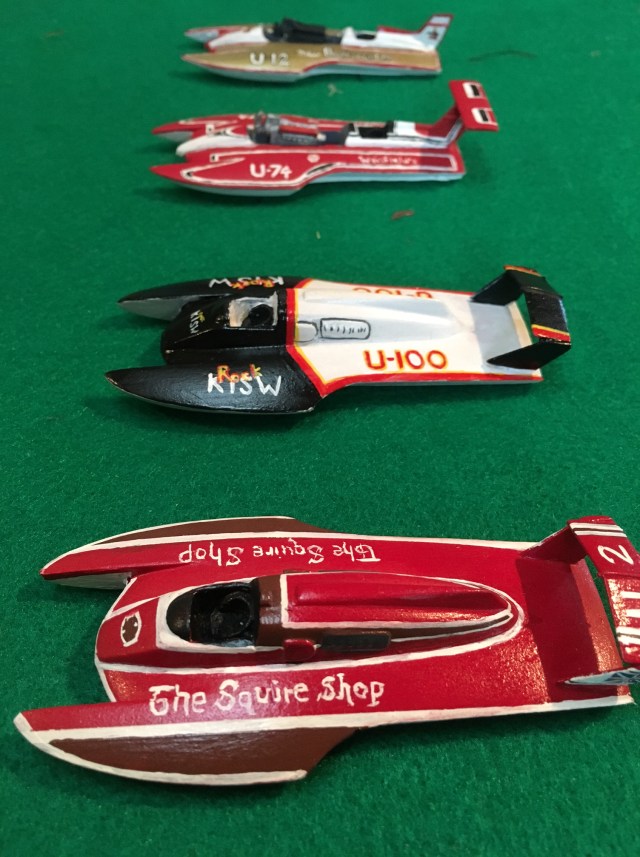
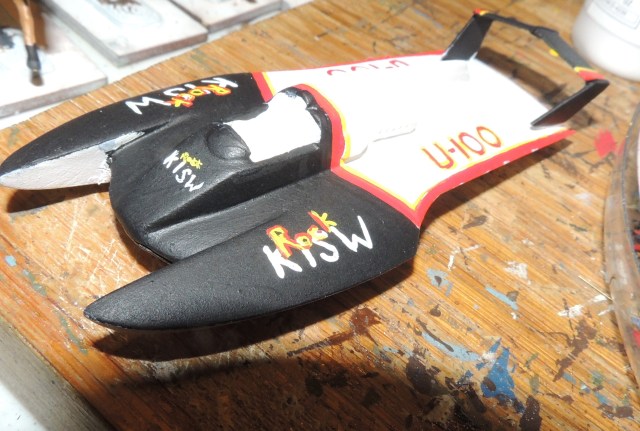
But I have been able to pick up my brushes a bit and make some progress.  I finished the Miss Rock hydroplane sponsored by KISW radio in 1983.  I loved the color scheme and gave it a try.  Nothing terribly tricky, just black and white with Vallejo Vermillion and Deep Yellow accents. It puts my picklefork flotilla at four with two left to paint for the convention.  They will be the identical hulls: 1973 Pay ‘N Pak and the 1976 Atlas Van Lines.  The hulls are a one and only, as Atlas picked up the Pak “Winged Wonder” as the latter began experimenting with new designs.

Picklefork 1

Miss Rock joins the other three boats.  They will race as a separate event at Enfilade in May.

I really am hoping to pick up some additional boats from Shawn.  I’d like another ten or so–a lot of the cab forward boats so I can do the legendary “Blue Blaster” of 1981 as well as other boats of similar design.  Would like a few more of the classic shovel nose hulls too.

Looking ahead

Will probably be trying the MSD 1/300 Swordfish for the Channel Dash scenario.  Dave, ordered a pair and they definitely look more manageable than the Ros/Heroics planes.  I hate to be a quitter on miniatures, but the Heroics planes are not good.  Building any biplane is hard in 1/300–the planes are small.  But these are super difficult.  I’m also going to order a couple of the MSD PB4Y-2 Privateers.  These are navy patrol bombers based on late war the B-24. They are just nasty both as patrol bombers and defensively, absolutely bristling with guns. It also gives me a chance to try out MSD, who started out with the Luft46 range of planes.

En Garde

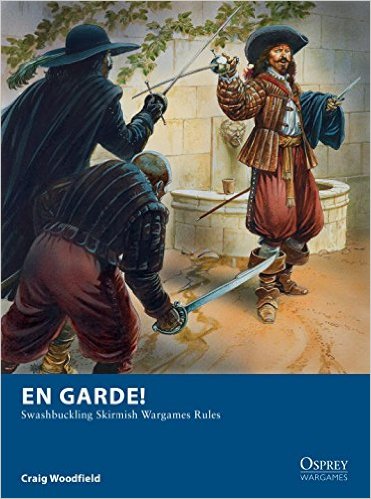
I picked up the Osprey En Garde! rules.  I had been waiting for them to come out and overlooked the fact they were actually released in November.  Based on the sucessful Ronin rules, these Renaissance era rules combine skirmish combat with the tactical flavor of the period.  Aztecs, Scottish Border reivers, Three Musketeers are the focus of the rules.  THREE MUSKETEERS!!!  Count me in.  My completed 40mm figures are sitting in the garage waiting to play a game.  Unfortunately, I may have to add a few figures to them to really do much.  Not many figures per side, but I’m thinking a few pikemen and command figures may be called for to make a Huguenot command.

Next week I get together with a couple of Dave’s to try out our Ironclads scenario at the Panzer Depot in Redmond.  I doubt we’ll be able to play through the entire scenario, looking instead to see how the fort fire works and whether the Confederate ships can do enough damage to Fort Pickens.  I’ll also be trying to make sure the game doesn’t bog down too terribly.

Less is More.

Since my last post I completed exactly one miniature, the Miss Rock.  I did make some progress on the Riders of Rohan, but not close to finishing them.  Hoping to wrap them up this week. No new figure purchases + 1 hydroplane puts me at +25 for the year.

Music to paint by

Best of Cream

When I was 13 I bought a copy of Best of Cream.  Yes it was an anthology by the British supergroup. I think I heard two songs on the record before buying: “Sunshine of Your Love,” and “White Room.”  I bought it instead of repaying a friend for an order he made to the Soldier Shop in New York.  I was terrible.

Ultimately, it was a great record I really enjoyed listening to.  Unfortunately it was a record that was relatively unknown by a lot of my peers.  I was in the eighth grade and I brought the album to school and nobody had ever heard of Cream.  I was suddenly the cool kid listening to something nobody else had.  I think that lasted for twenty minutes before I returned to being the nerdy kid who built plastic models and played Avalon Hill games.

I usually avoid “Best of” collections like the plague. I believe you learn much more about a band by listening to all of their music without just cherry picking the best.  Unfortunately, being able to buy individual MP3’s have made us lazier or less mature listeners. Alas, I have no other Cream albums, but some day I’ll have all of them: Fresh Cream, Disraeli Gears, Wheels of Fire, Good-bye.  But with “I Feel Free,” “Crossroads,” “The Tales of Brave Ulysses,” “Badge” and other great songs to go with those previously mentioned, this is a very good filler. The cover is cool too.

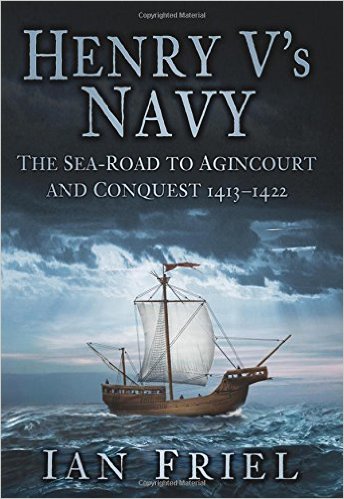
Henry V’s Navy: Review

51j13gnZ0mL._SX342_BO1,204,203,200_

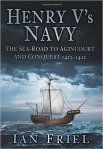
This is one of the naval history books I snagged a couple of weeks ago. I wasn’t quite sure what to expect, and I confess a certain degree of initial disappointment at the book’s slim profile.  There are only 157 pages of text.  But my initial sorrow was quickly set aside once I began reading.

Ian Friel’s study of King Harry’s fleet focuses on the Royal Navy, those ships built, purchased, or captured for the king. Like many historians of this period, Friel struggles a bit to share what can be known and what must be surmised based on the evidence.

But what Friel is able to share is extremely valuable to understanding the importance of controlling the sea lanes to projecting  English power into France during the Hundred Years War

Friel does a great job of helping the reader understand, creating a common language to use when discussing the naval war between England and France in the early 15th century.  He limits his discussion largely to the Royal Navy, the king’s navy, or those ships purchased, built or captured and a part of Henry’s fleet as opposed to the many vessels and crews, privately owned, “arrested” and put into service as fighting vessels or transports for the king’s army.  He also carefully explains the classes of ships: great ships or carracks, ships such as cogs, and then oared vessels, barges and ballingers that all had important roles in King Henry’s navy. Friel goes on to explain further amount typical crews and likely armament for many ships.

Only after the reader has reached an understanding of Henry’s Navy, does Friel attempt to report the important naval combats accompanying the invasion of 1415 that led to the siege of Harfleur, and subsequently the battle at Agincourt.  He also recounts the Normandy campaign of 1417, the Battle of La Chef De Caux, off the Seine estuary.  Friel emphasizes the importance of the navy in its seakeeping role-ensuring the sea lanes were free of French ships, and just as importantly those belonging to their allies, the Castilians and Genoese. Finally, he includes the role of the navy in the siege of Rouen.

Unfortunately, all good things come to an end.  The navy, a costly arm of royal power went in to decline as ships could not be maintained, rotted and simply sank in port. In most respects the story of Henry V’s navy is a mirror of the Hundred Years War, enjoying great success, but always costing more than England can afford, and silenced when resources became scarce.

My chief revelation from Henry V’s Navy is the important role oared vessels played in the royal fleet. Though these vessels were small with relatively small numbers of armed men, they played an important role in scouting and seakeeping. I had always believed oared vessels to chiefly a feature of Castilian and Genoese fleets, but clearly I was mistaken.  Gonna need to add some oared vessels to my cog fleets.

This is a very enjoyable, highly accessible book, and if you have an interest in the Hundred Years War and hope to understand the important naval aspect of Henry V’s campaigns, it is well worth your time and money.

What’s on my painting table. 

Well, this is pitiful.  I haven’t finished anything recently.  I’ve been stuck at school a lot.  But I did start working on the Miss Rock KISW hydroplane from 1983.Nearly done, need a bit more yellow trim on the numerals, some touch-up and varnishing. A simple color scheme, but I really like it.

DSCN1509

I’ve made slight progress on my Riders of Rohan, but it is something.  The riders are now mounted on their horses, and I’ve made some progress on the two bowmen.

DSCN1508

Music to paint by

I’ve written about my love of Blue Oyster Cult.  I went to see them for the second time at the Emerald Queen Casino on Saturday night with some friends from work.  I wrote a review of the show here.  BOC comes to EQC fairly regularly, and I can’t recommend their show highly enough.  Though Eric Bloom and Donald “Buck Dharma” Roeser are the sole remaining original members, the band is incredibly talented, and play with passion and professionalism.  Bloom is a great frontman, and Buck is simply the greatest guitarist I’ve ever seen.  The tickets are cheap for a show these days (we paid $25 for view seats), and even though a concert at the Emerald Queen is liking watching a show in a large high school gym, it was still wonderful.


This Bud’s for me

Though my interest in hydroplane racing  waned by the time I became an adult in the mid-1970’s, Seafair was still an important annual event. By 1975, I moved to California and back and been away from the Northwest racing scene.  When I returned, many of the boats of my youth were long gone–no more Miss Bardahl, the Gale boats were gone, and so was my interest in following the sport.  I lived in the Bay area for five years and my interests were the Giants and A’s, the 49ers and Raiders, and that team that played basketball in the Seattle Center Coliseum–those Sonic guys.

Even so, as Seafair approached each summer, I’d catch the buzz and find a boat to root for.  One boat I never rooted for was Bernie Little’s Miss Budweiser. By the mid 1970’s the Budweiser had gone from something of a joke in the mid 60’s, a regular finisher, but not a winner, and developed into a powerhouse. Little’s gold, and later red hydros went on to dominate the sport for decades, though there would be intervals when a new team seemed to surprise him with a new design or new technology.

I hated the Budweiser team.  They were like Tom Landry’s Dallas Cowboys and George Steinbrenner’s New York Yankees.  They had money, they could build the fastest boats and hire the best drivers, and I hated them for it. Between 1969-2004, a period of 35 years, the Budweiser team won 16 Gold Cups and dominated the APBA high points standing, winning 24 times.

1973 was a big year for the beer boat. Purchased from the the Pay and Pak team, it featured the picklefork hull design, though it had not yet placed the driving compartment in front of the engine, “cab forward,” and it retained the traditional fighter plane tail. It continued with its striking, but familiar color scheme of gold, white and red.  Though it was fast, and was driven by the extremely talented Dean Chenoweth, it would barely lose the APBA high points championship to the radically re-designed Pay n Pak boat, “the Winged Wonder.”

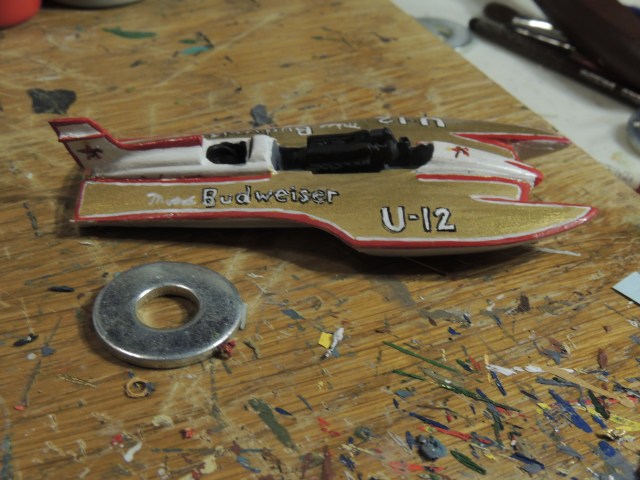
One of Shawn McEvoy’s designs simply is that 1973 Budweiser boat.  Because my knowledge of the 1970-81 period is so limited I’ve had to do a lot of searches for usable boat paint schemes, but when I finally spied the 1973 Bud, it was clear I had to do it whether I like it or not.  And let’s face it, from an aesthetic standpoint, what’s not to like? The gold decking together with the white canopy and engine compartment, together with red and white striping make a striking contrast.

DSCN1501

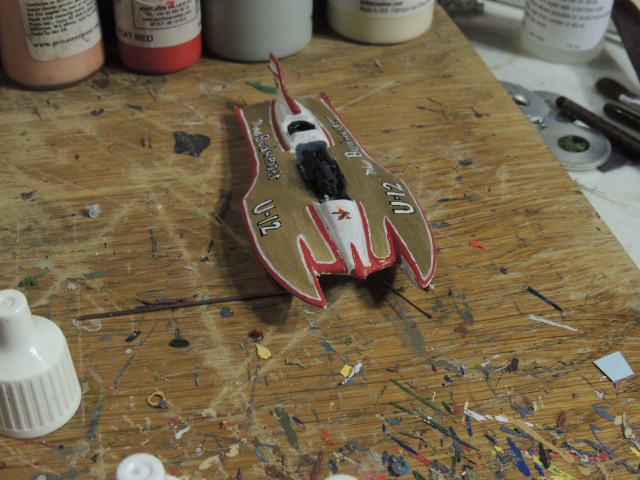
1973 Miss Budweiser is painted Vallejo Old Gold, Vallejo Foundation White, and Vallejo Flat Red

I painted the boat hull Vallejo Old Gold.  The regular gold color was simply too bright, and this is the correct shade.  I also used Vallejo Flat Red for the striping, though I used the somewhat browner Skorne Red by Formula P3 for the red A in the Anheuser Busch logo. I got a bit adventuresome outlining the numbers and lettering on the boat hull.  Always a challenge, but I felt it needed the contrast.

DSCN1503

The washer is about quarter sized.  Just to give you an idea of what I’m working with.

I’ve identified the other boats I’m going to do for Enfilade.  They will be Miss Pay n’Pak 1974, Miss Atlas Van Lines 1976, and The KISW radio boat, Miss Rock 1983.  I’m not sure how quickly I’ll get them done, but they are needed for Enfilade, so time’s a wastin’

On my painting table.

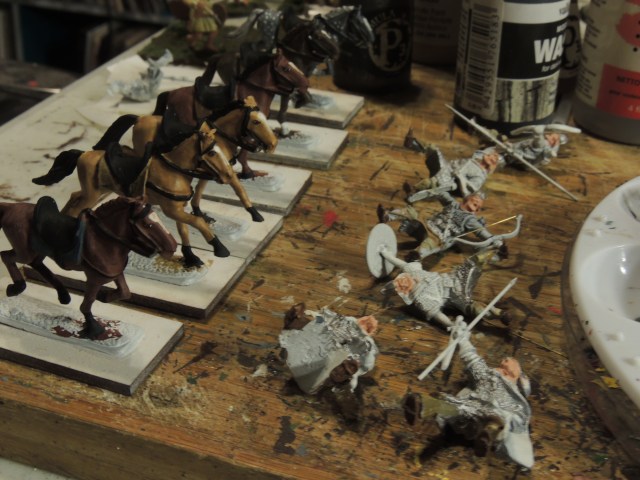
Those same six Rohan cavalrymen are staring at me from my painting table.  The horses are done, but I haven’t progressed much since I last posted about them.  I’m hoping to have them finished by my next post.

DSCN1504

The horsies are done. I just need to get my act together and finish the riders.

Music to paint by

I collect album covers by Hipgnosis, the graphic arts company featuring the photographic art of Storm Torgerson and Aubrey Powell.  They did tons of interesting covers for Led Zeppelin, 10 CC, The Alan Parsons Project, Pink Floyd and a host of less well-known bands.

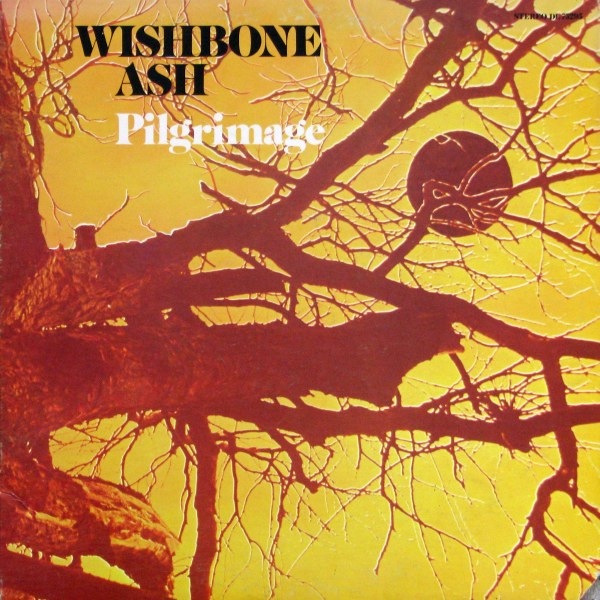
Pilgrimage

I picked up a few records cheap by Wishbone Ash, a British rock band featuring many Hipgnosis covers.  I finally got around to listening to Pilgrimage, their 1971 second album.  It was a fascinating record.  Reviewed as progressive rock, I’m not sure I quite agree. It’s more blues-based guitar rock, with a very avant garde feel.

The first song, “Vas Dis” opens with an intensely picked guitar, strong rhythm lines, and a vocal track that basically sings scat.The album is dotted with interesting instrumental pieces.  Really great stuff. Very progressive, with jazz overtones. I have a couple more albums by Wishbone Ash and really need to give them a listen.


Skytrex ships

Skytrex is gone forever. I don’t know if you could call them venerable, but it seems to me that twenty five years ago I was looking at their paper catalog and scratching my head trying to figure out how to order from them.  A British company, Skytrex carried this wonderful wealth of different miniatures–WW I planes in 1/144th scale, 1/300 scale planes, WW II and modern coastal vessels. And 1/200 scale armor and infantry–sounds weird now, but in the days before 15mm armor became universal, it was the bridge between micro-armor and 20mm. The real problem was ordering.  In those days I had to make an international phone call in the morning before I left for work, which invariably cost as much as what I was ordering.  Ah, the days before the internet and online shopping. Editors note: This is not correct!! In fact Skytrex does exist, though many of their ranges have been sold off elsewhere, including the WWII coastal line. The modern coastal vessels are still available.

A couple of years ago Skytrex went away and their coastal miniatures were acquired by ROS/Heroics.  Since their breakup from Navwar, I’ve ordered from ROS a few times.  I needed stuff for the St. Nazaire project.  I’ve always found it to be a bit more of an adventure than I would like. I always get my order, eventually, but a four week wait or longer is not unusual.

During this long weekend I focused my attention on getting my small remaining bunch of ship miniatures finished, including the German Type 24 torpedo boat I’ll need for the Channel Dash scenario at Enfilade.

Let’s start with the Siebel ferries.  Pretty simple miniature.  Painted overall in Vallejo Neutral Gray, deck finished in Ceramcoat gray-brown, a quick dry brushing with Vallejo Light Sea Grey and washed black.  Honestly there wasn’t a lot to the models, and not a lot to the actual catamaran ferry/assault craft. The heavily armed escort version of the model is a nice twist.  I like having the addition to my pile of WWII coastal miniatures.  Something different.

DSCN1492

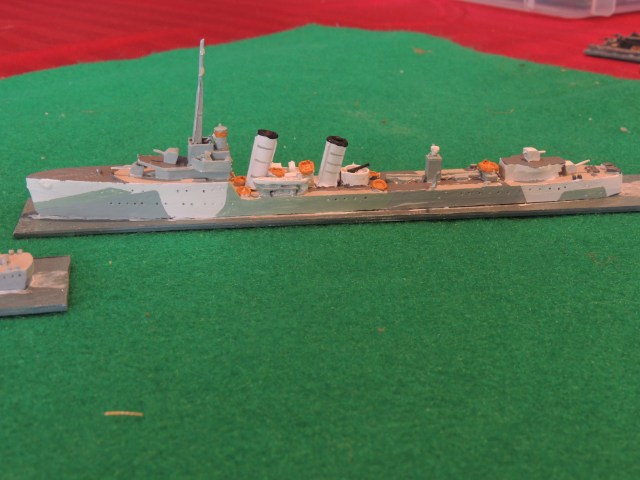
Next on the list is the HMS Vixen, a V and W class destroyer.  Weighing in at 1,100 tons, this large class of 69 destroyers was authorized and built during World War I and served throughout the Second World War. I bought, assembled and primed this miniature a few years ago, while Skytrex was still Skytrex. I decided on something different.  I usually avoid painting camouflage patterns, but opted for the Western Approaches scheme.  It combines white, a light, pastel green and an even lighter blue. No problem, eh?  Unfortunately, the, blue, Vallejo Pale Blue, came out much darker, or at least scaled out much darker than it seems.  But I’ll be damned if I’ll repaint.  When looking at the side view of camouflaged ships I’m always at a loss about the decking and what that looked like.  I gave a deck tan in the obvious spaces, and everything else is Vallejo Neutral Gray–one of my favorite go-to colors.

DSCN1499

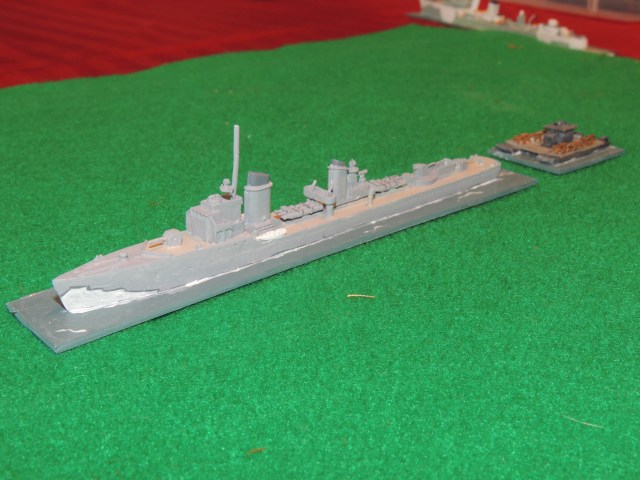
Finally, I ordered the Type 24 torpedo boat from ROS/Heroics in November. Assembly was pretty easy, it was just the question of what to do with the paint scheme.  I had one of those internet moments, scrolling through the web looking for color side views of the Type 24/Elbling Class and thought I found something interesting with a bow wake camouflage and red gun turrets. I closed the page and never found it again.  Sigh.  In any case, I painted my torpedo boat in Vallejo Light Sea Grey and gave it the bow wake marking as best I could remember.  I’m actually pretty happy with it.

DSCN1494

So I’ve added these six ships to my collection of coastal vessels, giving me about sixty all in all. The vast majority of my ships are the excellent resin miniatures by David Gregory at PT Dockyard, but there are a handful of the Skytrex metal models in there too.

On my painting table

I’m in the middle of my next batch of Dragon Rampant figures.  These are old Mithril Riders of Rohan from the early 90’s.  Probably worth a lot more unpainted than painted, but I need a batch of collectible miniatures like a hole in the head. The horses are okay, but simplistic; it’s the riders that are pretty interesting.  I’m calling them Riders of the Westfold, with Erkenbrand as their leader figure.

Less is more

The six ships adds +6 to my totals for the year.  No new purchases keeps me headed in the right direction.  +25 for 2016.

Music to paint to

Zephyr

One of my better $1 finds last year was Going Back to Colorado by Zephyr. This 1971 LP by a band you’ve probably never heard of will not blow you away.  It is an album better for its component parks than a complete whole.  When I was much younger I would see lots of albums by Tommy Bolin.  Lots.  And I had no idea who this was.  Was he related to that T-Rex guy? No, he was a wunderkind guitarist who died uselessly of a drug overdose at age 25 in 1976.  Together with vocalist Candy Givens, Zephyr offered a couple albums worth of sort of bluesy rock.  I’d characterize Givens as an Anne Wilson-lite kind of singer.  The heart is there but the instrument isn’t.  Most of the ten songs on the album show Bolin as a support to Givens, but on “See My People Come Together,” Bolin is freed–and fully unlimbered he is pure fire. Not a great record, but interesting, and for a buck . . . any time.


Bostons and the Irish cops

DSCN1479

I’m having a great painting month.  And with a four day weekend approaching (for this teacher, at any rate,) and nothing much planned, I’m looking forward to a great painting weekend.

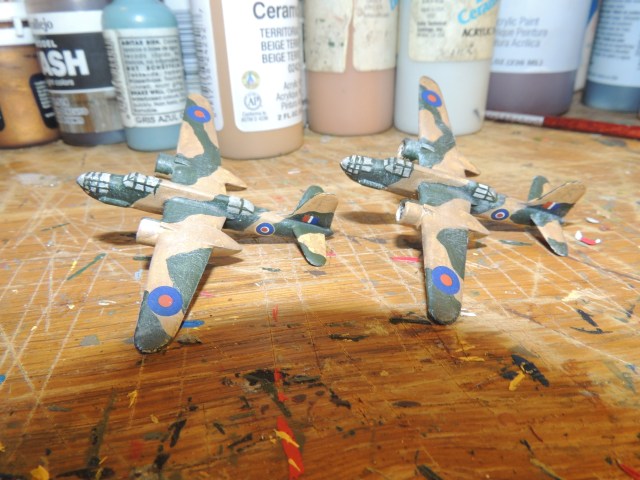
First on my completion pile is the C in C Boston bombers.  These are American built bombers built by Douglas.  Primarily light bombers or attack planes and given the designation A-20A, many were flown by the Brits as Boston II’s.  I chose to paint them in a North Africa/Mediterranean scheme.  They are my entire British RAF representatives for this theater.  Maybe I need more. It will encourage me to paint my GHQ Hurricane II’s I’ve had sitting around for decades.

DSCN1483

The miniatures are by C in C. The minis have lines that are really clean and I like that.  However, they are bit short of detail.  Overall nice, but lacking a little bit, or the scribing so light for the control surfaces I simply painted out the detail The camouflage is Vallejo Desert Yellow as a base, with Vallejo Military green.  I dry brushed over the whole business with white to lighten up the colors a bit and then black washed the lot. The undersurface is painted with Vallejo Light Grey.  The paint scheme is out of the book Flying Colours.

I’ll probably add two more at a future time so I have four planes to work with.  That’s the minimum.

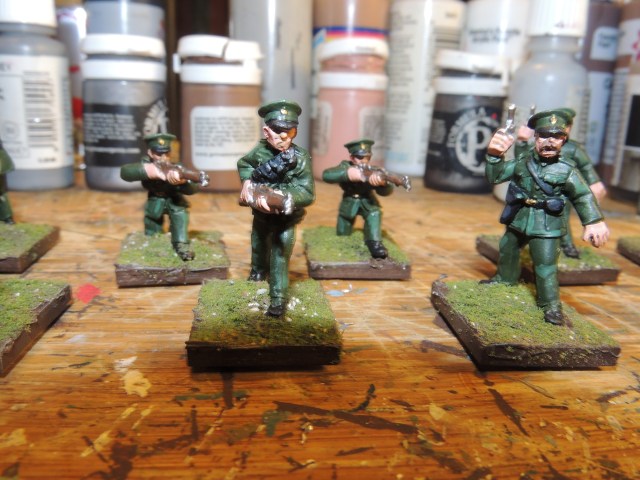
I’ve also completed nine of the Musketeer/Footsore Royal Irish Constabulary figures. These are figures I really enjoyed painting, probably because they are really easy.  With their dark green 20th century uniforms, there isn’t a whole lot to them.  I used Vallejo Military Green as the base color and did my best to highlight them, but they are still pretty dark. I painted their cartridge belts black, which may be a no-no, but I have no photos to refer to for this equipment, and all other belting was black and the Auxies most definitely wore black cartridge belts.

What’s on my painting table?

DSCN1486

From the RIC to WWII at sea.  I’ve assembled and primed four of the Skytrex-now ROS/Heroics-Siebel ferries.  I had a couple I purchased during our St. Nazaire prep last year. I added a two more in December. They’ll go with my 1/600 coastal collection.  They served in the Mediterranean, the Baltic and the Channel coasts.  A unique catamaran vessel they were designed for the invasion of Britain in 1940.  They were designed as amphibious landing craft, and could carry about 100 tons of cargo, including trucks and tanks.  Experimentation with propulsion systems included truck engines and aircraft engines. All were armed at least with light AA weapons, and some were armed with multiple 88mm guns.

After that, it’s on to a couple of much larger vessels, the German Wolf class torpedo boat we’ll use in the Channel Dash scenario. The second vessel is a British V & W class destroyer.  I’ve decided to do the Wolf in light gray with a white bow wave camo.  The British destroyer I’m going to color up a bit in a Western Approaches color scheme which includes a white hull and markings in pastel green and light blue gray.  No point in tedium.

After the ships it will be on to do the first unit of Rohirrim for Dragon Rampant.  These will all be Mithril miniatures I bought during the early 1990’s, so needless to say they’ve been waiting around for a paint job for a while. Then it will be hydroplanes and assembling some Crosley tenders for my Irish project. I have one model by Sloppy Jalopy and two more by Company B miniatures.  I’ll cross my fingers and trust to luck.

Less is more

I did make one purchase.  I picked up a pair of Passaic class monitors from Thoroughbred.  Just wanted to fill out what I have. This will give me three monitors from a class of ten. I won’t need any more.  I suspect another order in the not too distant future-probably a Canonicus class monitor and the Civilian Purchased Screw steamer variant of the always useful Yankee Gunboat model.  Any variety of steamer I can put my hands on is a bonus.

That makes me a +11-2 for this time, and a + 19 for the year.

And a quick plug

I’ve been buying 1/600 scale ACW ships from Throughbred Figures since they issued the Albemarle almost 25 years ago.  I’ve always loved owner/designer Toby Barrett’s work. It is of high quality, sturdy and for an all metal miniature, very fairly priced.  Now Toby has added superb customer service.  I ordered my monitors on Monday and they were in my mailbox today (Friday.) For the record, Virginia Beach, the home of Thoroughbred Figures, is about as far as one can be from beautiful Puyallup Washington, and remain in the continental United States.  Check it out here.

Pages afloat

Normally I would be sharing some awesome music with you.  Unfortunately my listening habits have been detoured by my decision to binge watch The X-Files.  Sick? A waste of time? Absolutely, and I’m enjoying every minute of it. But for the next post, I promise I’ll share a review of Zephyr, by the band of the same name.  Haven’t heard of them?  Well, you will soon.

However, I have bought a few books recently, all of them related to naval warfare in a couple of different periods. Note:  I have read none of them yet, but two are relatively new, and worth knowing about.

51j13gnZ0mL._SX342_BO1,204,203,200_Henry V’s Navy: The Sea Road to Agincourt and Conquest 1413-1422 .  by Ian Friel To suggest that books about the Hundred Years War at sea are as rare as hen’s teeth may be giving too much credit to the hens. The only other book-length study I’m aware of is 2011’s Edward III and The War at Sea, 13227-1377 and is pretty much worth a king’s ransom (and somehow I missed it when it came out, sniff.)  I determined not to be shut out when this book became available on February 1, and promptly ordered a copy.  The small volume was not over-priced, and I’m hoping to read it soon. Henry V was a noted shipbuilder and vastly increased the size of the fleet that virtuallydisappeared during the reign of Richard II.
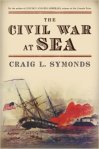
51CezmtWcJL._SX329_BO1,204,203,200_The Civil War at Sea by Craig Symonds.  Symonds’ name may ring a bell.  He’s a prolific writer, best known for his military atlases, but he’s written about many military topics, including the naval aspects of the Civil War.  He tackles this massive topic thematically rather than chronologically, focusing on the changing nature of ships and armament, the blockade, commerce raiding, war on the rivers, the attack on ports (using Charleston as an example) and the success of the Union naval strategy. The book has only 170 pages of text, so it tends not to get hung up on detail, so if that is your desire this may not be the book for you.  But as a thematic interpretation of the Civil War on the water, it could do the trick.
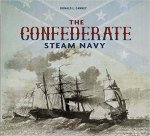
61yXPXIuvrL._SY454_BO1,204,203,200_The Confederate Steam Navy by Donald Canney.  I have only ordered this book and haven’t received it yet.  But I have been angling for a copy since it was released on December 9th.  Canney’s book on the Confederate Navy is supposed to mirror his brilliant two volume study of the The Old Steam Navy that went out of print in the ’90’s.  These are books I constantly consult and I believe the new book will be just as useful.  So much of what is written about the Confederate Navy is conjectural while Canney’s work always seems to be anything but.  It covers all types of vessels from the ironclad rams to blockade runners, and as with his previous work, will be crammed with illustrations and photos, some not previously published.  I’m excited.  Hoping it arrives from Amazon today.


Orcs!!!

I’ve finished painting my band of orcs.  There is a great variety to them because they are by three different manufacturers.  The tallish looking ones are by Mithril Miniatures.  The short squatty guys are Ral Partha.  The biggest and two smallest are by Alternative Armies. I like ’em.  It’s a nice variety-as manufactured creatures should be.

The twelve figure unit didn’t take long, just a few days.  To insure a mix I went with three different Vallejo colors as the basis for their flesh–khaki, khaki-grey and stone gray.  I painted their accoutrements a variety of grays and browns and washed the lot brown.  Made sure to paint on something resembling a face and even managed some eyes.  Pretty basic, but I wanted to insure some variety.

This is the first unit for my orc Dragon Rampant armies.  Ideally I’d like to have a total of eight, or enough for two retinues (or whatever the clot of units is called for the fantasy game.)  They were fun, and they’ve been awaiting paint for about 25 years.

And on my painting table . . .

I’ve mapped out a plan for February, which gets an extra day because of leap year. Here’s what I’ll be doing this month:

  1. The two Boston bombers are next on my list, and I’m already making good progress on them.  Wish I had a couple more.
  2. Nine Musketeer/Footsore Royal Irish Constabulary figures for the Irish Civil War.  They were the British cops who were well-armed, but not as nasty as the Black and Tans and Auxies, who were often veterans brutalized by their experiences in France.
  3. Six 1/600 scale ships.  This includes a German Wolf class torpedo boat and a British V and W class destroyer, as well as four German Siebel ferries–motorized catamarans used to transport stuff around the Adriatic.
  4. Six Mithril Rohan horse.  They’ve been knocking around my unpainted pile for decades and its time to get them done.
  5. if I can get all these finished with time remaining for the end of the month, I’ll turn my attention to the four hydroplanes that need painting.  That would be as much as 39 figures painted by the end of the month, including the orcs.

Less is more

No new figure purchases.  I hope that’s something I’ll repeat with regularity throughout the year.

Painting the dozen greenskins gives me a total of +10 for 2016.  Love to see the pluses.

Music to Paint By

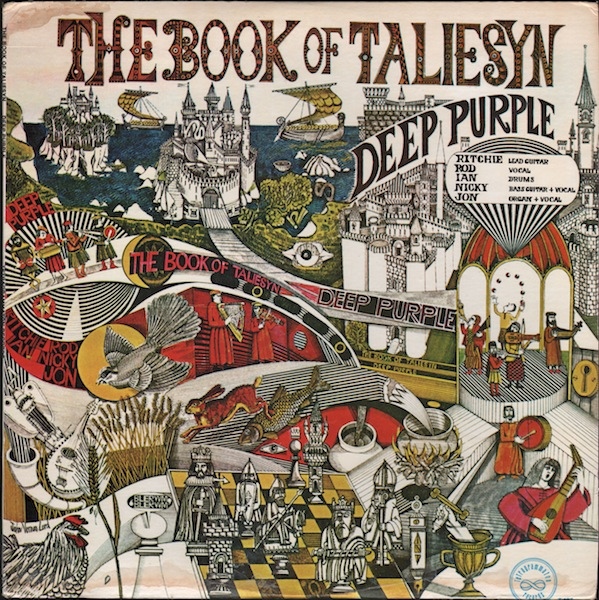
Deep Purple is best remembered as a guitar heavy rock band from the 1970’s.  Though not as well known as Led Zeppelin, like that band they had a death dealing guitarist in Ritchie Blackmore, and later they had an awesome vocalist in Ian Gillian.

But in 1968 they released their second album, The Book of Taliesyn.  It’ an odd album that is desperately trying to find its place among the many bands exporting music from England.  With the fiery, “Listen,Learn, Read On,” I was reminded of Pink Floyd’s Piper at the Gates of Dawn, and other bands producing uniquely British psychedelia.  But other songs are more puzzling.  The purple bunch cover Neil Diamond’s “Kentucky Woman,” The Beatles “We Can Work it Out” and Ike and Tina Turner’s “River Deep Mountain High.” The remaining songs are an odd mix of guitar rock and  folk influenced songs.  This is a band still searching for an identity they will find later.

Book of Taliesyn

Very uneven stuff.  But it has such a cool cover!!!!