Enfilade Day Two: period one

Almost a full house this morning. One table empty due to a no-show. The hall is buzzing. Life is good. Lots of good games from lots of periods.

Here are some of note.

20130525-103118.jpg

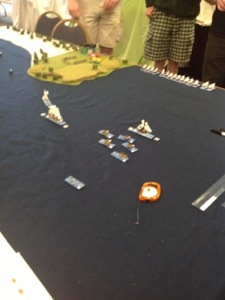
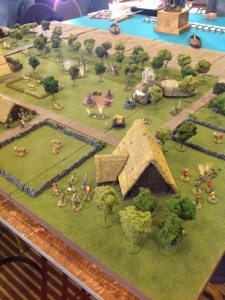
Neil Marker’s The Battle at Bjork’s Drift. A 28mm battle on Mars.

20130525-103355.jpg

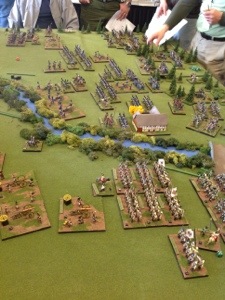
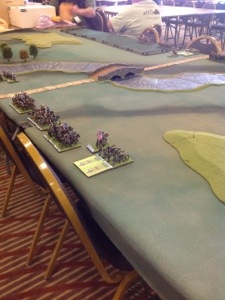
Dave Schueler’s Second Battle of St. Leonard’s Creek.

20130525-104112.jpg

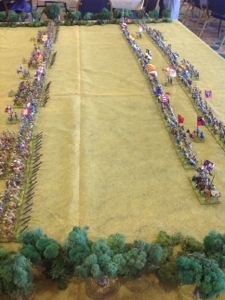
Doug Hamm and Seth Terry run the Battle of Hanau in 28mm

20130525-104340.jpg

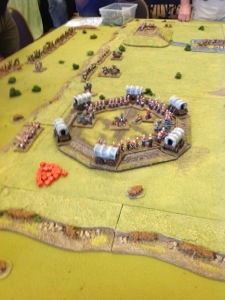
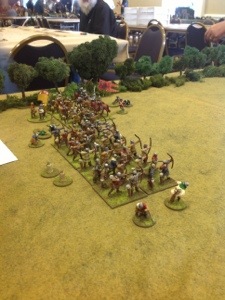
Chris Leach runs his Conquest of Empire game in 28mm. Can’t have too many Zulus.

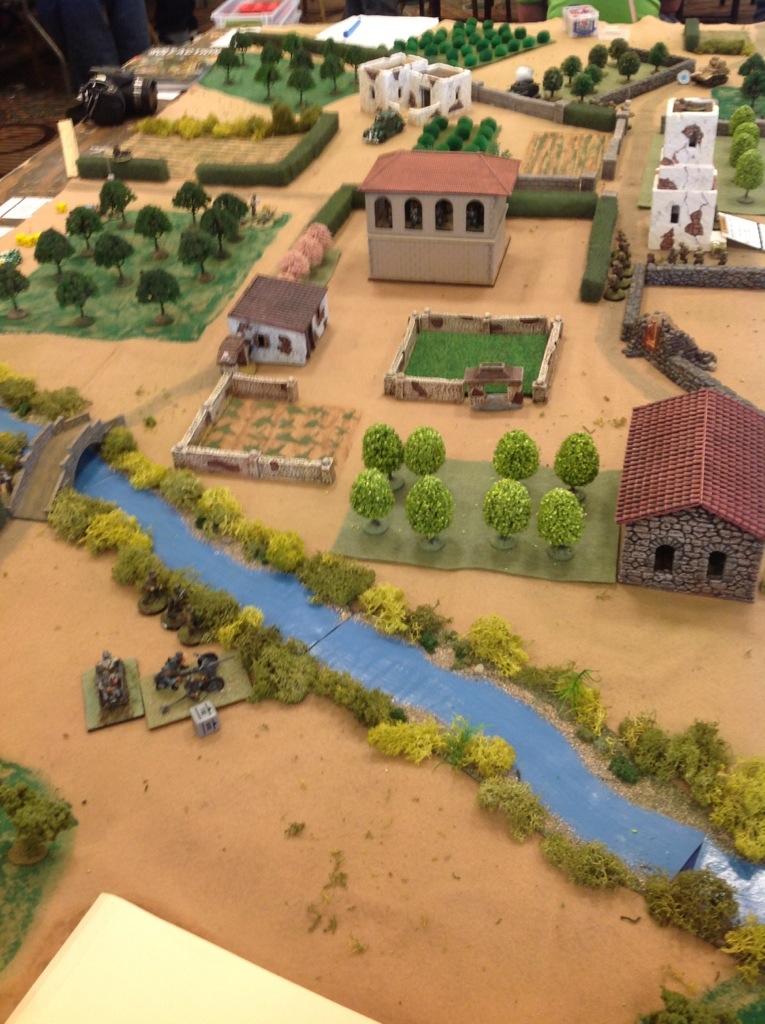
Best of show winner for this period: assault on Crete.

20130525-125643.jpg

Enfilade live blog?

It’s Friday!!! I’m so excited for the convention. Usually I go with this feeling of foreboding and am totally stressed out. But I don’t feel that way this year. Maybe I’m just too dumb to know better. In any case I’m looking forward to it.

I thought I would try my hand at some live blogging this year. Of course that’s all contingent on having access to wireless at the hotel. If there’s no free internet, no live blog. I’ll try to keep anybody that reads this blog up to date as I go along. One more caveat: there are six game periods, I’m playing in one of them and running games in four of them, so it may be difficult to get around a lot.

1:30 at the Red Lion. Half hour short of the first game period. Here are pics of games being set up.

20130524-133253.jpg

Lloyd Bowler and Dave Mebust’s Viking Run Game.

20130524-133540.jpg

Fix that damn Bridge game 28 mm Civil War

20130524-133904.jpg

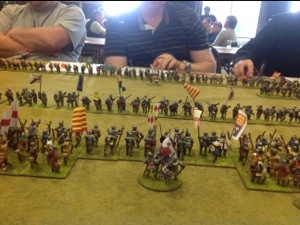
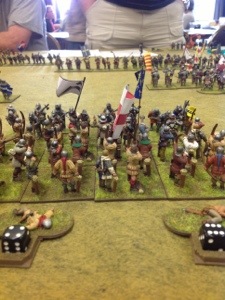
Chris Craft’s Henry V game.

Playing in Chris, Agincourt game. Old friend Kim Harris and I split a command. Unfortunately the English have not covered themselves in glory. Arrow fire has been fairly ineffective, so archers have been driven from their stakes. The French have been un able to totally take advantage of the situation but things are looking bad.

20130524-152740.jpg

20130524-152758.jpg

20130524-152831.jpg

Jammed full

When I made my last post, I thought it would be smooth sailing to Friday, but such things were not to be.  One of my problems is that even though my games are pretty easy to schlep and transport, I’m providing goodies for my friends to use.  A couple of game mats, and tidy tubs of air racers and hydroplanes, my Fleet Air Arm planes and throw in some rules and dice and ta-ta, I’m good.  However I’ve agreed to support Mark Waddington’s Crysler’s Farm game with figures and terrain, and Scott Murphy’s Martian game with figures.  This means transporting three times more stuff than I am dragging along for my own games.

I also needed to do some extra work for Crysler’s.  First, I made myself a little deal about mountings for my War of 1812 stuff.  I remounted all my artillery on 50mm square bases, from their much larger bases.  In some ways this is ground-breaking stuff.  Doug Hamm always feared having masses of artillery on the board.  Now there is.  I have five sections of militia artillery, four sections of regular artillery and two sections of naval artillery.  Need it all for Bladensburg.  Though Doug may fear bumping into this in a game, it all runs away defending Washington, except the naval guns.  I also remounted all my officers (six) on smaller (40mm square) bases, including one on a round base that could serve as a C in C.

I also agreed to bring trees.  There was a problem with this, of course.  I no longer own any singly mounted trees.  I followed Mark’s lead to create some vignette-like wooded bases.  Unfortunately, I only had four of these, and some were quite small.  I also had three that were incomplete, and much larger.  I decided to take these on over the weekend and finished them Sunday.  The key to completing these pieces is to try not to rush them.  Make them each look a little different. Not sure they are that great, but, I also think it’s foolish to make them too busy (just in case you have to put move figures through them.) I’ll need two tubs to get it all to Enfilade.

So lots of stuff going south.  This is complicated by my desire to part with my Geo-Hex.  I bought this in the early 80’s, and for a good fifteen years gave it quite a workout.  Unfortunately it’s passed it’s prime and I’ve tried to find other solutions to creating varying elevations. I have a willing victim who is willing to take it all, and there is a lot of it.  And that’s part of my problem.  Somehow I have to get it all down there. I did do a trial jamfest last night and everything seemed to fit.

Enfilade is just around the corner

The last 10 days before Enfilade. It’s always a spring down the home stretch to be sure projects are done. But that’s not the case this year. I didn’t have anything major to complete for the convention. I’m running an air racing game and hydroplane racing game. I’ve miniaturized all my air racers with the Shapeways planes. I finished the last of them yesterday. My latest additions are the Laird Solution, the year later Super Solution and the Howard “Pete.” All three were reasonably easy to paint, so nothing super challenging there.

Arctic Skunk's Howard Pete is very nice, and very small.

The Super Solution seems like it could be a bit more hefty with its bigger engine.

The Super Solution seems like it could be a bit more hefty with its bigger engine.

The Laird Solution is nicely executed.  Maybe the Solution is too big and the Super is just right

The Laird Solution is nicely executed. Maybe the Solution is too big and the Super is just right

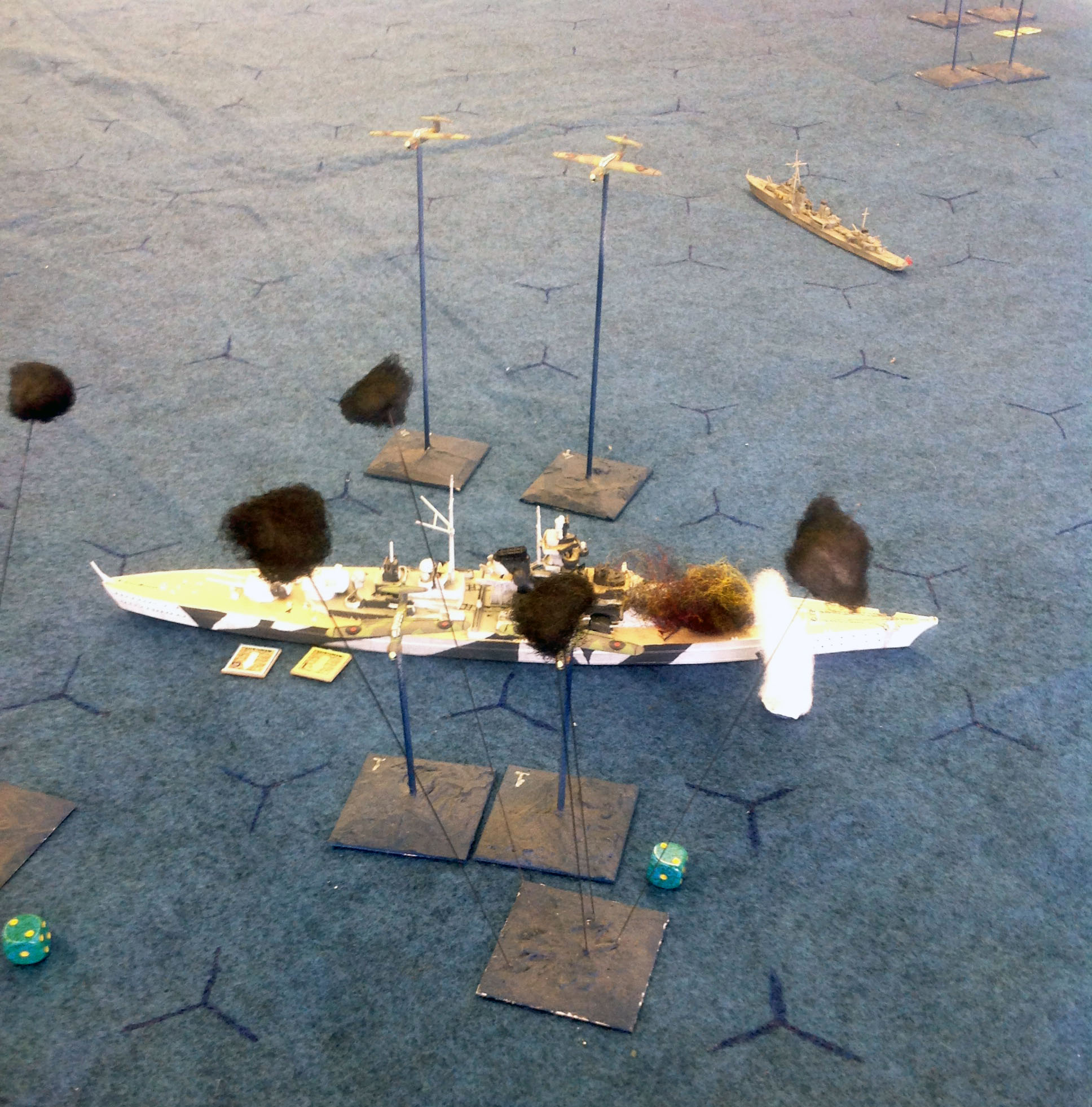
I’m also working with Dave Schueler on our Tirpitz scenario. We got together last Saturday (May 11th) to walk through the game. We were aided by Scott Murphy, Scott Abbott and son Casey. Dave already constructed the scenario, and the playtest showed the options were right on. The Brits had some interesting choices to make, and honestly the playtest was mostly focused on them. Casey and I sort of fiddled with the Germans. There were two things we really needed to accomplish. First and foremost, Dave and I needed to walk through the Mustangs rules. Once upon a time we played these a lot, but not so much the last decade. One reason we hoped Scott Abbott would play is because he has run the rules recently and he could keep us honest. The other big issue was walk through the flak rules Dave designed for the game. The light flak in the game rarely came into use as it only reached up to level 2, though we’re going to stretch it to level 3 for the game. The heavy flak was most concerning. It did damage a fair number of the incoming Barracudas and shot down one. We agreed the flak should have the threat of being effective if the Brits roll poorly or the Germans roll well, but there is a lot of potential for heavy damage, and we’ve decided to reduce it’s attack factor.

Barracudas fly through flak before beginning their dives on Tirpitz

Barracudas fly through flak before beginning their dives on Tirpitz

My other helping out game is with Mark Waddington’s Crysler’s Farm game. I’m schlepping all my War of 1812 stuff. I’ll supply whatever Mark needs, but still need to rebase some artillery and Indians. This weekend’s micro project.

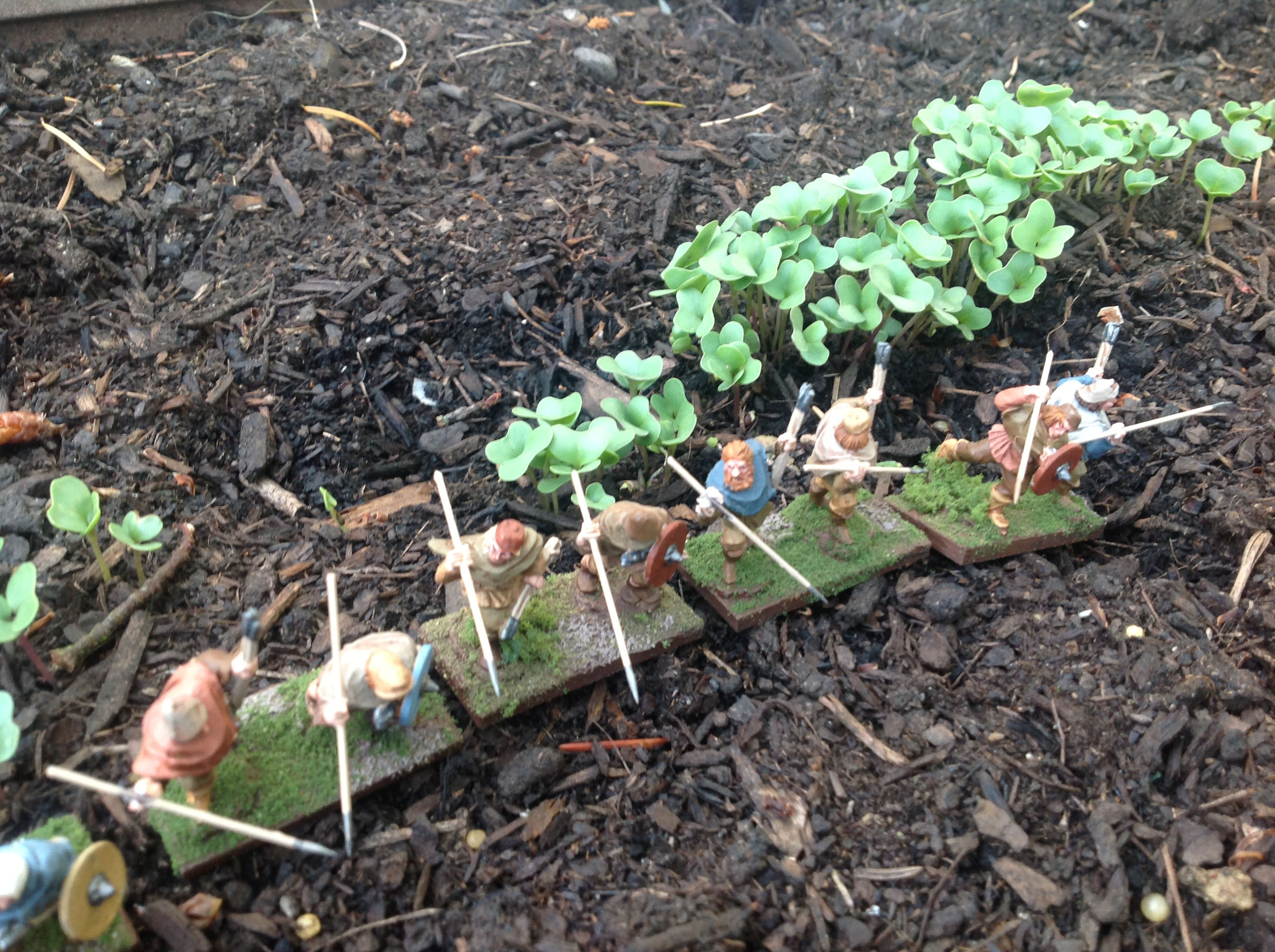
I’ve also recently finished some Breton light infantry-bidets or bidowers. Breton troops are interesting because they can fight for either side. They’re just javelin armed light infantry. Brittany was torn by civil war through much of the middle 14th century. Because it was one of several autonomous regions of France, owing feudal allegiance to the crown, that plunged into dynastic struggle during the Hundred Years War. With the French backing one side and the English the other, these fraternal conflicts persisted far longer than needed, plunging Brittany into needless bloodshed and misery. I’ve painted them very plainly, because they would have been drawn from the lower classes and fought mostly for loot. They are on half stands to show their skirmish ability.

Breton skirmishers advance through Farmer Smyth's vegetable garden.  Not a great angle

Breton skirmishers advance through Farmer Smyth’s vegetable garden. Not a great angle

I’m back to working on Royal Marines. One more unit to paint and then one more unit of Maryland militia for Bladensburg. After that, all that’s left is my Victrix British. I’m not looking forward to that but such is life. You buy ’em, you own ’em, you paint ’em.

New Shapeways racers

I ordered three more air racers for Enfilade from Arctic Skunk on Shapeways. They are the three newest models and welcome additions to my growing collection. First, I picked up Howard’s initial entry into racing, the “Pete.” I already have the “Mike” and I keep thinking Daveshoe will order the “Ike” to complete the trio.

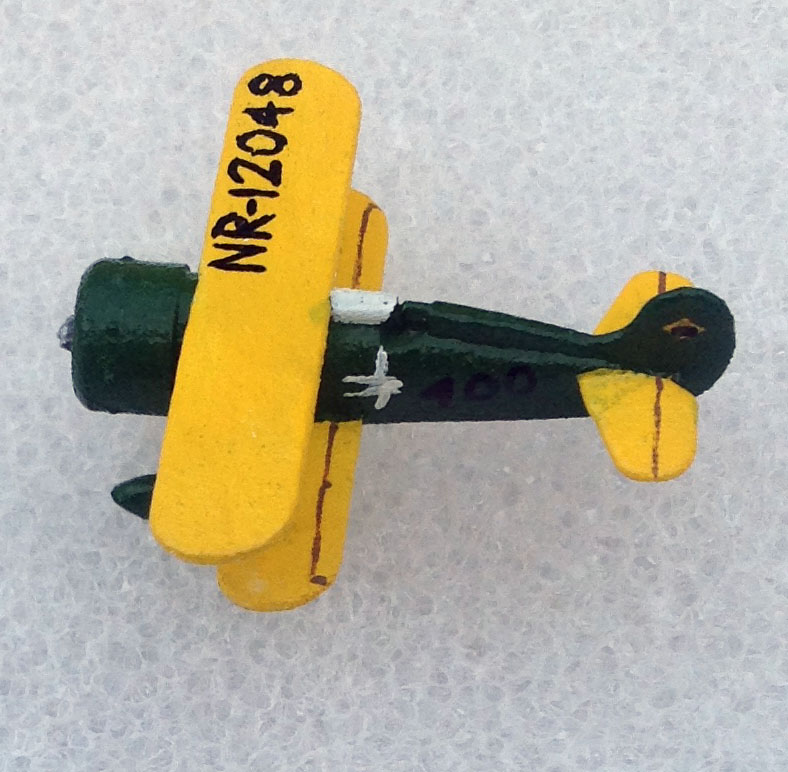
The other planes are both Laird racers. The first is the Laird Solution. In 1930 it was a helluva racer and was among the last effective bi-planes, winning the Thompson Trophy. However it’s powerful antecedent, the Super Solution, raced the following year and finished first in the Bendix Trophy cross-country race.

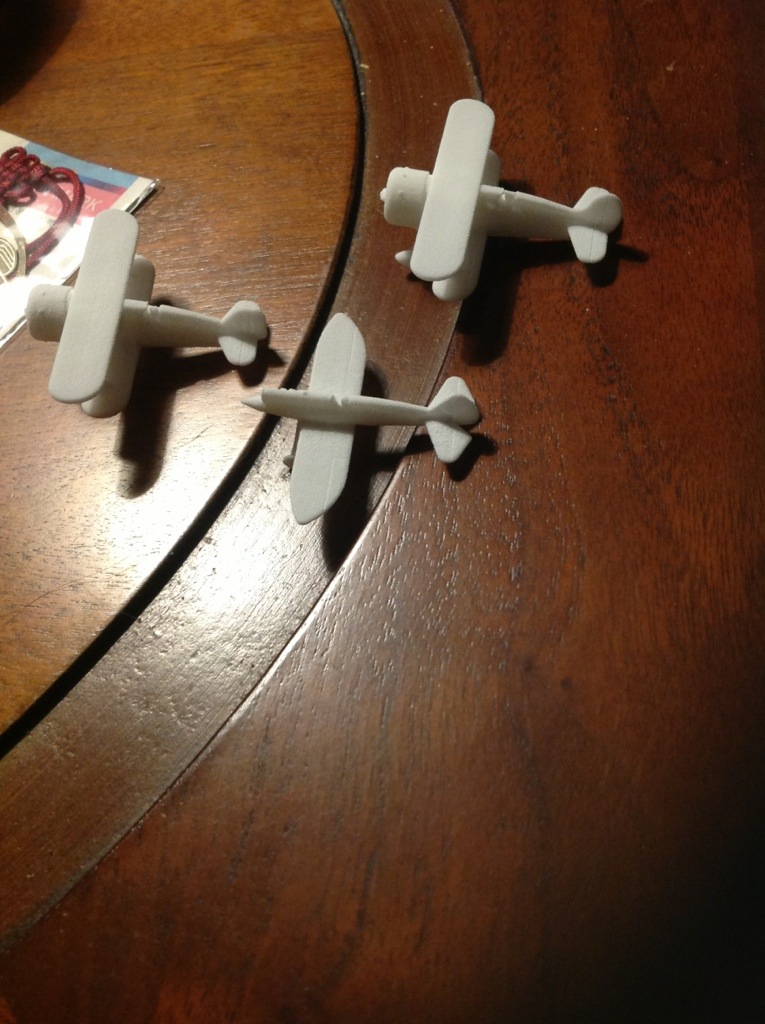
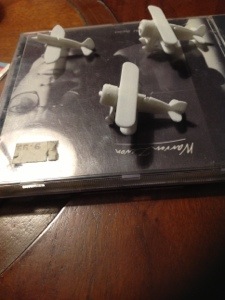
From top to bottom are the Super Solution, Solution, and “Pete.” I added the second picture to give you an idea of size compared to an excellent Warren Zevon CD.

These are the first bi-plane racers I’ve purchased. They are solid, like all of Arctic Skunk’s work. I hope to begin painting them as soon as I get home from San Francisco

20130425-203509.jpg

20130425-203545.jpg

“Gonna burn me to the wick, now won’t you-Barracuda?”

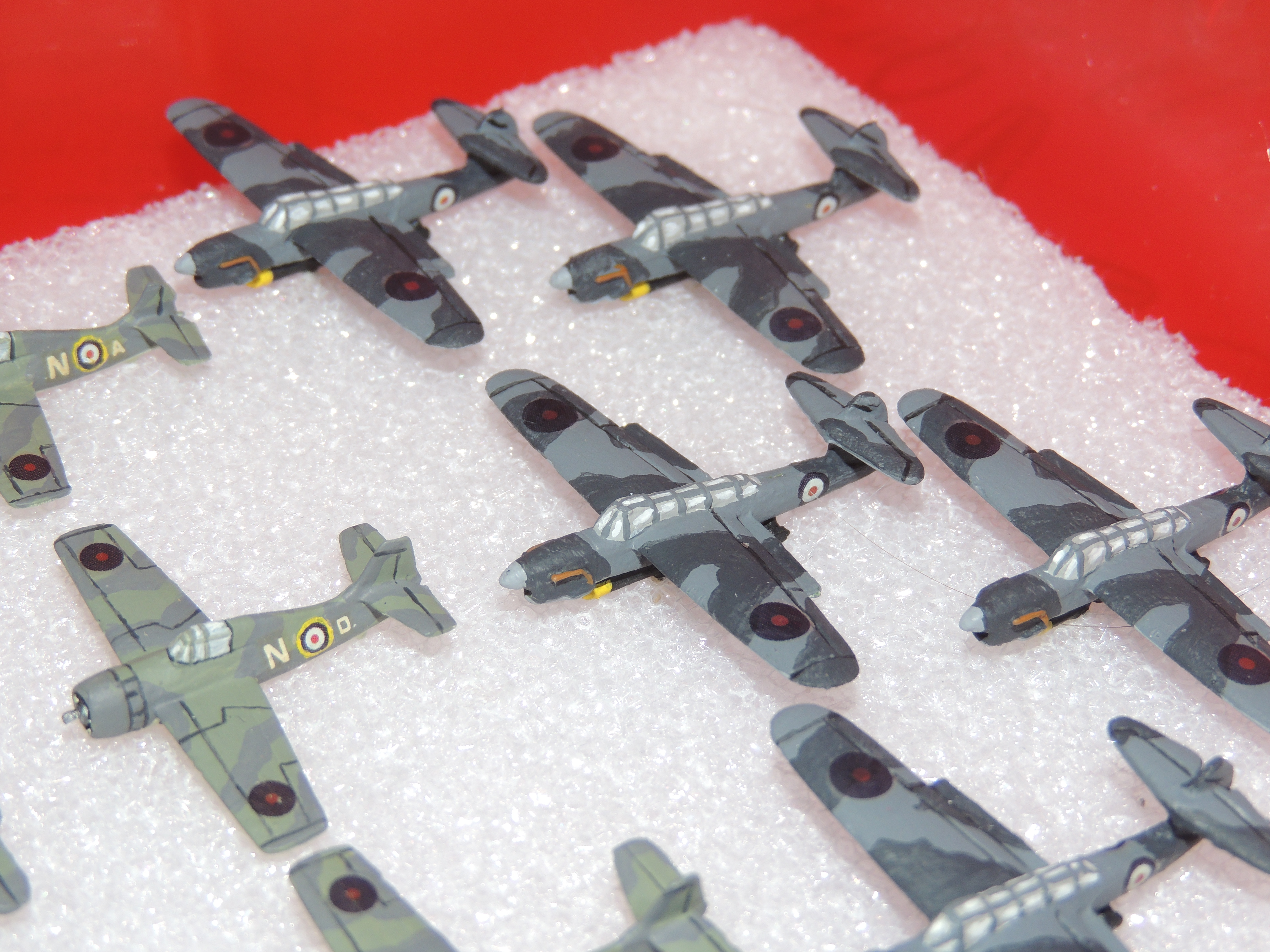
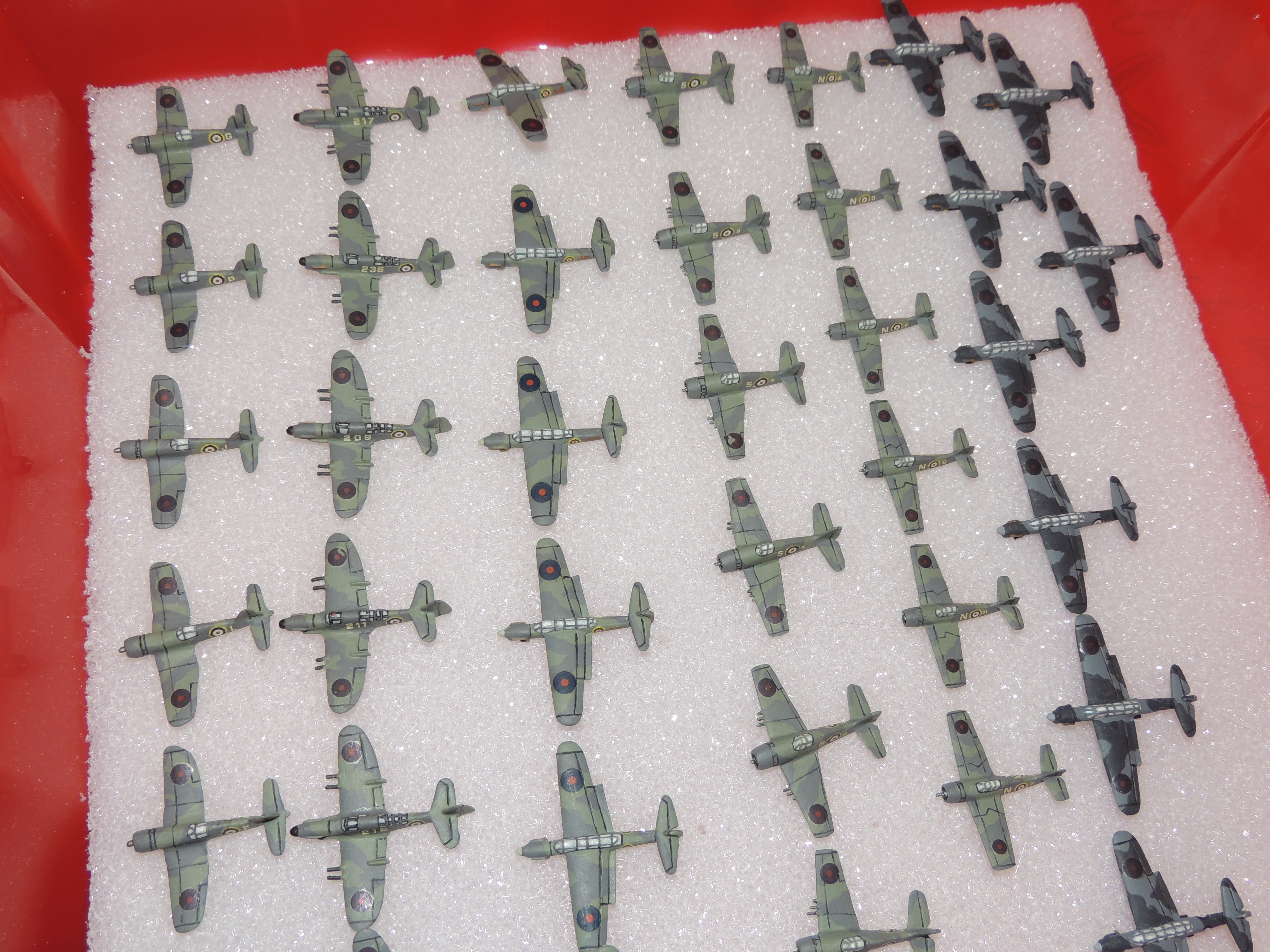
My newish Barracudas in gray comouflage.

My newish Barracudas in gray comouflage.

Barracudas 003

Dave Schueler and I have had a potential Mustangs scenario lurking in the weeds for most of the last 10 years.  No wait, twelve years.  I painted my Fleet Air Arm planes for Enfilade 2001 at the Marriott. Yikes.  In any case, Dave and I brought up my FAA planes in an attack on the Tirpitz, as with the Tungten raids of 1944, around the first of the year.  I revealed the number of planes I had.  I didn’t have any Fairey Barracudas, the British carrier-based bombers that were the chief strike planes in the attacks.  I hurriedly ordered some more Scotia planes from I-94 Enterprises and had them in a week.

The problem with all this is that I actually had a half dozen painted Barracudas.  I decided to paint them for the project anyway rather than toss them in a box where they might sit for God knows how long.  I ran into an immediate problem.  Could I recreate my original color scheme? I’ve already told this story right?  In any case, after numerous efforts to match the original paint scheme, I gave up.  I found an alternate gray on gray paint scheme used by the Fleet Air Arm and settled for that.  I used Vallejo Neutral Gray as the medium base color.  The undersides are painted light gray.  The dark upper surfaces are painted Ceramcoat Charcoal Gray.  I decided to choose a pattern for the camouflage and generally stuck with it on each plane.  That made it easy.

I dragged out my bunch of I-94 decals.  They’ve been carefully stowed away for most of a decade.  They don’t show up well due to the dark paint, and I deliberately saved myself the hassle of putting up the red lettering and stuck with the roundels.

Of course, while painting the ‘Cuda’s, Daveshoe reminded me the Tungsten planes were bomb armed, not torpedo armed like my new miniatures.  Something about the torpedo nets surrounding the Tirpitz.  Oh well.

I see myself continuing to paint from my stash of planes periodically.  I will probably take on some Scotia P-40N’s and C and C P-40D’s next.  They’re just fun to paint.

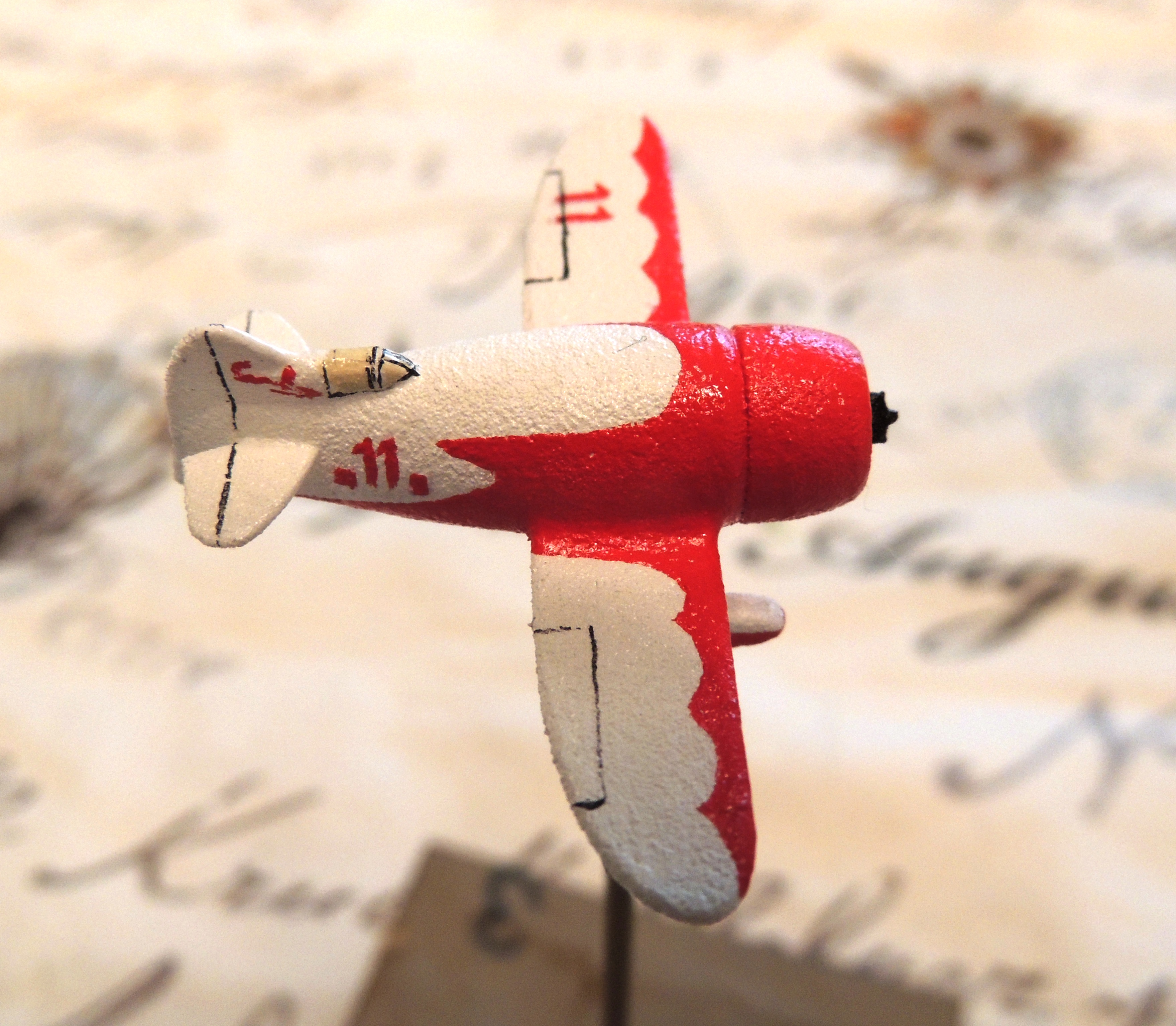
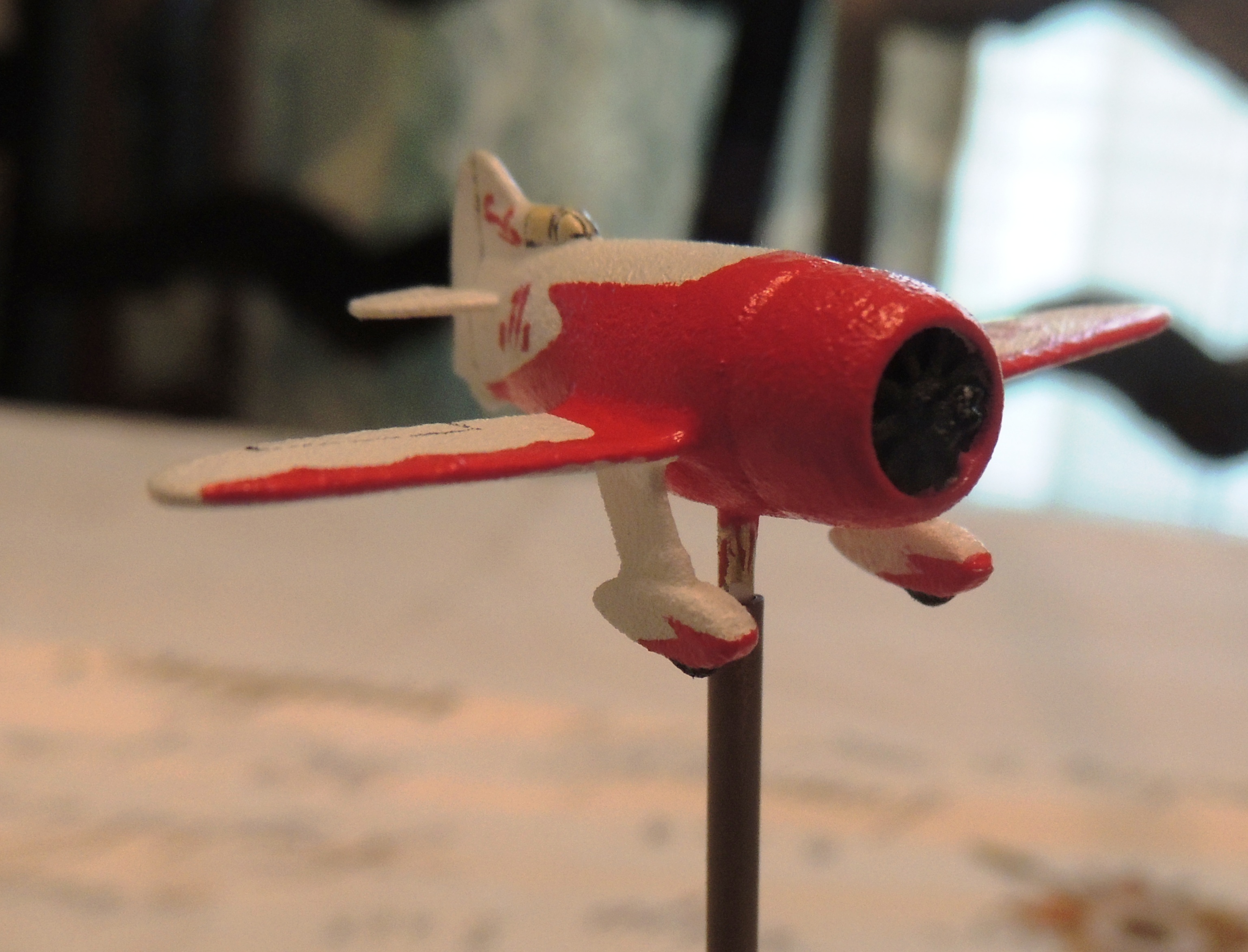
A fistful of Gee Bees

The last of my Shapeways planes are Gee Bees.  Gee Bees are air racers built by the Granville Bros between 1929-34.  They are perhaps the iconic air racers of the Golden Age of air racing due to their unique shapes and flying colors.  Sort of iconic like a black widow spider is iconic.  The Gee Bees eventually killed or severely injured all their pilots.  The reason there were no Gee Bee’s built after 1934 is because the Granville Brothers went bankrupt.

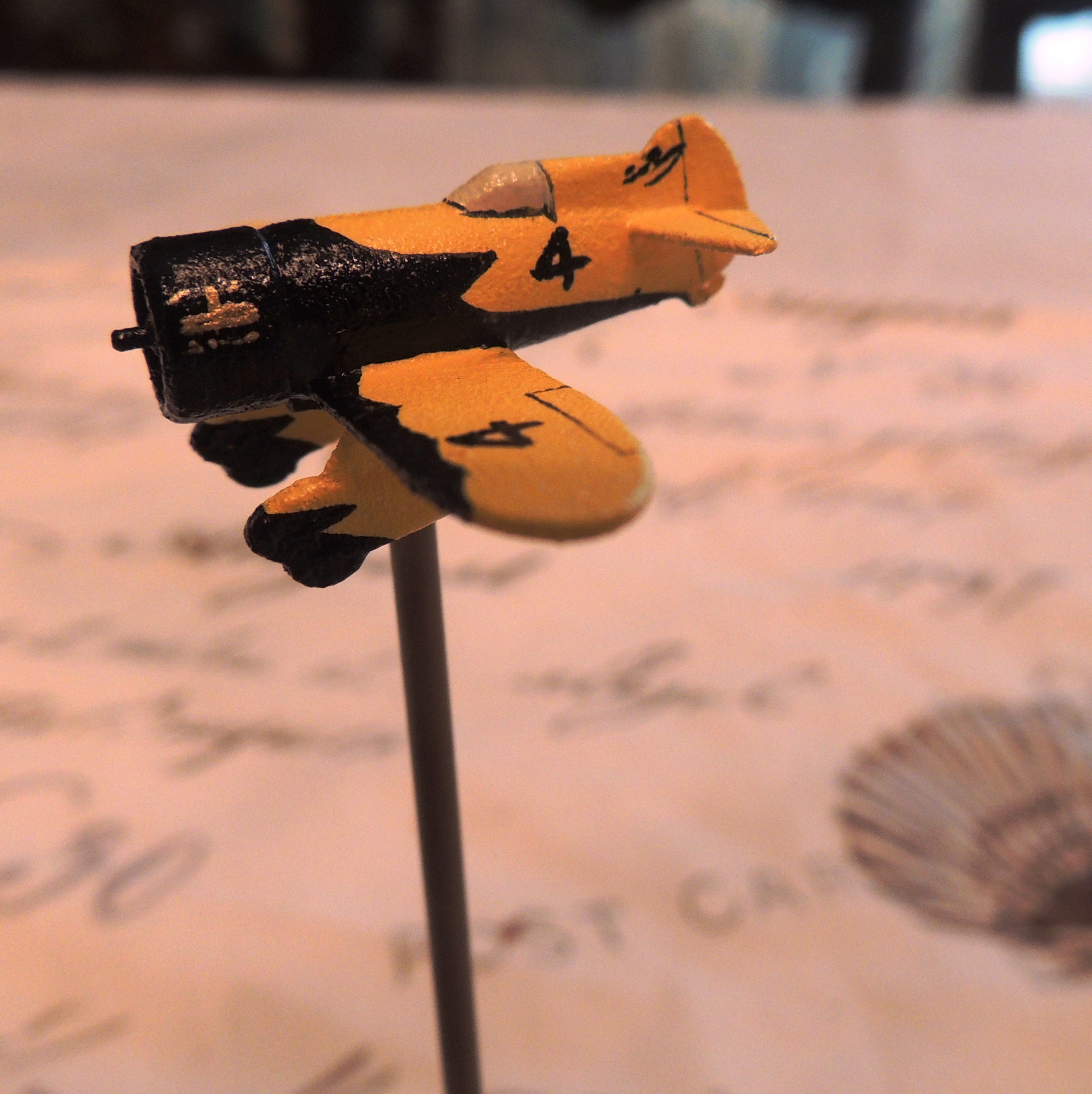
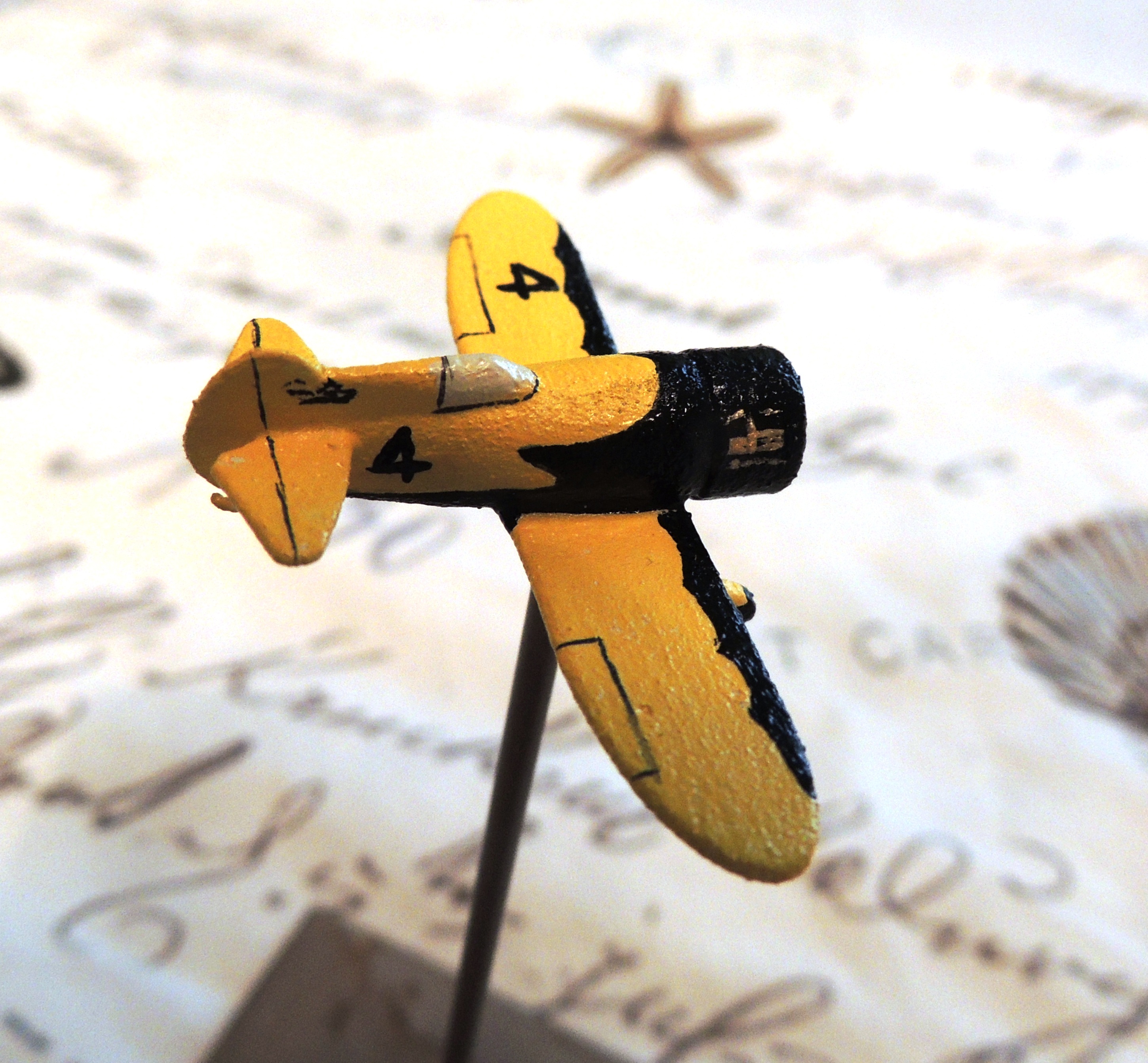
Gee Bee Z has a fuselage length of 1 1/8" and a wingspan of just under 2"

Gee Bee Z has a fuselage length of 1 1/8″ and a wingspan of just under 2″

It's a well designed, well cast miniature. Though it lacks detail, it just requires some photos and a little effort to make it usable.

It’s a well designed, well cast miniature. Though it lacks detail, it just requires some photos and a little effort to make it usable.

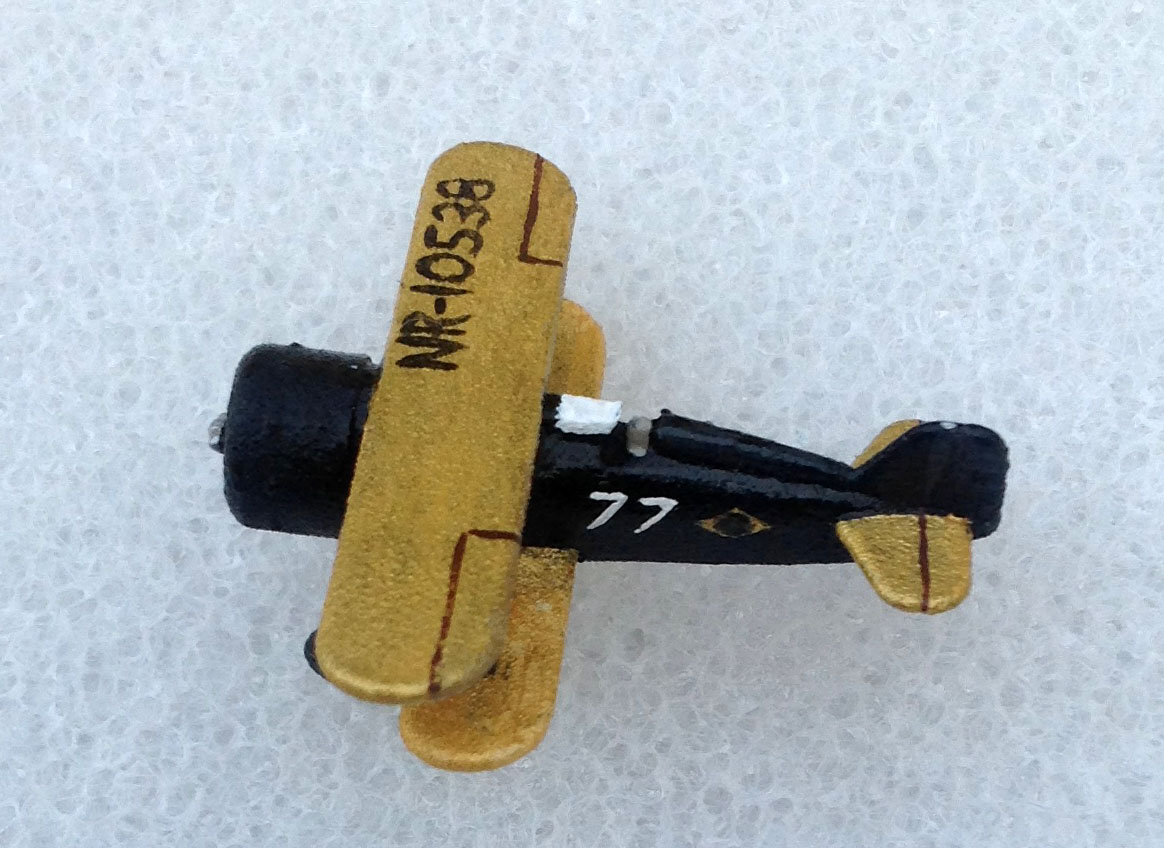
I’ll ‘fess up though, the Gee Bee Z, with the it’s 525 hp Pratt and Whitney Wasp engine is my absolute favorite plane.  Short and stout, its yellow and black flying colors make it seem short and quick.  That Shapeways produced the miniature was probably one of my incentives to move to the smaller scale.  The miniature is well made, though the rough resin really sucks up the paint.  I decided to go with Vallejo Deep Yellow as the base color with Vallejo black for the accent color. I felt  the pigment-rich Vallejo black would work best with the bumpy surface. My experience is there just isn’t a lot of room for error and my craft black just doesn’t seem to cover the resin well.  I’d never use a craft yellow for any purpose so the Vallejo yellow is a natural. The Gee Bee Z won the 1931 Thompson trophy, but crashed later in the year, killing pilot Lloyd Bayles

The most fun of the Gee Bees to paint.  You can see the much longer wings and fuselage than the purpose built racers.

The most fun of the Gee Bees to paint. You can see the much longer wings and fuselage than the purpose built racers.

??????????

The fuselage length of this miniature is about 1 3/4" and the wingspan is nearly 2 1/2".

The fuselage length of this miniature is about 1 3/4″ and the wingspan is nearly 2 1/2″.

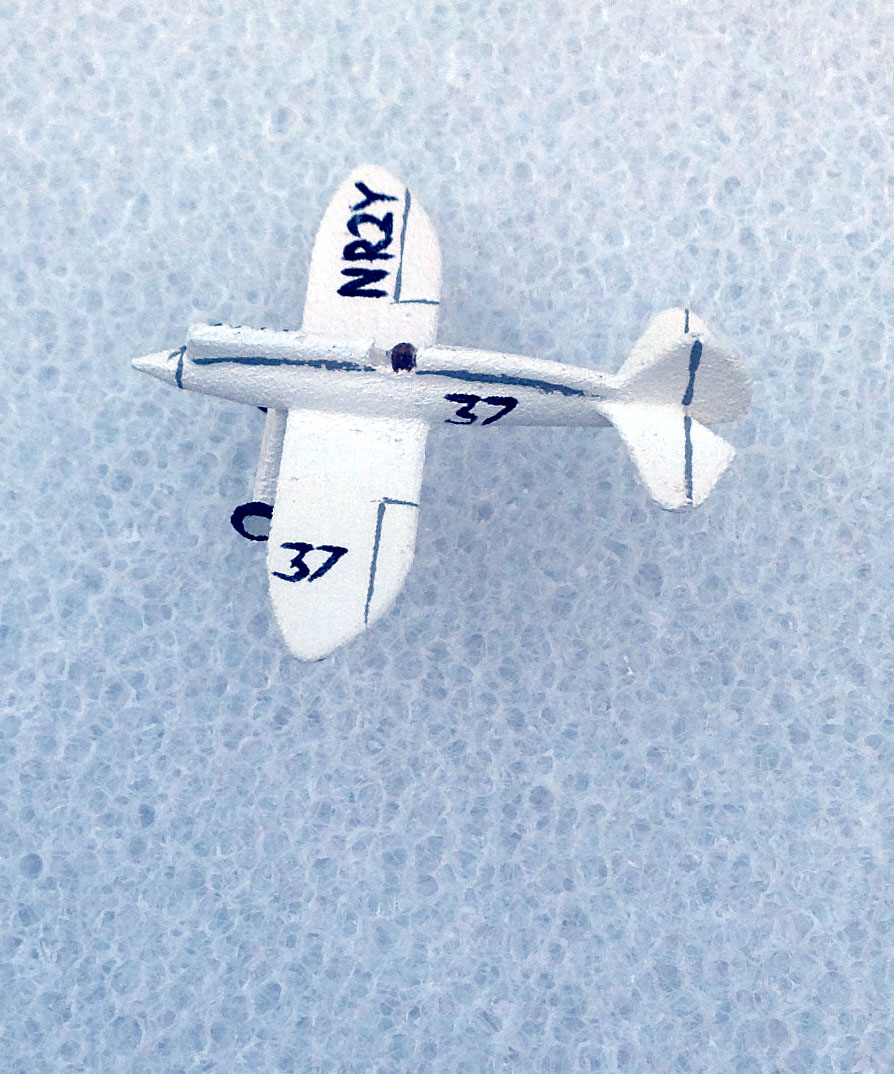
The Granvilles built two Gee Bee Model Y’s, called the “Senior Sportsters.”  Shapeways designer “Arctic Skunk” offers three version of the Y.  Mine is the 1931 version with the 215 horsepower Lycoming engine.  This plane was lost when it’s propeller flew off over New York City, and its engine vibrated loose.  It crashed in the ocean, but the pilot was recovered.  The second Y raced in the Chicago Nationals in 1932, finishing second.  The following year it appeared up-engined, with a 450 h.p. Wright Whirlwind.  This version killed pilot Florence Klingensmith at this same event.

All the Gee Bees had unique and interesting markings.  Due to the small size Doolittle's dice are hard to show.

All the Gee Bees had unique and interesting markings. Due to the small size Doolittle’s dice are hard to show.

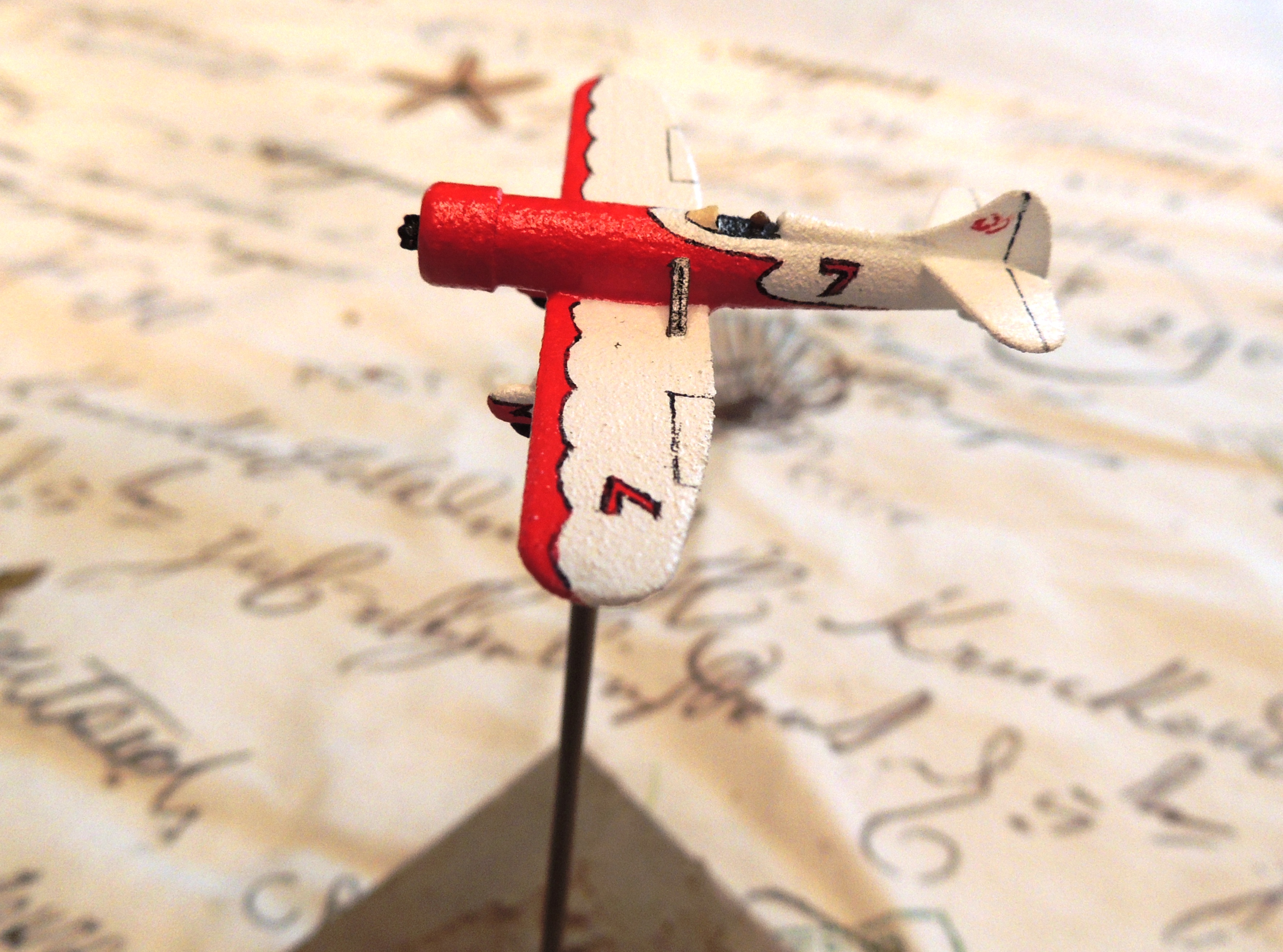
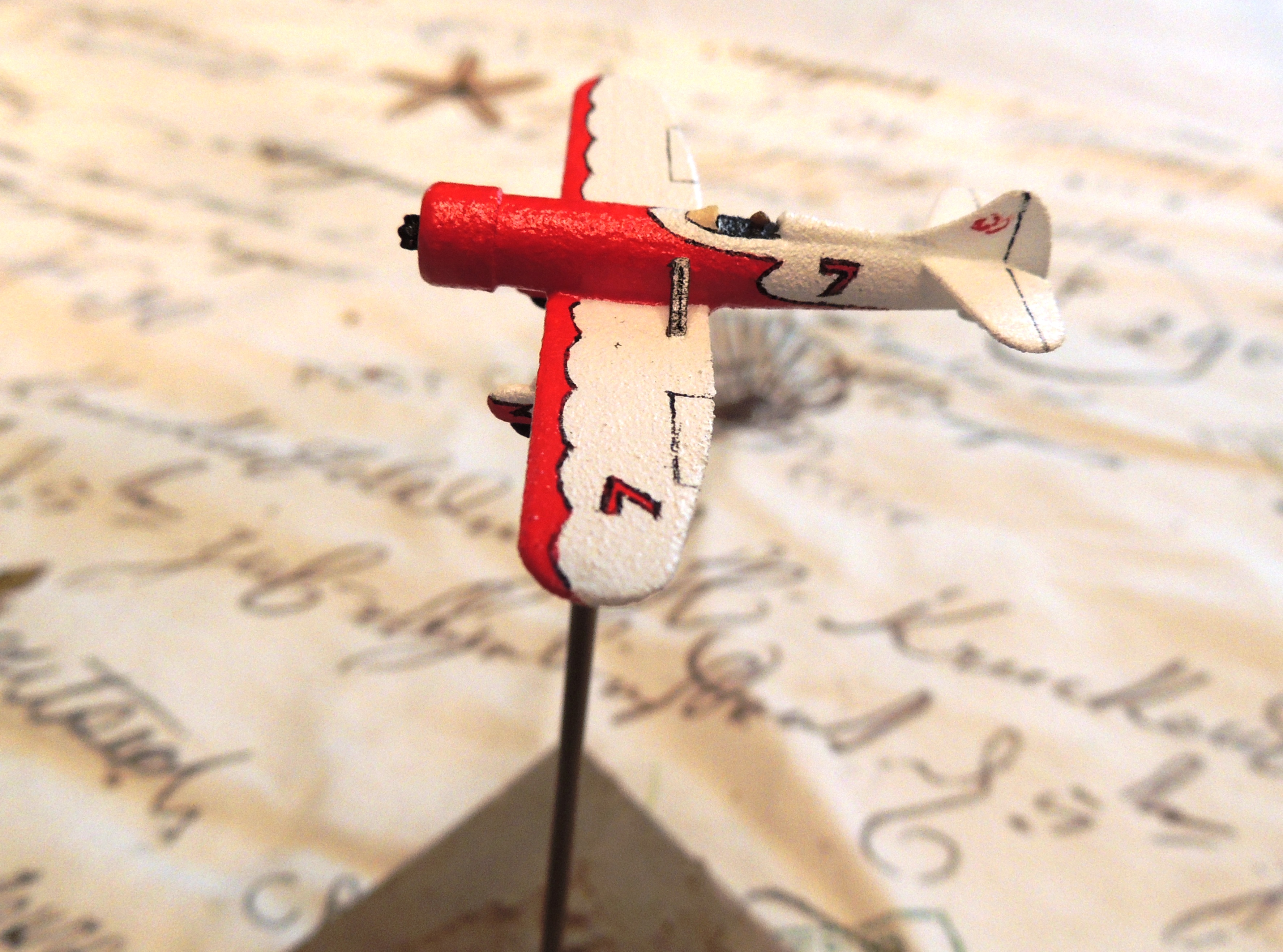
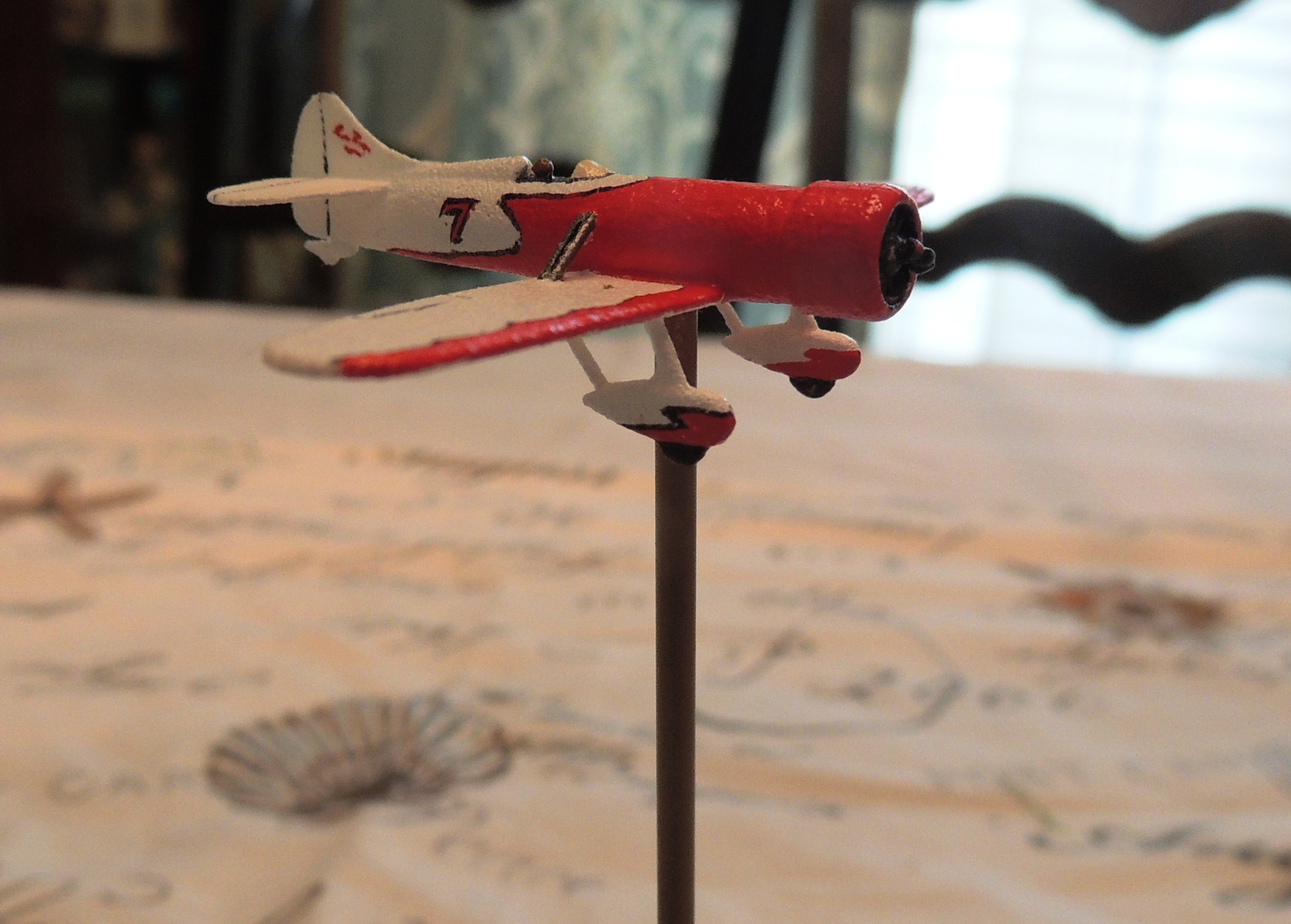
This miniature has a fuselage length of about 1 5/8" and the wingspan is about 2"

This miniature has a fuselage length of about 1 5/8″ and the wingspan is about 2″

The best known Gee Bee is the R model “Senior Sportsters.”  R-1 was flown to victory in the 1932 Thompson Trophy Race, by Jimmy Doolittle.  It also won the Shell Speed Dash.  In 1933, the R-1 crashed, killing pilot Russell Boardman.  The second R, R-2, was not a winner and crashed in 1933, seriously injuring pilot Jimmy Haizlip.  As if the Granville’s hadn’t had enough, the remains of both planes were reassembled into the R-1/2, lengthening the fuselage.  Unfortunately that wasn’t enough to save pilot Cecil Allen, when the plane crashed in 1935.

The Gee Bee Y and Gee Bee R-1 are painted similarly.  I used Vallejo Vermillion and a white craft paint.  I decided against adding struts to any of the planes.  First, the models are really small.  They also limit what can be done on the fuselage and wings.  Because each of the three planes had important parts of their paint schemes where the wire should go, I decided against.  On a bigger model, absolutely, but on this small version, nobody would notice anyway.

All photos were taken with a Nikon Coolpix P510 with macro settings on.  From the closeups you can see how rough the resin surface is, which makes detailing a bit of a challenge.  Heck, the lines looked straight with my reading glasses on.

Planes in Progress: 787 ain’t got nothin’ on me.

I’m hosting two games at Enfilade as a solo act. They are Golden Age Air Racing, an air racing game (shocking, yes I know)  I’m also running Thunderboats, which is a hydroplane racing game.  GAAR and T-Boats were both designed by my good friend Dave Schueler.  They’re fun and relatively easy to run.  By the third turn or so the players are running the game, so it’s a piece of cake.

I’m also helping out with a couple of games.  One is Crysler’s Farm with Mark Waddington and Doug Hamm.  We’ve playtested Crysler’s Farm a couple of times now and I think we more or less have it figured out.  The other is theTungsten Raids on the battleship Tirpitz in Norway in 1944.  These invovle Fleet Air Arm planes, mostly American, launched from British carriers trying to get past air defenses to attack the moored battleship.

Thankfully I have almost all the planes for Tungsten.  Some years ago I hosted a scenario calling for an air scenario between the Tungsten fighters and German fighters.  It was pretty fun throwing out American Hellcat and Corsair fighters to duke it out with Me-109’s and FW-190’s. We mostly think of the American planes serving in the Pacific and not so much in the Atlantic.  But when the Fleet Air Arm needed battle-ready carrier fighters they turned to the Americans.

I also have some Fairey Fireflies, the two-seat reconnaissance fighter flown by the FFA until well into the 1950’s.  What I needed however, were some Fairey Barracudas, the strike planes used by the FAA for it’s raids on the battleship at her anchorage in Altenfjord in April of 1944.  Last year I ordered some Scotia ‘Cudas from I-94 miniatures.  Very nice planes, mostly armed with torpedoes.  Eight Barracudas to paint and my role in the project would be finished.

For the air racing game, I have everything I need.  Except I’m making a scale change from 1/48 to 1/144th.  The larger scale planes are nice but there are limited number of miniatures, and they are at best unwieldy to maneuver on the game table.  A Shapeways artist had modeled a fair number of the 30’s era racers in a more manageable scale which simply requires that I mount and paint the little beggars.

Unfortunately both the Tungsten Barracudas and the air racers pose some sticking points. First, it would be nice if the new Barracudas matched the old planes.  I painted the older miniatures in 2001 and a lot has happened with hobby paint in twelve years.  I painted these mostly with Polly S colors.  Polly S, made by Floquil was purchased by Testors some time ago.  I bought those paints at American Eagles in Seattle or Tacoma, both stores now closed.  The original planes were painted with Italian camo green and medium gray surfaces and an underside of Sky type S.  My bottle of Italian camo green has long since passed on to paint Valhalla, so that’s a problem.  Where can I find it?  It is accessible on the Testor’s website for about $4.65 for 1/2 ounce PLUS $6.50 shipping.  That makes it about $11.00 to buy a bottle of paint I used to complain about spending $3.29 for!!!  Sky Type S is no longer made.  A pretty unique shade of green, perfect.

Fortunately I was able to resolve this.  I rummaged through my drawer of odd paint colors and actually found a bottle of Sky Type S.  It wasn’t even crunchy and nasty.  I counted my lucky stars and quickly painted the undersurfaces of the ‘Cudas.  Unfortunately, I didn’t have a suitable substitute for Italian Camo green. In desperation I turned to Amazon and typed in Polly S.  They have a vendor selling the stuff for about $2.65 a bottle plus very reasonable shipping.  I should have my paint in a few more days for a little less than five bucks.

The Shapeways planes are all pinned and primed.  Despite their rough surface, they should paint up okay.  If the ’30’s was the golden age of air racing it was also the golden age for wing struts.  While planes were making the transition from biplanes to monoplanes, they were still trying to figure out that whole structural integrity business.  Because most of these planes were aiming for speed at the expense of airworthiness and even safety, often becoming testbeds for new engine designs, they needed all the help they could get to pin their little bitty wings to their big round fuselages.  The Shapeways minis look nice, but really need the strutting, at least on the upper surfaces to make them appear in-period.  There’s also lots of strutting on the under  surfaces including the fixed landing gear but I thought that was A) too hard to see and B) might get torn away when trying to swap out one altitude stand for another, so I let it go.

The last couple of nights I’ve been using a hand drill to put some indents into the Shapeways resin as guides for the fine brass wire I’m going to use to rig the struts.  So far I’ve completed the struts for the two Wedell-Williams racers, the Reviresco Travelair racer, and am half way through the Howard Ike.  That just leaves the Gee Bee R and Gee Bee Z to do.  Unfortunately I’m nearly out of brass wire, and I’m not sure how to get more, particularly in timely manner.   I do have some fine steel wire, but because it’s steel it is a lot harder to work with. I can cut the brass with scissors, but the steel has to be cut with heavy cutters.  We’ll see how this turns out.
And now a word about Old Glory 25’s

I’ve bought lots of Old Glory miniatures over the years.  I bought the original glue-on-the-head ACW figures way back when, and in fact still have about 80 or so unpainted versions of these guys.  Some day.  (And you wonder why I don’t buy more figures!!) I know it’s not super fashionable, but I’ve always liked this company.  They’ve really done a lot for the hobby.  In some ways I liken them to Hinchcliffe in that they’ve supplied the hobby with expansive ranges of figures that cover many, many historical eras, as well as rounding out some non-historical stuff too.  The alliances they’ve made with other manufacturers, i.e; Blue Moon, Sash and Saber, and Merrimac Shipyards , offer opportunities to the gamer that are pretty unique.

Another characteristic that also bears mention is price.  The cost of the Old Glory figure is miniscule at $1.16 per foot figure and $3.50 per mounted figure.  That’s, of course, before one factors in the benefits of the Old Glory Army.  If one purchases an annual membership for $50, the potential savings are enormous.  The price for a bag of thirty figures falls from $35 to $21.00.  The cost per figure savings plummets from $1.16 to seventy cents, the cost of a mounted figure to two bucks plus a dime. I confess, I’ve never been one that buys tons of the new thing that’s out there.  However, I do like my Perry AWI figures.  Last summer I took a chance on some Knuckleduster War of 1812 minis.  I’m getting ready to order some of the Musketeer Miniatures IRA figs.  Every one of them costs  about twice the amount of an Old Glory miniatures.  Just to clarify a little more about cost, when I began buying miniatures in 1974, the cost of a Hinchliffe 25mm figure was .30 or .70 for a mounted figure.  That was nearly 40 years ago.  Today that same Hinchcliffe figure costs about a buck.

There are those that complain about Old Glory’s quality.  As in their miniatures aren’t as good as other manufacturers.  I would credit some of what said.  The Perry AWI line is better than the AWI line.  Are they twice as good, given the cost?  No probably not.  The attraction of the Perry AWI figures is they simply offer a much wider range of miniatures.  But if I was doing the Battle of Monmouth, you bet your ass a huge proportion of the miniatures would be Old Glory.  They’re nice enough-definitely better than the old Hinchcliffe figures I used to buy (and those were really nice in 1974.)

If I ever had a criticism of the Old Glory 25’s folks it’s that they were a little slow getting orders to me compared to places like Brookhurst Hobbies or the Warstore.  A two week or longer delay from the order date was the norm.  Last Friday I ordered two packs of figures, the last I’ll need to complete my War of 1812 project I believe/hope.  When I got home from work on Monday they were sitting in my mailbox.

Russ and Connie Dunaway, Theresa Gregory have really provided a remarkable product for this hobby.  Yes, there are lots of other bright and shiny ranges, and some very nice and very costly figures out there.  Old Glory 25’s is for everyman-those who think big, those with small budgets, those who are looking for a fair deal.