A fistful of Gee Bees

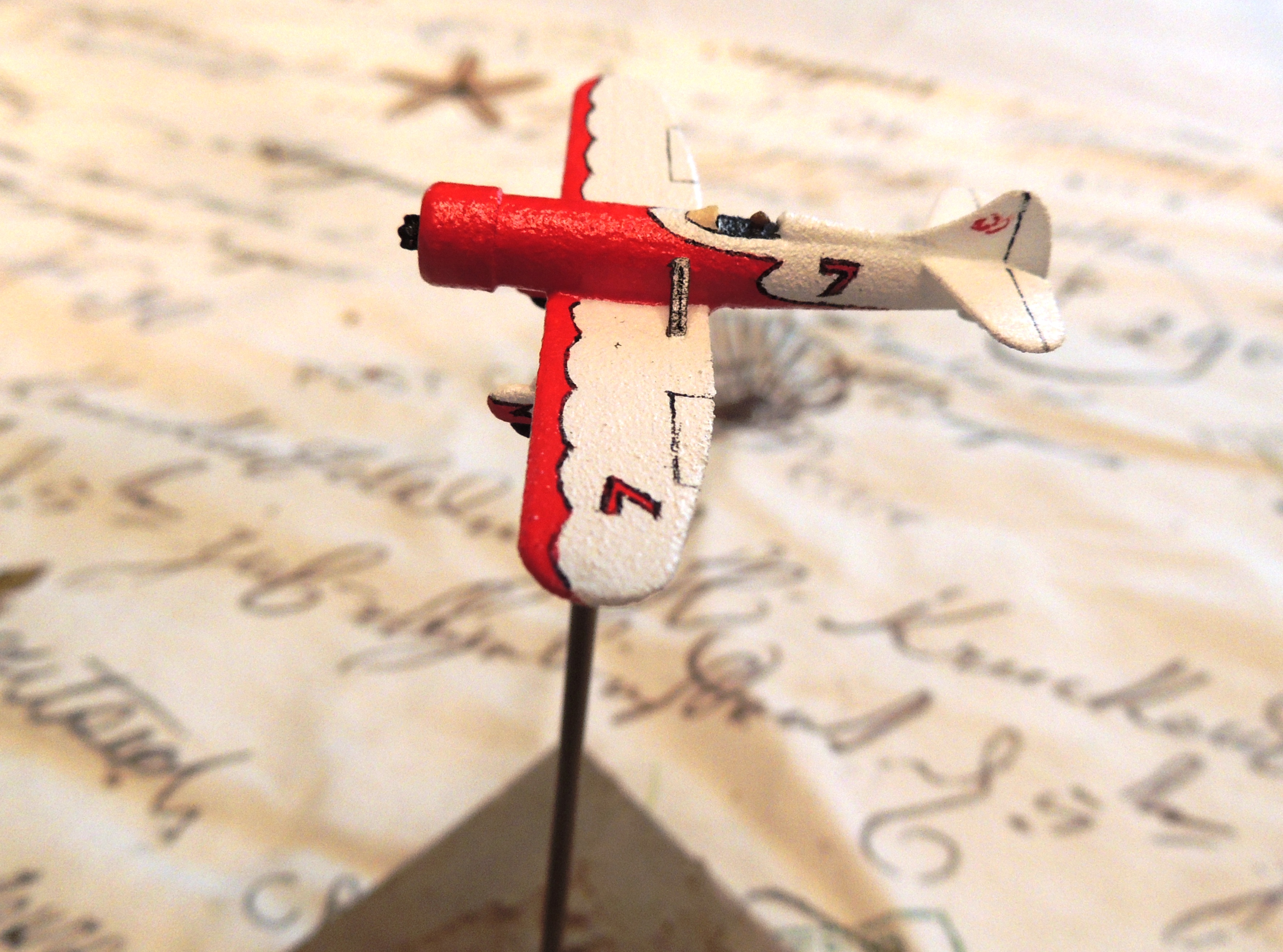
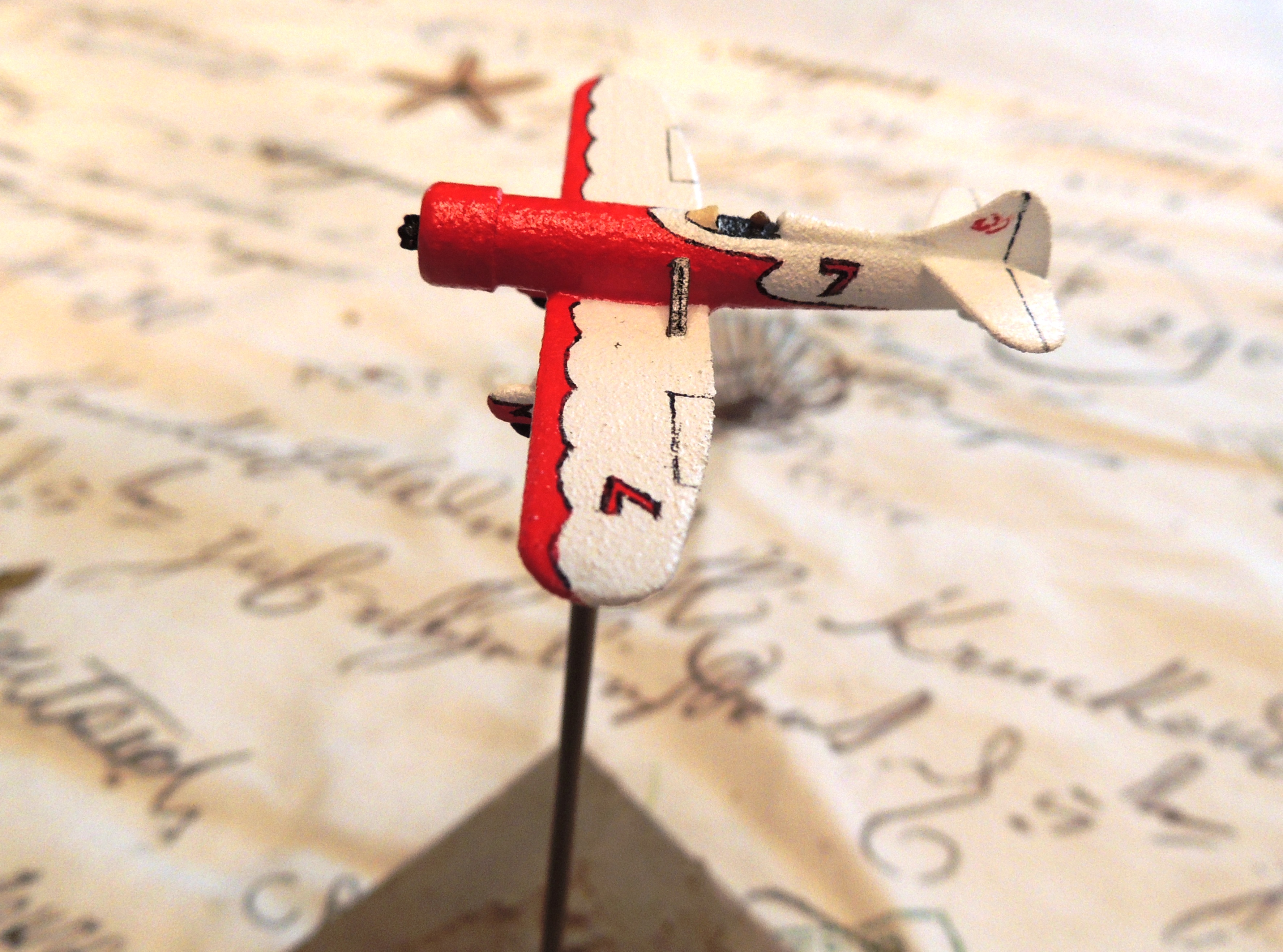
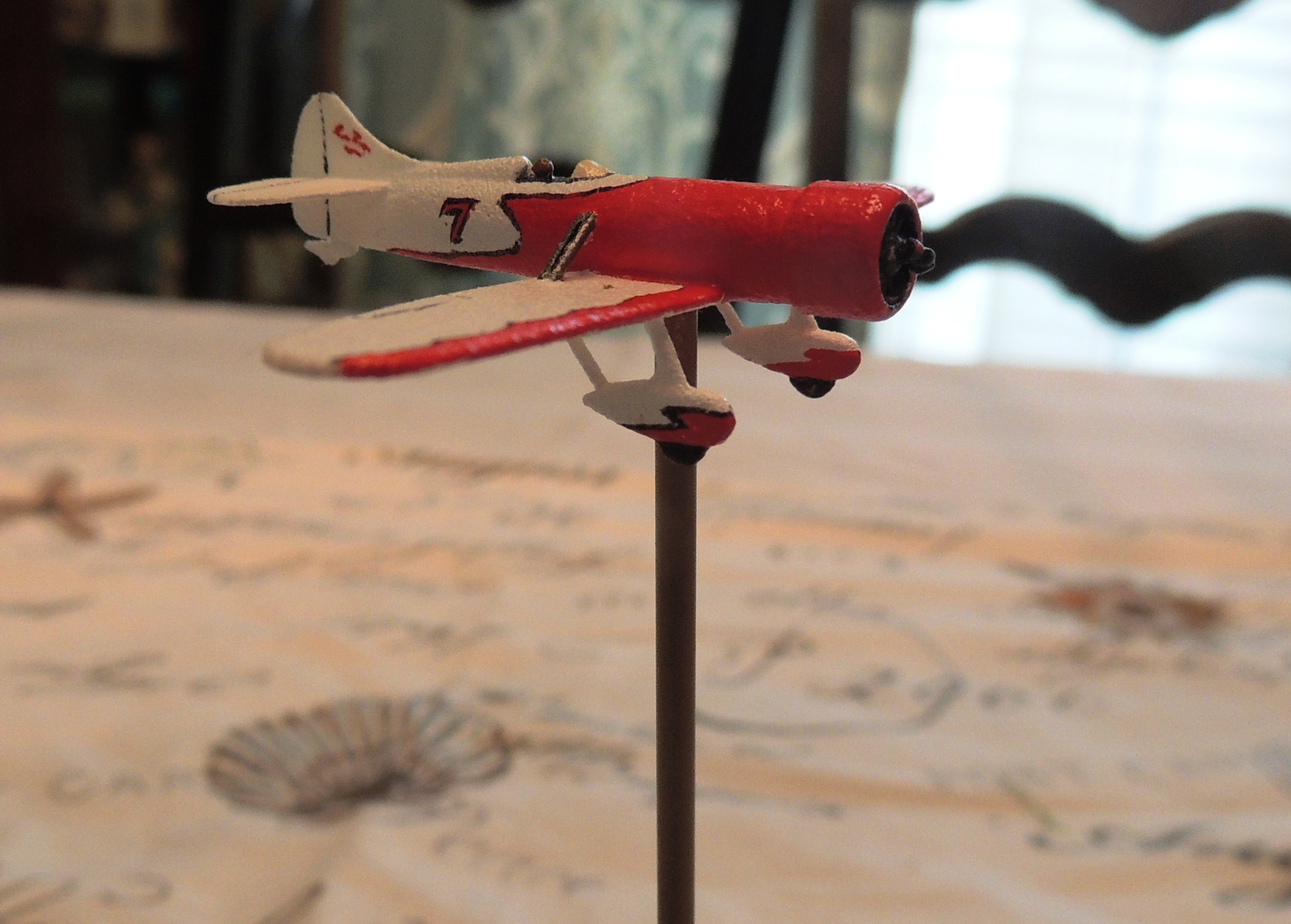
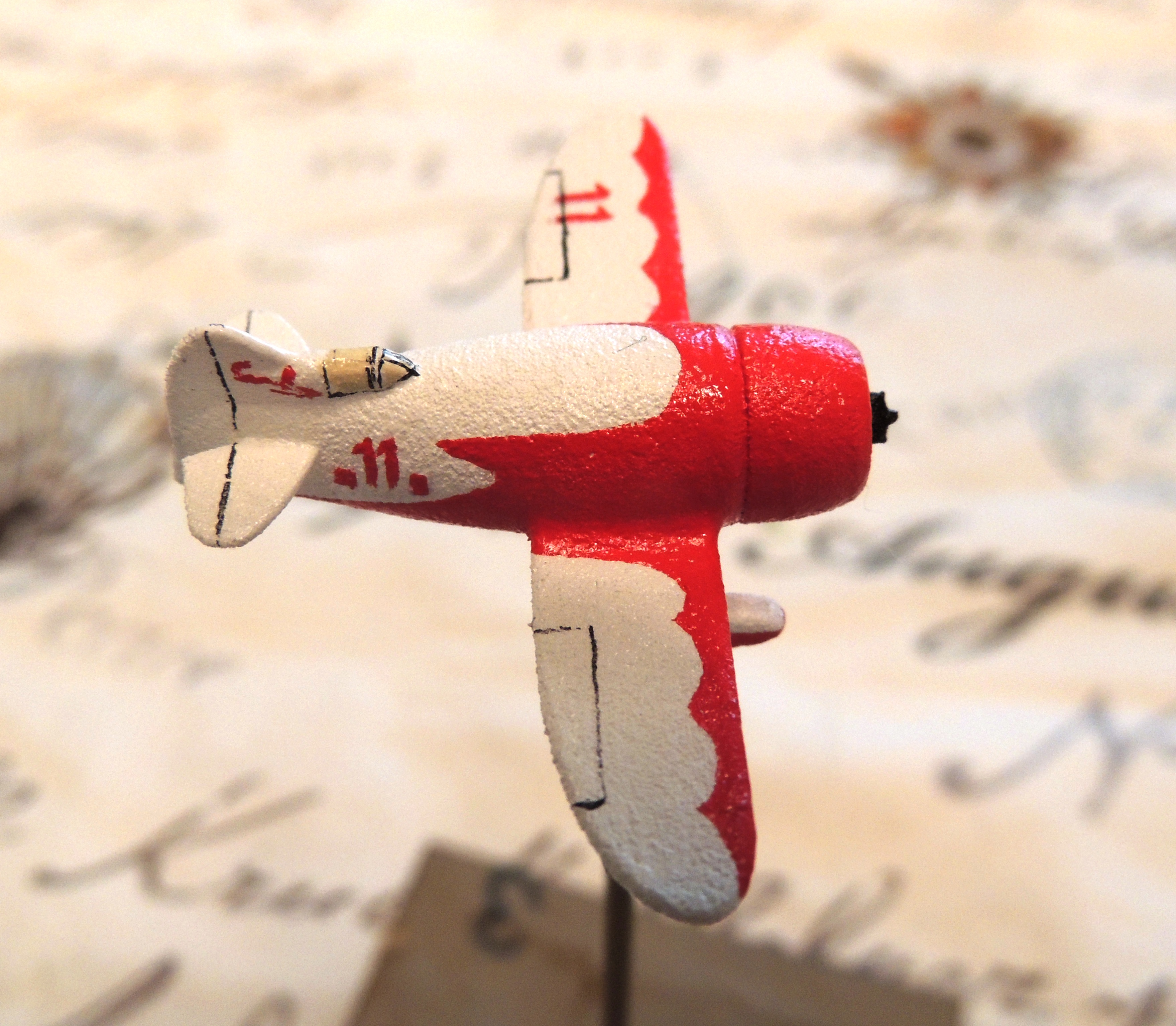
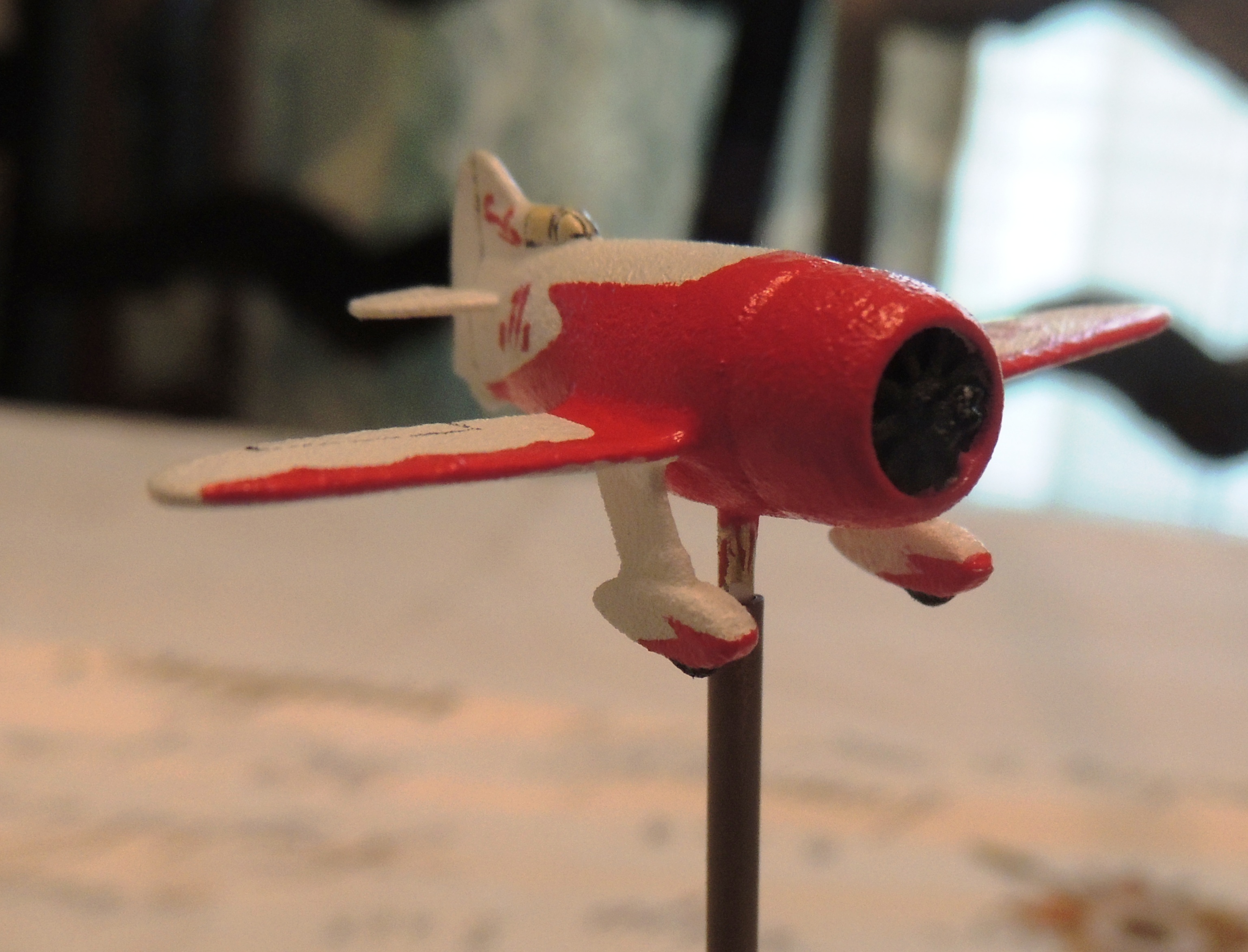
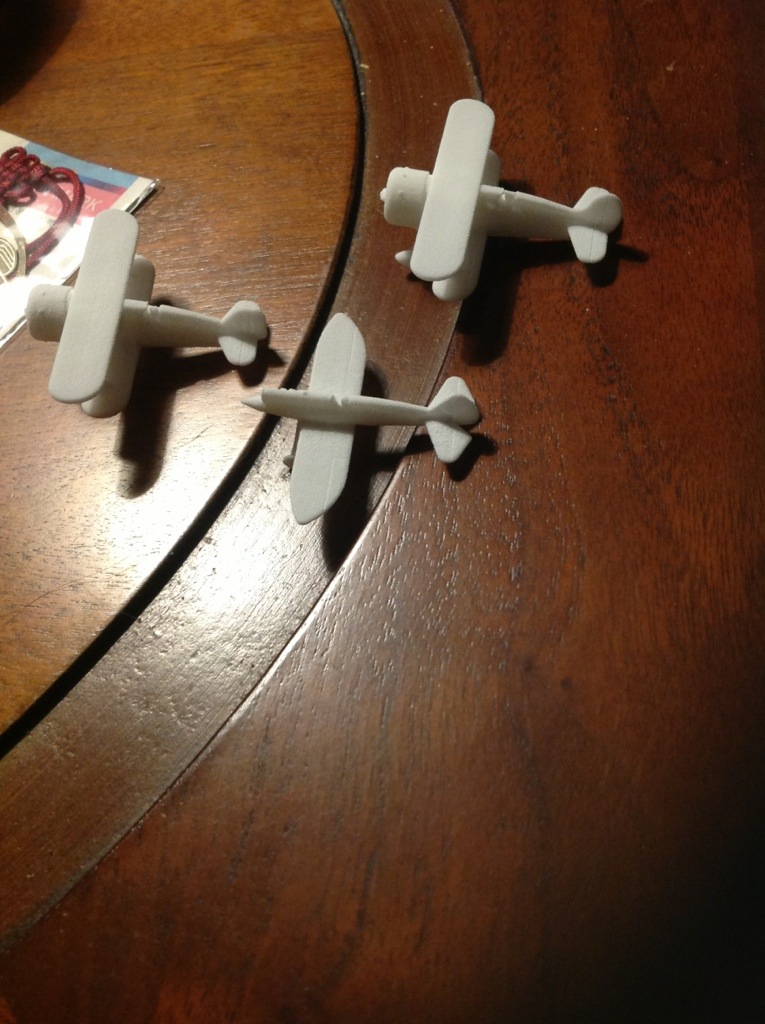
The last of my Shapeways planes are Gee Bees.  Gee Bees are air racers built by the Granville Bros between 1929-34.  They are perhaps the iconic air racers of the Golden Age of air racing due to their unique shapes and flying colors.  Sort of iconic like a black widow spider is iconic.  The Gee Bees eventually killed or severely injured all their pilots.  The reason there were no Gee Bee’s built after 1934 is because the Granville Brothers went bankrupt.

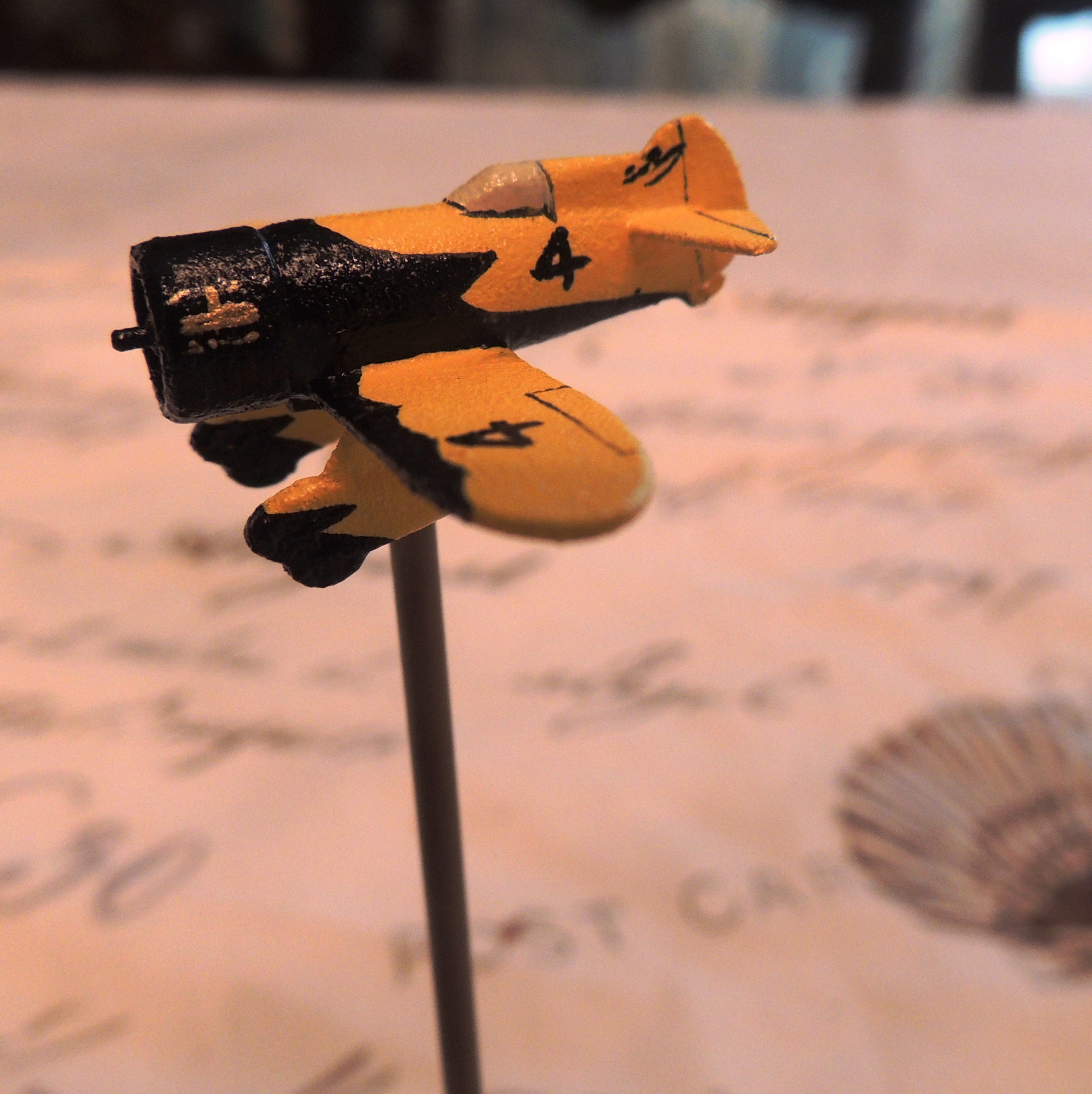
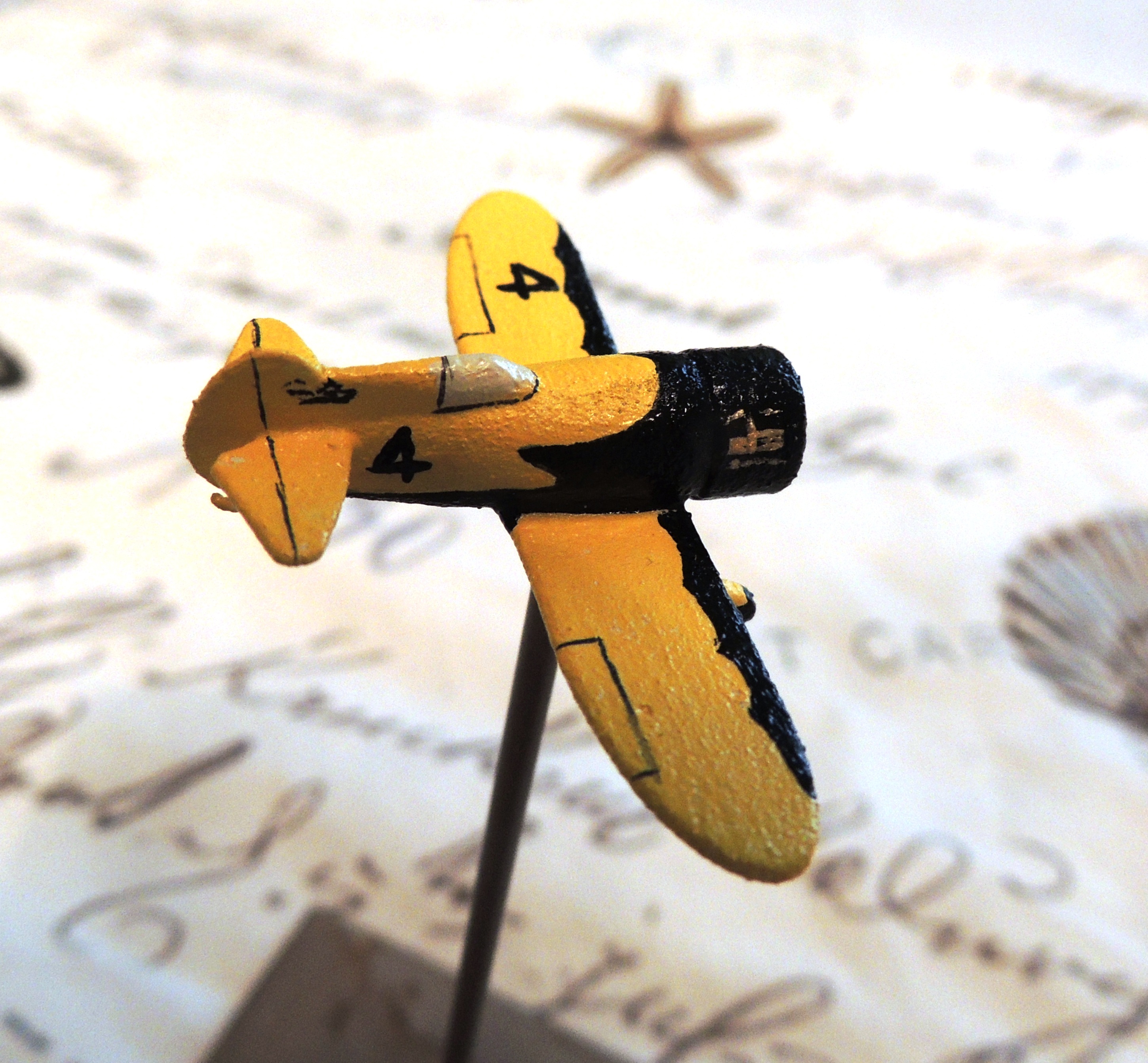
Gee Bee Z has a fuselage length of 1 1/8" and a wingspan of just under 2"

Gee Bee Z has a fuselage length of 1 1/8″ and a wingspan of just under 2″

It's a well designed, well cast miniature. Though it lacks detail, it just requires some photos and a little effort to make it usable.

It’s a well designed, well cast miniature. Though it lacks detail, it just requires some photos and a little effort to make it usable.

I’ll ‘fess up though, the Gee Bee Z, with the it’s 525 hp Pratt and Whitney Wasp engine is my absolute favorite plane.  Short and stout, its yellow and black flying colors make it seem short and quick.  That Shapeways produced the miniature was probably one of my incentives to move to the smaller scale.  The miniature is well made, though the rough resin really sucks up the paint.  I decided to go with Vallejo Deep Yellow as the base color with Vallejo black for the accent color. I felt  the pigment-rich Vallejo black would work best with the bumpy surface. My experience is there just isn’t a lot of room for error and my craft black just doesn’t seem to cover the resin well.  I’d never use a craft yellow for any purpose so the Vallejo yellow is a natural. The Gee Bee Z won the 1931 Thompson trophy, but crashed later in the year, killing pilot Lloyd Bayles

The most fun of the Gee Bees to paint.  You can see the much longer wings and fuselage than the purpose built racers.

The most fun of the Gee Bees to paint. You can see the much longer wings and fuselage than the purpose built racers.

??????????

The fuselage length of this miniature is about 1 3/4" and the wingspan is nearly 2 1/2".

The fuselage length of this miniature is about 1 3/4″ and the wingspan is nearly 2 1/2″.

The Granvilles built two Gee Bee Model Y’s, called the “Senior Sportsters.”  Shapeways designer “Arctic Skunk” offers three version of the Y.  Mine is the 1931 version with the 215 horsepower Lycoming engine.  This plane was lost when it’s propeller flew off over New York City, and its engine vibrated loose.  It crashed in the ocean, but the pilot was recovered.  The second Y raced in the Chicago Nationals in 1932, finishing second.  The following year it appeared up-engined, with a 450 h.p. Wright Whirlwind.  This version killed pilot Florence Klingensmith at this same event.

All the Gee Bees had unique and interesting markings.  Due to the small size Doolittle's dice are hard to show.

All the Gee Bees had unique and interesting markings. Due to the small size Doolittle’s dice are hard to show.

This miniature has a fuselage length of about 1 5/8" and the wingspan is about 2"

This miniature has a fuselage length of about 1 5/8″ and the wingspan is about 2″

The best known Gee Bee is the R model “Senior Sportsters.”  R-1 was flown to victory in the 1932 Thompson Trophy Race, by Jimmy Doolittle.  It also won the Shell Speed Dash.  In 1933, the R-1 crashed, killing pilot Russell Boardman.  The second R, R-2, was not a winner and crashed in 1933, seriously injuring pilot Jimmy Haizlip.  As if the Granville’s hadn’t had enough, the remains of both planes were reassembled into the R-1/2, lengthening the fuselage.  Unfortunately that wasn’t enough to save pilot Cecil Allen, when the plane crashed in 1935.

The Gee Bee Y and Gee Bee R-1 are painted similarly.  I used Vallejo Vermillion and a white craft paint.  I decided against adding struts to any of the planes.  First, the models are really small.  They also limit what can be done on the fuselage and wings.  Because each of the three planes had important parts of their paint schemes where the wire should go, I decided against.  On a bigger model, absolutely, but on this small version, nobody would notice anyway.

All photos were taken with a Nikon Coolpix P510 with macro settings on.  From the closeups you can see how rough the resin surface is, which makes detailing a bit of a challenge.  Heck, the lines looked straight with my reading glasses on.

Planes in Progress: 787 ain’t got nothin’ on me.

I’m hosting two games at Enfilade as a solo act. They are Golden Age Air Racing, an air racing game (shocking, yes I know)  I’m also running Thunderboats, which is a hydroplane racing game.  GAAR and T-Boats were both designed by my good friend Dave Schueler.  They’re fun and relatively easy to run.  By the third turn or so the players are running the game, so it’s a piece of cake.

I’m also helping out with a couple of games.  One is Crysler’s Farm with Mark Waddington and Doug Hamm.  We’ve playtested Crysler’s Farm a couple of times now and I think we more or less have it figured out.  The other is theTungsten Raids on the battleship Tirpitz in Norway in 1944.  These invovle Fleet Air Arm planes, mostly American, launched from British carriers trying to get past air defenses to attack the moored battleship.

Thankfully I have almost all the planes for Tungsten.  Some years ago I hosted a scenario calling for an air scenario between the Tungsten fighters and German fighters.  It was pretty fun throwing out American Hellcat and Corsair fighters to duke it out with Me-109’s and FW-190’s. We mostly think of the American planes serving in the Pacific and not so much in the Atlantic.  But when the Fleet Air Arm needed battle-ready carrier fighters they turned to the Americans.

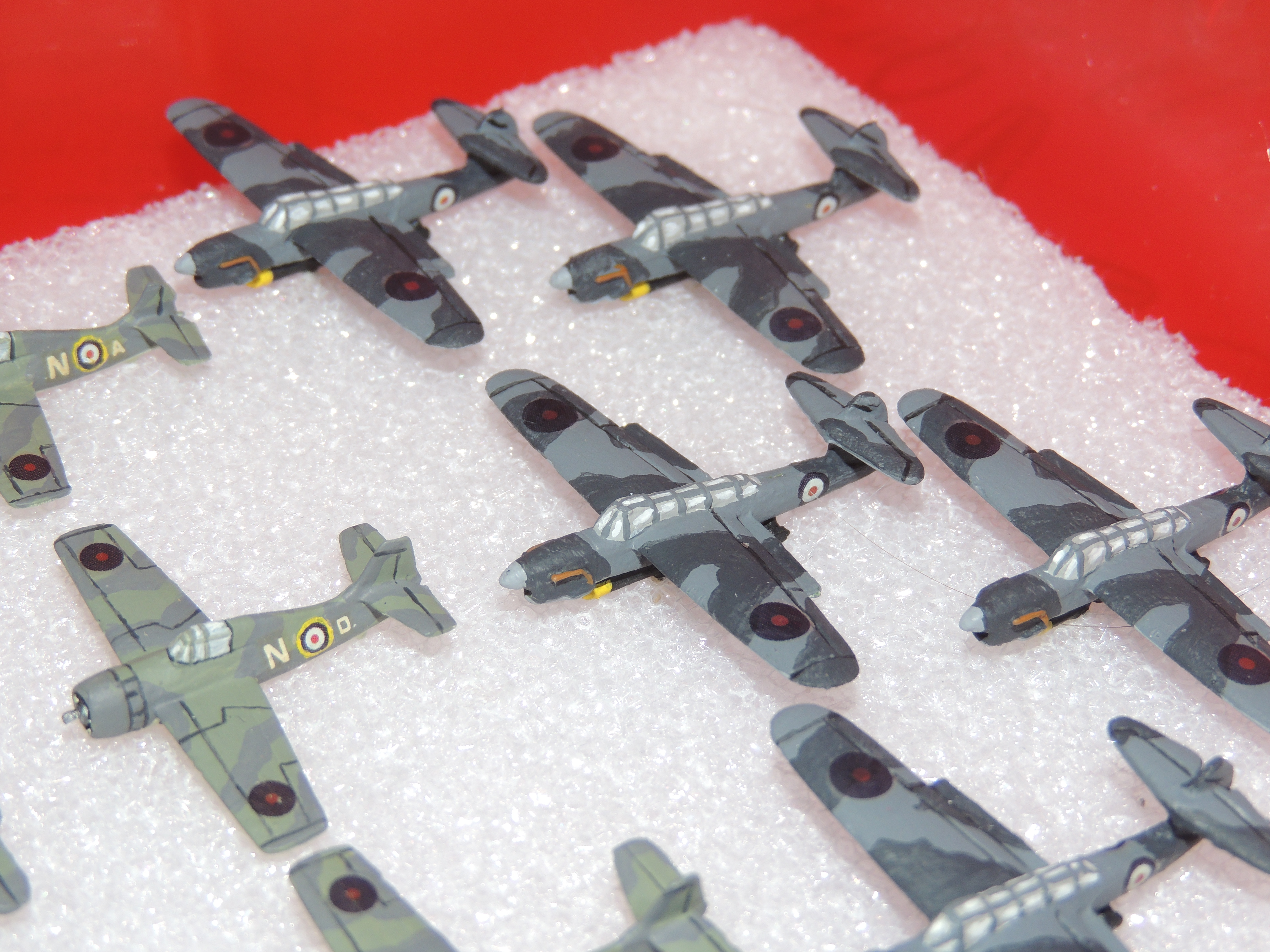
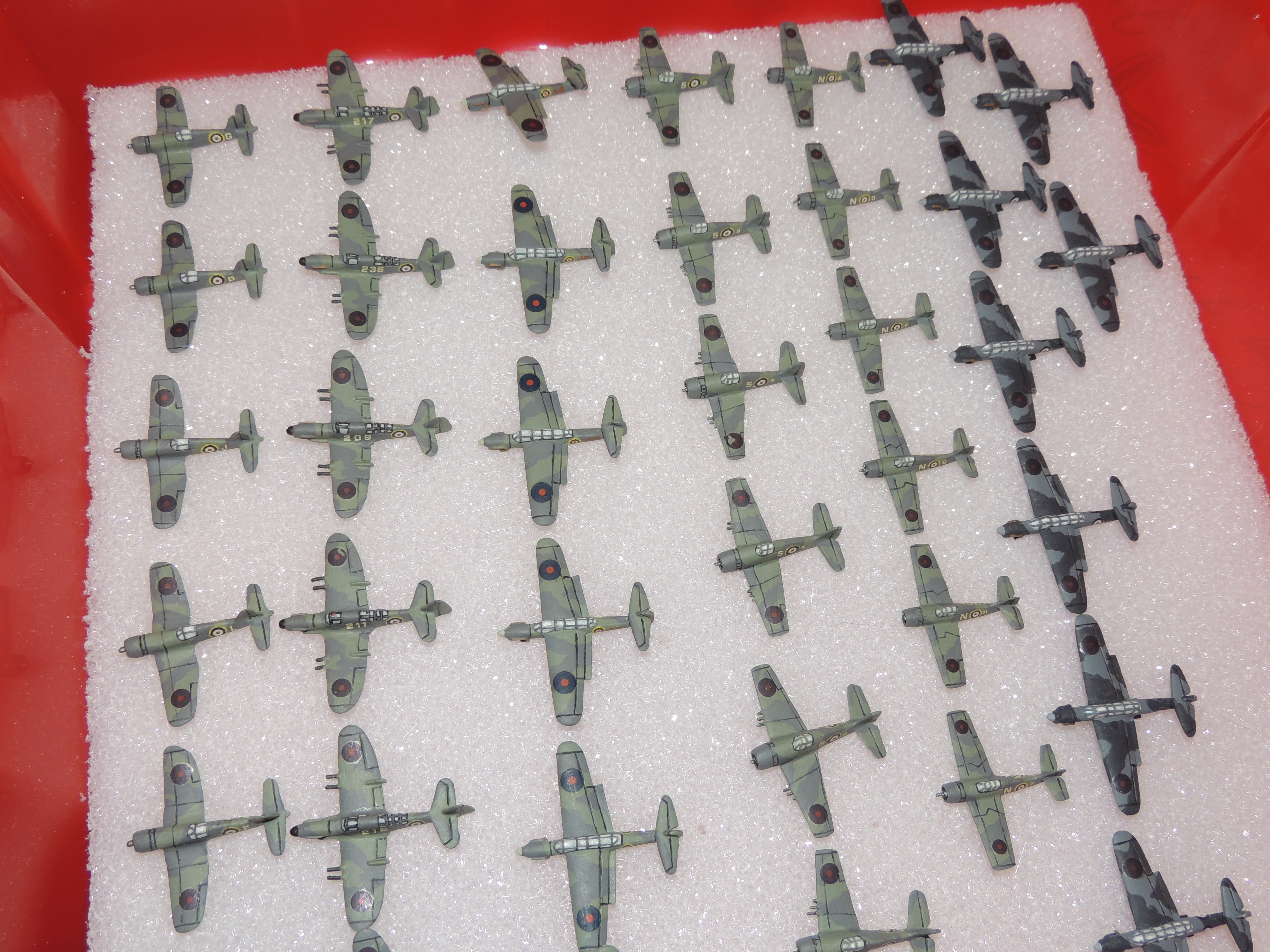
I also have some Fairey Fireflies, the two-seat reconnaissance fighter flown by the FFA until well into the 1950’s.  What I needed however, were some Fairey Barracudas, the strike planes used by the FAA for it’s raids on the battleship at her anchorage in Altenfjord in April of 1944.  Last year I ordered some Scotia ‘Cudas from I-94 miniatures.  Very nice planes, mostly armed with torpedoes.  Eight Barracudas to paint and my role in the project would be finished.

For the air racing game, I have everything I need.  Except I’m making a scale change from 1/48 to 1/144th.  The larger scale planes are nice but there are limited number of miniatures, and they are at best unwieldy to maneuver on the game table.  A Shapeways artist had modeled a fair number of the 30’s era racers in a more manageable scale which simply requires that I mount and paint the little beggars.

Unfortunately both the Tungsten Barracudas and the air racers pose some sticking points. First, it would be nice if the new Barracudas matched the old planes.  I painted the older miniatures in 2001 and a lot has happened with hobby paint in twelve years.  I painted these mostly with Polly S colors.  Polly S, made by Floquil was purchased by Testors some time ago.  I bought those paints at American Eagles in Seattle or Tacoma, both stores now closed.  The original planes were painted with Italian camo green and medium gray surfaces and an underside of Sky type S.  My bottle of Italian camo green has long since passed on to paint Valhalla, so that’s a problem.  Where can I find it?  It is accessible on the Testor’s website for about $4.65 for 1/2 ounce PLUS $6.50 shipping.  That makes it about $11.00 to buy a bottle of paint I used to complain about spending $3.29 for!!!  Sky Type S is no longer made.  A pretty unique shade of green, perfect.

Fortunately I was able to resolve this.  I rummaged through my drawer of odd paint colors and actually found a bottle of Sky Type S.  It wasn’t even crunchy and nasty.  I counted my lucky stars and quickly painted the undersurfaces of the ‘Cudas.  Unfortunately, I didn’t have a suitable substitute for Italian Camo green. In desperation I turned to Amazon and typed in Polly S.  They have a vendor selling the stuff for about $2.65 a bottle plus very reasonable shipping.  I should have my paint in a few more days for a little less than five bucks.

The Shapeways planes are all pinned and primed.  Despite their rough surface, they should paint up okay.  If the ’30’s was the golden age of air racing it was also the golden age for wing struts.  While planes were making the transition from biplanes to monoplanes, they were still trying to figure out that whole structural integrity business.  Because most of these planes were aiming for speed at the expense of airworthiness and even safety, often becoming testbeds for new engine designs, they needed all the help they could get to pin their little bitty wings to their big round fuselages.  The Shapeways minis look nice, but really need the strutting, at least on the upper surfaces to make them appear in-period.  There’s also lots of strutting on the under  surfaces including the fixed landing gear but I thought that was A) too hard to see and B) might get torn away when trying to swap out one altitude stand for another, so I let it go.

The last couple of nights I’ve been using a hand drill to put some indents into the Shapeways resin as guides for the fine brass wire I’m going to use to rig the struts.  So far I’ve completed the struts for the two Wedell-Williams racers, the Reviresco Travelair racer, and am half way through the Howard Ike.  That just leaves the Gee Bee R and Gee Bee Z to do.  Unfortunately I’m nearly out of brass wire, and I’m not sure how to get more, particularly in timely manner.   I do have some fine steel wire, but because it’s steel it is a lot harder to work with. I can cut the brass with scissors, but the steel has to be cut with heavy cutters.  We’ll see how this turns out.

And now a word about Old Glory 25’s

I’ve bought lots of Old Glory miniatures over the years.  I bought the original glue-on-the-head ACW figures way back when, and in fact still have about 80 or so unpainted versions of these guys.  Some day.  (And you wonder why I don’t buy more figures!!) I know it’s not super fashionable, but I’ve always liked this company.  They’ve really done a lot for the hobby.  In some ways I liken them to Hinchcliffe in that they’ve supplied the hobby with expansive ranges of figures that cover many, many historical eras, as well as rounding out some non-historical stuff too.  The alliances they’ve made with other manufacturers, i.e; Blue Moon, Sash and Saber, and Merrimac Shipyards , offer opportunities to the gamer that are pretty unique.

Another characteristic that also bears mention is price.  The cost of the Old Glory figure is miniscule at $1.16 per foot figure and $3.50 per mounted figure.  That’s, of course, before one factors in the benefits of the Old Glory Army.  If one purchases an annual membership for $50, the potential savings are enormous.  The price for a bag of thirty figures falls from $35 to $21.00.  The cost per figure savings plummets from $1.16 to seventy cents, the cost of a mounted figure to two bucks plus a dime. I confess, I’ve never been one that buys tons of the new thing that’s out there.  However, I do like my Perry AWI figures.  Last summer I took a chance on some Knuckleduster War of 1812 minis.  I’m getting ready to order some of the Musketeer Miniatures IRA figs.  Every one of them costs  about twice the amount of an Old Glory miniatures.  Just to clarify a little more about cost, when I began buying miniatures in 1974, the cost of a Hinchliffe 25mm figure was .30 or .70 for a mounted figure.  That was nearly 40 years ago.  Today that same Hinchcliffe figure costs about a buck.

There are those that complain about Old Glory’s quality.  As in their miniatures aren’t as good as other manufacturers.  I would credit some of what said.  The Perry AWI line is better than the AWI line.  Are they twice as good, given the cost?  No probably not.  The attraction of the Perry AWI figures is they simply offer a much wider range of miniatures.  But if I was doing the Battle of Monmouth, you bet your ass a huge proportion of the miniatures would be Old Glory.  They’re nice enough-definitely better than the old Hinchcliffe figures I used to buy (and those were really nice in 1974.)

If I ever had a criticism of the Old Glory 25’s folks it’s that they were a little slow getting orders to me compared to places like Brookhurst Hobbies or the Warstore.  A two week or longer delay from the order date was the norm.  Last Friday I ordered two packs of figures, the last I’ll need to complete my War of 1812 project I believe/hope.  When I got home from work on Monday they were sitting in my mailbox.

Russ and Connie Dunaway, Theresa Gregory have really provided a remarkable product for this hobby.  Yes, there are lots of other bright and shiny ranges, and some very nice and very costly figures out there.  Old Glory 25’s is for everyman-those who think big, those with small budgets, those who are looking for a fair deal.

February’s over already?

February seemed like a busy month, and at only 28 days a damned short one.  I painted exactly 10 figures, which is about 30 figures less than my target.  My chief issue was I kind of farted around painting figures.  I have 24 War of 1812 militia on my table nearly painted.  I also had eight Irish Civil War figures nearly finished.  If I’d put the time in to finish them I’d be well over my monthly target, I’d be great.  At least I didn’t buy anything new.

As March begins, I’ll need to finish those militia.  I’m really close, probably three or four more hours.  I already finished the eight ICW figures, and I still have five or so more to wrap.  It’s okay, they go fast.  I also have eight HYW French men-at arms I’d like to do. But this is March, which leads into spring break.  It’s the month when I really need to paint the planes I need for my Enfilade projects.  There are eight Fairey Barracudas to paint, and about eight more air racers to go.  After that I’m not quite sure.

It’s also one of those rare months when I’m ordering some figures.  Lorri shared her bonus with me, so I’ve ordered some Old Glory figures-a bag each of British Light Infantry and Royal Marines for Bladensburg.  I’m also ordering a bunch of ICW figures from Musketeer Miniatures, including one of their awesome Lancia armored trucks. Both of these orders will wrap up the figures I need for both projects, so I’m pretty pleased.  No it doesn’t finish the painting and etc., but it does establish what I need to complete to bring an end to it.

Friends have been playing Bolt Action by Warlord games, but I refuse to start anything new, regardless how small until I finish a couple things up first.  I look to be done with my War of 1812 miniatures in about a year.

My gaming reality

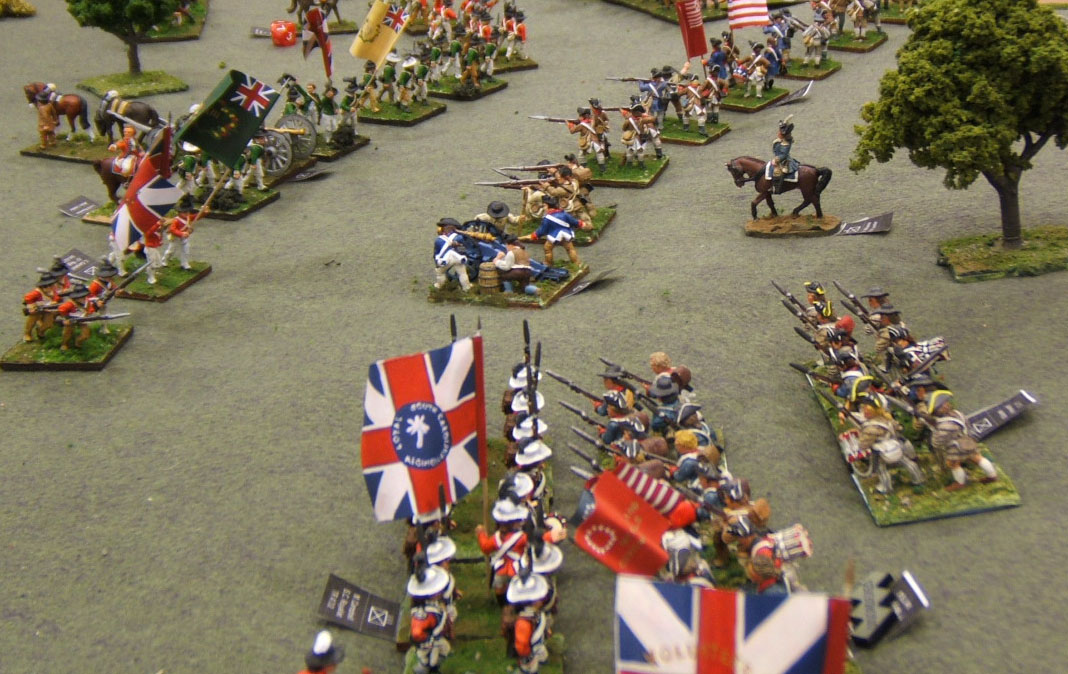
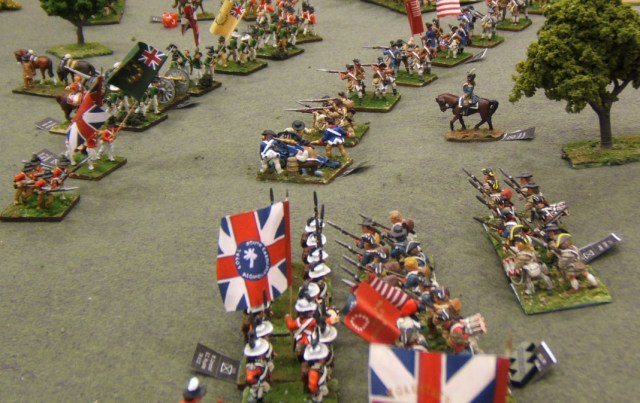
A photo of Hobkirk's Hill, an AWI game from Enfilade 2011

A photo of Hobkirk’s Hill, an AWI game from Enfilade 2011

Doug Hamm is one of my best friends in this hobby.  We’ve known each other for nearly thirty years.  He is without question the best painter I’ve ever known, combining quality with uncanny speed.  Doug is dedicated to the hobby in a way that I once was for a few nanoseconds, but unfortunately have I’ve had to change my approach to the hobby.  As you may know, Doug writes the Larry Leadhead cartoon.  Yes, I know nothing new in a while, but it is my hope the cartoon is just on hiatus and may make a return some day. The thing you should know is that Doug is a lot like Larry.  We write about what we know best-typically ourselves, and Doug is no different.  Though there are elements of Larry in all of us, Doug is mesmerized by the lure of new, bright, shiny things, and we frequently exchange e-mails about new figures and I will beg off 80% of the time.  (However he did really get me when the Perrys announced the release of the Volunteers of Ireland.) I am not a magazine person, but Doug follows them fairly carefully, those online and not so much, and if he thinks he finds something useful will often share it with me.  While my nose is often in the Washington Post website, as well as any Seattle Mariners news, Doug is carefully scanning the internet for new or useful gaming news, which he generously shares with me. Doug has wrapped his life in this hobby, as I’m sure many of you have as well.

There was a time, not so long ago when I would rank my miniature wargaming intensity with anybody, even Doug Hamm. Unfortunately, I’ve had many diversions the past five or so years.  Some of them are choices I’ve made; some were made for me.

Time-Six years ago I made the decision to change my career.  I went from being a pretty busy elementary school teacher to a very busy high school teacher.  High school is different than elementary school in lots of ways, but one way it is a significant departure is the culture of high school.  It takes over your life. There are tons of out-of-school activities that are associated with the older kids-sports, debate, drama-that just aren’t a part of younger students’ school program.  I won’t for a minute say that I am involved or attend all of these, but I am the adviser of the high school newspaper.  Every month I allot 40 hours just to get out the paper.  Yes I get a stipend, which works out to almost a dollar an hour, and I also really enjoy it.  Nonetheless it does cut into my gaming time and painting time.  Due to my commitments to school, I’m really unable to take part in the weekly evening game activities many of my friends participate in.  I’ll try to do better this summer.

Aging-I am 57.  That’s not so old.  I’m really fortunate that I don’t have any significant health problems.  Yes, I’d really like to take off and keep off about 30-40 pounds, but aside from that I don’t have anything chronically bad going on.  No high cholesterol, no high blood sugar, no diseases or allergies. However, I am sleep bereft.  I am a bad sleeper.  This morning I was awake at 2:50, though I did manage to sleep for an hour before I awoke for good at 4:50.  I tire easily in the evening.  I am always asleep well before 10:00-unless the paper is on deadline.  That also makes evening gaming problematic for me.  It also cuts a bit into my painting.  I used to be able to paint 2-3 hours a night, but I simply run out of gas after about an hour and a half.  Painting raises my next aging issue that we all seem to confront and that is deteriorating eyesight.  I can still paint, and do most nights, though I can be distracted by a great book.  Unfortunately, I can only do so with 2X reading glasses.  I haven’t had to make the transition to a special viewer or magnifier, but that day may be coming.  Today I only have the inconvenience of keeping track of my cheaters, though I do find my eyes tire more quickly.

Personal-This has been a difficult seven or so years for my wife and I.  We’ve been married nearly 34 years and I can honestly say marriage to Lorri has been the best thing that ever happened to me.  I never believed the adage that when you take a wife you marry your in-laws too, but it’s so true.  Seven years ago my sister-in-law, always a difficult person, committed suicide.  The year after that my father-in-law died.   While I was never particularly close to either, their loss caused deep emotional difficulties for Lorri and added responsibilities for me.  Though things are better now, it’s been a long road.  Lorri’s mom, suffering from severe health issues lost her husband three years ago.  Together with my brother-in-law we’ve been responsible for insuring her living situation is okay.  She’s had multiple hospitalizations and several moves, added tons of stress to our lives.  However, she’s now in adult family care and so far she’s been more stable and much healthier than at any time the last few years.  All of this has kept me closer to home.

As some of you may know, I love dogs.  We’ve had miniature Australian shepherds at Chez Smyth for nearly a dozen years.  Not miniature as in eeny teeny lap dogs, they’re about the 30-40 lb variety.  Since 2001, we’ve had five of the little varmints, and I just love ’em.  Spend most of my time with them just laughing at them.  Last year we lost our Jack at age 10 and it nearly undid me.  Last summer we added Amos and in November one more, Rusty.  Together with Lucy, age 12, we are a family. That all goes into my game time calculations too.  The dogs need my attention and I’m happy to give it to them, but it means the time has to come from somewhere, and that means games.
Cogs 5

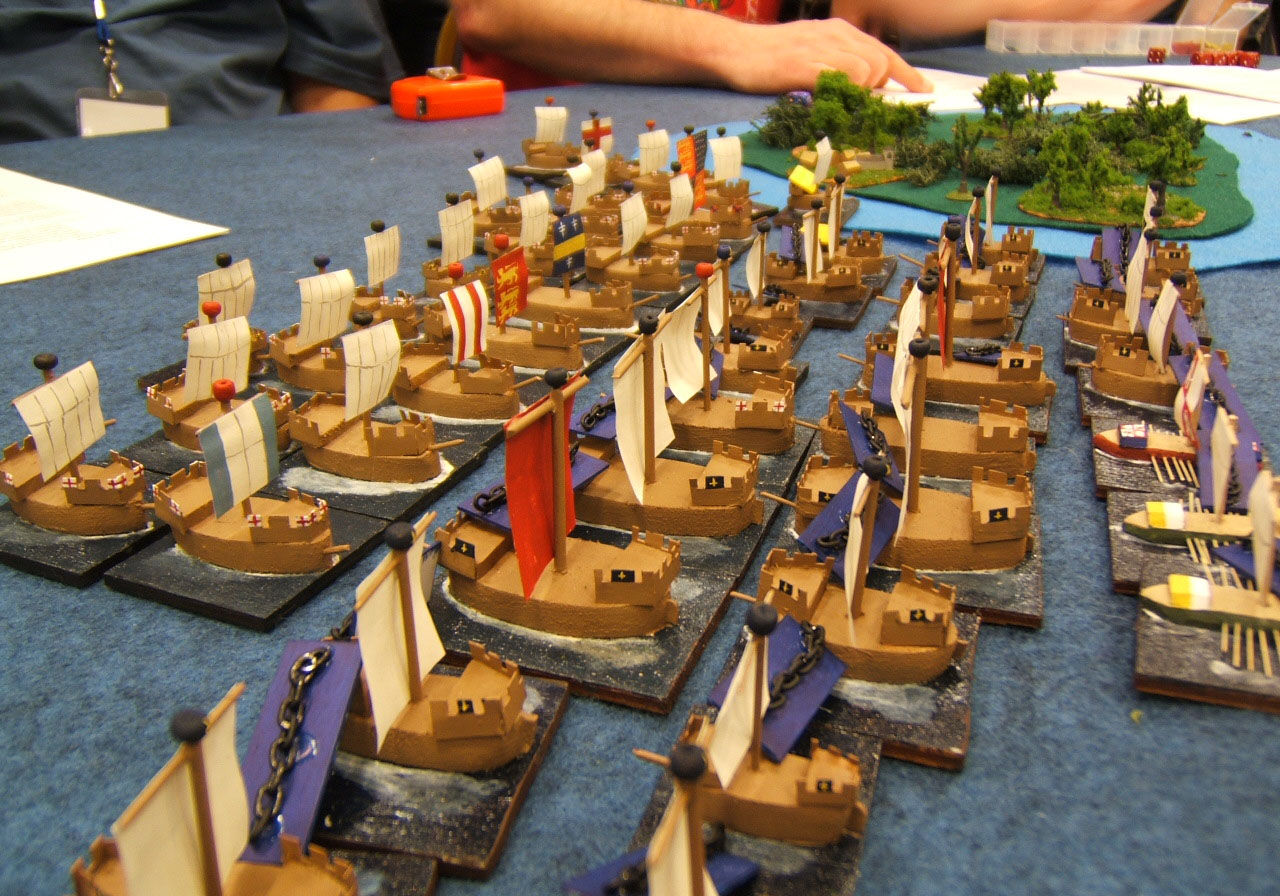
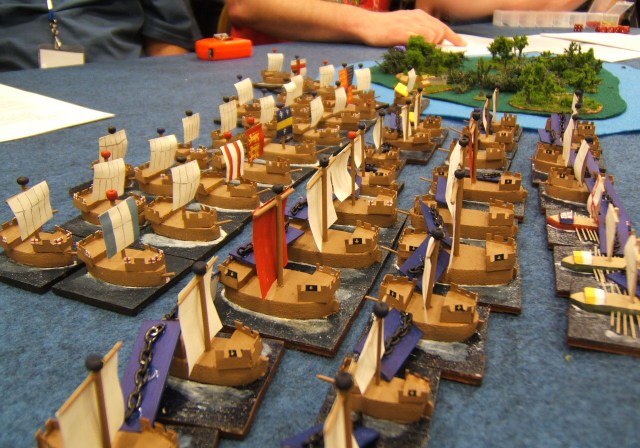
Sluys playtest in the Spring of 2011. It was my scratch-built project and a pleasure to produce.

Enough is enough-I used to be like Larry Leadhead.  I’d buy scads of miniatures on spec.  Maybe I’d paint them, maybe they’d sit.  I’d often buy on credit.  Not a good thing, as we were buying lots of things on credit.  Another problem, I don’t really want to get into.  In any case, I’m much more careful with money now and I’m much more careful with figure purchases.  In fact I’m a lot more careful with the projects I’m involved with and have set rules for myself:

  1. No new projects.  There are certain historical eras that really get me, and I intend to continue enjoying them.  That may mean figure purchases to fill out projects, but really, I’m serious, no new endeavors.  The following is a list of my projects: A. 28mm American Revolution in the South; B. 28mm Lewis and Clark/Wayne’s Legion/hypothetical war with Spain 1792-1810; C.  28mm War of 1812 on the Chesapeake; D. 28mm Hundred Years War ; E. 15mm DBA (though no new armies until I’m playing regularly again and all my unpainted armies are painted;) F. 15mm Spanish Civil War; G. 15mm Lord of the Rings; H. 1/600 American Civil War naval; I. 15mm American Civil War for Fire and Fury brigade rules; 28mm American Civil War for Fire and Fury Regimental; J. 1/285th WWII and modern air gaming; K. 1/700 WWII and modern coastal naval; L. 28mm Irish uprising and civil war; M. 28mm Maxmillian’s Adventures in Mexico; N. Hydroplane and air racing miniatures; 28mm Space 1889. With the exception of Maxmillian, all of these projects have unpainted figures numbering from just a few to many hundreds.
  2. Buy what you need when you need it.  I still buy figures, but not as many as I used to.  I have a plan and I stick to it.  I buy figures as I need them to stick to that plan.  I have two very big projects I’m working on.  One is the Battle of Bladensburg and the other is the Battle of Poitiers. I usually stick to painting figures for that period leavened with other bits of projects so I don’t get bored.  That seems to work, and it prevents ordering more than what I need or undertaking a lot of impulse buying.  I paint an average of six days a week for at least an hour a day.  I can get a lot of painting done in that time-almost enough to finish all my unpainted lead in my lifetime.
  3. Be honest with yourself and honest with your friends.  I don’t allow myself to be talked into anything new.  I just say no.  As you can see I have plenty on my plate, with plenty of accompanying unpainted lead.  As best I can tell there’s only so many hours in the day and only so many figures I can paint. Maybe I’ll feel differently another time, but for now I have plenty and taking on another project or buying more figures just because they are nice and new doesn’t make sense to me.
  4. Try building your own-The last couple of years I’ve made my own stuff.  In 2011 I decided to build miniature cogs to host the Hundred Years War Battle of Sluys.  The miniatures available were costly and the shipping from the UK was prohibitive.  I decided to try my hand at scratch-building and for four weeks my workroom became Smyth’s shipyard. Last year I scratchbuilt a Native American fort, cornfields and houses for my Chickasaw Bluffs project.  All of them looked fine and it felt really good to actually make something myself.

Competing interests-Finally there are a couple of activities outside miniature gaming and school that compete for my time.  I’ve become a bit more active in board gaming the past couple of years.  Usually it’s just the group Euro-games that grab me.  My son Casey plays with me and some of my dearest friends, guys I’ve known for many years.  The games are fun and it’s a great opportunity to do something good with my youngest.  Another activity that takes my time is blogging.  You may know this isn’t my only blog.  I have two additional place where I write.  Tales from the South Sound is a hodge-podge of book, movie and concert reviews, tales of my dogs, and even some politics.  I also blog about baseball on Chatter From the Cheap Seats.  My usual topic is the progress of  the beloved Seattle Mariners.  I try not to take my stuff too seriously, but I do enjoy the opportunity to write.

So that’s about it.  I game with toys about once a month.  Occasionally more, sometimes less. I always have something painting, and I work on it regularly. I buy miniatures, but at a reduced rate, and usually only when I need them.
My little bit of Ireland project

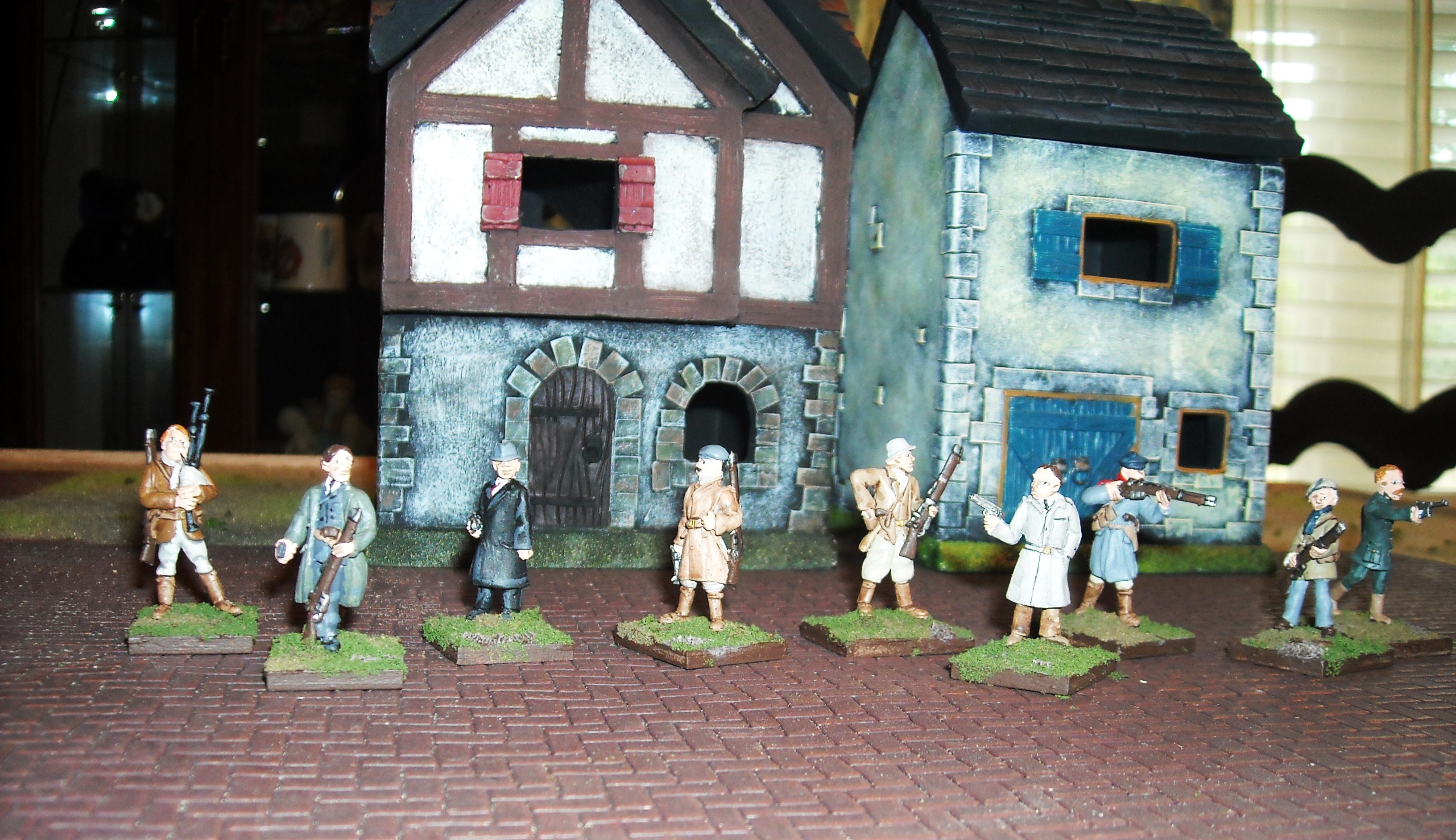
Cannon Fodder IRA miniatures.  Miniature Building Authority buildings and cobblestone plaza.

Cannon Fodder IRA miniatures. Miniature Building Authority buildings and cobblestone plaza.

As an Irishman two generations removed from County Cork, I’ve always had a bit of an interest in Irish topics.  I’ve even accumulated some figures over the years, and last week began painting a few of my hidden treasures.  About ten years ago I purchased some figures from Cannon Fodder Miniatures.  It was an Australian company that teamed with Eureka for production.  They had some interesting ranges.  They started with some American sailors and Marines for the river war in China during the warlord era, and had a handful of Irish Republican Army figures from the Irish War of Independence in the 1920’s.  I bought some of the sailors, and I bought some of the Irish and waited for the ranges to be completed, which unfortunately never happened. I’ve added some miniatures from Musketeer, Renegade and Reviresco, but could still use some more.

Last week I began working on my ten IRA guys and today I finished them.  The Cannon Fodder miniatures are nicely detailed.  They are well-proportioned, not massive on the order of Copplestone or Renegade.  They are, generally, either armed with some sort of pistol or an Enfield Rifle.  One figure comes in the uniform of the Irish Republic, but most are in civilian dress.  Cannon Fodder went away a few years ago, but sculptor Greg Blake’s ranges are available at Blaze Away Miniatures in Australia.  There’s actually a few more miniatures available than when I purchased mine many years ago.

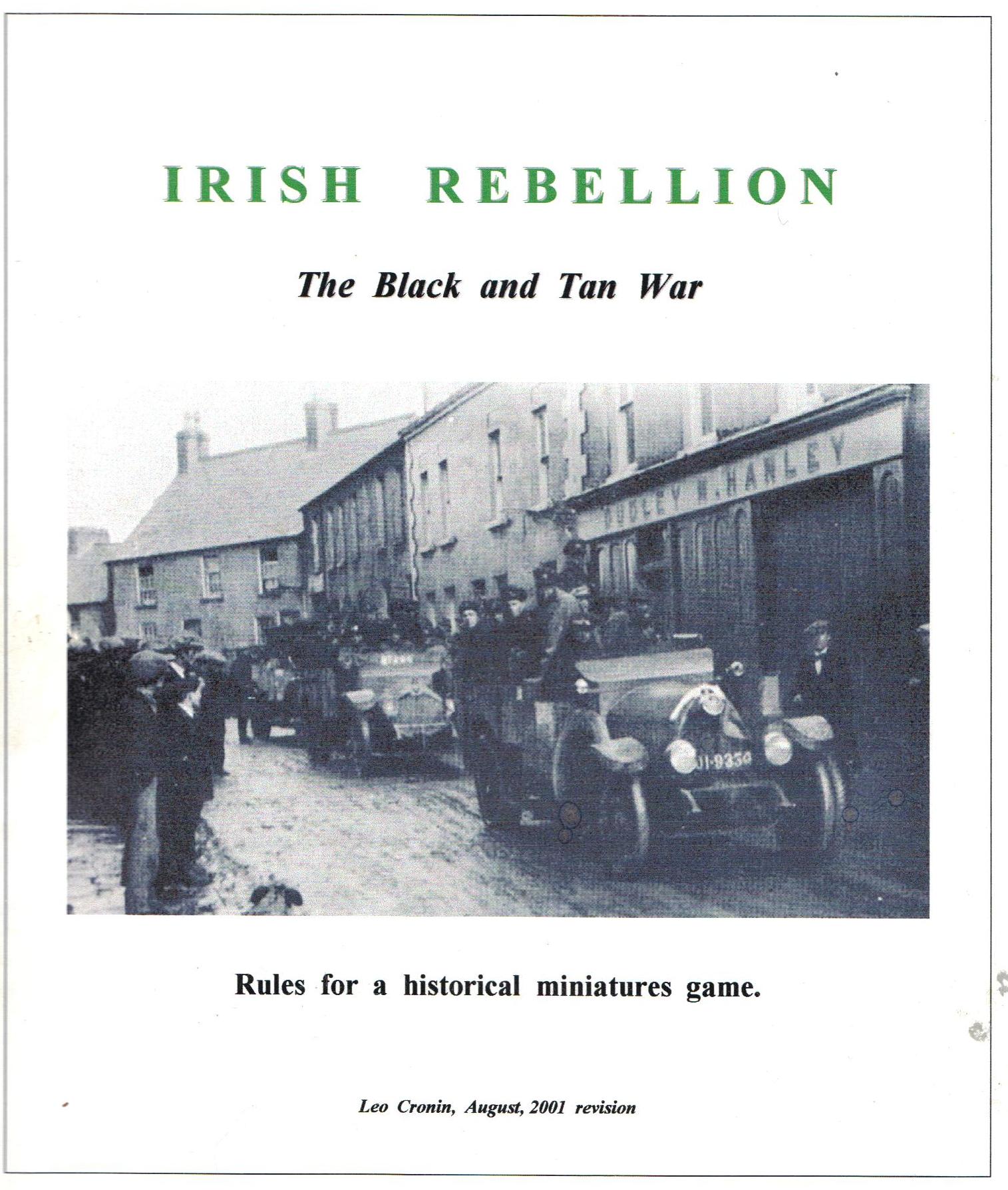
I have always been at a loss for how to do the conflict.  I did locate my copy of Leo Cronin’s The Black and Tan War after some frustrating searches.  After re-reading those rules, I think they are exactly what I’m looking for.  Cronin’s rules are a combination of skirmish wargaming and role playing that I think will be really fun. I see setting the situation as a series of tactical problems the players need to plan for and work through that can be played on a fairly small table in an evening.  I think I’d tweak the ground scale a bit.

Leo Cronin's Irish Rebellion: Black and Tan Wars combine elements of role playing and skirmish gaming.  It is both useful and practical.

Leo Cronin’s Irish Rebellion: Black and Tan Wars combine elements of role playing and skirmish gaming. It is both useful and practical.

This is not a massive project.  I’d like to double the number of IRA figures I have.  I’d probably pick up some of the awesome Musketeer miniatures to supplement my Cannon Fodder guys, but I’d like a total of 20-25 IRA figures.  I have a few Cannon Fodder Black and Tans, and a dozen of the very nice Musketeer Auxies.  I also bought a unit pack of the Renegade WWI British soldiers in early war uniform, including GS hats.  I’m going to take half of these and paint them as a few of the 80,000 British that served in Ireland 1919-22, and the rest will be members of the Irish Free State Army that had a somewhat different color but generally a similar uniform.  At the most I’m talking about another 40 figures, including civilians.

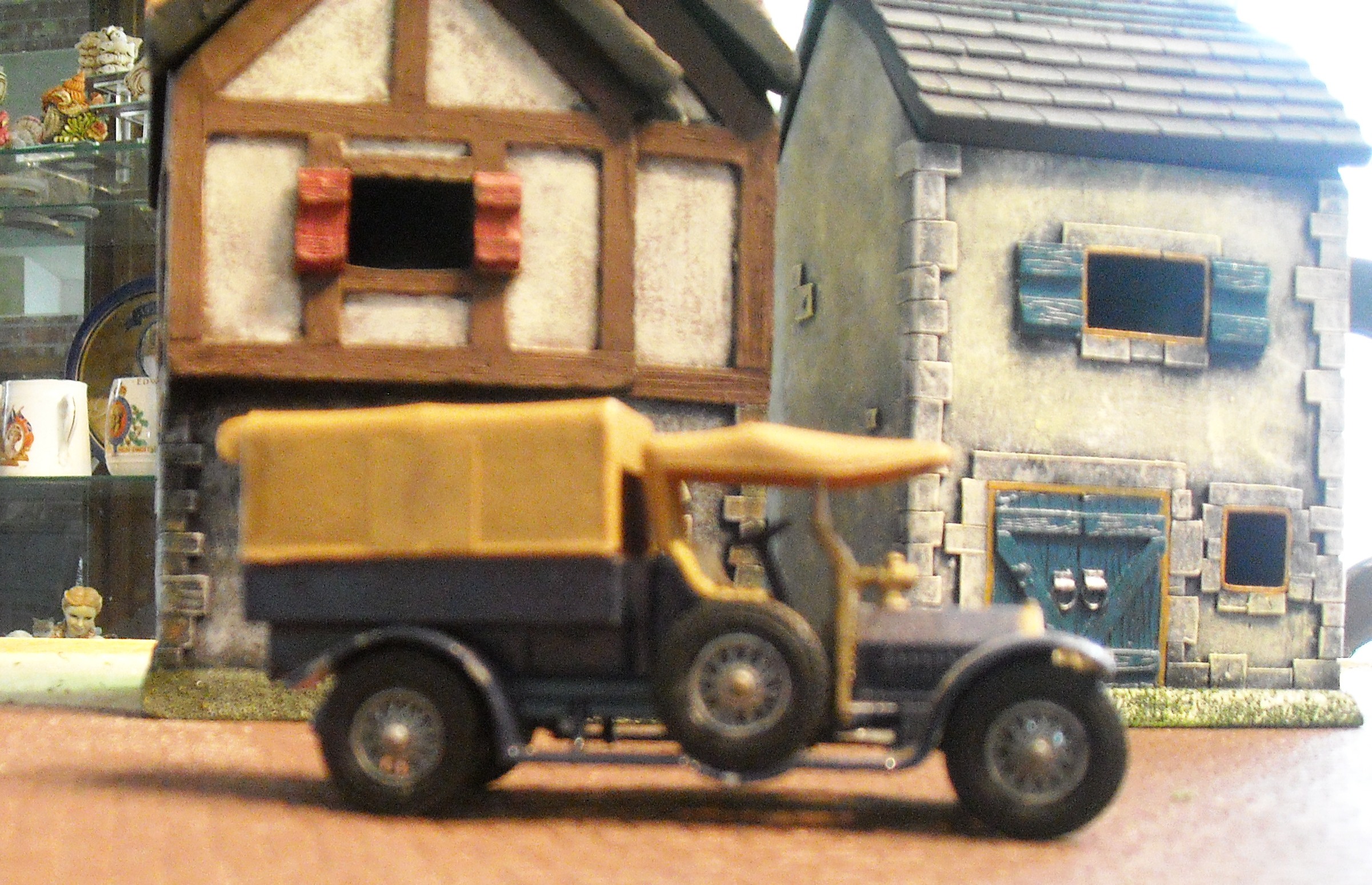
Blurry photo of the Matchbox Crosley tender.  Used without the top or canvas cover, the tender is in perfect scale with the miniatures.

Blurry photo of the Matchbox Crosley tender. Used without the top or canvas cover, the tender is in perfect scale with the miniatures.

Then there is the question of vehicles.  I’ve pretty much decided to do them on the cheap, using old Matchbox Cars of Yesteryear.  I know I can get these fairly cheap, like less than ten bucks a pop.  I have some of the Reviresco miniatures, but they’re just too small.  Matchbox has a great Crosley tender that just needs to be reprimed and repainted. I bought one on Ebay and am awaiting its arrival.  I’ll probably go the same route for other vehicles from the period.  Matchbox makes some nice Model T’s, Maxwell and some interesting trucks/vans. I have a Reviresco Lanchester armored car, but at 1/64 scale it’s a bit small.  I’d really like to snag an Old Glory Austin A/C as a replacement.  The creme de la creme would be a Lancia armored lorry made by Musketeer, but at 20 quid it’s a bit spendy.  Maybe this summer.

In any case, I’ve finished the first ten CF figs, and have primed a dozen more including British regulars, Black and Tans and some smallish Reviresco Royal Irish Constabulary.  More to follow.

Finally finished: Pavisiers and Militia artillery

It seems like I’ve been working on these figures for months, but they’re finally finished.

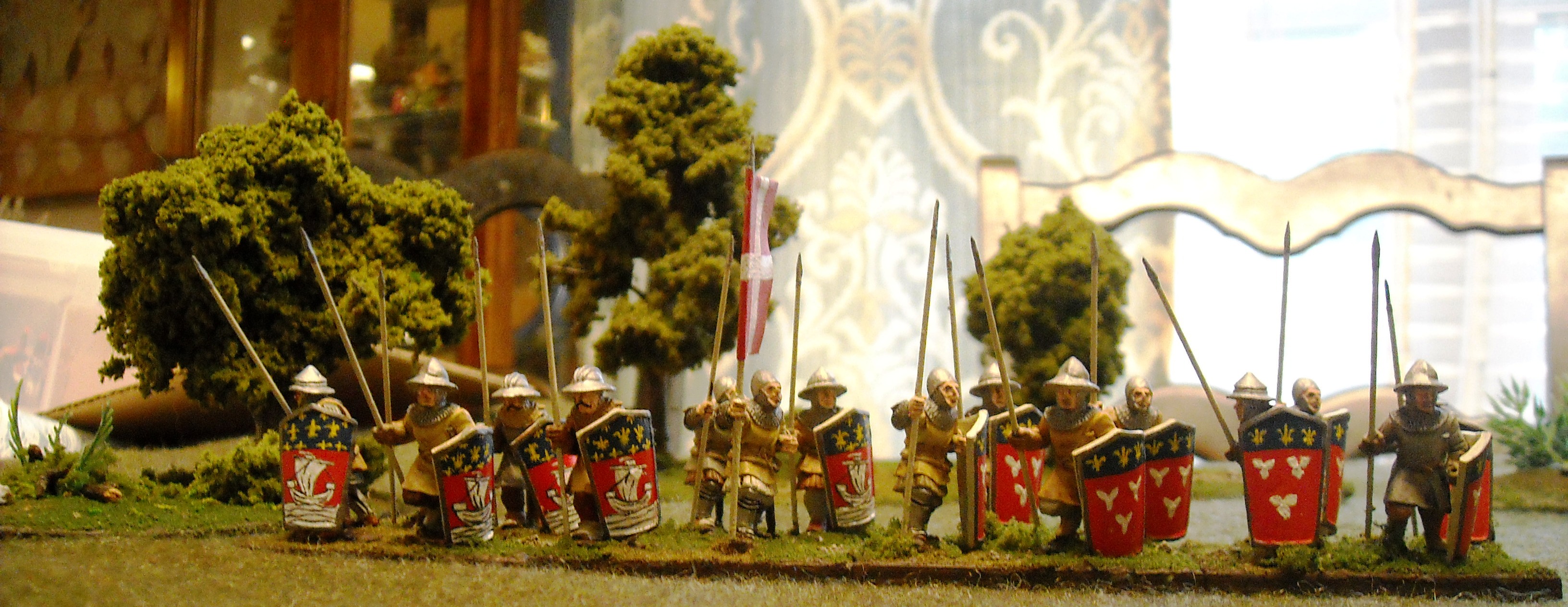
First, let’s talk about the pavisiers.  These are French Hundred Years War spearmen.  Typically, pavisiers, so named for the large shield or pavise, are feudal militia, either raised due to feudal obligation to a French nobleman, or pledged by a place.  My pavisiers are Old Glory figures with Northstar spears.  These are spearmen from Paris and Orleans.  The Parisians have the ship on their shield.  The Orleanists have the, well, whatever that’s supposed to be.  Flowers I think.  I really thought the Orleans shield pattern would be a lot easier to paint, but I just could quite make the petals full enough.  The Parisians, once the fleur de lys pattern at the top came together, were kind of fun and less challenging than I thought they would be.

16 Old Glory pavisiers.  The standard is the cross of St. Denis.  Kind of the reverse of the cross of St. George.  The Paris spearmen are on the left.

16 Old Glory pavisiers. The standard is the cross of St. Denis. Kind of the reverse of the cross of St. George. The Paris spearmen are on the left.

Pavisiers were doubtless available aplenty to the French when on campaign.  They don’t often fight in the big battles of the HYW.  In fact they probably were sent away by King Jean at Poitiers and Constable Albret at Agincourt.  Thought they probably reported for duty in those campaigns, in actuality they simply inflated the French numbers, but were almost certainly dismissed.  Lots of men consume lots of vittles on the march and too many marchers slow down the advance. However, because the Hundred Years War isn’t just limited to a handful of big battles that turn in to big disasters, doubtless militia spearmen like these fought in dozens of battles over the long decades. French militia were required to be trained in the use of their arms, as well as bring their arms and armor to the battlefield.  Not quite the miserable levy scrapings we’re led to believe they were.

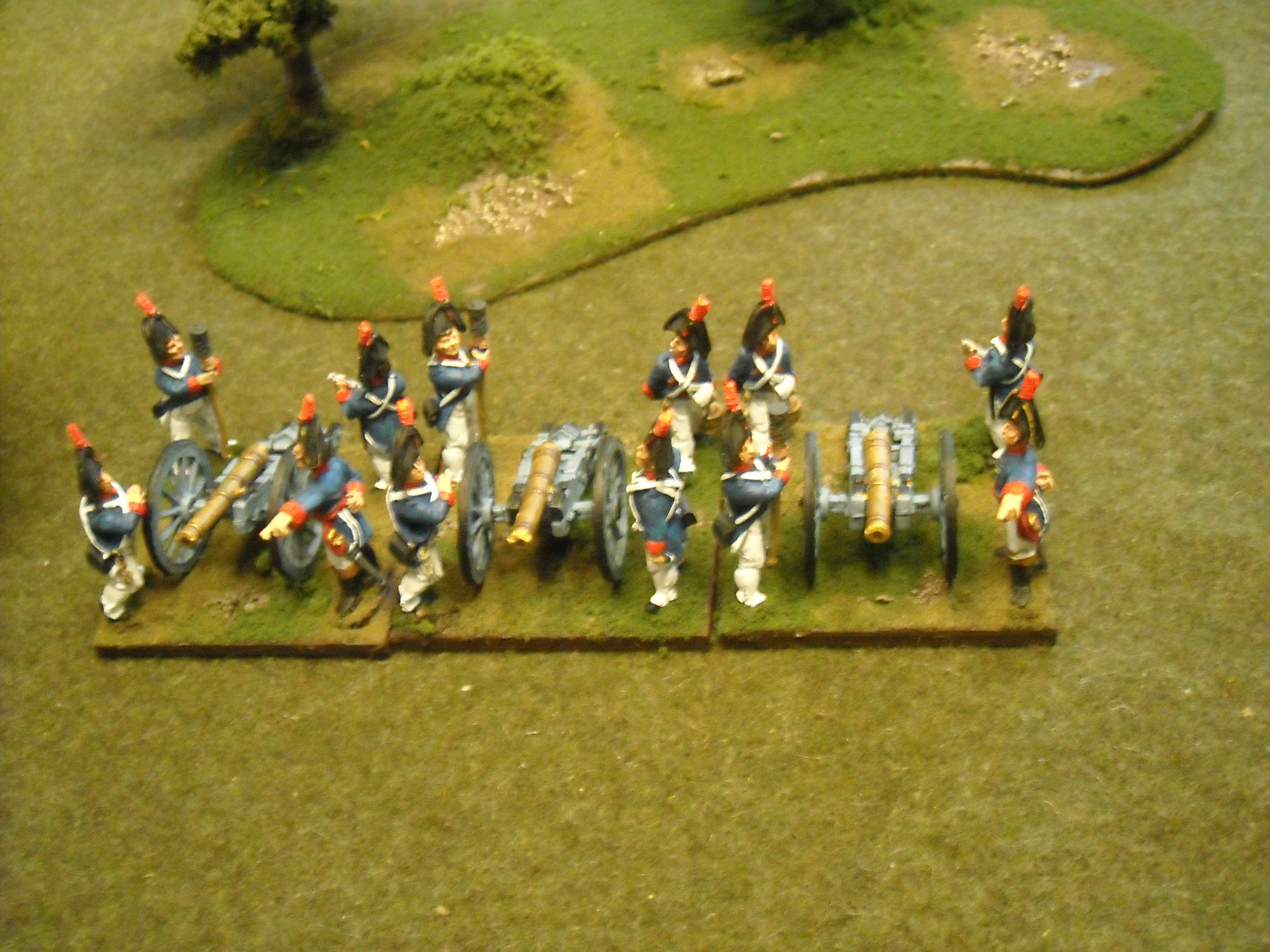
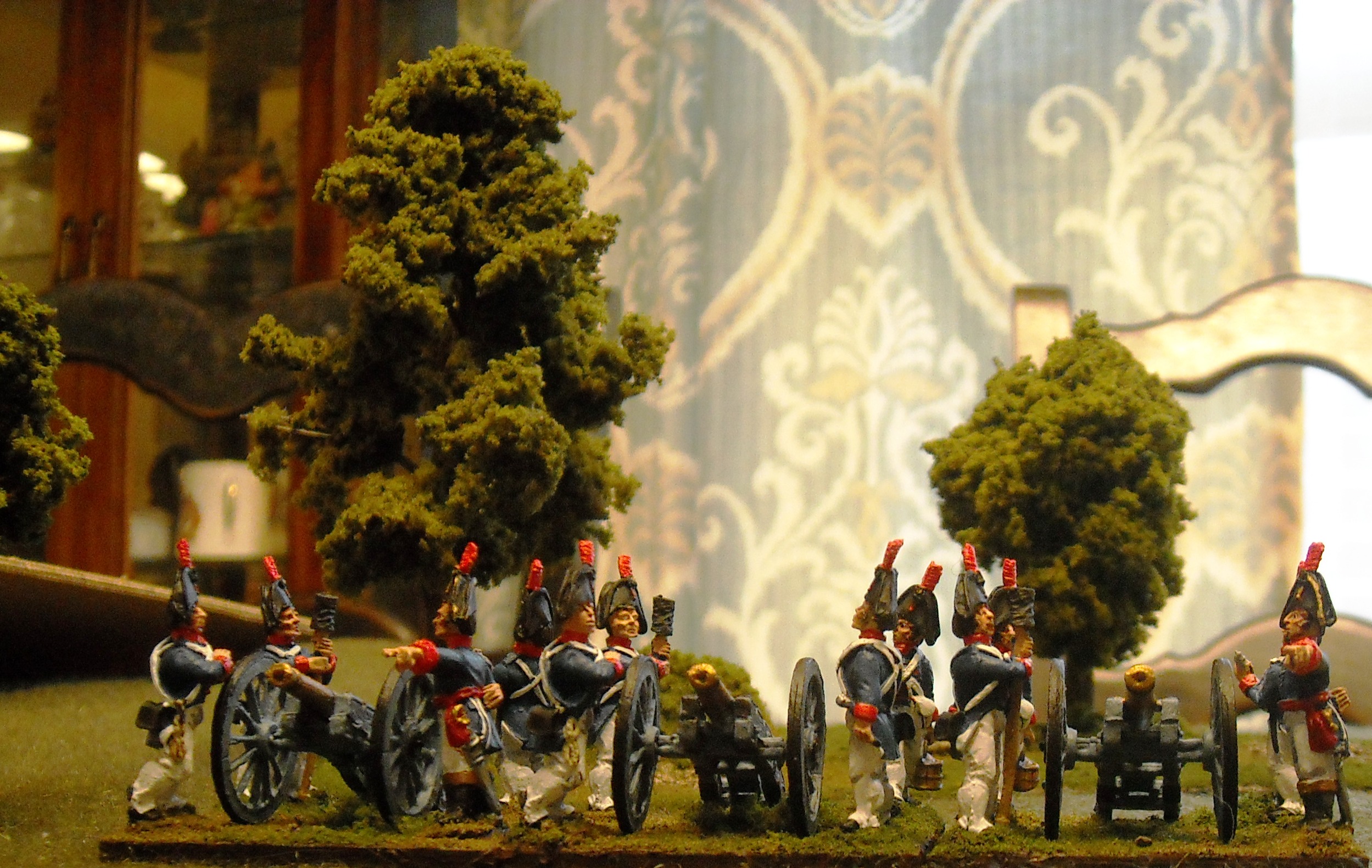
The artillery figures are painted to represent the Maryland militia artillery present at the Battle of Bladensburg in the summer of 1814.  These are also Old Glory figures from the War of 1812 range, as are the six pound guns.  They’re quite serviceable figures, though they come with a bit too much lace and frippery. Uniforms are similar to U.S. regular artillery with the obvious exception of the big damn hat.  I wonder how they kept them on in a stiff breeze.  Though the only figures pictured are in the white trousers of the summer uniform, I also painted two section in the blue trousers of the winter uniform.  There was plenty of militia artillery at Bladensburg, though much of it was seen fleeing from their guns.

Pavisiers and Maryland artillery 011??????????

Busy, busy, busy

That’s my story and I’m sticking to it. I promised an entry per week and I didn’t get one out last week.  I know I should have something to report but sometimes my real life sidetracks me.  We were on deadline two weeks ago which sucks up a bunch of my free time-about 30 hours per issue- and this week it’s been all about getting my mother in law moved, again.  I didn’t even have a Drumbeat post.  I’ll rectify that now, even though I’m a week behind.

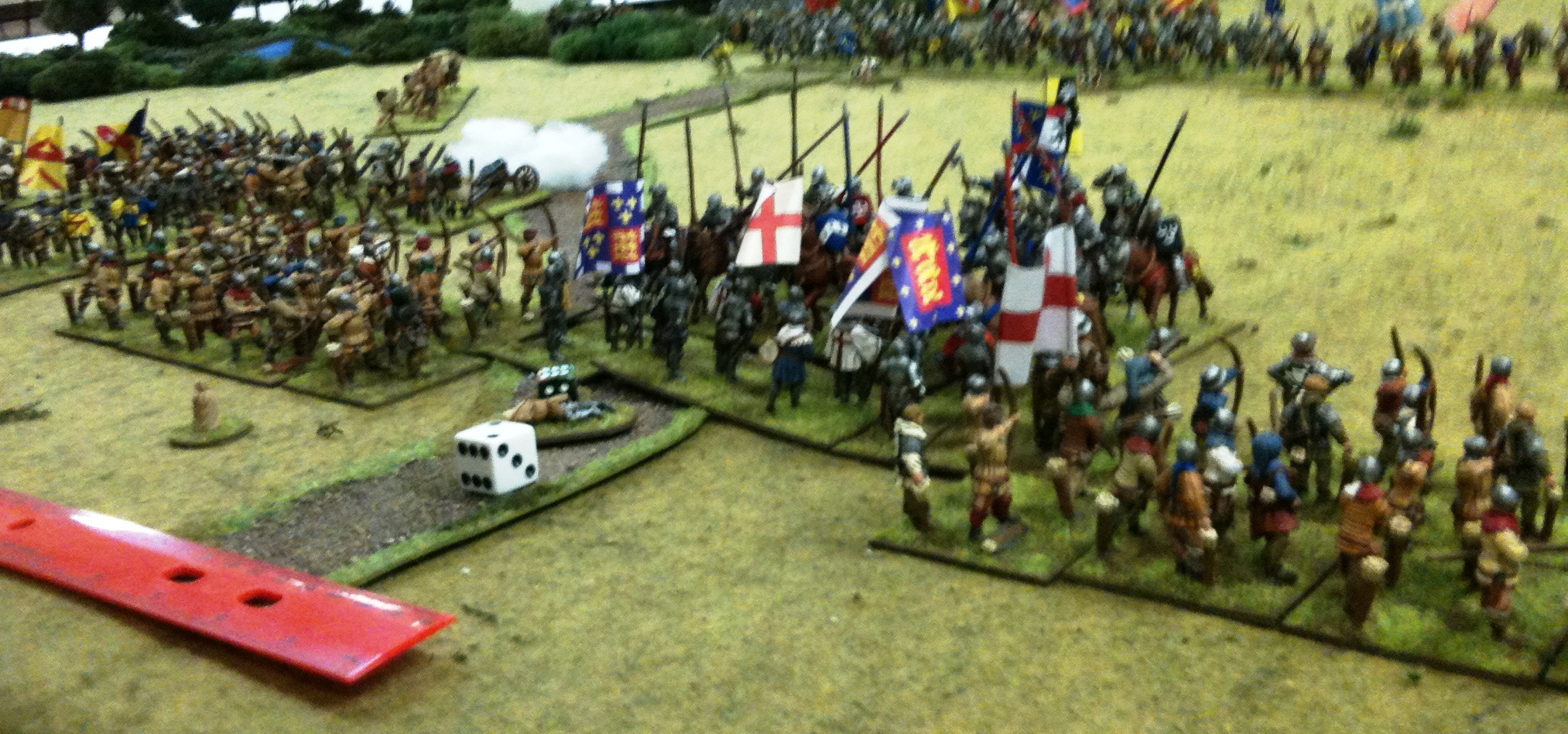
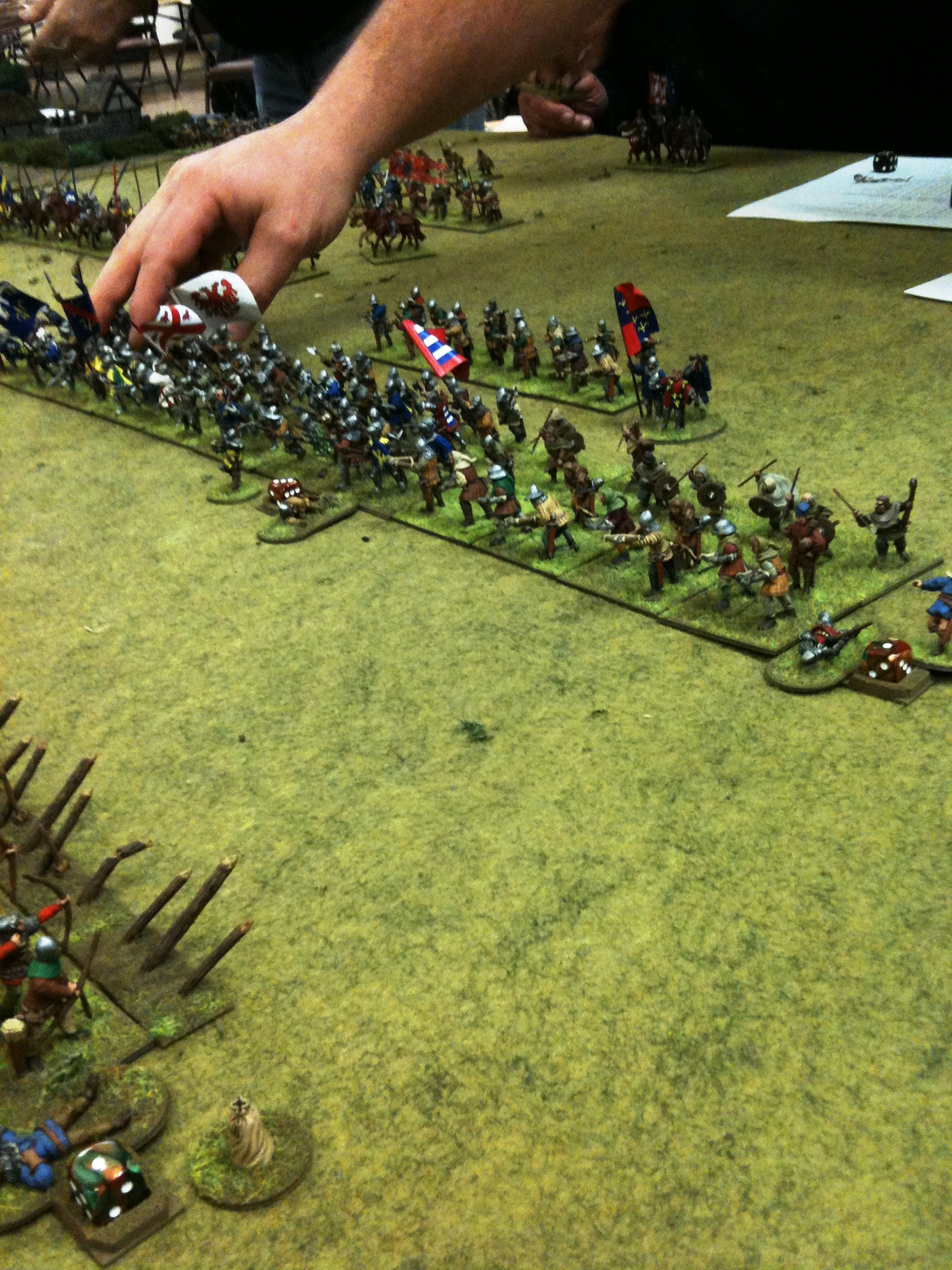
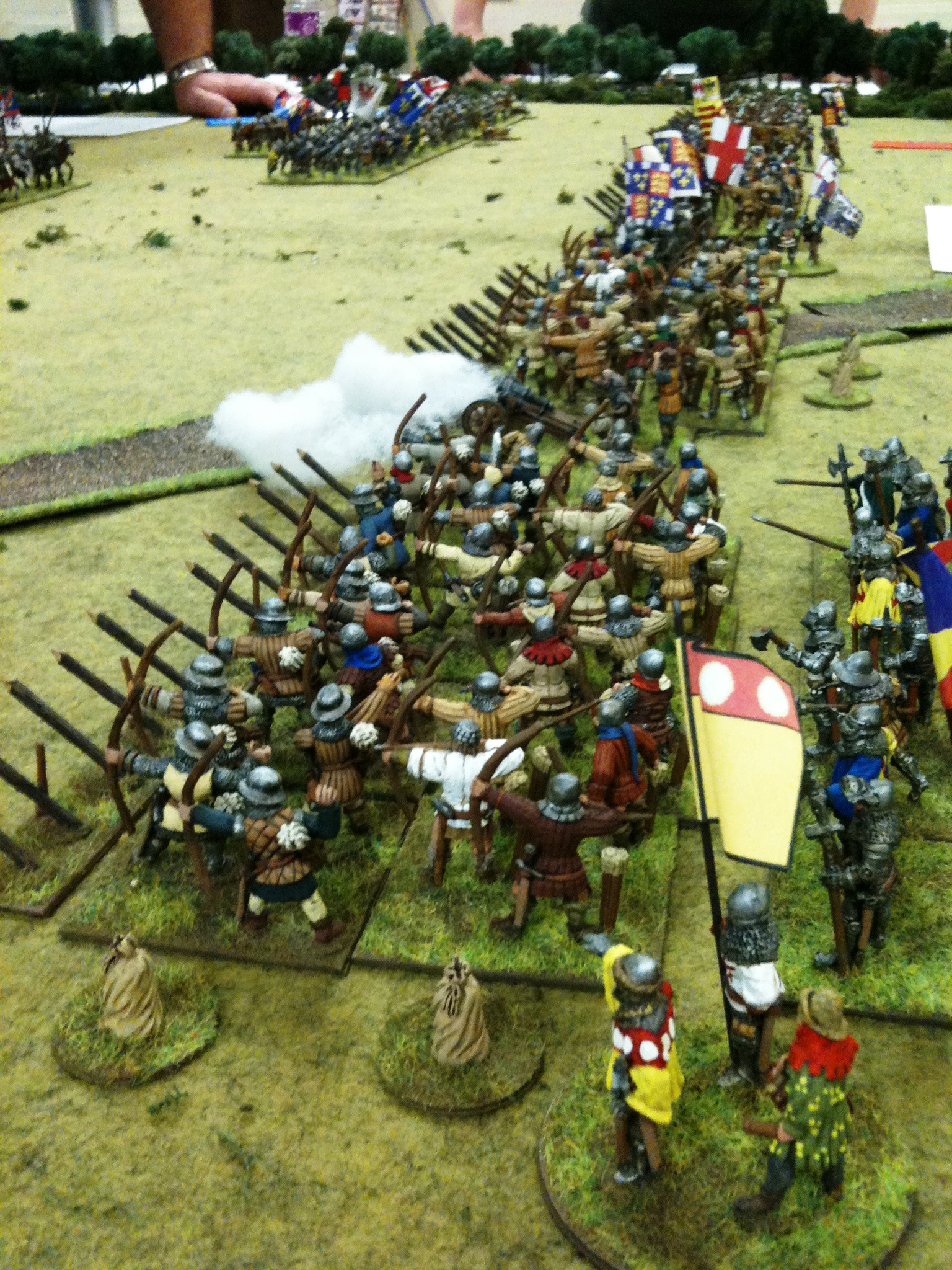
These are pics of Chris Craft’s Hundred Years War game.  Chris has a great approach to his project.  His wonderfully painted figs are all Perry Miniatures.  He, like me, has them mounted on 50mm square bases. Chris, like me, is also searching for a set of rules that work best for him.  This game was played with Hail Caesar rules from Warlord Games. They are fairly similar to Black Powder, which others playing the game had experience with, but I have not played. I was a little late to the affair and so I didn’t get to begin the game as a player and instead I just watched.  The fire system was interesting, in that the resulting fire disordered their targets and forced them to halt.  Even so, the French pretty much survived the bow fire and seemed to easily make contact with the English battle line and eventually routed them.  In all fairness, the Hundred Years War isn’t included in the rules so Chris had to create his own house rules to make the game work.  Still experimenting.

Hail Caesar 1

The French battle line advances in Chris Craft's prelude to Agincourt game.

The French battle line advances in Chris Craft’s prelude to Agincourt game.

Hail Caesar 3

In speaking of the Hundred Years War, I’m still working on those pavisiers. The figs are done, it’s the damn pavises that have got me.  Not painting up very fast and I have mistakes to go back and fix.  On the other hand, I did finally assemble and prime the five guns I need for the War of 1812 militia artillery units.  Hope to have these done by the end of the week.  Maybe the damn pavises too. I’ve also dragged out some of my aging collection of figures from the Irish War of Independence/Irish Civil War.  This is a collection of Cannon Fodder, Musketeer, Renegade and Reviresco miniatures. I’ve ordered a copy of the World in Flames rules by Osprey to at least investigate.  I’m hoping to do some scenario design with that combines role playing and straight skirmish gaming.

Also on the topic of the Hundred Years War, I’m reading a great book, Arrowstorm: the world of the Archer in the Hundred Years War, by Richard Wadge.  Not a super practical read, really more of a social history of the English archers.  Interesting stuff as long as you don’t hope to find the penetrating power of a bodkin arrow at 35 degrees at 150 yards.  This has a little bit about dress, the success of the indenture versus array system of recruitment, and the motivations of those common soldiers that fought in this long, long conflict.

Hope you all are having a fabulous January.  Semester ends on Tuesday, hope to plan a trip to Card Kingdom/Cafe Mox on February 9th.


Painting Log

One thing I really miss about my old Blogger pages are all the widgets.  There were lots of them and they were very easy to use.  WordPress has lots of widgets too, but they aren’t quite as intuitive for me. I’ve added a widget that should allow me to record my completed figures as well as my purchases.  Unfortunately it’s not too good at allowing individual entries and tracking totals. I think I’ll keep a monthly total.

My goals for 2013 are the same as they are every year:  400-600 figures painted.  I expect that 2013 will see focus in three areas.

  1. War of 1812, specifically the Battle of Bladensburg.  I have lots of British to paint, mostly the Victrix plastics, which I own.  I painted my first unit during the summer and they weren’t horrible, but they are a pain in the tookus.  On the painting table are the five cannon I need to paint for my militia gunners.
  2. The Hundred Years War, focused chiefly on Poitiers.  On my painting table I have sixteen pavisiers.  There were lots of feudal militia types at Poitiers, and honestly they add some variety to having to come up with a bunch of armored knights and all their heralry.  Tough to do sometimes. I’m hoping to get at least a hundred HYW figures done this year.  More would be better.
  3. 1/144th air racers.  I have another seven or so to add to the two I’ve already finished.  This is important because I plan to run an air racing game at Enfilade.  I’m trying to decide how fiddly I want to make them.  Lots of bracing on the various Gee Bees and Wedell-Williams.  The TravelAire too. I’d need more fine brass wire.
  4. 15mm Pelennor Fields project-This is a long held interest of mine.  I wrote briefly about it a couple months ago.  I painted lots of orc archers, but needless to say I need a lot more.  I have plenty of figures to paint–and then I’ll need some more.

I’m likely to pick out some other toys to work on too.  But in general, these are the projects I expect to focus on this year.

French militia of the Hundred Years Wars

French militia did not crown themselves glory during the Hundred Years War. Let’s understand, these guys were basically feudal levies called out by their lords for limited service in limited geographical areas, with limited training and limited enthusiasm.  Yes, that’s right, the operative word to describe them is limited. However, you, like me, are drawn to this amazing conflict, you are not required to paint French pavisiers, feudal levy, crossbow types as complete and utter crap.  They may perform like complete and utter crap, but they don’t have to look crappy.

What turned the corner for me are two great illustrations on the Perry miniatures website that depict their excellent pavisier figures with city heraldic devices emblazoned on their really big shields (pavises.)  I actually pilfered some pavises from my Old Glory Pavisiers to give to some of my Old Glory crossbowmen, but that left me with enough to put together a four-stand sixteen figure unit of city militia pavisiers.  I’ve already decided to paint half from Paris and half from Orleans.


City of orleans coat of arms

City of orleans coat of arms


City of Paris coat of arms.  A bit simpler than the Perry example

City of Paris coat of arms. A bit simpler than the Perry example